.webp&w=384&q=75)

Loading, please wait...
Loading, please wait...
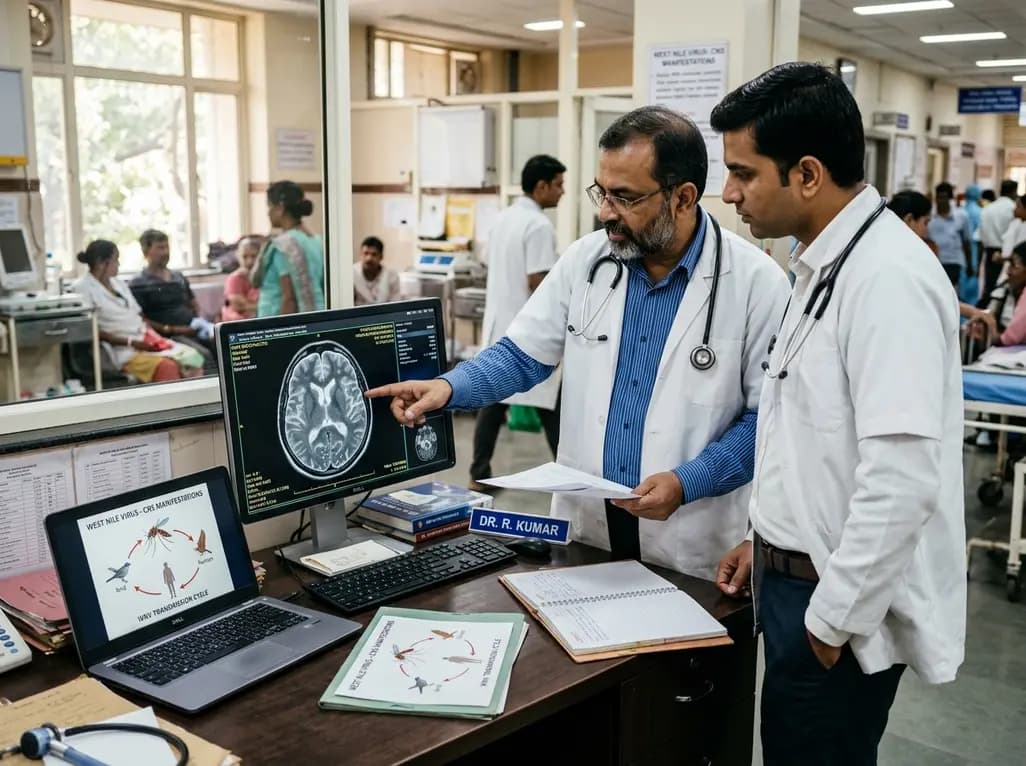
Recent epidemiological surveillance reports highlight the fatal resurgence of West Nile virus in the Netherlands, where public health authorities confirmed three patient fatalities. In addition, health agencies across southern and central Europe report surging arboviral activity during unprecedented summer heatwaves. Consequently, healthcare professionals worldwide, including clinicians managing acute febrile illnesses, must revisit this vector-borne pathogen. Understanding transmission dynamics, diagnostic criteria, and supportive care remains vital for modern hospital practice.
The National Institute for Public Health and the Environment in the Netherlands recently verified eighteen human infections and three related deaths. Furthermore, surveillance teams confirmed these indigenous cases after several years without documented local transmission. Southern European nations like Italy and Greece currently observe similar escalating caseloads. Meteorologists and epidemiologists attribute this geographical expansion to record-breaking heatwaves and extended warm seasons across the continent. Warmer atmospheric temperatures accelerate the extrinsic incubation period of the virus inside mosquito vectors. Consequently, mosquitoes develop higher viral loads much faster and reproduce more rapidly in standing water. In addition, elevated ambient temperatures expand the geographic boundaries of competent mosquito vectors into previously temperate zones. Therefore, regions that historically faced negligible arboviral threats now confront seasonal transmission risks. Clinicians must recognize that changing weather patterns directly alter regional vector ecology. Because international travel and migratory avian flight paths connect distant regions, health systems globally must maintain heightened diagnostic alertness for unusual neurological syndromes. Moreover, local clinicians should consider arboviral surveillance a core element of institutional preparedness. Thus, routine screening protocols protect vulnerable populations during intense summer months.
The West Nile virus belongs to the Flaviviridae family, sharing antigenic similarities with Japanese encephalitis and dengue viruses. In nature, wild birds serve as the primary amplifying reservoir hosts for this single-stranded RNA virus. Mosquitoes, particularly species of the Culex genus, acquire the pathogen while feeding on viremic avian hosts. Subsequently, infected female mosquitoes transmit the agent to incidental hosts, including humans and horses, during blood meals. Because humans generate transient, low-titer viremia, scientists designate them as dead-end hosts. Therefore, human-to-mosquito transmission does not typically sustain the environmental propagation cycle. However, healthcare professionals must remember rare non-vector transmission routes. Documented secondary modes include blood transfusions, organ transplantation, transplacental transmission, and breast milk exposure. Once inside the human host, the virus infects dendritic cells before migrating to regional lymph nodes. Afterward, primary viremia seeds visceral organs and occasionally breaches the blood-brain barrier. Consequently, host immune mechanisms, particularly robust humoral responses, dictate whether the infection clears or progresses. While young, immunocompetent hosts often control viral replication, immunocompromised and elderly individuals face severe systemic dissemination. Additionally, viral neurotropism can damage spinal anterior horn motor neurons directly.
Epidemiological data indicate that approximately eighty percent of infected individuals remain entirely asymptomatic throughout their infection. Meanwhile, roughly twenty percent develop West Nile fever after an incubation period of two to fourteen days. This febrile prodrome manifests with sudden high-grade fever, retro-orbital headache, generalized fatigue, myalgias, and occasional maculopapular eruptions. Additionally, patients frequently report gastrointestinal symptoms, including nausea, vomiting, and non-bloody diarrhea. Most febrile presentations resolve uneventfully within two weeks, although fatigue can linger for several months. However, less than one percent of patients progress to catastrophic neuroinvasive disease. This severe condition occurs predominantly in older adults and organ transplant recipients. Clinical manifestations include aseptic meningitis, severe encephalitis, and acute flaccid myelitis. Specifically, patients with encephalitis exhibit acute altered sensorium, coarse tremors, cerebellar ataxia, and focal neurological deficits. Acute flaccid paralysis presents identically to poliomyelitis, featuring sudden, asymmetric, painless lower-motor-neuron weakness without prominent sensory loss. Furthermore, respiratory muscle paralysis can develop rapidly, necessitating urgent mechanical ventilation. The overall case fatality rate among neuroinvasive cases approximates ten percent, emphasizing the critical need for rapid recognition. Therefore, attending physicians must evaluate all unexplained neurological deterioration promptly.
Clinicians must maintain a high index of suspicion when evaluating unexplained encephalitis or acute flaccid paralysis during warm seasons. Serological testing provides the primary tool for laboratory confirmation of active infection. Specifically, detection of virus-specific IgM antibodies in serum or cerebrospinal fluid using capture ELISA indicates acute infection. Cerebrospinal fluid IgM testing carries exceptional clinical value because IgM antibodies do not cross the intact blood-brain barrier. Therefore, their presence in spinal fluid demonstrates direct central nervous system invasion. However, cross-reactivity presents a major diagnostic hurdle in regions endemic for other flaviviruses. For instance, antibodies against dengue, Japanese encephalitis, and yellow fever viruses cross-react extensively on standard immunoassays. In such situations, reference laboratories must perform plaque reduction neutralization tests to distinguish specific neutralizing antibodies. Furthermore, reverse-transcription polymerase chain reaction testing can detect viral RNA, but human viremia remains transient and brief. Consequently, molecular assays often yield negative results after neurological symptoms develop. Neuroimaging via magnetic resonance imaging may reveal non-specific signal abnormalities in the basal ganglia, thalamus, or anterior spinal horns. Thus, diagnostic evaluation requires integrating clinical, neuroimaging, and paired serological findings.
Currently, medical science offers no specific antiviral therapy or approved human vaccine against this flaviviral infection. Consequently, clinical management relies entirely on aggressive supportive care and meticulous symptom control. Hospitalized patients with neuroinvasive complications require intensive monitoring for airway protection, seizure activity, and secondary bacterial infections. In addition, clinicians must carefully manage elevated intracranial pressure and fluid-electrolyte balances in intensive care units. Several experimental modalities, including intravenous immunoglobulin and interferon therapy, lack convincing randomized controlled trial evidence. Therefore, clinicians reserve these compassionate interventions for selected refractory cases. Because medical treatments remain supportive, robust vector prevention forms the cornerstone of disease control. Public health agencies must prioritize integrated mosquito management, focusing on source reduction in standing water pools. Furthermore, municipal authorities should conduct targeted larvicide and adulticide operations in active transmission sectors. For individual protection, healthcare workers should counsel travelers and community members to apply DEET-based insect repellents diligently. Moreover, installing fine window screens and wearing permethrin-treated, light-colored clothing significantly reduces mosquito bites during peak dawn and dusk biting hours. Ultimately, proactive community education and coordinated vector surveillance safeguard public health against expanding arboviral threats. Hence, multisectoral collaboration between medical and environmental teams remains indispensable.
Q1: What are the primary clinical signs that distinguish neuroinvasive disease from uncomplicated viral fever?
Uncomplicated viral fever typically presents with self-limiting pyrexia, headache, fatigue, and myalgias without neurological deficits. In contrast, neuroinvasive disease involves direct central nervous system inflammation, manifesting as aseptic meningitis, encephalitis, or acute flaccid myelitis. Clinicians observe altered mental status, neck stiffness, coarse tremors, cranial neuropathies, and asymmetric motor weakness. In addition, patients exhibiting lethargy, acute confusion, or respiratory compromise require immediate hospital admission and neurodiagnostic evaluation.
Q2: Why do standard diagnostic tests struggle to differentiate between various flavivirus infections?
Standard diagnostic assays rely heavily on detecting antibodies against viral envelope proteins. Because flaviviruses like West Nile, dengue, and Japanese encephalitis share structurally similar envelope epitopes, standard ELISA tests exhibit extensive cross-reactivity. Consequently, serology can produce false-positive results in endemic areas or vaccinated individuals. Reference laboratories overcome this challenge by performing plaque reduction neutralization tests. This confirmatory assay specifically measures titers of neutralizing antibodies, allowing definitive viral differentiation.
Q3: What treatment options and supportive measures exist for patients with severe neuroinvasive disease?
Currently, no specific antiviral medication or targeted therapy holds regulatory approval for this viral illness. Therefore, clinical care focuses on aggressive, supportive intensive interventions. Critical care teams deliver intravenous hydration, manage cerebral edema, provide antipyretics, and ensure prompt seizure control. Furthermore, physicians must monitor neuromuscular function closely, as ascending flaccid paralysis can rapidly cause diaphragmatic failure. While experimental therapies like intravenous immunoglobulin exist, clinicians evaluate them on a strict case-by-case basis.
Disclaimer: This content is for informational and educational purposes only. It does not constitute medical advice or replace professional judgment. Refer to the latest local and national guidelines for clinical practice.
References

Read summarized clinical updates, watch expert medical content, and earn CME certifications right from your smartphone.
Open your smartphone camera to scan and install.





Health authorities have confirmed fatal West Nile virus infections in the Netherlands amid expanding mosquito activity across Europe. This clinical overview outlines transmission cycles, clinical presentation, neuroinvasive manifestations, diagnostic workup, and supportive treatment considerations for physicians.
last month

As monsoon seasons elevate arboviral disease threats, Tamil Nadu has initiated an ICMR-monitored evaluation of the tetravalent dengue vaccine in Tenkasi district. Clinicians emphasize clinical monitoring, public prevention, and high-quality early pediatric care to reduce disease morbidity across endemic regions.
Today

Leucine Rich Bio has introduced South Asia's first comprehensive vaginal microbiome test, BugSpeaks. By profiling microbial dysbiosis, pathogens, and antimicrobial resistance, this next-generation diagnostic platform provides clinicians with deeper insights into recurrent infections, fertility, and reproductive health.
Today

Review how tailored exercise programs benefit frail older patients with heart failure. Explore pathophysiological mechanisms, individualized training prescriptions, and strategies to overcome adherence barriers in clinical practice.
Today

This comparative study evaluates posterior labral tears with and without glenohumeral instability, highlighting distinct demographic patterns, MRI underestimation in stable shoulders, and successful arthroscopic repair outcomes.
Today

A clinical study demonstrates that early intervention with tocilizumab, either as monotherapy or bridged with corticosteroids, achieves significant proptosis reduction and resolves active inflammation in treatment-naive thyroid eye disease.
Today
