.webp&w=384&q=75)

Loading, please wait...
Loading, please wait...
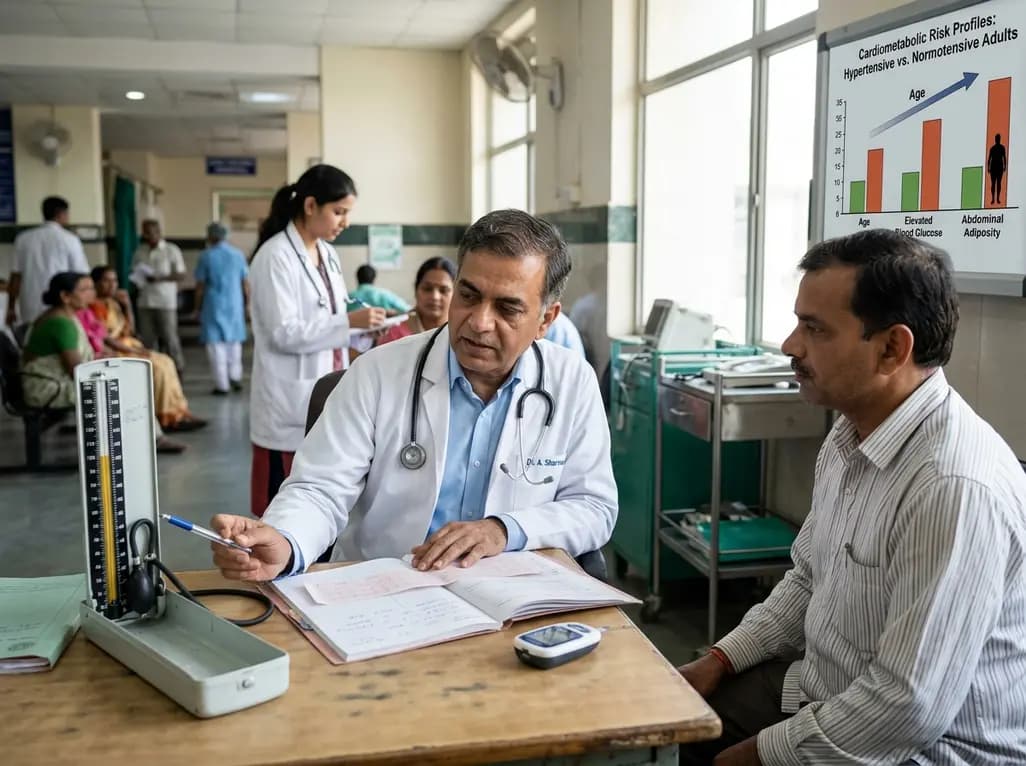
Cardiovascular and metabolic diseases continue to impose a tremendous healthcare burden across developing and transitioning economies. In clinical settings, understanding disparate cardiometabolic risk profiles between hypertensive and normotensive adults helps clinicians identify vulnerable individuals before overt vascular complications occur. When clinicians evaluate hypertension simply as an isolated hemodynamic disorder, they risk missing underlying metabolic dysfunction. Therefore, a holistic assessment encompassing glucose dysregulation, abdominal adiposity, and lipid abnormalities remains paramount for effective long-term disease management and prevention.
Cardiometabolic syndrome encompasses a cluster of interrelated biochemical, vascular, and physiological disturbances. Specifically, persistent arterial hypertension frequently coexists with insulin resistance, central obesity, and atherogenic dyslipidemia. A recent cross-sectional investigation conducted by Thaga and colleagues evaluated these precise parameters among community adults. The study examined anthropometric measurements, blood pressure values, and biochemical markers, including fasting or random glucose and serum lipid panels. Consequently, the researchers sought to delineate the exact metabolic divergence separating normotensive individuals from those with established hypertension.
In outpatient practice, clinicians frequently encounter patients whose elevated blood pressure masks silent glycemic and lipid derangements. Furthermore, urban environments often accelerate metabolic decline through chronic psychological stress, altered dietary habits, and sedentary lifestyles. Therefore, evaluating cardiometabolic risk profiles comprehensively allows healthcare providers to stratify patient risk more accurately. Instead of treating blood pressure in isolation, physicians must recognize vascular stiffness and metabolic decline as interconnected processes. Ultimately, addressing these overlapping mechanisms early in primary care prevents progressive target organ damage and reduces overall cardiovascular morbidity.
The investigative team identified several striking statistical associations between metabolic indicators and blood pressure elevation. Notably, multivariable regression models revealed that advancing age and elevated circulating glucose served as the strongest independent predictors of hypertension status. As chronological age increases, progressive arterial remodeling and vascular calcification diminish arterial compliance. Consequently, structural vascular stiffening elevates systolic pressures significantly over time.
However, the pronounced association with glycemic dysregulation underscores a critical pathophysiological link that transcends simple aging. Hyperglycemia promotes advanced glycation end-product formation, which degrades vascular endothelial elasticity. Moreover, accompanying hyperinsulinemia stimulates renal tubular sodium reabsorption and accelerates sympathetic nervous system activity. In this study, the prevalence of hypertension climbed steeply alongside worsening biochemical markers. Normotensive adults maintained significantly lower mean glucose levels than their hypertensive peers. Thus, the data clearly demonstrate that impaired glucose metabolism and vascular hypertension develop along parallel biological trajectories. Clinicians must therefore view early dysglycemia not merely as a precursor to diabetes, but also as an active catalyst for systemic hypertension.
In addition to glucose levels, the study analyzed anthropometric indicators, focusing on body mass index and waist circumference. Interestingly, the prevalence of hypertension rose markedly across escalating weight categories. Hypertensive status affected only thirty percent of normal-weight participants, whereas over sixty-four percent of obese individuals exhibited hypertension. Furthermore, central adiposity, reflected by elevated waist circumference, showed a powerful correlation with elevated arterial pressures.
Visceral fat acts as an active endocrine organ rather than an inert storage depot. Specifically, visceral adipocytes secrete excessive proinflammatory cytokines, free fatty acids, and angiotensinogen, directly fueling vascular constriction. However, the study also revealed substantial overlap in body mass index between normotensive and hypertensive groups. Consequently, body mass index alone proved insufficient to distinguish vascular health reliably in every individual. Waist circumference provided superior clinical insight into visceral fat accumulation and vascular strain. Therefore, primary care practitioners should prioritize central adiposity measurements during routine health examinations. Evaluating waist circumference offers immediate, cost-effective insight into an individual patient's underlying cardiometabolic burden.
These observational findings carry urgent clinical relevance for healthcare professionals practicing throughout India. The South Asian phenotype exhibits a unique propensity for high visceral adiposity and early insulin resistance despite modest body mass index values. Consequently, Indian patients frequently experience premature coronary artery disease, early-onset hypertension, and rapidly progressive type 2 diabetes. The Indian Council of Medical Research has repeatedly highlighted this dual metabolic and vascular epidemic across rural and urban centers.
Moreover, urbanization in India has intensified dietary changes, physical inactivity, and occupational stress. When Indian physicians evaluate asymptomatic adults, they must look beyond traditional weight charts. Even non-obese individuals can harbor significant central adiposity and severe dyslipidemia, termed metabolically obese normal-weight phenotype. Therefore, routine community and clinic screenings must combine blood pressure checks with simultaneous glucose and lipid profiling. Early detection enables timely pharmacological and lifestyle interventions before irreversible vascular damage develops. By addressing cardiovascular and metabolic risks concurrently, Indian healthcare providers can mitigate the accelerating epidemic of noncommunicable diseases nationwide.
Managing interconnected metabolic and vascular disorders demands a coordinated, multidisciplinary intervention strategy in primary care. First, physicians should advocate structured lifestyle modifications as foundational therapy for all patients. Regular aerobic exercise combined with resistance training enhances insulin sensitivity, reduces sympathetic tone, and lowers arterial stiffness. In addition, dietary adjustments emphasizing high-fiber complex carbohydrates, healthy unsaturated fats, and restricted sodium intake generate substantial cardiometabolic benefits.
However, when lifestyle measures prove inadequate, clinicians must select pharmacological agents that confer dual vascular and metabolic protection. For example, renin-angiotensin-aldosterone system inhibitors represent ideal antihypertensive choices because they preserve renal function and improve glycemic dynamics. Similarly, modern antihyperglycemic therapies, such as sodium-glucose cotransporter-2 inhibitors and glucagon-like peptide-1 receptor agonists, provide proven cardioprotective outcomes. Routine biochemical monitoring should occur every three to six months to track glycemic control, lipid ratios, and kidney biomarkers. Ultimately, proactive risk mitigation requires seamless collaboration among physicians, nutritionists, and patients. By implementing comprehensive preventive protocols, clinicians ensure robust protection against cardiovascular events and premature mortality.
Elevated blood glucose levels stimulate systemic vascular resistance through multiple complex biological pathways. Persistent hyperglycemia triggers advanced glycation end-product accumulation, which diminishes endothelial nitric oxide bioavailability and stiffens arterial walls. Concurrently, associated hyperinsulinemia activates the sympathetic nervous system and enhances renal sodium reabsorption. Consequently, chronic glycemic dysregulation impairs microvascular perfusion, increases circulating blood volume, and accelerates vascular remodeling, ultimately driving systemic hypertension.
Body mass index fails to distinguish between lean muscle mass and localized fat distribution. Conversely, waist circumference accurately measures visceral adiposity stored within the abdominal cavity around vital organs. Visceral adipose tissue actively secretes proinflammatory cytokines, free fatty acids, and vascular vasoconstrictors like angiotensinogen. Therefore, waist circumference correlates much more closely with endothelial dysfunction, insulin resistance, and hypertension than generalized body weight calculations alone.
Clinicians evaluating adults with elevated blood pressure should order a targeted panel of cardiometabolic assessments. Essential initial investigations include fasting plasma glucose or glycated hemoglobin, a complete serum lipid profile, and serum creatinine with estimated glomerular filtration rate. Additionally, physicians must measure waist circumference and perform urine albumin-to-creatinine testing. These complementary tests identify silent metabolic dysfunction and early target organ damage effectively.
Disclaimer: This content is for informational and educational purposes only. It is not intended to substitute for professional medical advice, diagnosis, or treatment. Always seek the advice of your physician or another qualified healthcare provider with any questions you may have regarding a medical condition. Refer to the latest local and national guidelines for clinical practice.
References
Thaga LF et al. Comparative Analysis of Cardiometabolic Risk Profiles Among Hypertensive and Normotensive Adults: Cross-Sectional Study. Interact J Med Res. 2026 Sep 10. doi: 10.2196/84466. PMID: 42721447.
Indian Council of Medical Research. ICMR Guidelines for Management of Type 2 Diabetes. New Delhi: ICMR; 2018.
World Health Organization. Guideline for the pharmacological treatment of hypertension in adults. Geneva: World Health Organization; 2021.

Read summarized clinical updates, watch expert medical content, and earn CME certifications right from your smartphone.
Open your smartphone camera to scan and install.





A comparative analysis shows that older age, elevated blood glucose, and abdominal adiposity are primary drivers of hypertension. Comprehensive evaluation of cardiometabolic risk profiles enables clinicians to detect overlapping metabolic dysfunctions early and optimize targeted prevention strategies.
last month

Review how tailored exercise programs benefit frail older patients with heart failure. Explore pathophysiological mechanisms, individualized training prescriptions, and strategies to overcome adherence barriers in clinical practice.
Today

Leucine Rich Bio has introduced South Asia's first comprehensive vaginal microbiome test, BugSpeaks. By profiling microbial dysbiosis, pathogens, and antimicrobial resistance, this next-generation diagnostic platform provides clinicians with deeper insights into recurrent infections, fertility, and reproductive health.
Today

In high-risk pulmonary embolism complicated by severe anemia and active uterine bleeding, systemic thrombolysis is contraindicated. Large-bore aspiration thrombectomy provides rapid hemodynamic rescue without fibrinolysis, supported by inferior vena cava filter placement and multidisciplinary critical care.
Today

This comparative study evaluates posterior labral tears with and without glenohumeral instability, highlighting distinct demographic patterns, MRI underestimation in stable shoulders, and successful arthroscopic repair outcomes.
Today

A clinical study demonstrates that early intervention with tocilizumab, either as monotherapy or bridged with corticosteroids, achieves significant proptosis reduction and resolves active inflammation in treatment-naive thyroid eye disease.
Today
