.webp&w=384&q=75)

Loading, please wait...
Loading, please wait...

The thalamus acts as a central hub for neural activity, but its exact role in drug-resistant epilepsy remains unclear. Therefore, a recent study investigated Thalamic SEEG in epilepsy to characterize interictal events during NREM sleep. Specifically, researchers examined 64 patients to see how thalamic activity relates to surgical outcomes. By sampling four specific nuclei, including the centromedian and pulvinar, the team gained new insights. Consequently, they mapped the brain's complex circuitry more effectively than previously possible.
Furthermore, the analysis of the recordings showed that pathological interictal events in the thalamus are relatively rare. In fact, only 0.2% of spikes from the seizure-onset zone reached the thalamus. However, the presence of specific markers, such as spike-fast activity, proved highly significant. For instance, this activity often indicated unfavorable outcomes for patients because it signaled deep-seated dysfunction. Moreover, clinicians may now have better tools for prognosis due to these findings and their clear implications.
In addition to pathological spikes, the study also monitored physiological events like sleep spindles. While these spindles are common, researchers noticed significantly reduced spindle rates in non-remediable cases. Similarly, this finding suggests that preserved thalamic physiology might correlate with better therapeutic potential. Furthermore, the study identified unique patterns like physiological fast ripples. Consequently, these patterns help experts distinguish between healthy and diseased states. As a result, these markers provide clear diagnostic value for neurologists and surgeons.
Overall, the findings emphasize that incorporating thalamic recordings into standard SEEG evaluations is vital. By doing so, clinicians can better predict surgical success. Likewise, they can refine neuromodulation targets more accurately because they understand the thalamic role better. In conclusion, this research provides a robust framework for improving presurgical assessments. Therefore, it represents a significant step toward better care for patients with complex focal epilepsy.
The centromedian (CM), pulvinar (Pu), ventral lateral (VL), and ventral posterolateral (VPL) nuclei are frequently sampled to guide neuromodulation and evaluate epilepsy networks.
High rates of thalamic spike-fast activity, particularly in the CM and VL nuclei, are associated with unfavorable or surgically non-remediable outcomes.
Disclaimer: This content is for informational and educational purposes only. It does not constitute medical advice or a professional relationship. Refer to the latest local and national guidelines for clinical practice.
References
Ye H et al. Thalamic interictal epileptic and non-epileptic events during NREM sleep in patients with focal epilepsy: a Stereo-EEG study. EBioMedicine. 2026 May 12. doi: undefined. PMID: 42119303.

Read summarized clinical updates, watch expert medical content, and earn CME certifications right from your smartphone.
Open your smartphone camera to scan and install.





A study on 64 patients identifies thalamic interictal events and sleep spindles as key biomarkers for predicting outcomes in drug-resistant focal epilepsy....
5 months ago
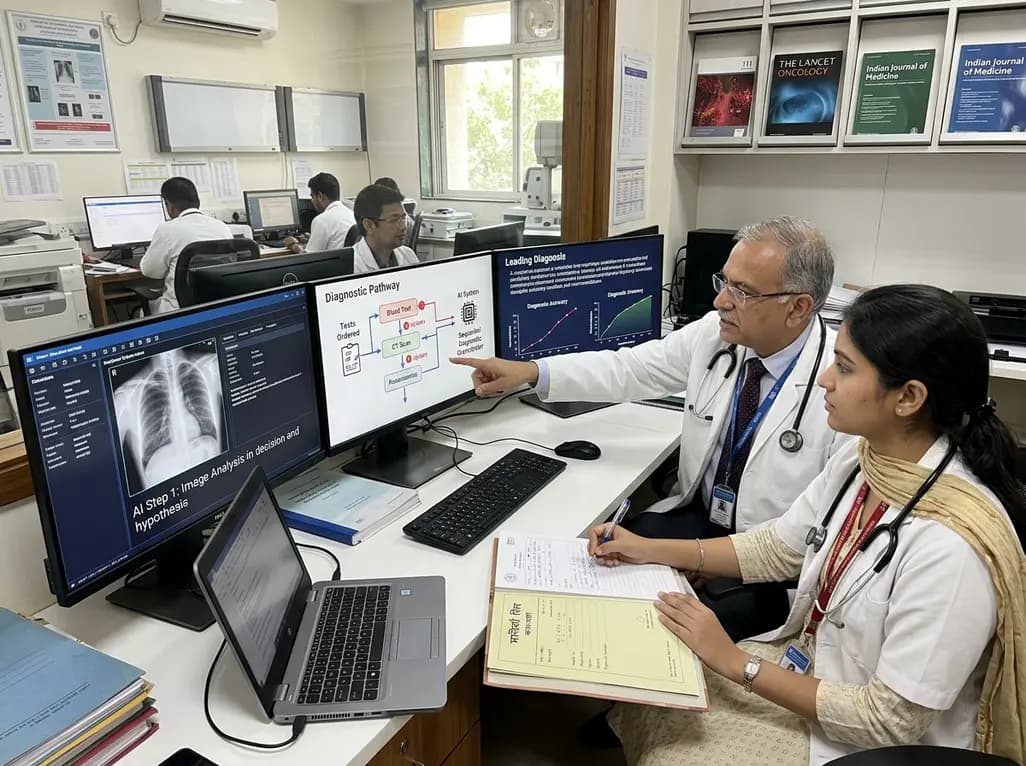
A breakthrough peer-reviewed study demonstrates that a sequential AI diagnosis system can mirror real-world clinical reasoning. By ordering stepwise tests and updating hypotheses dynamically, this multi-agent orchestrator achieved superior diagnostic accuracy while reducing investigative costs.
Today

A prenatal case highlights severe glutaric acidemia type II presenting as bilateral hyperechoic cystic kidneys at 18 weeks. Whole-exome sequencing revealed a novel homozygous ETFDH frameshift variant, demonstrating the power of rapid genetic testing in fetal renal anomalies.
Today

Review how tailored exercise programs benefit frail older patients with heart failure. Explore pathophysiological mechanisms, individualized training prescriptions, and strategies to overcome adherence barriers in clinical practice.
Yesterday

This comparative study evaluates posterior labral tears with and without glenohumeral instability, highlighting distinct demographic patterns, MRI underestimation in stable shoulders, and successful arthroscopic repair outcomes.
Yesterday

A clinical study demonstrates that early intervention with tocilizumab, either as monotherapy or bridged with corticosteroids, achieves significant proptosis reduction and resolves active inflammation in treatment-naive thyroid eye disease.
Yesterday
