.webp&w=384&q=75)

Loading, please wait...
Loading, please wait...

Severe symptomatic mitral regurgitation (MR) poses a significant challenge for aging populations worldwide. While surgical intervention remains the gold standard for many, a large proportion of patients are deemed too high-risk for conventional open-heart surgery. Furthermore, transcatheter edge-to-edge repair (TEER) is not always anatomically feasible for every patient. Consequently, there has been a growing interest in transcatheter mitral valve replacement (TMVR) options that can provide a more definitive solution. One of the most extensively studied systems in this space is the Tendyne Mitral Valve System. Recent data from the Tendyne Expanded Clinical Study have provided crucial insights into the long-term viability of this technology. Understanding the Tendyne TMVR outcomes over a five-year period is essential for clinicians evaluating therapy options for patients with secondary MR. This study specifically focused on those unsuitable for traditional surgery, representing a particularly vulnerable cohort. Notably, the five-year data demonstrate that TMVR can achieve sustained results in a population that previously had limited therapeutic avenues. Therefore, clinicians can now look toward this data to guide their decision-making for complex valvular cases.
The Tendyne Expanded Clinical Study was a prospective, single-arm, multicenter trial designed to evaluate the safety and performance of the Tendyne system. Between November 2014 and June 2020, the study enrolled 191 patients with severe symptomatic MR. The average age of the participants was 74.1 years, and more than 60% were male. Specifically, 70.2% of the patients presented with NYHA class III or IV heart failure symptoms at baseline. A vast majority of the cohort, roughly 88.5%, suffered from secondary mitral regurgitation. This demographic profile reflects the typical high-risk patient encountered in clinical practice who often carries multiple comorbidities. Out of the 191 enrolled, 186 patients successfully underwent the TMVR procedure with the Tendyne device. The study researchers followed these individuals for five years to assess the durability of the intervention. This long-term follow-up is particularly important because early transcatheter successes must be balanced against the potential for late complications or device failure. By maintaining a rigorous follow-up schedule, the investigators were able to capture a comprehensive picture of the device's performance in a real-world clinical setting over half a decade.
The primary goal of any mitral valve intervention is the effective and lasting elimination of regurgitation. In this study, the Tendyne TMVR outcomes regarding MR reduction were highly impressive. At the baseline, 99.5% of the participants had an MR grade of 3+ or higher. Immediately following the procedure, the device achieved a significant reduction in the severity of the leak. Most importantly, this reduction remained durable throughout the entire five-year follow-up period. By the five-year mark, 95.3% of the surviving patients maintained an MR grade of 1+ or less. This level of sustained elimination is superior to many results seen with transcatheter repair techniques. Specifically, the dual-frame design of the Tendyne valve allows it to conform to the native mitral anatomy, effectively sealing the orifice. This anatomical fit is crucial for preventing paravalvular leaks, which can often complicate transcatheter procedures. Furthermore, the absence of significant residual MR contributes to better reverse remodeling of the left ventricle over time. Consequently, the study confirms that TMVR can provide a near-total abolition of MR that does not degrade as the years pass, offering a stable hemodynamic profile for the patient.
Beyond the technical success of MR reduction, the study focused heavily on how the treatment improved the daily lives of the patients. For the 49 patients who survived to the five-year follow-up, the symptomatic improvements were both significant and durable. At the five-year check-up, 73.5% of these patients were classified as NYHA class I or II, representing a major shift from their baseline class III or IV status. In addition to functional classification, the researchers used the Kansas City Cardiomyopathy Questionnaire (KCCQ) to quantify quality of life. The mean KCCQ overall summary score increased from 48.5 points at baseline to 67.6 points at five years. This nearly 20-point increase indicates a clinically meaningful improvement in physical and social functioning. Patients reported fewer limitations in their daily activities and a general sense of better well-being. Moreover, these functional gains were observed early after the procedure and were maintained throughout the study duration. Such results are vital because they demonstrate that the hemodynamic benefits of TMVR translate directly into tangible benefits for the patient. Therefore, the Tendyne system provides more than just a physiological fix; it offers a path toward a more active and comfortable lifestyle for elderly patients.
Safety is a paramount concern when introducing a transapical device into a high-risk population. Over the five-year period, the study monitored for various serious adverse events. Life-threatening bleeding occurred in 11.5% of patients, while fatal bleeding was restricted to 2.6%. Additionally, renal insufficiency or failure was reported in 28.8% of the cohort, often reflecting the baseline frailty of the participants. Other notable events included endocarditis in 7.3% and device thrombosis in 5.8% of cases. New-onset atrial fibrillation was also seen in 13.1% of the patients during the follow-up. Despite these systemic complications, the performance of the device itself was exemplary. Most importantly, there were no reported cases of structural device degeneration or device embolism through the five-year mark. This lack of structural failure is a significant finding for a bioprosthetic valve, suggesting that the porcine pericardial leaflets and the nitinol frames are robust. While the overall mortality in this high-risk group remains a factor, the deaths were largely attributed to the underlying disease state rather than device failure. Consequently, the safety profile of the Tendyne system appears manageable when compared to the natural history of untreated severe MR.
The findings from the Tendyne Expanded Clinical Study offer a hopeful outlook for the future of mitral valve therapy. These results support TMVR as a legitimate alternative for patients with appropriate anatomy who cannot undergo surgery or TEER. Specifically, the ability to achieve immediate and sustainable elimination of MR is a powerful clinical tool. In countries like India, where the burden of rheumatic and degenerative heart disease is significant, having multiple transcatheter options is essential. However, patient selection remains the most critical factor for success. Heart teams must carefully evaluate the mitral valve anatomy and the left ventricular dimensions to ensure the Tendyne device can be safely anchored. Furthermore, the transapical approach requires specific expertise to minimize procedural risks. As technology continues to evolve, transeptal delivery systems may eventually supplement the current transapical methods, potentially further reducing the risk of bleeding. Nevertheless, the current five-year data provide the evidence base needed to integrate TMVR into standard clinical guidelines. Therefore, clinicians should consider these long-term outcomes when discussing treatment trajectories with their symptomatic MR patients who have limited options.
The five-year outcomes revealed that 95.3% of surviving patients maintained a mitral regurgitation grade of 1+ or less. This highlights the device's ability to provide a durable and nearly complete elimination of the valve leak. Additionally, 73.5% of patients remained in NYHA functional class I or II, indicating sustained symptomatic improvement. These results confirm that TMVR can offer long-term hemodynamic and functional benefits for high-risk patients with severe MR.
Over the five-year follow-up, the most frequent serious adverse events included renal insufficiency or failure in 28.8% of patients and new-onset atrial fibrillation in 13.1%. Life-threatening bleeding occurred in 11.5% of the cohort, while device-related complications like endocarditis and thrombosis were less frequent, occurring in 7.3% and 5.8% respectively. Notably, no structural device degeneration was observed, which speaks to the physical durability of the Tendyne valve system over time.
The ideal candidates are patients with severe symptomatic mitral regurgitation who are considered at high or prohibitive risk for traditional mitral valve surgery. Additionally, these patients should be unsuitable for transcatheter edge-to-edge repair due to anatomical constraints. Clinicians must ensure that the patient has an appropriate mitral valve anatomy and sufficient left ventricular space to accommodate the device. A multidisciplinary heart team approach is essential for identifying those who will benefit most.
Disclaimer: This content is for informational and educational purposes only and does not constitute medical advice, diagnosis, or treatment. Always seek the advice of a qualified healthcare provider with any questions you may have regarding a medical condition. Refer to the latest local and national guidelines for clinical practice.
References
Muller DW et al. Five-Year Outcomes of Transcatheter Mitral Valve Replacement in Patients With Severe Symptomatic Mitral Regurgitation: Results From the Tendyne Expanded Clinical Study. ESC Heart Fail. 2026 Jun 27. doi: undefined. PMID: 42363737.
Sorajja P et al. Transcatheter Mitral Valve Replacement for Severe Mitral Annular Calcification: Primary Outcomes From the SUMMIT-MAC Study. J Am Coll Cardiol. 2026. doi: 10.1016/j.jacc.2025.10.001.
Otto CM et al. 2020 ACC/AHA Guideline for the Management of Patients With Valvular Heart Disease: A Report of the American College of Cardiology/American Heart Association Joint Committee on Clinical Practice Guidelines. Circulation. 2021;143(5):e35-e71.

Read summarized clinical updates, watch expert medical content, and earn CME certifications right from your smartphone.
Open your smartphone camera to scan and install.





This article reviews the five-year outcomes of the Tendyne Transcatheter Mitral Valve Replacement (TMVR) system, highlighting its effectiveness in providing sustainable reduction of mitral regurgitation and improving functional status in high-risk patients who are unsuitable for traditional surgery.
3 months ago
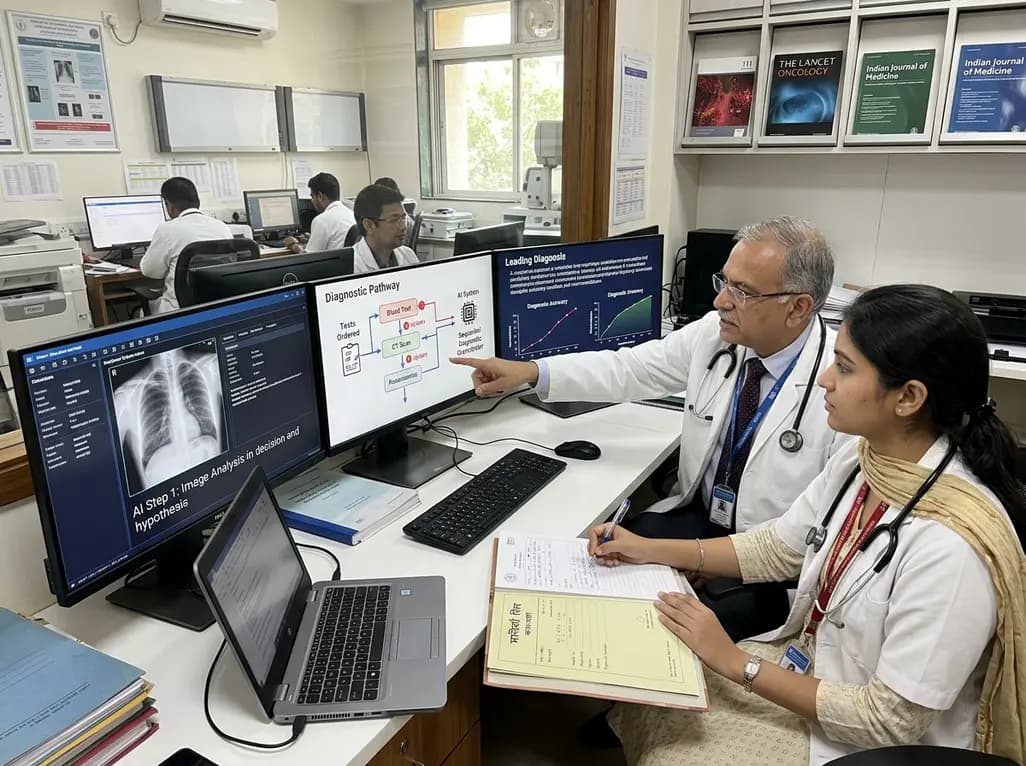
A breakthrough peer-reviewed study demonstrates that a sequential AI diagnosis system can mirror real-world clinical reasoning. By ordering stepwise tests and updating hypotheses dynamically, this multi-agent orchestrator achieved superior diagnostic accuracy while reducing investigative costs.
Today

A prenatal case highlights severe glutaric acidemia type II presenting as bilateral hyperechoic cystic kidneys at 18 weeks. Whole-exome sequencing revealed a novel homozygous ETFDH frameshift variant, demonstrating the power of rapid genetic testing in fetal renal anomalies.
Today

Review how tailored exercise programs benefit frail older patients with heart failure. Explore pathophysiological mechanisms, individualized training prescriptions, and strategies to overcome adherence barriers in clinical practice.
Yesterday

This comparative study evaluates posterior labral tears with and without glenohumeral instability, highlighting distinct demographic patterns, MRI underestimation in stable shoulders, and successful arthroscopic repair outcomes.
Yesterday

A clinical study demonstrates that early intervention with tocilizumab, either as monotherapy or bridged with corticosteroids, achieves significant proptosis reduction and resolves active inflammation in treatment-naive thyroid eye disease.
Yesterday
