.webp&w=384&q=75)

Loading, please wait...
Loading, please wait...

Telemedicine adoption in general practice experienced a significant surge during the global pandemic. However, maintaining this digital momentum requires a deep understanding of why clinicians choose these tools. A recent comparative study explored the behavioral intentions of general practitioners (GPs) in England and Sweden. Researchers utilized the Physicians' Attitudes and Intentions to use Telemedicine (PAIT) questionnaire to measure these psychological drivers. Consequently, the findings highlight critical factors that influence how doctors integrate digital health into daily workflows.
The study analyzed 52 GPs from England and 101 from Sweden. Interestingly, Swedish GPs demonstrated significantly higher mean scores for their intention to use telemedicine compared to their English counterparts. Furthermore, both groups reported a notable lack of formal training. This suggests that while the desire to use technology exists, structural support remains insufficient. Specifically, two main predictors emerged as significant drivers of intention: positive attitudes and perceived behavioral control. Therefore, doctors who feel confident in their technical abilities are more likely to adopt digital solutions.
In contrast, subjective norms—or social pressure from peers—did not play as strong a role in either country. This finding indicates that individual self-efficacy is more influential than professional pressure. Additionally, the study noted that self-reported use of telemedicine remained low following the peak of the COVID-19 pandemic. This gap between intention and actual practice suggests that barriers like infrastructure or administrative load may still persist. To improve telemedicine adoption in general practice, healthcare systems must focus on empowering clinicians through better training and technical support.
Notably, these results provide a roadmap for international comparisons. By identifying what motivates GPs, policymakers can design better implementation strategies. For instance, increasing a clinician's perceived control over technology can directly boost usage rates. Moreover, the PAIT questionnaire serves as a validated tool for future cross-country studies. Understanding these behavioral nuances is essential for a sustainable digital transformation in primary care settings worldwide.
The most significant predictors are positive attitudes toward the technology and a high level of perceived behavioral control. This means GPs are more likely to use telemedicine if they believe it is useful and feel confident in their ability to operate the tools.
The study found that both English and Swedish GPs reported little training, which correlates with low self-reported use post-pandemic. Improving formal training programs is essential to bridge the gap between having the intention to use technology and actually implementing it in daily practice.
Disclaimer: This content is for informational and educational purposes only and does not constitute medical advice or professional consultation. Refer to the latest local and national guidelines for clinical practice.
References
Harris M et al. Exploring English and Swedish General Practitioners' Behavioral Intentions to Use Telemedicine: Comparative Study. JMIR Hum Factors. 2026 Mar 20. doi: 10.2196/73609. PMID: 41861382.
Scott Kruse C et al. Evaluating barriers to adopting telemedicine worldwide: A systematic review. J Telemed Telecare. 2018;24(1):4-12.
Shrivastava SR, Shrivastava PS. Telemedicine in India: The road ahead. J Med Soc. 2017;31:140-1.

Read summarized clinical updates, watch expert medical content, and earn CME certifications right from your smartphone.
Open your smartphone camera to scan and install.





A comparative study of English and Swedish GPs reveals that positive attitudes and perceived control are key drivers for telemedicine adoption in general pr...
7 months ago
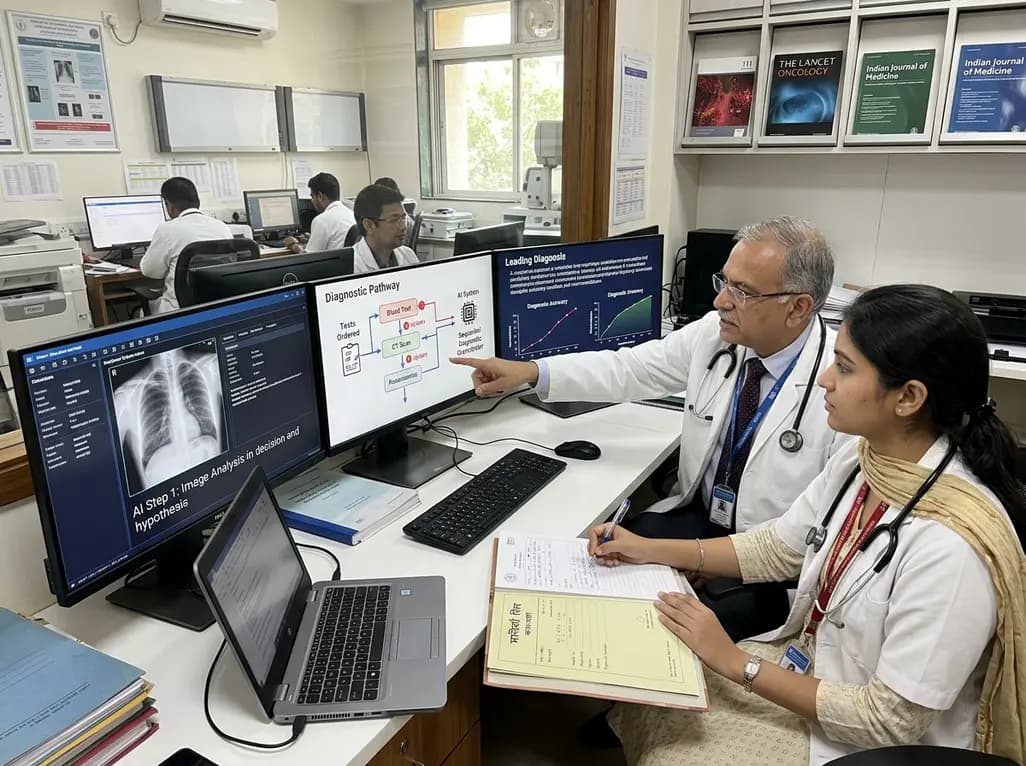
A breakthrough peer-reviewed study demonstrates that a sequential AI diagnosis system can mirror real-world clinical reasoning. By ordering stepwise tests and updating hypotheses dynamically, this multi-agent orchestrator achieved superior diagnostic accuracy while reducing investigative costs.
Today

A prenatal case highlights severe glutaric acidemia type II presenting as bilateral hyperechoic cystic kidneys at 18 weeks. Whole-exome sequencing revealed a novel homozygous ETFDH frameshift variant, demonstrating the power of rapid genetic testing in fetal renal anomalies.
Today

Review how tailored exercise programs benefit frail older patients with heart failure. Explore pathophysiological mechanisms, individualized training prescriptions, and strategies to overcome adherence barriers in clinical practice.
Yesterday

This comparative study evaluates posterior labral tears with and without glenohumeral instability, highlighting distinct demographic patterns, MRI underestimation in stable shoulders, and successful arthroscopic repair outcomes.
Yesterday

A clinical study demonstrates that early intervention with tocilizumab, either as monotherapy or bridged with corticosteroids, achieves significant proptosis reduction and resolves active inflammation in treatment-naive thyroid eye disease.
Yesterday
