.webp&w=384&q=75)

Loading, please wait...
Loading, please wait...

Cognitive impairment following chemotherapy and hormone therapy remains a significant challenge for many breast cancer survivors. Recently, medical professionals have begun exploring tDCS for cognitive impairment as a viable non-pharmacological intervention. This case report details the successful treatment of a 71-year-old Brazilian woman suffering from persistent cognitive complaints and depression after treating Luminal A subtype breast cancer.
The intervention involved a specific neuromodulation protocol targeting the Left Dorsolateral Prefrontal Cortex (L-DLPFC). Specifically, the patient underwent 12 sessions over four weeks, receiving a current of 2 milliamperes. Clinicians assessed several parameters, including general cognition, depression, and brain electrical activity via electroencephalogram. Consequently, the patient demonstrated notable improvements in most cognitive test scores and a reduction in depressive symptoms. Furthermore, the electroencephalogram revealed modulated cortical activity in the prefrontal regions. However, verbal fluency did not show the same level of improvement as other cognitive domains.
The results suggest that transcranial direct current stimulation effectively addresses cognitive deficits related to antineoplastic treatments. Moreover, the therapy is portable and non-invasive, making it highly accessible for clinical practice. Therefore, it represents a promising alternative for patients who do not respond well to traditional pharmacological management. This case adds to the growing literature supporting neuromodulation as a cornerstone of cancer survivorship care.
tDCS helps improve general cognition and reduces depressive symptoms that often follow aggressive chemotherapy or hormone treatments.
In this specific case, while general cognition and brain activity improved, verbal fluency scores remained unchanged after the treatment sessions.
Disclaimer: This content is for informational and educational purposes only. It does not constitute medical advice or a professional relationship. Always seek the advice of your physician or other qualified health provider with any questions regarding a medical condition. Refer to the latest local and national guidelines for clinical practice.
References
Alexandrino KALG et al. Effects of transcranial direct current stimulation on cognition, depression, and brain activity in a breast-cancer survivor: a case report. J Med Case Rep. 2026 Apr 25. doi: 10.1186/s13256-026-06061-4. PMID: 42032764.
Gaynor A et al. Impact of transcranial direct current stimulation on sustained attention in breast cancer survivors: Evidence for feasibility, tolerability, and initial efficacy. Brain Stimul. 2020;13(4):1124-1133. doi: 10.1016/j.brs.2020.04.013.
Knotkova H et al. Transcranial direct current stimulation (tDCS) improved cognitive outcomes in a cancer survivor with chemotherapy-induced cognitive difficulties. Brain Stimul. 2014;7(5):767-8. doi: 10.1016/j.brs.2014.05.007.

Read summarized clinical updates, watch expert medical content, and earn CME certifications right from your smartphone.
Open your smartphone camera to scan and install.





A case report highlights how tDCS sessions improved cognition and depression in a breast cancer survivor suffering from chemotherapy-induced impairments....
5 months ago
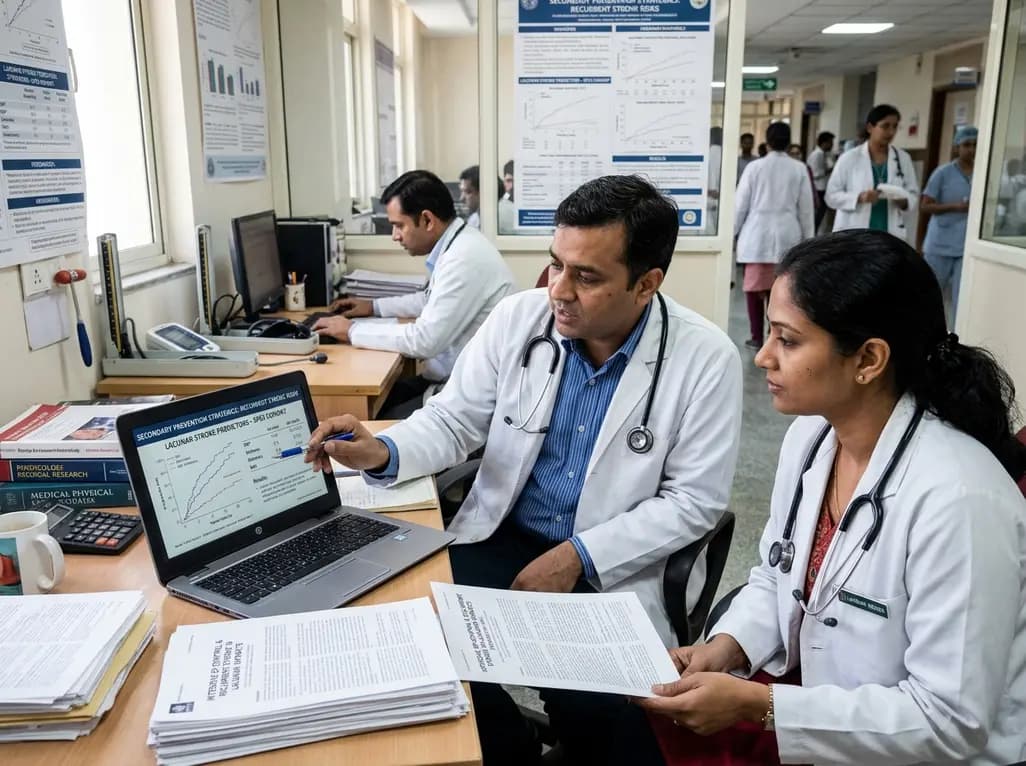
Explore vital recurrent stroke predictors in lacunar stroke patients managed with intensive blood pressure lowering. This analysis examines trial findings from SPS3 to uncover residual vascular risks, metabolic factors, and targeted secondary prevention strategies for high-risk neurological patients.
Today

Odisha has established India's first state-level clinical protocol specifically tailored for pregnant women with sickle cell disease. Developed with NHM and UNICEF, the framework provides structured antenatal screening, crisis mitigation, standardized referral pathways, and specialized interdisciplinary care.
Today

The Directorate General of Health Services directs Indian states to halt the hazardous reuse and reprocessing of single-use medical devices. Discover regulatory implications under the Drugs and Cosmetics Act, critical infection risks, legal liabilities, and operational changes required across clinical specialties.
Today

Mitochondria-targeted nanoparticles self-assembled from EGCG and L-glutamic acid effectively restore mitochondrial homeostasis, suppress synovial inflammation, and attenuate chondrocyte senescence in osteoarthritis, offering a promising disease-modifying nanotherapy.
Today

India is advancing preventive healthcare by integrating genomics, artificial intelligence, and quantum technologies. With the SANGAM programme sequencing one million Indian genomes, clinicians can unlock personalized therapies, detect cardiometabolic risks early, and curb the burden of diabetes and heart disease.
Today
