

Loading, please wait...
Loading, please wait...

Foodborne bacterial contamination represents a relentless global public health crisis that strains healthcare infrastructures. Nearly one in ten individuals worldwide suffers from foodborne illnesses annually, culminating in roughly 420,000 preventable deaths. In low- and middle-income countries, unsafe food produces economic productivity losses exceeding US$ 110 billion each year. Traditional preservation methods rely heavily on bactericidal chemicals and physical treatments. However, conventional antimicrobial strategies induce severe selective survival pressure, accelerating the dissemination of multi-drug resistance among enteropathogens. Consequently, researchers are turning toward bacterial signaling pathways to disarm pathogens without promoting drug resistance.
Targeting bacterial signaling pathways offers an innovative paradigm shift in antimicrobial stewardship. Rather than executing bactericidal killing or halting growth, anti-virulence interventions selectively disrupt intracellular and intercellular communication networks. Bacteria utilize chemical communication systems, such as quorum sensing, to assess population density and coordinate group activities. Furthermore, these networks control virulence factor expression, exotoxin excretion, and recalcitrant biofilm architecture. By neutralizing signaling molecules or competitive receptor binding, inhibitors silence pathogenicity while allowing commensal flora to survive. Therefore, this non-lethal approach significantly reduces selective evolutionary pressure, effectively preventing the rapid emergence of resistant bacterial lineages.
Extensive mechanistic analyses highlight three pivotal communication cascades across Gram-negative and Gram-positive foodborne pathogens. First, the acyl-homoserine lactone system operates predominantly in Gram-negative organisms, governing motility, extracellular enzyme secretion, and structural colonization. Second, Gram-positive contaminants like Listeria monocytogenes and Staphylococcus aureus utilize autoinducing peptide loops to synchronize toxin generation. Third, the interspecies autoinducer-2 pathway, catalyzed by the ubiquitous LuxS synthase, allows cross-species communication across polymorphic bacterial populations. Additionally, cyclic diguanylate second-messenger cascades regulate transitions between planktonic virulence and sessile biofilm matrices. Disrupting these coordinated circuits prevents microbial adherence to processing surfaces and host gastrointestinal mucosa.
Recent technological advancements have catalyzed diverse translational platforms for anti-virulence deployment. Phytochemicals derived from botanical matrices, including polyphenols, flavonoids, and essential oils, act as potent natural quorum sensing inhibitors. In addition, computational biology enables high-throughput in silico molecular docking to screen novel small molecules against conserved bacterial receptors. Synthetic biology facilitates the engineered expression of lactonases and acylases that enzymatically degrade signaling messengers before receptor activation occurs. Furthermore, nano-encapsulation platforms, such as polymeric nanoparticles and liposomes, protect labile bioactive compounds from premature degradation. Consequently, these multi-target delivery platforms significantly enhance stability across commercial meat, dairy, and agricultural supply chains.
Deploying signaling inhibitors in real-world commercial environments presents formidable formulation challenges. Food matrices exhibit diverse biochemical composition, including hydrophobic lipids, complex proteins, and fluctuating pH environments that bind small-molecule inhibitors. Consequently, these interactions reduce active compound bioavailability and functional stability during commercial storage. Moreover, industrial cold chains and food processing facilities impose significant osmotic, moisture, and temperature fluctuations. Natural quorum sensing inhibitors also display variable shelf-life and occasionally alter the organoleptic properties of delicate food items. Therefore, successful commercial implementation requires robust nano-carrier systems, optimized matrix compatibility, and stringent regulatory safety profiles for human ingestion.
For clinicians and gastroenterologists in India, foodborne illnesses represent a substantial proportion of acute diarrheal admissions and systemic bacteremia. Enteric organisms like Salmonella enterica, pathogenic Escherichia coli, and Campylobacter increasingly demonstrate resistance to third-generation cephalosporins and fluoroquinolones. Integrating signaling-targeted interventions at the agro-food level directly prevents primary microbial colonization and animal-to-human pathogen transmission. Furthermore, reducing prophylactic chemical preservatives curbs veterinary drug resistance reservoirs, mitigating environmental runoff into community water networks. Adopting these proactive farm-to-table anti-virulence technologies exemplifies the One Health strategy, ultimately protecting vulnerable populations from complex, drug-resistant gastrointestinal infections.
Traditional antibiotics and chemical preservatives kill microbes directly or halt bacterial reproduction, exerting tremendous evolutionary pressure that selects for resistant strains. In contrast, anti-virulence approaches disrupt intercellular signaling cascades, inhibiting biofilm matrix formation and toxin secretion without threatening cellular viability. Consequently, pathogenic bacteria lose their clinical virulence while experiencing minimal selective pressure to develop genomic or phenotypic antimicrobial resistance.
Deploying signaling inhibitors within food processing systems faces hurdles regarding biochemical stability, molecular bioavailability, and sensory effects. Complex food matrices, containing proteins, fats, and variable acidities, often degrade or deactivate natural bioactive molecules. Additionally, cold-chain temperature shifts require advanced delivery platforms, such as nano-encapsulation, to maintain sustained inhibitory activity without altering the product taste, texture, or appearance.
In India, foodborne enteric infections cause massive outpatient morbidity, acute diarrheal admissions, and occasional life-threatening septicemia, frequently complicated by widespread antimicrobial resistance. Suppressing bacterial signaling pathways along the food production chain reduces pathogen virulence and eliminates resilient biofilm reservoirs. Consequently, fewer virulent pathogens enter consumer food channels, alleviating clinical disease severity and preserving existing therapeutic antimicrobial regimens.
Disclaimer: This content is for informational and educational purposes only... Refer to the latest local and national guidelines for clinical practice.
References

Read summarized clinical updates, watch expert medical content, and earn CME certifications right from your smartphone.
Open your smartphone camera to scan and install.





Targeting bacterial signaling pathways marks a major shift in antimicrobial strategies. By disrupting quorum sensing and biofilm formation, anti-virulence tools suppress foodborne pathogens without driving antimicrobial resistance, protecting vulnerable patients and the broader food ecosystem.
Today
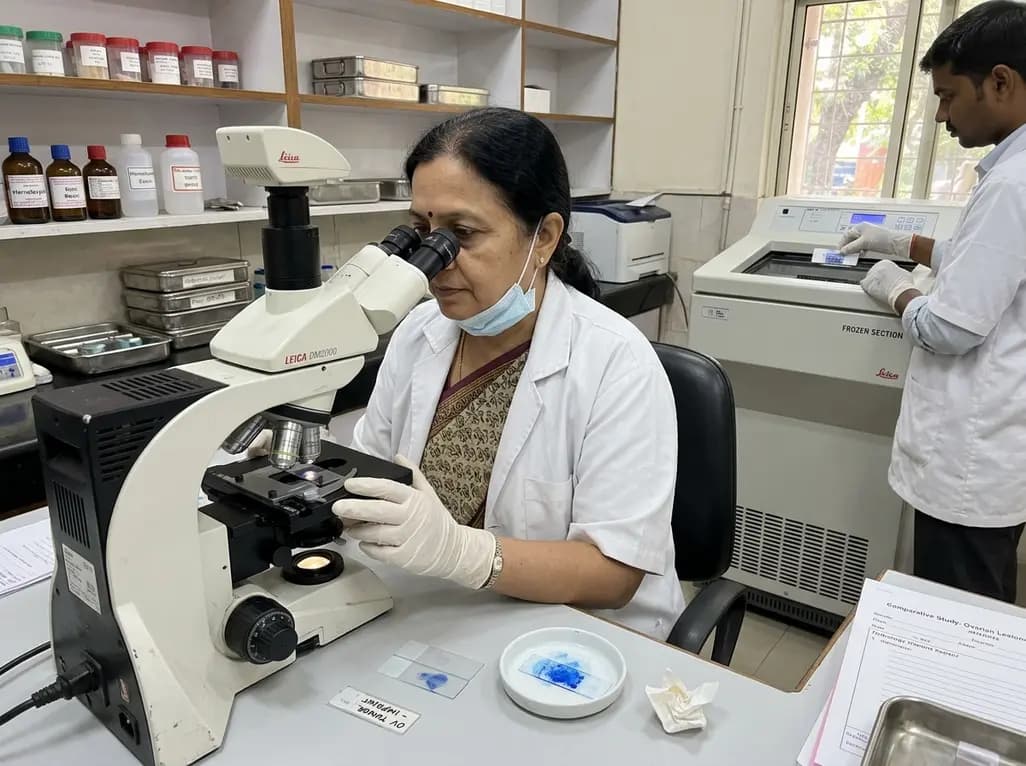
A new comparative study demonstrates that intraoperative imprint cytology achieves 96.6% diagnostic accuracy in ovarian tumours, outperforming frozen section in sensitivity for borderline lesions and offering an accessible, rapid alternative for resource-constrained surgical centres.
Today

Thoracic aortic aneurysm lacks etiologic medical therapy. A new study reveals that targeting specific αV integrins with Cilengitide attenuates TGF-β and mechanotransduction pathways, effectively limiting pro-fibrotic remodeling and aortic bulb dilation in both syndromic and sporadic disease models.
Today

A validated 10-item survey measures preoperative expectations for posterior spinal fusion in adolescent idiopathic scoliosis. While parents and teens agree on avoiding future surgery, their priorities diverge on appearance and sports, underscoring the critical need for separate preoperative evaluations.
Today

A real-world retrospective study demonstrates that combining intravitreal ranibizumab with focal/grid macular laser significantly improves visual acuity and central macular thickness compared to laser monotherapy in patients with center-involved diabetic macular edema.
Today
