.webp&w=384&q=75)

Loading, please wait...
Loading, please wait...
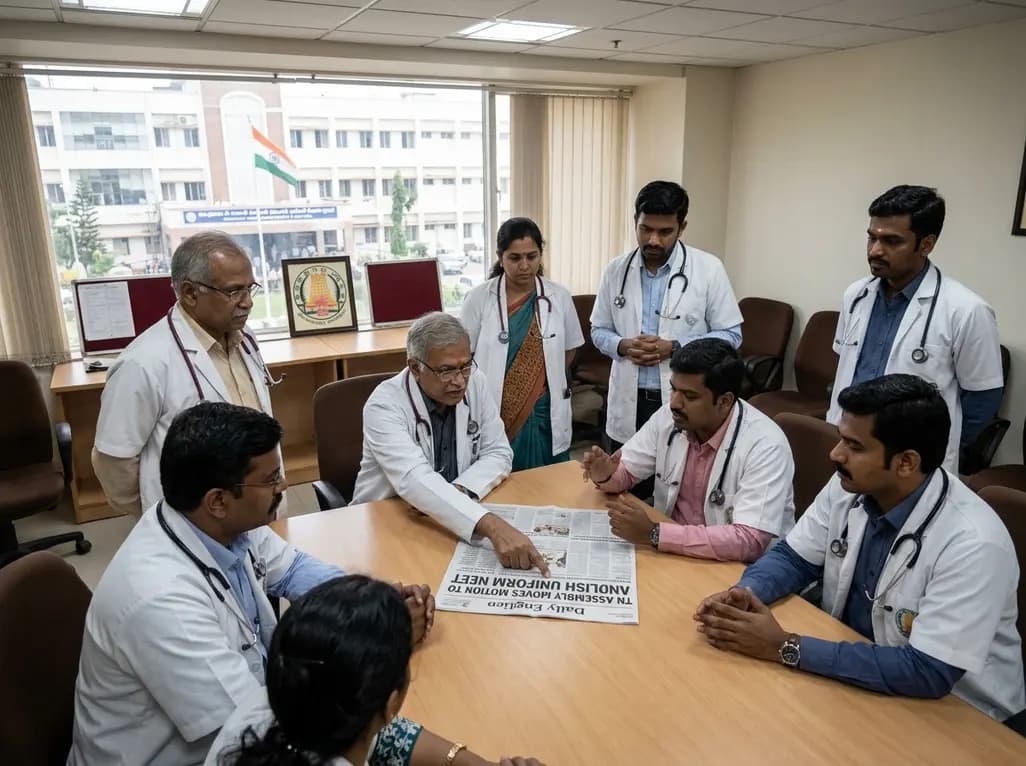
The Tamil Nadu Legislative Assembly has initiated a major legislative move opposing the national medical entrance framework. The assembly recently introduced a comprehensive NEET abolition resolution aimed at dismantling the centralized undergraduate medical admission process across the state. State leaders argue that the existing mechanism compromises federalism and limits equitable healthcare access for rural students. Consequently, this initiative seeks to restore state autonomy over medical education admissions.
The state government maintains that a single-day examination cannot fairly assess twelve years of comprehensive secondary schooling. Furthermore, state officials emphasize that rural and economically weaker students face significant disadvantages under the current testing framework. Tamil-medium candidates encounter unique linguistic barriers when competing on a national standardized platform against peers from elite educational boards. Additionally, the reliance on high-stakes entrance testing undermines the holistic secondary education system across state schools. State leaders contend that uniform entrance criteria erode state legislative powers regarding healthcare administration and medical seat distribution. Therefore, the assembly insists that educational evaluation metrics should reflect broader academic achievements rather than single-day test performance. Moreover, historical data indicates that local board examinations provided a reliable, merit-based benchmark for medical seats prior to centralized testing. By advocating for systemic reform, the state aims to protect student diversity within medical colleges and public healthcare facilities. Consequently, policymakers argue that abolishing centralized testing will restore social justice in professional healthcare education. In addition, state representatives argue that local health services benefit significantly when doctors originate from diverse socio-economic backgrounds. Thus, this policy reform remains central to state administrative priorities. Furthermore, state leaders highlight that equitable access to medical training strengthens primary healthcare delivery in remote regions.
The growth of private coaching institutes has significantly transformed the preparation landscape for undergraduate medical candidates across the country. However, these commercial institutions frequently charge exorbitant tuition fees that remain entirely inaccessible to underprivileged rural families. As a result, students from affluent urban backgrounds gain an unfair structural advantage in securing competitive medical seats. Furthermore, the intense focus on entrance coaching diverts valuable student attention away from standard secondary school curricula. Many candidates prioritize repetitive test-taking strategies over fundamental scientific understanding taught in regular high school classrooms. Consequently, high school attendance and overall academic engagement have experienced a notable decline in recent years. In addition, the commercialization of medical admissions creates severe, long-term financial strain for middle-class and low-income households. Parents often secure substantial bank loans or sell family assets to afford specialized entrance preparatory classes for their children. Therefore, state policymakers express deep concern regarding the growing influence of private coaching monopolies on basic schooling. Moreover, this commercial ecosystem perpetuates socio-economic inequality by systematically marginalizing talented candidates who lack financial resources. Ultimately, the state assembly seeks to eliminate this structural barrier to ensure fair, merit-based educational opportunities for every student.
Persistent technical failures and severe security breaches have significantly compromised public confidence in the national testing architecture over recent years. Specifically, recent instances of question paper leaks and widespread administrative irregularities caused immense distress among eligible candidates nationwide. The cancellation and subsequent re-examination of NEET-UG 2024 severely damaged the credibility and reliability of the entire evaluation process. Furthermore, the continuous uncertainty surrounding examination integrity generates immense psychological pressure and anxiety for young candidates and their families. Tragically, acute exam-related distress has been linked to multiple student suicides across the state in recent years. Consequently, health professionals and educational psychologists have called for an immediate re-evaluation of student mental health risks associated with centralized testing. Additionally, prolonged emotional stress severely impacts candidates' academic motivation and long-term emotional well-being during critical developmental years. State representatives argue that a national admission system causing such severe psychological trauma requires urgent structural revision. Therefore, protecting student welfare and psychological safety remains a primary justification for opposing the centralized examination framework. Moreover, parents and educational advocates actively demand a transparent, stress-free admission mechanism that prioritizes student well-being above standardized testing.
To successfully execute this educational reform, the assembly urges the Union government to modify several foundational statutory enactments governing professional health education. Specifically, the resolution requests key legislative amendments to the National Medical Commission Act of 2019. Furthermore, state leaders recommend corresponding statutory changes to the National Commission for Indian System of Medicine Act of 2020. In addition, the assembly advocates for altering relevant provisions within the National Commission for Homoeopathy Act of 2020. These proposed statutory modifications would officially discontinue uniform national testing requirements across all undergraduate medical discipline streams. Consequently, individual state governments would regain clear statutory authority to determine their respective selection criteria for medical course admissions. Notably, the Tamil Nadu Legislative Assembly previously passed Bill Number 43 of 2021 to secure state-level exemption from centralized entrance testing. However, that bill remains pending without presidential assent, prompting this renewed and urgent legislative motion. Therefore, the current assembly resolution serves as a direct call for parliamentary intervention and national legal reform. Furthermore, state officials maintain that federal principles must govern health education policies. Thus, updating central legislation represents the necessary legal pathway toward achieving state educational autonomy.
The state government proposes returning to a transparent, equitable selection process based strictly on qualifying Class 12 board examination marks. Historically, this merit-based framework successfully supplied well-qualified, dedicated medical professionals across both urban and rural public healthcare facilities. Furthermore, evaluating multi-year secondary academic performance provides a far more balanced measure of a candidate's foundational scientific knowledge. Consequently, secondary school education would regain its central role in preparing students for higher academic and professional pursuits. In addition, standardized normalisation procedures can effectively reconcile mark variations across different secondary educational boards within the state. This comprehensive approach ensures equal opportunity for candidates from varied educational backgrounds without requiring expensive coaching center enrollments. Therefore, rural and underprivileged students can compete fairly based on their sustained school performance rather than commercial test preparation. Moreover, restoring board mark validity drastically reduces financial burdens on families and alleviates extreme, test-induced psychological stress. Health administrators also anticipate that local candidates admitted through board merit are more likely to serve in underserved rural healthcare institutions. Thus, the proposed transition aligns with both educational equity and long-term public health needs.
Q1: Why is the Tamil Nadu Assembly urging the Centre to abolish NEET?
The Tamil Nadu Assembly seeks to abolish NEET because the uniform entrance exam disadvantages rural and Tamil-medium students, promotes expensive private coaching centers, and causes severe mental stress. Furthermore, recent examination paper leaks and administrative irregularities have eroded trust in the centralized system. Consequently, the state advocates replacing the single-day test with Class 12 board exam marks to restore social justice and equal opportunity in medical admissions.
Q2: Which central laws does the state resolution propose to amend?
The assembly resolution urges the Union government to amend several central statutes governing healthcare education. Specifically, it targets the National Medical Commission Act of 2019, the National Commission for Indian System of Medicine Act of 2020, and the National Commission for Homoeopathy Act of 2020. Amending these acts would allow individual states to discontinue uniform national entrance testing and implement localized admission criteria for undergraduate medical courses.
Q3: What concerns were raised regarding the FCRA Amendment Bill 2026?
The assembly raised serious concerns regarding provisions in the Foreign Contribution Regulation Amendment Bill 2026 that allow authorities to control or sell assets of charitable organizations after registration expiry or cancellation. Lawmakers emphasized that these clauses threaten the operational autonomy of minority-run educational and welfare institutions. Therefore, the state called for comprehensive stakeholder consultations and legislative revisions to protect federalism, natural justice, and institutional property rights.
Disclaimer: This content is for informational and educational purposes only. It does not constitute medical advice or replace professional judgment. Refer to the latest local and national guidelines for clinical practice.
References

Read summarized clinical updates, watch expert medical content, and earn CME certifications right from your smartphone.
Open your smartphone camera to scan and install.





The Tamil Nadu Legislative Assembly has moved a resolution urging the Union government to abolish NEET and amend central healthcare laws. The state proposes returning to Class 12 board marks for medical admissions, citing socioeconomic inequities, private coaching costs, and severe examination irregularities.
Today
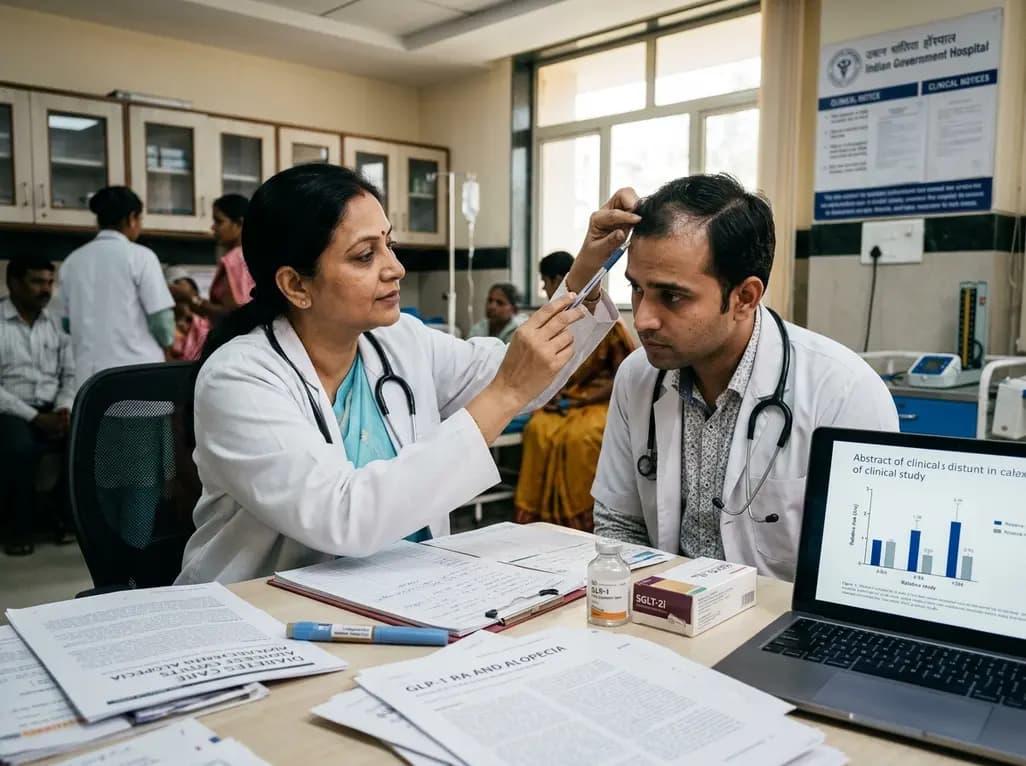
A BMJ cohort study shows GLP-1 receptor agonists are linked to a modest rise in non-scarring hair loss in adults with type 2 diabetes compared to SGLT-2 and DPP-4 inhibitors. Although relative risk is higher, absolute risk remains low, likely driven by rapid weight loss rather than direct follicular damage.
Today
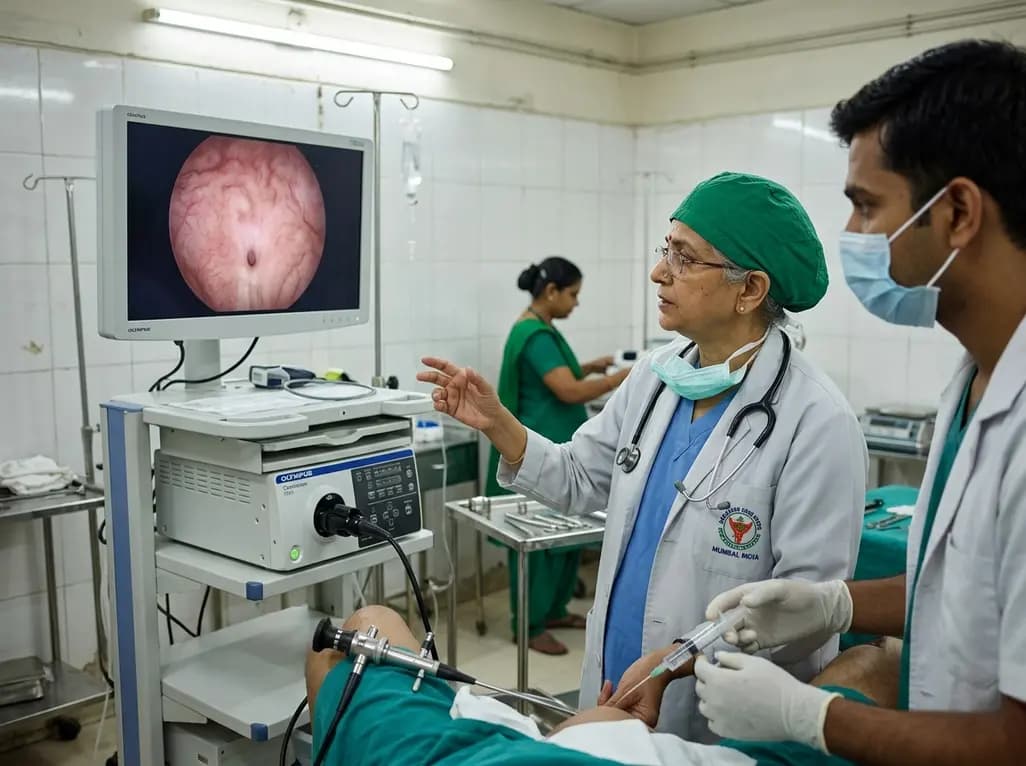
This pilot study compares cystoscopic versus periurethral Bulkamid injections for post-obstetric fistula repair incontinence (POFRI) in Madagascar. Results show both methods offer initial continence improvement, highlighting periurethral delivery as a practical option for resource-constrained clinical settings.
Today
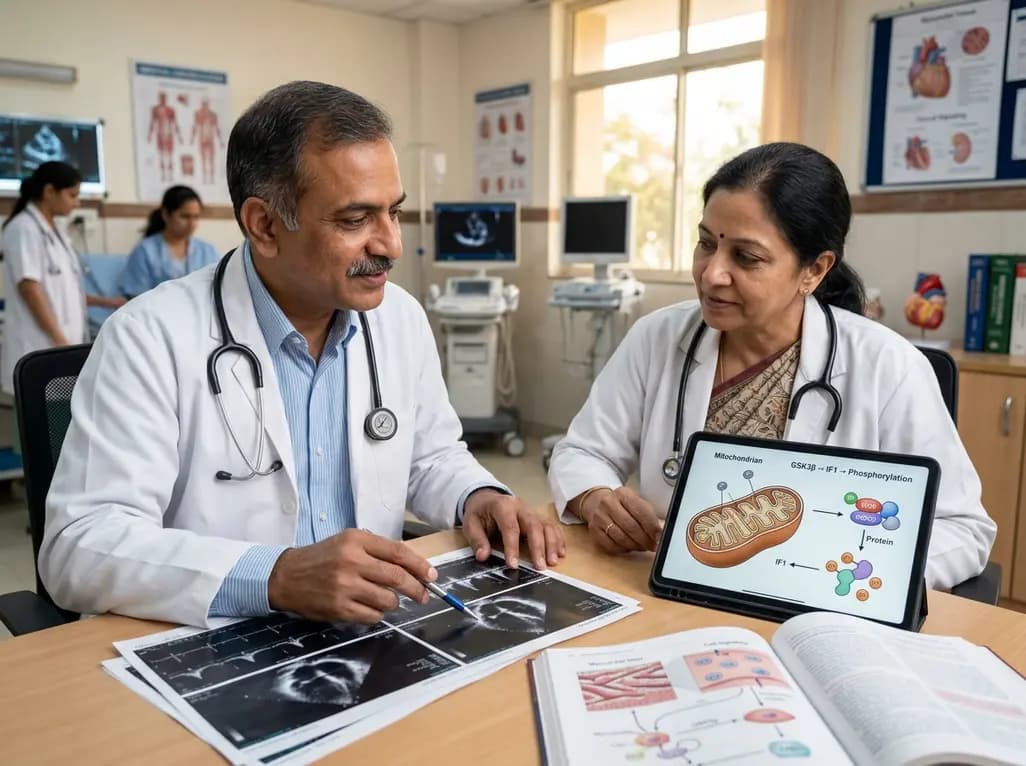
Discover how GSK3β-mediated phosphorylation of ATP synthase inhibitory factor 1 (IF1) at Ser27 accelerates proteasomal degradation during myocardial ischemia-reperfusion injury. Blocking this site offers a novel therapeutic approach to preserve mitochondrial function and reduce cardiac damage.
Today
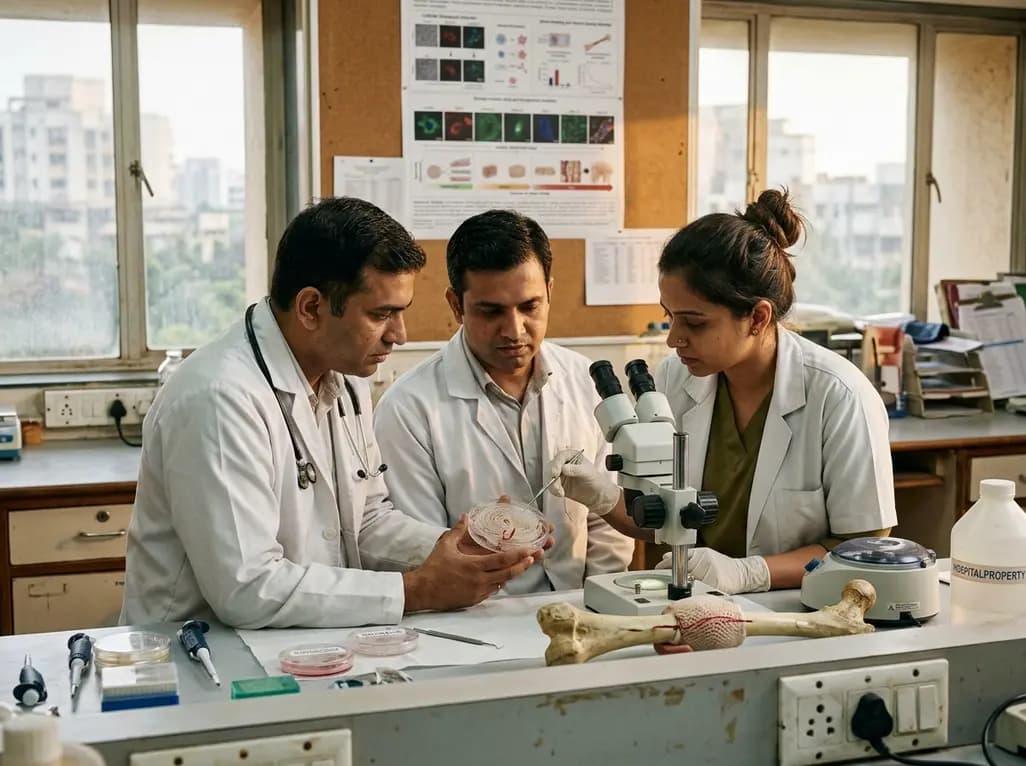
Researchers developed a Haversian-inspired composite scaffold that addresses delayed vascularization and wet-state mechanical deterioration in critical bone defect repair. By integrating spatially programmed calcium phosphate minerals and selective silica reinforcement, the design promotes vascularized bone repair.
Today
Early weight loss in adults with impaired glucose tolerance is linked to significant long-term reductions in all-cause mortality and cardiovascular risk, according to new findings from the Da Qing Diabetes Prevention Outcome Study.
Today
