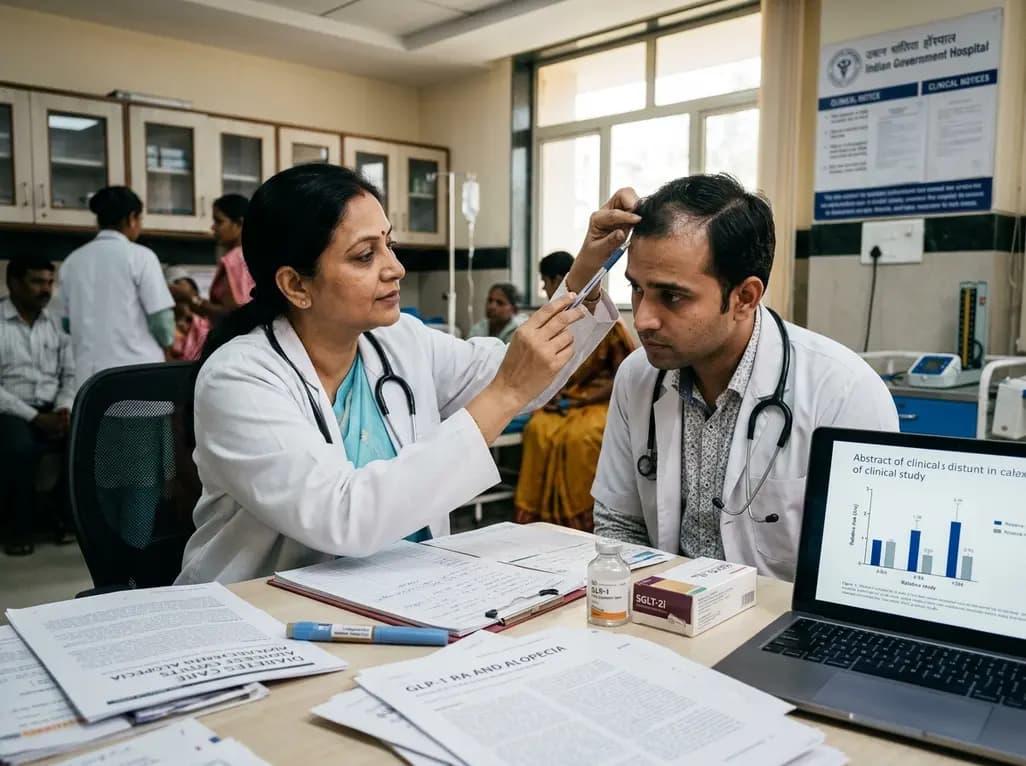
Recently, observational evidence from a large cohort study published in The British Medical Journal highlighted a potential link between anti-diabetic medications and dermatological changes. Specifically, researchers observed that GLP-1 hair loss risk represents a distinct clinical signal among adults managing type 2 diabetes. While these therapeutic agents effectively control glycemic levels and foster significant weight reduction, clinicians must recognize emerging secondary effects. Consequently, understanding the relative incidence and physiological underpinnings of hair shedding remains paramount for endocrinologists, primary care physicians, and dermatologists guiding shared decision-making.
BMJ Study Design and Comparative Findings
Researchers from the University of Pennsylvania Health System conducted a comprehensive target trial emulation to assess dermatological outcomes in real-world clinical practice. Their primary objective focused on evaluating incident alopecia among adults with type 2 diabetes initiating different classes of anti-diabetic medications between January 2019 and September 2024. Specifically, the study compared 12,004 patients starting glucagon-like peptide-1 receptor agonists against 15,221 individuals commencing sodium-glucose cotransporter-2 inhibitors. Additionally, a secondary cohort matched 11,964 GLP-1 users with 11,233 patients receiving dipeptidyl peptidase-4 inhibitors. After adjusting for influential baseline variables, including body mass index, age, sex, and comorbidities, the findings demonstrated a clear statistical variation. GLP-1 receptor agonist users exhibited a 37 per cent higher risk of developing alopecia compared to SGLT-2 inhibitor users. Furthermore, GLP-1 users experienced a 68 per cent increased risk compared to those prescribed DPP-4 inhibitors. Despite these relative hazard elevations, researchers emphasized that the absolute risk remained low at roughly six to seven cases per 1,000 person-years. Therefore, while the statistical signal is robust, absolute clinical incidence affects a small proportion of patients.
Understanding Non-Scarring Alopecia and Mechanisms
A critical finding in the BMJ analysis involves the anatomical nature of the reported hair shedding. Subtype analysis demonstrated that the observed risk elevation was confined strictly to non-scarring alopecia. In non-scarring forms of hair loss, hair follicles remain structurally intact and viable, meaning the condition is generally temporary and reversible. Consequently, patients who experience hair loss during therapy retain excellent potential for complete hair regrowth after metabolic stabilization. Pharmacological and physiological experts suggest that rapid weight loss serves as the primary driver behind this adverse event. When patients undergo rapid weight reduction, the body experiences significant metabolic stress that disrupts the physiological hair growth cycle. Specifically, this metabolic stress triggers telogen effluvium, pushing actively growing hair follicles prematurely into a resting and shedding phase. Furthermore, substantial caloric restriction can impair micro-nutrient absorption, leading to transient deficiencies in essential elements like iron and zinc. Hormonal fluctuations associated with rapid adipose tissue loss may also alter follicular physiology. However, current evidence indicates that GLP-1 receptor agonists do not exert direct cytotoxic damage on hair follicles, reinforcing the transient nature of the shedding.
Clinical Significance of GLP-1 Hair Loss Risk
Evaluating the clinical impact of GLP-1 hair loss risk requires balancing relative statistical risk against absolute patient outcomes. Because medications like semaglutide and tirzepatide deliver substantial cardiovascular, metabolic, and glycemic benefits, hair shedding should rarely prompt immediate drug discontinuation. Instead, medical practitioners must contextualize these findings during initial patient consultations. Indeed, unmanaged patient anxiety regarding hair loss often leads to poor medication adherence or premature treatment termination. By proactively discussing the possibility of temporary shedding before initiating therapy, clinicians can establish realistic expectations and alleviate patient distress. Furthermore, recognizing that absolute incidence remains under seven cases per 1,000 person-years helps reassure patients that severe hair loss is uncommon. Patients starting higher doses for significant weight reduction face higher likelihoods of telogen effluvium compared to those on lower glycemic maintenance doses. Therefore, monitored dose titration and structured nutritional monitoring represent vital strategies for mitigating adverse dermatological responses. Clinicians should maintain open communication channels, ensuring patients report hair shedding early so supportive measures can begin promptly.
Differentiating Nutritional Triggers and Metabolic Stress
Distinguishing medication-induced dermatological effects from metabolic or nutritional triggers is crucial for effective patient care. Rapid weight loss from any intervention, including bariatric surgery or intensive caloric restriction, frequently precipitates telogen effluvium. When caloric intake drops abruptly, the body prioritizes essential organ function over non-essential tissue growth like hair synthesis. Consequently, hair follicles transition from the anagen phase to the telogen phase approximately two to three months following metabolic stress. Moreover, GLP-1 receptor agonists significantly reduce appetite and gastric emptying, which can inadvertently lead to inadequate protein intake. Protein malnutrition directly impairs keratin synthesis, exacerbating hair thinning and structural weakness. In addition, serum micronutrient levels, particularly serum ferritin, vitamin D, and zinc, frequently decline during rapid weight reduction. Therefore, clinicians evaluating patients with hair loss on GLP-1 therapy should perform comprehensive laboratory screening before assuming direct drug toxicity. Identifying and correcting specific nutrient deficits often reverses hair shedding without requiring any alteration to the underlying diabetes regimen. Thus, comprehensive nutritional support forms a foundational pillar in managing GLP-1-associated alopecia.
Patient Counseling and Clinical Management Strategies
Managing hair loss in patients prescribed GLP-1 receptor agonists requires a structured, multi-disciplinary approach involving primary care, endocrinology, and dermatology. First, clinicians should conduct baseline assessments of nutritional status, hair density, and thyroid function before initiating therapy. Additionally, counseling patients about adequate daily dietary protein intake—typically 1.2 to 1.5 grams per kilogram of ideal body weight—helps preserve lean muscle mass and hair integrity. Furthermore, clinicians can recommend routine supplementation with multivitamins containing iron, zinc, and biotin for high-risk patients undergoing rapid weight reduction. If hair shedding occurs, practitioners should reassure the patient that non-scarring telogen effluvium typically self-limits within six to nine months as weight stabilizes. Reassuringly, stopping GLP-1 therapy is seldom necessary unless hair loss causes severe psychological distress or unmasked underlying androgenetic alopecia. In complex or persistent cases, referring the patient to a dermatologist allows for advanced diagnostic evaluation, such as trichoscopy or scalp biopsy. Ultimately, proactive management preserves the immense cardiometabolic advantages of GLP-1 receptor agonists while minimizing adverse secondary outcomes.
Frequently Asked Questions
Q1: Do GLP-1 receptor agonists directly cause permanent hair loss in patients?
No, GLP-1 receptor agonists do not cause permanent hair loss. Research shows that the associated hair shedding is non-scarring alopecia, meaning hair follicles remain healthy and intact. This condition is usually temporary telogen effluvium triggered by rapid weight loss or nutritional changes rather than direct follicular damage. Consequently, normal hair growth typically resumes once weight stabilizes and nutritional intake becomes balanced.
Q2: How does the hair loss risk of GLP-1 drugs compare to other diabetes medications?
Studies indicate that GLP-1 receptor agonist users face a 37 per cent higher risk of hair loss compared to SGLT-2 inhibitor users and a 68 per cent higher risk compared to DPP-4 inhibitor users. However, the absolute risk remains very low across all groups, affecting approximately six to seven patients per 1,000 person-years on GLP-1 therapy compared to three to five per 1,000 on other agents.
Q3: Should patients stop taking Ozempic or Mounjaro if they experience hair shedding?
Patients should not stop taking GLP-1 medications without consulting their prescribing physician. Because hair shedding is typically temporary and non-scarring, stopping the medication is rarely necessary. Instead, doctors usually recommend evaluating dietary protein, checking iron and zinc levels, and allowing time for weight stabilization. Discontinuing therapy abruptly could reverse significant cardiovascular and glycemic health benefits gained from the treatment.
Disclaimer: This content is for informational and educational purposes only. It does not constitute medical advice or replace professional judgment. Refer to the latest local and national guidelines for clinical practice.
References
- Hair loss a possible side effect of Ozempic-like drugs, study suggests - ETHealthworld
- Risk of hair loss associated with glucagon-like peptide-1 receptor agonists in adults with type 2 diabetes: target trial emulation - The BMJ
.webp&w=384&q=75)