.webp&w=384&q=75)

Loading, please wait...
Loading, please wait...

Type 2 diabetes (T2D) is a remarkably heterogeneous condition, making a "one-size-fits-all" approach to treatment increasingly obsolete. Recent research suggests that understanding T2D subphenotypes and MBS outcomes can pave the way for more personalized clinical decisions. By identifying specific patient clusters, clinicians can better predict postoperative success and long-term metabolic health.
A recent international multicentre study utilized the Ahlqvist methodology to categorize patients into three distinct groups. These included mild obesity-related diabetes (MOD), severe insulin-resistant diabetes (SIRD), and severe insulin-deficient diabetes (SIDD). The results demonstrated that these subphenotypes are powerful predictors of T2D remission. Specifically, patients in the SIRD group achieved an impressive 97.2% remission rate at two years.
In contrast, those classified as SIDD faced significantly lower remission rates of only 36.7%. Furthermore, the MOD group showed a moderate remission rate of 79.3%. Consequently, identifying a patient's subphenotype before surgery provides invaluable insight into their likely metabolic recovery. However, despite these variations in glucose control, total body weight loss remained remarkably similar across all three clusters.
Beyond glycemic control, the study explored the relationship between these clusters and liver health. Researchers found that patients in the SIRD and SIDD groups had a higher prevalence of metabolic dysfunction-associated steatohepatitis (MASH). Specifically, 81.3% of SIDD patients and 77.8% of SIRD patients showed signs of MASH during intraoperative biopsies. In comparison, only 56.6% of those in the MOD group presented with this condition.
Moreover, patients with SIDD and SIRD exhibited higher scores for steatosis and ballooning. These findings highlight that while weight loss may be uniform, the underlying metabolic damage and subsequent repair vary significantly between subphenotypes. Therefore, the SIDD cluster represents a particularly high-risk group that may require more intensive postoperative monitoring and tailored hepatological care.
The severe insulin-resistant diabetes (SIRD) subphenotype showed the highest remission rate, reaching 97.2% at two years post-surgery.
No, the study found that total body weight loss was comparable across all subphenotypes, including MOD, SIRD, and SIDD.
Patients with severe insulin-deficient diabetes (SIDD) have significantly lower beta-cell function, which limits the potential for complete diabetes remission compared to groups characterized primarily by insulin resistance.
Disclaimer: This content is for informational and educational purposes only. It does not constitute medical advice or a substitute for professional healthcare consultation. Refer to the latest local and national guidelines for clinical practice.
References
Poljo A et al. Type 2 diabetes subphenotypes are associated with differential outcomes after metabolic and bariatric surgery: An international multicentre retrospective cohort study. Diabetes Obes Metab. 2026 Mar 08. doi: 10.1111/dom.70547. PMID: 41796088.
Ahlqvist E et al. Novel subgroups of adult-onset diabetes and their association with outcomes: a data-driven cluster analysis of six variables. Lancet Diabetes Endocrinol. 2018;6(5):361-369.
Sandforth L et al. Subphenotype-Dependent Benefits of Bariatric Surgery for Individuals at Risk for Type 2 Diabetes. Diabetes Care. 2025;48(6):1-11.

Read summarized clinical updates, watch expert medical content, and earn CME certifications right from your smartphone.
Open your smartphone camera to scan and install.





A multicentre study reveals how T2D subphenotypes like SIRD and SIDD predict diabetes remission and liver health outcomes after metabolic and bariatric surg...
7 months ago
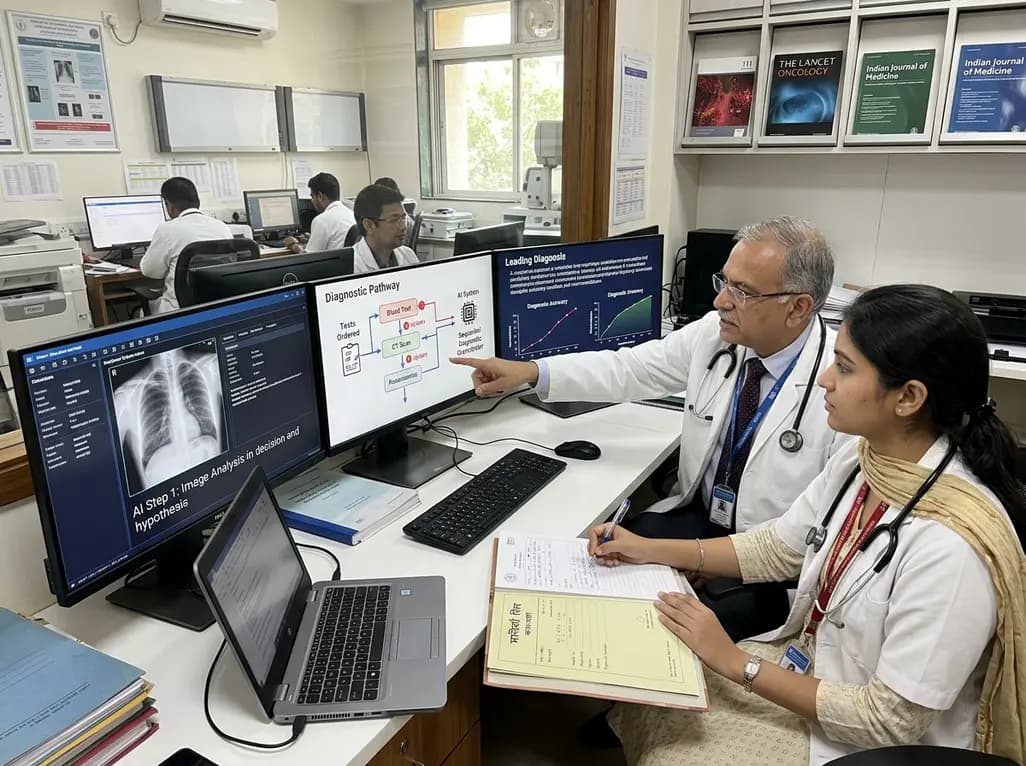
A breakthrough peer-reviewed study demonstrates that a sequential AI diagnosis system can mirror real-world clinical reasoning. By ordering stepwise tests and updating hypotheses dynamically, this multi-agent orchestrator achieved superior diagnostic accuracy while reducing investigative costs.
Today

A prenatal case highlights severe glutaric acidemia type II presenting as bilateral hyperechoic cystic kidneys at 18 weeks. Whole-exome sequencing revealed a novel homozygous ETFDH frameshift variant, demonstrating the power of rapid genetic testing in fetal renal anomalies.
Today

Review how tailored exercise programs benefit frail older patients with heart failure. Explore pathophysiological mechanisms, individualized training prescriptions, and strategies to overcome adherence barriers in clinical practice.
Yesterday

This comparative study evaluates posterior labral tears with and without glenohumeral instability, highlighting distinct demographic patterns, MRI underestimation in stable shoulders, and successful arthroscopic repair outcomes.
Yesterday

A clinical study demonstrates that early intervention with tocilizumab, either as monotherapy or bridged with corticosteroids, achieves significant proptosis reduction and resolves active inflammation in treatment-naive thyroid eye disease.
Yesterday
