.webp&w=384&q=75)

Loading, please wait...
Loading, please wait...

Healthcare accounts for nearly 5% of global emissions. Consequently, sustainable dental education has emerged as a vital necessity for modern oral health professionals. Specifically, dentistry imposes a heavy environmental burden because of high energy use and medical waste. In light of this, a recent study at İnönü University evaluated students’ perceptions and curriculum gaps. Researchers surveyed 600 dental students to assess their awareness and attitudes. While 82% knew about sustainability, only 28% received formal training. Therefore, a significant gap exists between student interest and current schooling.
Educators must integrate green principles into the clinical workflow. For example, schools should teach efficient resource management and waste reduction. Furthermore, faculty members need specialized training to guide students effectively. Transitioning to eco-friendly practices helps clinics reduce their carbon footprint. Additionally, it prepares students for future regulatory changes. Because sustainability is a global goal, dental schools should lead the way. Moreover, students are eager to adopt these changes. In addition, adopting new technologies can further enhance efficiency. Thus, curriculum reform is essential for progress.
It refers to the integration of environmental principles into dental school curricula. This training prepares students to minimize clinical waste and energy consumption during patient care.
Green dentistry reduces the environmental footprint of healthcare. By learning these practices, dentists can save costs and meet global sustainability goals while providing high-quality care.
Disclaimer: This content is for informational and educational purposes only. It does not constitute professional medical advice, diagnosis, or treatment. Always seek the advice of your physician or other qualified healthcare provider with any questions you may have regarding a medical condition. Refer to the latest local and national guidelines for clinical practice.
References

Read summarized clinical updates, watch expert medical content, and earn CME certifications right from your smartphone.
Open your smartphone camera to scan and install.





A study explores dental students' awareness and the need for curriculum integration to promote eco-friendly practices and reduce healthcare's carbon footpri...
6 months ago
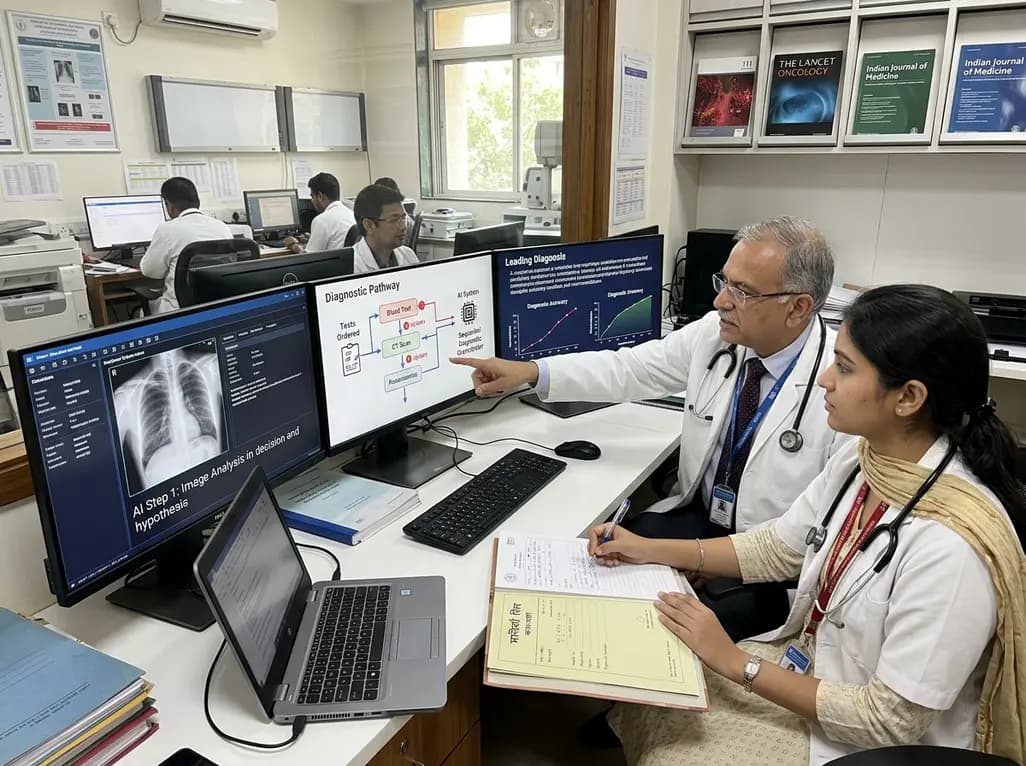
A breakthrough peer-reviewed study demonstrates that a sequential AI diagnosis system can mirror real-world clinical reasoning. By ordering stepwise tests and updating hypotheses dynamically, this multi-agent orchestrator achieved superior diagnostic accuracy while reducing investigative costs.
Today

A prenatal case highlights severe glutaric acidemia type II presenting as bilateral hyperechoic cystic kidneys at 18 weeks. Whole-exome sequencing revealed a novel homozygous ETFDH frameshift variant, demonstrating the power of rapid genetic testing in fetal renal anomalies.
Today

Review how tailored exercise programs benefit frail older patients with heart failure. Explore pathophysiological mechanisms, individualized training prescriptions, and strategies to overcome adherence barriers in clinical practice.
Yesterday

This comparative study evaluates posterior labral tears with and without glenohumeral instability, highlighting distinct demographic patterns, MRI underestimation in stable shoulders, and successful arthroscopic repair outcomes.
Yesterday

A clinical study demonstrates that early intervention with tocilizumab, either as monotherapy or bridged with corticosteroids, achieves significant proptosis reduction and resolves active inflammation in treatment-naive thyroid eye disease.
Yesterday
