.webp&w=384&q=75)

Loading, please wait...
Loading, please wait...

Managing diffuse adult-type gliomas requires precise molecular stratification and personalized surgical planning. Recent clinical research demonstrates that a molecularly defined oligodendroglioma exhibits distinct biological features and favorable therapeutic responsiveness. Historically, neuropathologists diagnosed these neoplasms using subjective histological criteria alone. However, contemporary guidelines strictly require an isocitrate dehydrogenase mutation alongside complete chromosomal 1p/19q codeletion. Identifying these alterations guides surgical strategies and establishes reliable long-term prognoses. Furthermore, multi-institutional clinical evidence confirms that maximal safe resection significantly prolongs progression-free intervals.
Historically, histological ambiguity complicated the clinical classification of adult infiltrative gliomas. Nevertheless, modern genomic profiling has established precise diagnostic boundaries. Under current World Health Organization standards, an authentic molecularly defined oligodendroglioma requires concurrent IDH mutation and 1p/19q codeletion. In a recent retrospective cohort study analyzing 277 adult patients, grade 2 tumors represented 74.7% of presentations. Meanwhile, grade 3 anaplastic lesions comprised the remaining 25.3% of cases. Most patients presented clinically with new-onset seizures, accounting for nearly 65% of all cohorts. Radiologically, over 60% of tumors exhibited non-contrast-enhancing features on baseline magnetic resonance imaging. Additionally, tumors predominantly involved the frontal lobes, which represented roughly 64% of anatomical locations. Consequently, clinicians must suspect oligodendroglioma when evaluating non-enhancing frontal masses presenting with adult-onset epilepsy. Because these lesions progress slowly, accurate molecular diagnosis prevents premature undertreatment and clarifies therapeutic objectives.
Maximal cytoreductive surgery represents the primary therapeutic intervention for newly diagnosed diffuse gliomas. In the cohort evaluation, surgical teams performed subtotal resection in 46.2% of patients and gross total resection in 39.0%. In contrast, stereotactic or open biopsies accounted for only 14.9% of primary surgical management. Surgeons frequently worry that aggressive resection near functional brain regions increases the risk of permanent neurological deficits. Fortunately, investigators documented new permanent neurological deficits in only 9.4% of patients overall. Furthermore, multivariable statistical models confirmed that gross total resection did not increase postoperative deficits compared to biopsy. This reassuring finding demonstrates the safety and precision of modern neurosurgical instruments and neuro-navigation systems. Consequently, experienced neurosurgeons can pursue maximal cytoreduction without causing permanent functional impairment. However, surgical teams must tailor operative boundaries to each patient’s unique cortical anatomy. Preserving neurological function remains essential because performance status directly influences overall survival and quality of life.
The degree of surgical cytoreduction directly influences long-term oncologic control in diffuse low-grade gliomas. Over a median clinical follow-up of 57 months, resected cohorts demonstrated substantially prolonged progression-free intervals. Specifically, patients undergoing surgical resection achieved a median progression-free survival of 76 months compared to 44 months for biopsy. Moreover, multivariable regression adjusting for age, tumor grade, and adjuvant therapies revealed that gross total resection independently predicted superior survival. Conversely, subtotal resection did not maintain independent statistical significance when compared directly with biopsy. Subgroup analyses also uncovered important grade-dependent biological variations. In particular, gross total resection provided a clear progression-free survival advantage in grade 2 oligodendrogliomas. In contrast, researchers observed no statistically significant survival divergence between resection and biopsy in grade 3 tumors. Aggressive natural history and early adjuvant chemoradiotherapy likely diminish the detectable survival impact of surgical margins in grade 3 disease. Therefore, achieving complete macroscopic cytoreduction is especially imperative during the initial presentation of lower-grade tumors.
Because oligodendrogliomas commonly infiltrate the frontal lobes, surgical trajectories often approach critical language and motor pathways. To protect functional networks, surgeons performed awake craniotomy with intraoperative cortical stimulation in 14.5% of cases. Awake mapping allows continuous neurocognitive and speech assessment while the surgical team removes infiltrative tumor tissue. Consequently, neurosurgeons can aggressively debulk lesions right up to functional boundaries without causing permanent speech arrest or hemiparesis. This strategic technique explains why aggressive resection did not trigger an increase in permanent postoperative deficits. Additionally, advanced tractography and neuronavigation systems optimize pre-surgical planning and intraoperative visualization. When surgeons combine intraoperative mapping with ultrasonic aspiration, they achieve maximal tumor clearance while preserving neurological integrity. Furthermore, intraoperative mapping identifies tumor-induced neuroplasticity, which frequently reorganizes cortical function in slow-growing gliomas. Thus, utilizing specialized awake protocols enables safe gross total resection in anatomical areas previously considered high-risk or inoperable.
Comprehensive management of oligodendroglioma extends beyond the operating room into structured multidisciplinary care. Following initial surgery, neuropathologists verify 1p/19q codeletion and IDH mutation to establish tumor grade and risk profile. These genetic alterations confer pronounced sensitivity to alkylating chemotherapy regimens and radiotherapy. For grade 3 anaplastic oligodendrogliomas, established clinical guidelines recommend adjuvant radiotherapy combined with procarbazine, lomustine, and vincristine chemotherapy. In contrast, clinical management of completely resected grade 2 tumors requires individualized clinical consideration. Clinicians often choose observation for younger patients who achieve gross total resection without high-risk features. However, older individuals or patients with residual lesions generally benefit from prompt adjuvant chemoradiation. Furthermore, newly developed IDH inhibitors offer viable options to defer radiation toxicity in selected low-grade cases. Ultimately, complete surgical cytoreduction reduces tumor volume and enhances the therapeutic efficacy of subsequent adjuvant interventions. Therefore, multidisciplinary tumor boards must integrate surgical outcomes with molecular data to optimize long-term clinical management.
These clinical findings provide actionable insights for neurosurgeons and neuro-oncologists managing infiltrative brain tumors. Historically, some physicians recommended watchful waiting or simple biopsies for suspected low-grade gliomas. Nevertheless, contemporary clinical evidence confirms that gross total resection delivers superior progression-free survival without increasing neurological morbidity. Therefore, surgical teams should pursue gross total resection whenever functionally feasible and anatomically safe. When anatomical constraints prevent complete removal, subtotal resection still provides therapeutic benefit over biopsy alone. Furthermore, accurate clinical decision-making requires rapid access to advanced molecular testing platforms across neurosurgical centers. Relying on histological criteria without molecular confirmation can lead to inaccurate risk stratification and suboptimal therapy. In addition, incorporating intraoperative functional mapping ensures that surgeons can push resection boundaries without compromising quality of life. Ultimately, combining aggressive microsurgery with precise molecular diagnostics ensures the highest standard of personalized neuro-oncological care.
Gross total resection significantly improves progression-free survival compared to biopsy in patients with molecularly defined oligodendroglioma. Multivariate analyses demonstrate that removing all visible tumor independently delays disease recurrence, particularly in grade 2 lesions. Consequently, maximal cytoreduction provides superior local disease control while delaying the immediate requirement for salvage interventions.
Awake craniotomy allows real-time intraoperative cortical and subcortical functional mapping during tumor resection. Because oligodendrogliomas frequently involve eloquent cortical regions in the frontal lobe, awake testing helps neurosurgeons identify critical speech and motor pathways. Consequently, surgical teams can achieve maximal safe cytoreduction while significantly minimizing the risk of permanent postoperative deficits.
Histopathology alone cannot reliably differentiate oligodendroglioma from other diffuse gliomas. Under current diagnostic guidelines, confirmation requires identifying both an IDH mutation and the complete co-deletion of chromosomal arms 1p and 19q. These specific genetic alterations predict exceptional chemosensitivity, prolonged survival trajectories, and distinct clinical responses to maximal surgical resection.
Disclaimer: This content is for informational and educational purposes only... Refer to the latest local and national guidelines for clinical practice.
References

Read summarized clinical updates, watch expert medical content, and earn CME certifications right from your smartphone.
Open your smartphone camera to scan and install.





A cohort study reveals that gross total resection independently prolongs progression-free survival in patients with molecularly defined oligodendroglioma without increasing postoperative neurological deficits, highlighting the crucial therapeutic role of maximal safe cytoreduction.
Today

A new systematic review protocol evaluates how virtual reality immersion levels and game formats—serious versus commercial—influence upper limb functional recovery after stroke, examining motor outcomes and adherence across acute and chronic stages.
Today

A cross-sectional study of over 33 million US live births from 2016 through 2024 reveals a 74% increase in hypertensive disorders of pregnancy. This clinical overview explores demographic drivers, maternal-fetal outcomes, and essential preventive strategies for obstetric practice.
Today
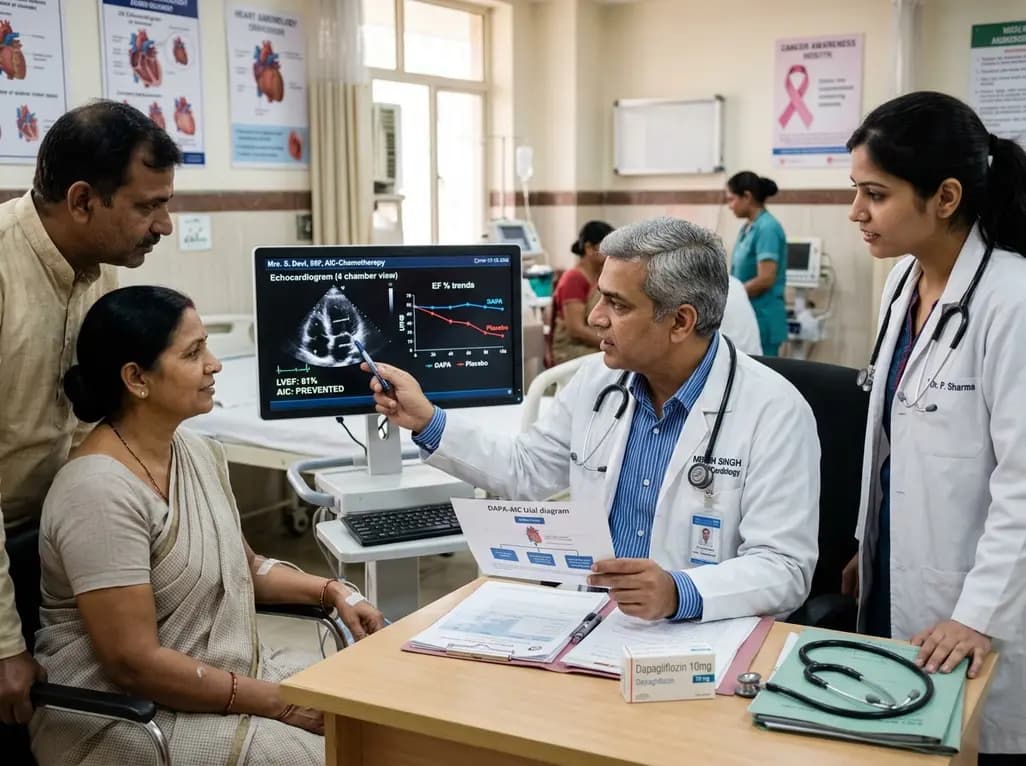
The phase II DAPA-AIC trial demonstrates that dapagliflozin 10 mg daily significantly preserves left ventricular ejection fraction compared to placebo over four months in adults undergoing anthracycline chemotherapy, highlighting a potential preventive strategy in cardio-oncology.
Today

A scoping review reveals severe gaps in long-term assistive technology provision following humanitarian emergencies. Addressing post-disaster rehabilitation requires systematic follow-up, workforce training, and integration into national health systems to sustain mobility and recovery.
Today
A randomized controlled trial investigated whether virtual reality thyroid biopsy reduces procedural pain, anxiety, and fear. While adjusted analyses showed modest pain reduction, unadjusted differences remained statistically insignificant, highlighting the need for larger confirmatory trials.
Today
