.webp&w=384&q=75)

Loading, please wait...
Loading, please wait...

Surgical training historically relied on the traditional apprenticeship paradigm, where senior mentors subjectively evaluated trainee performance in the operating theater. However, manual observation often introduces interpersonal bias, inconsistent scoring, and variability across clinical evaluators. Therefore, modern surgical education increasingly demands validated, unbiased methodologies to measure technical proficiency. The implementation of surgical motion tracking represents a pivotal technological breakthrough in this ongoing educational paradigm shift. By quantifying hand kinematics during complex procedures, digital systems provide granular insight into a surgeon's technical dexterity. In recent years, mixed reality platforms have superseded bulky electromagnetic sensor setups, allowing unobstructed physical movements during delicate operative maneuvers. Consequently, educators can capture continuous kinematic telemetry without disrupting native surgical ergonomics. In addition, automated tracking eliminates observational Hawthorne effects and grading discrepancies among supervising surgical faculties. Furthermore, this technology empowers surgical educators to establish standardized competency milestones across diverse training cohorts. Ultimately, tracking hand movements establishes clear benchmarks for technical excellence, ensuring that surgical trainees develop essential procedural fluency before advancing to unsupervised patient interventions.
Recent investigations utilize the Microsoft HoloLens 2 mixed reality headset to collect high-fidelity kinematic datasets during operative simulation. Specifically, researchers deployed a validated paediatric open inguinal herniotomy simulator to test procedural proficiency across sequential operative steps. Participants completed structured pre-task questionnaires before performing delicate tissue handling, sac dissection, and high ligation while wearing the untethered optical device. During each simulated operation, the headset sensors continuously monitored hand positions without requiring attached external markers. Consequently, the tracking system logged four primary kinematic metrics: total path length, average path length, average movement velocity, and total procedure time. Total path length measures the aggregate distance traversed by the surgeon's hands, effectively capturing economy of movement. In contrast, average movement velocity reflects manual fluidity and motor rhythm during tissue manipulation. In addition, total procedure duration highlights overall operative efficiency and cognitive familiarity with operative sequencing. Thus, mixed reality headsets eliminate cumbersome cables, providing frictionless integration into simulation laboratories while preserving natural sterile hand maneuvers.
The comparative analysis between expert paediatric surgeons and novice medical students revealed dramatic differences across all kinematic parameters. Specifically, experienced paediatric surgeons demonstrated significantly shorter total path lengths, reflecting superior economy of movement during the simulated herniotomy. Novices exhibited erratic, repetitive trajectories, which substantially increased their total hand displacement across sequential procedural steps. Moreover, expert surgeons completed the complex simulation in significantly less time than novices while maintaining consistent surgical flow. Average movement velocity also differentiated both cohorts effectively. In particular, experienced practitioners maintained smooth, deliberate velocities rather than abrupt accelerations. Conversely, novice participants frequently hesitated, making sudden corrective adjustments that destabilized their operative trajectory. These distinct kinematic profiles prove that mixed reality motion tracking possesses high construct validity for technical assessment. In addition, post-task questionnaires confirmed that participants tolerated the headset comfortably without experiencing debilitating visual fatigue. Therefore, objective telemetry reliably mirrors surgical maturity without depending on the subjective impression of an observing faculty member. Consequently, training programs can use these discrete quantitative thresholds to deliver targeted psychomotor remediation.
Traditional surgical curricula historically relied on procedural case volumes and subjective rating scales like the Objective Structured Assessment of Technical Skills. However, high operative volume does not always guarantee technical competence, and observational scoring remains vulnerable to assessor leniency. Incorporating mixed reality tracking into simulation centers enables automated, continuous formative assessment. Because the headset records real-time kinematics, trainees receive instant quantitative feedback regarding their efficiency and path precision. Consequently, residents can practice complex maneuvers repeatedly until their path length and velocity curves match expert benchmarks. Furthermore, this automated process alleviates the substantial faculty workload associated with constant direct supervision. Instructors can review asynchronous kinematic dashboards rather than standing alongside residents during every practice iteration. In addition, longitudinal telemetry tracking allows educators to monitor individualized learning curves over multi-year residency programs. Surgical trainees who plateau prematurely can review their recorded kinematic curves to isolate specific technical deficiencies, such as excessive instrument travel. Ultimately, integrating motion-tracking technology shifts medical education away from rigid time-based paradigms toward authentic, verified technical mastery.
In India, the National Medical Commission mandates robust simulation-based skill training across postgraduate surgical specialties. However, high patient volumes and faculty-to-student ratios often constrain the hours experienced consultants can dedicate to one-on-one procedural observation. Therefore, scalable objective technologies provide an invaluable solution for Indian medical colleges and apex institutions like AIIMS. Wearable mixed reality headsets do not require proprietary synthetic organs or specialized physical fixtures, making them adaptable across diverse laboratory models. For instance, academic centers can utilize a single headset across general surgery, paediatric surgery, orthopaedics, and gynaecology modules. Additionally, standardized digital assessment mitigates geographical training disparities, ensuring uniform technical standards between metropolitan centers and rural teaching hospitals. Standardizing evaluation through kinematic data also establishes robust objective criteria for postgraduate exit examinations and surgical credentialing. Moreover, adopting wearable tracking aligns with India's digital health missions by building data-driven academic infrastructure. While hardware acquisition presents initial capital costs, long-term efficiency gains and enhanced patient safety provide compelling justification. Consequently, Indian medical institutions stand to gain immense pedagogical value from adopting wearable kinematic evaluation platforms.
Traditional surgical evaluation depends on subjective checklists or direct human observation, which introduces personal bias, grading inconsistency, and halo effects. In contrast, surgical motion tracking quantifies exact kinematic variables, such as total hand path length, velocity, and procedure duration. Consequently, these numerical metrics provide reproducible, bias-free data that distinguish expert dexterity from novice inexperience. This automated process ensures standardized feedback and benchmarked competency assessments across diverse clinical training institutions.
Mixed reality headsets cannot completely replace expert human evaluators because operative competence entails cognitive decision-making, patient safety vigilance, and ethical judgment beyond psychomotor dexterity. However, wearable motion tracking effectively automates the technical scoring component, eliminating observational variability. Therefore, hybrid assessment models represent the optimal approach, where objective kinematic algorithms evaluate manual mechanics while experienced surgical faculties assess situational awareness, operative strategy, tissue respect, and team communication during high-stakes certification.
The primary barriers include initial capital hardware acquisition costs, specialized software maintenance requirements, and limited institutional technical support in peripheral medical colleges. Furthermore, faculty members require dedicated orientation to interpret kinematic telemetry and configure simulator modules effectively. Nevertheless, central initiatives supporting simulation laboratories under the National Medical Commission offer ideal platforms to deploy shared headsets across multiple surgical departments, thereby maximizing institutional return on investment and enhancing resident education.
Disclaimer: This content is for informational and educational purposes only and does not constitute medical advice, diagnosis, or treatment. Qualified healthcare professionals should exercise their independent clinical judgment when evaluating and managing patient care. Medical knowledge evolves rapidly, and practices may vary based on individual clinical scenarios and institutional protocols. Refer to the latest local and national guidelines for clinical practice.
References

Read summarized clinical updates, watch expert medical content, and earn CME certifications right from your smartphone.
Open your smartphone camera to scan and install.





A study demonstrates that wearable mixed reality headsets can objectively assess surgical proficiency. Using motion tracking during simulated pediatric herniotomy, researchers quantified path length, velocity, and procedure time to distinguish expert surgeons from novices with high accuracy.
Today
A comprehensive systematic review reveals that CT-based epicardial adipose tissue radiomics combined with machine learning holds significant promise for predicting atrial fibrillation occurrence and recurrence. However, technical heterogeneity and validation gaps currently limit immediate clinical adoption.
Today
A retrospective cohort study evaluated 1,000 low-risk singleton births to assess maternal and neonatal outcomes during office-hours versus off-hours. Off-hours deliveries were significantly associated with higher odds of intrapartum cesarean sections and episiotomies, highlighting critical obstetric staffing considerations.
Today
Procedural success in panvascular intervention does not guarantee vessel stability. The tri-ecological framework introduces vascular device suitcordance and the Suitcordance Score, matching mechanical, cellular, and physicochemical-immune dynamics to restore true vessel homeostasis and prevent late failures.
Today
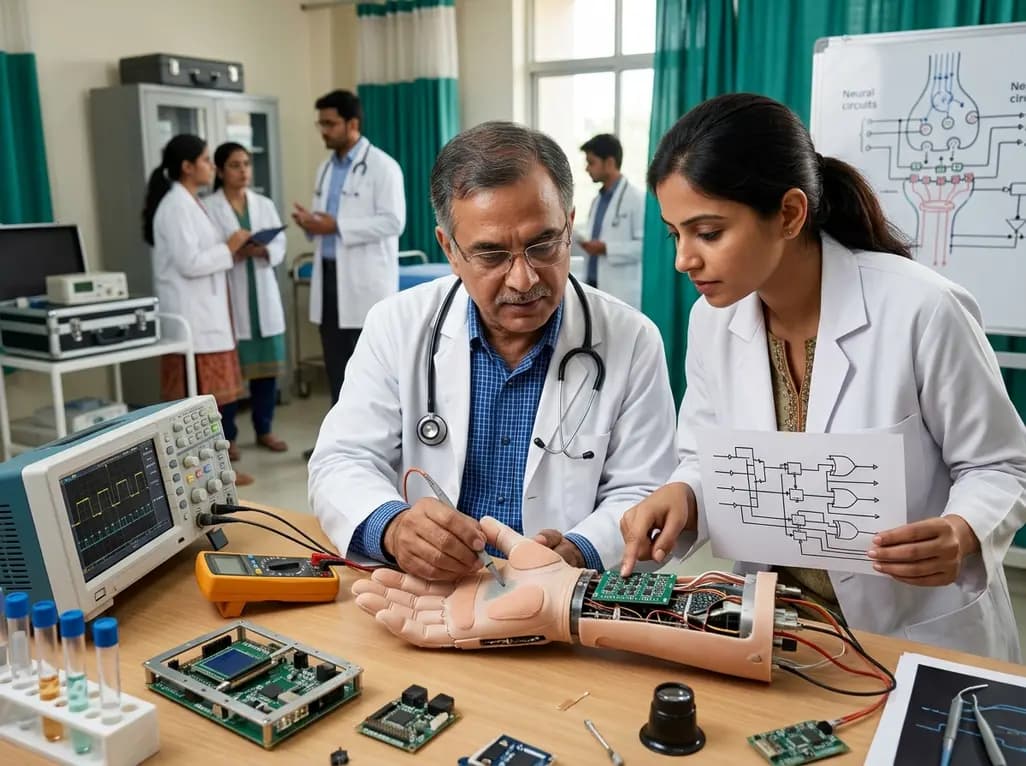
Researchers have engineered an artificial sensory-pain integrated receptor using a multi-threshold organic synaptic transistor. The system distinguishes benign touch from noxious stimuli, enabling safer, more responsive prosthetic limbs with built-in memory and simplified hardware architecture.
Today
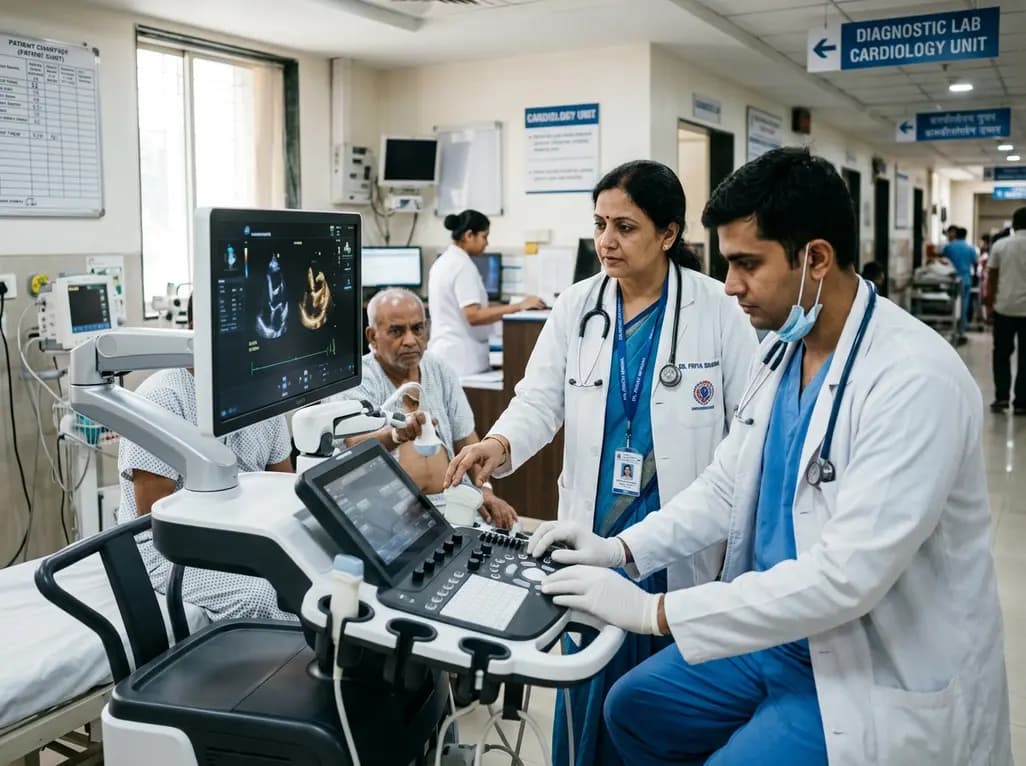
Medical robotics is transitioning beyond operative suites into diagnostics, cardiology, and endocrinology. Explore how innovations in tele-robotics, AI integration, and nanomedicine are overcoming geographical barriers and transforming precision healthcare delivery across India's evolving disease landscape.
Today
