.webp&w=384&q=75)

Loading, please wait...
Loading, please wait...

Ophthalmologists often face challenges with superior oblique myokymia treatment due to the condition's rare and persistent nature. This disorder presents as spontaneous episodes of high-frequency, unilateral torsional oscillopsia. Patients usually seek surgery when medical therapies fail to provide relief. Traditional surgical recommendations often involve a full-tendon tenectomy. However, this method frequently results in secondary superior oblique palsy, which requires further procedures.
Clinicians recently reported an alternative approach using a selective nasal anterior superior oblique tenectomy. This technique resects only the anterior one-third of the tendon. Consequently, it specifically targets the fibers responsible for the troublesome symptoms. Additionally, practitioners may combine this with a contralateral inferior rectus recession. This combination effectively reduces the risk of inducing downgaze diplopia. Therefore, this selective method provides a more stable outcome than full-tendon removal. Furthermore, the patient in the study showed marked improvement even after previous surgeries had failed.
The condition is episodic and often resistant to standard medications like carbamazepine or beta-blockers. Consequently, many patients require surgery, which historically carries a high risk of inducing secondary muscle imbalances.
Full-tendon surgery often causes superior oblique palsy and subsequent double vision. In contrast, selective nasal anterior tenectomy minimizes these risks by preserving some of the tendon's functional attachments.
Disclaimer: This content is for informational and educational purposes only. It does not constitute medical advice or establish a doctor-patient relationship. Always seek the advice of a qualified healthcare provider regarding any medical condition. Refer to the latest local and national guidelines for clinical practice.
References
Francis B et al. Selective Nasal Anterior Superior Oblique Tenectomy for the Treatment of Superior Oblique Myokymia. J Binocul Vis Ocul Motil. 2026 Mar 03. doi: 10.1080/2576117X.2026.2636321. PMID: 41773485.
Zhang M, Gilbert A, Hunter DG. Superior oblique myokymia. Surv Ophthalmol 2018; 63:507-517.
Agarwal S, Kushner BJ. Results of extraocular muscle surgery for superior oblique myokymia. J AAPOS 2009; 13:472-476.

Read summarized clinical updates, watch expert medical content, and earn CME certifications right from your smartphone.
Open your smartphone camera to scan and install.





New surgical technique for superior oblique myokymia offers relief with lower risk of secondary palsy and double vision compared to traditional methods....
7 months ago

A retrospective analysis reveals that cavotricuspid isthmus ablation using a variable-loop pulsed field ablation catheter achieves acute conduction block safely and efficiently during concomitant atrial fibrillation procedures.
Today
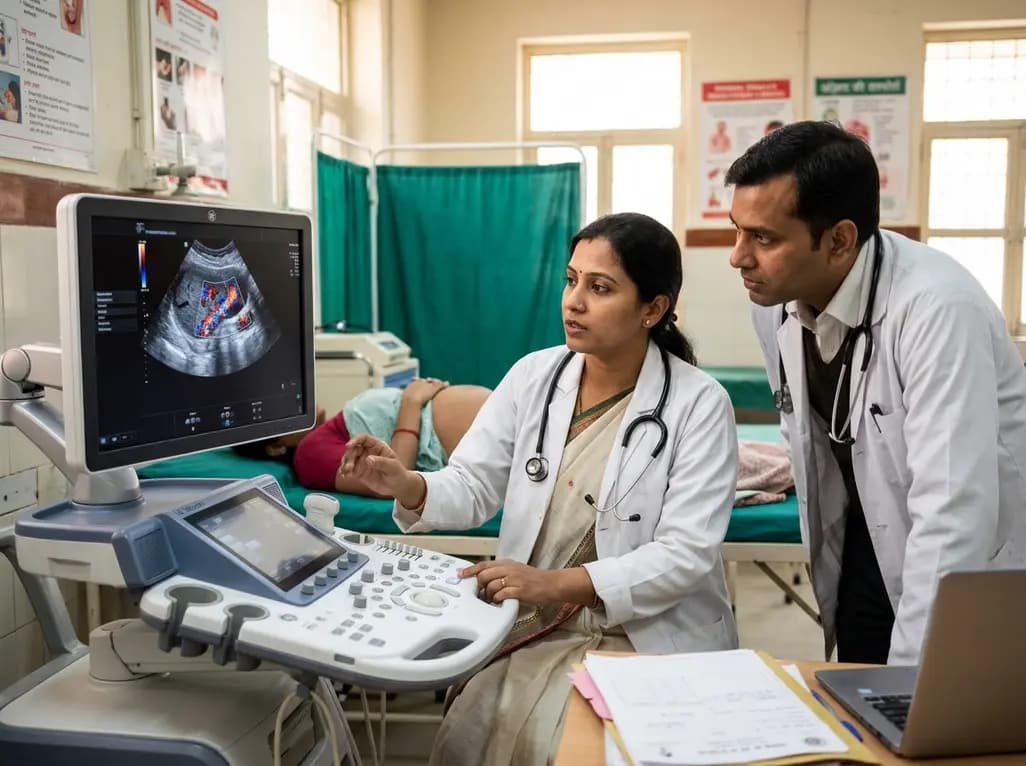
A study in Ultrasound in Obstetrics & Gynecology shows that quantitative vascularization of the anterior fornix/cervix with transvaginal ultrasound reliably identifies placenta accreta spectrum and predicts severe intraoperative hemorrhage, offering vital objective risk stratification.
Today
A clinical study highlights how coupling interval variability assessed through Poincaré plots differentiates right ventricular outflow tract premature ventricular contractions from left ventricular origins, optimizing patient selection and procedural strategy for radiofrequency catheter ablation.
Today
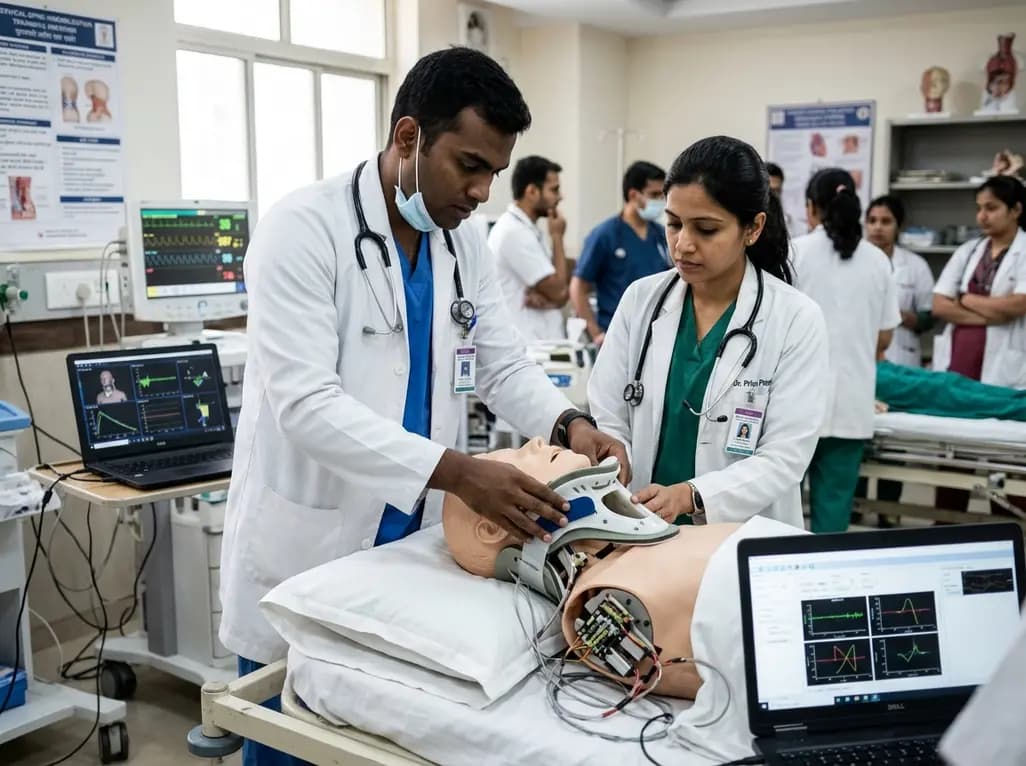
A novel proof-of-concept study presents a six-degree-of-freedom articulated manikin neck equipped with linear potentiometers. The system provides real-time kinematic motion feedback during cervical immobilisation, delivering sub-degree tracking accuracy to improve pre-hospital trauma training and patient safety.
Today
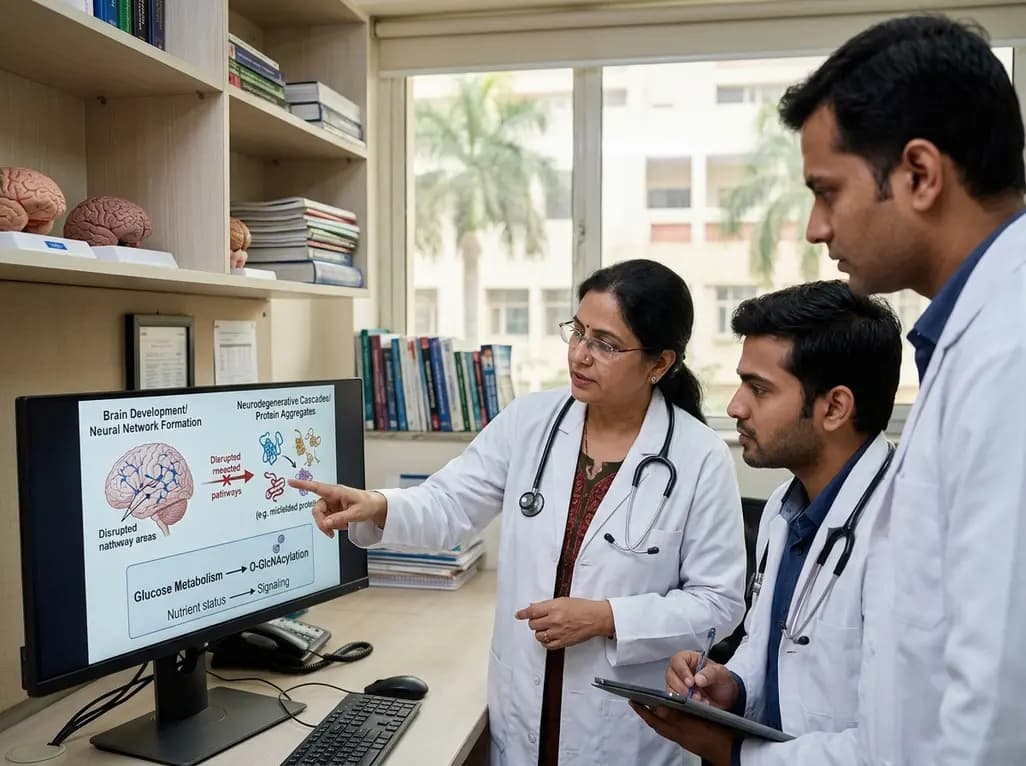
Protein O-GlcNAcylation couples cellular nutrient status to vital neuronal functions. This review explores how disrupted O-GlcNAc cycling drives both neurodevelopmental delays and neurodegenerative cascades, positioning metabolic post-translational modifications as therapeutic targets in clinical neurology.
Today
