

Loading, please wait...
Loading, please wait...

Catheter ablation represents the cornerstone of management for patients who experience typical atrial flutter and concomitant atrial fibrillation. Historically, cardiac electrophysiologists rely on thermal radiofrequency energy to complete cavotricuspid isthmus ablation. Although radiofrequency delivery provides dependable conduction interruption, it carries inherent risks of collateral tissue injury. Recently, pulsed field ablation has emerged as a groundbreaking, non-thermal alternative that selectively destabilizes cell membranes via irreversible electroporation. While clinicians initially adopted this technology for pulmonary vein isolation, electrophysiologists increasingly investigate its utility in right atrial targets. Consequently, evaluating how pulsed electric fields behave outside the pulmonary venous antrum has become an important clinical priority. In routine practice, patients frequently present with coexisting atrial flutter, requiring combined intervention during a single operative session. Therefore, using the same variable-loop catheter across both anatomical regions could eliminate catheter exchanges and streamline laboratory workflow. Early observational data demonstrate encouraging feasibility when operators apply this novel energy source to the right atrium. However, questions regarding transmurality, lesion persistence, and safety protocols require thorough clinical investigation.
A recent single-center descriptive study examined twenty-three consecutive patients undergoing simultaneous pulmonary vein isolation and flutter ablation. Specifically, the investigative team evaluated the practical feasibility, procedural efficiency, and acute safety of a variable-loop pulsed field catheter. The patient cohort had a mean age of sixty-five years, and fifty-seven percent of the participants were male. Because anatomical variations along the subcaval groove present distinct technical challenges, the variable-loop mechanism allowed operators to adjust loop diameter dynamically. This adjustable geometry ensured stable tissue contact across the irregular right atrial ridge and pouch anatomy. Furthermore, the procedural protocol incorporated systemic intravenous nitroglycerin for every enrolled subject before energy delivery. This pharmacological precaution directly addresses the recognized risk of catheter-induced coronary vasospasm during right atrial pulsed field delivery. In addition, electrophysiologists utilized high-density electroanatomical mapping to verify precise catheter placement and evaluate local electrical signals. Procedural specialists monitored real-time signal attenuation throughout the ablation sequence to confirm durable conduction slowing. Thus, the comprehensive protocol prioritized both anatomical adaptability and preventive cardiovascular safety.
The investigation revealed remarkable acute procedural success across the entire study population. Specifically, operators achieved bidirectional cavotricuspid isthmus block in all twenty-three patients before concluding the procedure. Moreover, clinicians confirmed conduction cessation through rigorous differential pacing techniques from the low lateral right atrium and proximal coronary sinus. The variable-loop catheter delivered pulsed field applications rapidly without requiring protracted dwell times on individual tissue sites. Consequently, procedure times remained short, and operators recorded exceptionally low overall fluoroscopy exposure. This reduction in ionizing radiation confers meaningful occupational protection for laboratory staff while diminishing biological risks for patients. Furthermore, the acute transmurality achieved with irreversible electroporation highlights the efficiency of pulsed electric fields within trabeculated atrial architecture. In contrast to thermal methods that depend on conductive heating, pulsed field energy acts nearly instantaneously upon myocardial tissue. Therefore, operators eliminated conduction across the isthmus with minimal repetitive deliveries. These consistent acute results demonstrate that variable-loop pulsed field tools can successfully replicate the primary therapeutic endpoints historically established by conventional radiofrequency ablation.
Safety considerations represent a critical focal point when electrophysiologists perform pulsed field ablation near vulnerable vascular structures. In particular, the right coronary artery traverses immediately adjacent to the subeustachian pouch within the cavotricuspid isthmus. Previous experimental studies indicate that pulsed electric fields can provoke intense, transient arterial vasospasm when applied near adventitial neural networks. Fortunately, the study protocol avoided any clinical coronary complications through the prophylactic administration of intravenous nitroglycerin. None of the twenty-three participants experienced acute coronary syndromes, severe hemodynamic collapse, or sustained ventricular arrhythmias. Additionally, operators documented zero periprocedural pericardial effusions, groin vascular access complications, or systemic thromboembolic events. This clean safety record underscores the protective efficacy of proactive vasodilator pretreatment during right-sided pulsed field procedures. Nevertheless, clinicians must maintain vigilant hemodynamic and electrocardiographic monitoring during every delivery phase. Because severe spasm can precipitate acute inferior ST-segment elevation, routine nitrate administration provides an essential barrier against myocardial ischemia. Hence, establishing standardized pharmacological guidelines will be vital as centers adopt pulsed field technology for broader atrial indications.
Assessing rhythm outcomes beyond the immediate post-operative window is crucial for determining true therapeutic durability. In this descriptive cohort, researchers followed patients for a mean duration of 218 days to detect arrhythmia recurrence. During this mid-term follow-up period, the clinical team identified only one symptomatic recurrence of possible typical atrial flutter. Consequently, the vast majority of patients maintained stable sinus rhythm without requiring repeat interventions or escalated antiarrhythmic therapy. While these midterm observations provide considerable clinical optimism, investigators emphasize several important limitations. First, the retrospective, single-center design naturally limits the generalizability of the findings across diverse patient demographics. Second, the modest sample size cannot adequately exclude rare adverse reactions or subtle anatomical failure modes. Therefore, large multicenter prospective trials must definitively establish lesion durability through structured rhythm surveillance and invasive re-mapping protocols. Furthermore, comparative trials directly contrasting variable-loop pulsed field catheters against conventional irrigated radiofrequency tools remain essential. Ultimately, these ongoing scientific efforts will determine whether pulsed electric fields should become the universal standard of care for complex atrial flutters.
Variable-loop pulsed field catheters offer adjustable geometry that conforms securely to irregular atrial anatomy, such as the trabeculated cavotricuspid isthmus. Additionally, non-thermal pulsed field energy selectively damages cardiomyocytes while sparing adjacent connective matrix, esophagus, and nerve bundles. This unique mechanism enables operators to achieve rapid tissue isolation without prolonged heating periods. Consequently, procedural efficiency improves significantly while reducing overall fluoroscopy exposure and procedural discomfort for patients.
Pulsed field electrical delivery in proximity to the right coronary artery can inadvertently stimulate local vascular smooth muscle, triggering intense coronary vasospasm. Administering prophylactic intravenous nitroglycerin promotes prompt coronary vasodilation, thereby mitigating this hyperreactive vascular reflex. Consequently, patients avoid acute myocardial ischemia, ST-segment shifts, and life-threatening ventricular arrhythmias during energy delivery. This pharmacological safeguard is now considered a vital procedural standard when applying pulsed electric fields near coronary vessels.
Preliminary clinical evidence demonstrates high acute efficacy for pulsed field lesions, matching traditional radiofrequency success rates. In this cohort, only one recurrence occurred over a mean follow-up of 218 days. However, long-term durability data across large populations remain limited because pulsed field systems are relatively new. Future randomized studies with invasive re-mapping will definitively prove whether non-thermal irreversible electroporation produces equivalent or superior lesion permanence compared to classic thermal modalities.
Disclaimer: This content is for informational and educational purposes only. It is not intended to be a substitute for professional medical advice, diagnosis, or treatment. Always seek the advice of your physician or other qualified health provider with any questions you may have regarding a medical condition. Refer to the latest local and national guidelines for clinical practice.
References
Wiederkehr C et al. Cavotricuspid Isthmus Ablation Using a Variable Loop Pulsed Field Ablation Catheter: A Single-Center Descriptive Analysis. J Cardiovasc Electrophysiol. 2026 Oct 25. doi: 10.1111/jce.70538. PMID: 42927637.
Knight BP. When Will Pulsed Field Ablation Replace Radiofrequency Ablation for Cavotricuspid Isthmus-Dependent Atrial Flutter? EP Lab Digest. 2025;25(8):6.
Di Biase L, Marazzato J, Gomez T, et al. Application repetition and electrode-tissue contact result in deeper lesions using a pulsed-field ablation circular variable loop catheter. Europace. 2024;26(9):euae220.
Reddy VY, Neuzil P, Koruth JS, et al. Pulsed Field Ablation for Pulmonary Vein Isolation in Atrial Fibrillation. J Am Coll Cardiol. 2023;81(19):1845-1856.

Read summarized clinical updates, watch expert medical content, and earn CME certifications right from your smartphone.
Open your smartphone camera to scan and install.





A retrospective analysis reveals that cavotricuspid isthmus ablation using a variable-loop pulsed field ablation catheter achieves acute conduction block safely and efficiently during concomitant atrial fibrillation procedures.
Today
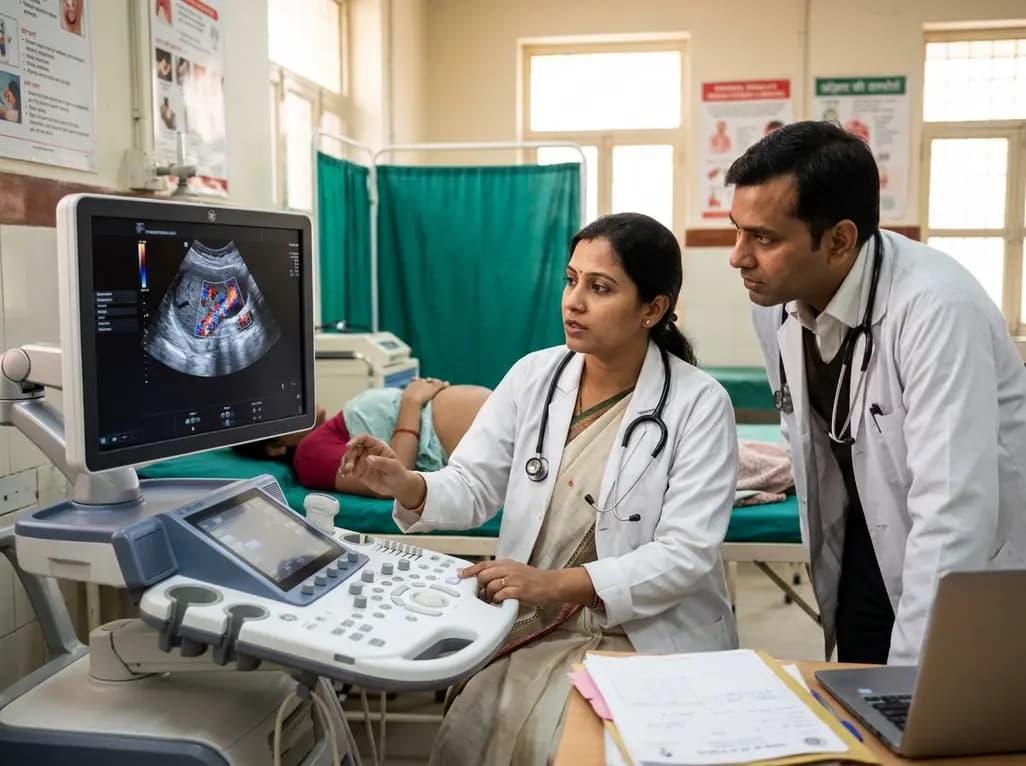
A study in Ultrasound in Obstetrics & Gynecology shows that quantitative vascularization of the anterior fornix/cervix with transvaginal ultrasound reliably identifies placenta accreta spectrum and predicts severe intraoperative hemorrhage, offering vital objective risk stratification.
Today
A clinical study highlights how coupling interval variability assessed through Poincaré plots differentiates right ventricular outflow tract premature ventricular contractions from left ventricular origins, optimizing patient selection and procedural strategy for radiofrequency catheter ablation.
Today
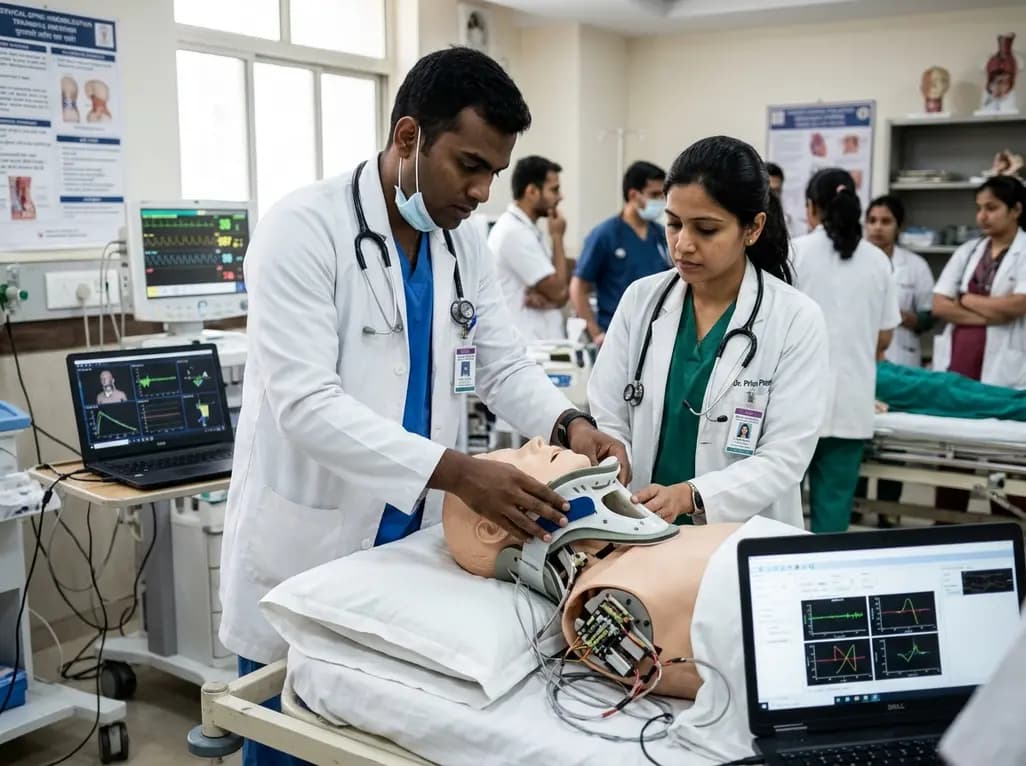
A novel proof-of-concept study presents a six-degree-of-freedom articulated manikin neck equipped with linear potentiometers. The system provides real-time kinematic motion feedback during cervical immobilisation, delivering sub-degree tracking accuracy to improve pre-hospital trauma training and patient safety.
Today

Protein O-GlcNAcylation couples cellular nutrient status to vital neuronal functions. This review explores how disrupted O-GlcNAc cycling drives both neurodevelopmental delays and neurodegenerative cascades, positioning metabolic post-translational modifications as therapeutic targets in clinical neurology.
Today
