.webp&w=384&q=75)

Loading, please wait...
Loading, please wait...

Sleep disruption represents a debilitating non-motor manifestation in Parkinson's disease. While clinicians readily treat tremor, rigidity, and bradykinesia, nocturnal sleep architecture often remains severely impaired. Deep brain stimulation targeting the subthalamic nucleus effectively suppresses pathological beta oscillations (13–30 Hz) to improve daytime motor function. However, the innate circadian behavior of these oscillations across natural sleep-wake cycles has remained poorly understood. Recent clinical research reveals that subthalamic nucleus LFPs undergo robust diurnal fluctuations that mirror naturalistic behavioral states. Historically, electrophysiological recordings occurred primarily during brief, acute post-operative assessments. Consequently, these clinical evaluations failed to capture the dynamic neurobiology governing full 24-hour sleep-wake transitions. Understanding these diurnal shifts in home environments provides fundamental neurophysiological insights into basal ganglia circuity. Furthermore, tracking continuous local field potential signals over extended periods establishes an objective foundation for closed-loop therapy. By recognizing how neural activity alters between wakefulness and sleep, clinicians can develop targeted interventions that treat motor signs without impairing sleep quality.
To characterize these neurophysiological dynamics outside artificial clinical settings, investigators evaluated thirteen Parkinson's disease patients across eighteen implanted hemispheres. Researchers collected continuous electrophysiological recordings over an average duration of nearly fifteen days in each patient's home setting. Specifically, the team captured subthalamic nucleus LFPs across alpha and beta frequency bands using commercially available sensing neurostimulators. Concurrently, participants wore validated wrist actigraphy devices to establish objective behavioral milestones of sleep and wakefulness during normal daily routines. The investigators calculated mean power differences across behavioral states, constructed probability density functions of normalized signal power, and measured histogram overlap fractions. Additionally, the team analyzed individual activity patterns to determine how variance in oscillatory power correlated with specific times of day. This longitudinal framework permitted direct evaluation of chronic neural activity in patients who had received neurostimulation therapy for years. Therefore, the findings accurately reflect stable, real-world neurophysiology rather than transient surgical artifacts or acute microlesion effects.
The trial demonstrated a remarkably consistent divergence in neural oscillatory power between daytime wakefulness and nocturnal sleep. Subthalamic local field potential power was substantially higher during wakeful epochs compared to periods of physiological sleep. Moreover, probability density distributions revealed minimal overlap in signal amplitude between these two distinct behavioral states. This clear separation indicates that subthalamic beta and alpha power shifts are fundamentally tied to behavioral transitions rather than random oscillatory noise. Interestingly, analysis of subject activity patterns revealed that variance in oscillatory power was more tightly correlated during nighttime hours than during daytime periods. Daytime recordings exhibited broader variance, reflecting diverse physical activities, medication timing, and cognitive tasks. In contrast, nocturnal recordings displayed steady, predictable signal reductions throughout the rest period. Consequently, these robust electrophysiological signatures provide a dependable biomarker to distinguish wakefulness from sleep under natural living conditions. These findings confirm that basal ganglia oscillations naturally downregulate during restful sleep.
Evaluating electrophysiology in the home setting represents a major conceptual shift for movement disorder management. Traditional neurostimulation programming relies on brief in-clinic assessments that capture only a momentary snapshot of motor state. However, Parkinson's disease symptoms fluctuate markedly throughout the day due to medication pharmacokinetics, physical fatigue, and circadian factors. Tracking continuous local field potentials provides clinicians with an objective, long-term window into the patient's daily physiological rhythms. Furthermore, sleep disturbances—such as nocturnal akinesia, frequent awakenings, and restless legs—often evade detection during routine outpatient consultations. By coupling chronic intracranial sensing with non-invasive actigraphy, healthcare providers can accurately monitor nocturnal rest and daytime wakefulness. Importantly, this study proves that modern sensing-enabled neurostimulators can reliably record and transmit neural data over several weeks in chronic deep brain stimulation recipients. As a result, clinicians can assess whether current therapeutic parameters adequately address nocturnal dysfunction without relying on subjective recall.
The identification of distinct sleep-wake oscillatory biomarkers offers transformative potential for adaptive closed-loop deep brain stimulation. Current clinical practice predominantly utilizes continuous, fixed-amplitude stimulation throughout the day and night. Nevertheless, constant stimulation during sleep can disrupt normal sleep architecture, induce unwanted paresthesias, or precipitate nocturnal awakenings. Because subthalamic field potentials naturally drop during sleep, closed-loop devices can use this biological signal to automatically titrate stimulation intensity. For instance, the system can reduce stimulation amplitude during confirmed sleep epochs to prevent overstimulation and conserve pulse-generator battery life. Conversely, when morning awakening occurs, the algorithm can rapidly escalate stimulation to alleviate morning akinesia and severe rigidity. Additionally, adaptive algorithms can integrate diurnal rhythms to deliver personalized, demand-driven therapy that responds dynamically to changing behavioral states. Thus, utilizing natural oscillatory fluctuations allows neurostimulation to transition from a static intervention into an intelligent, physiologically responsive neuromodulation platform.
Incorporating chronic local field potential sensing into routine Parkinson's care heralds a new era of precision neurology. Clinicians can increasingly utilize longitudinal electrophysiological trends to make data-driven medication adjustments and refine stimulation parameters. Furthermore, identifying stable circadian biomarkers helps distinguish true disease progression from transient symptomatic fluctuations. Future research must evaluate how specific sleep stages, such as rapid eye movement and slow-wave sleep, interact with subthalamic oscillatory patterns. Additionally, larger multi-center cohorts should investigate whether diurnal field potential signatures vary across disease phenotypes or different dopaminergic regimens. Clinicians should also explore whether sensing algorithms can detect early sleep fragmentation before overt motor worsening occurs. Ultimately, continuous bio-sensing bridges the gap between subjective symptom reporting and objective neurophysiological monitoring. By integrating real-world neural telemetry into clinical workflows, neurologists and movement disorder specialists can substantially enhance quality of life, nocturnal recovery, and daytime motor independence for patients living with Parkinson's disease.
Subthalamic nucleus LFPs exhibit prominent power elevations in beta and alpha frequency bands during daytime wakefulness. Conversely, these electrophysiological signals drop significantly during nocturnal sleep. This pronounced diurnal divergence allows neurostimulation systems to reliably track behavioral states and distinguish wakefulness from physiological rest in natural home environments.
In-clinic assessments only capture short, isolated snapshots of neural activity that frequently fail to reflect habitual circadian rhythms. Naturalistic home monitoring tracks electrophysiological shifts across consecutive days and nights alongside actigraphy. Consequently, this real-world recording provides clinicians with realistic physiological baselines to optimize chronic adaptive neurostimulation protocols.
Closed-loop neurostimulation systems can leverage diurnal oscillations as autonomous control signals. By detecting changes between daytime motor demands and nocturnal rest, the device can automatically modulate stimulation parameters. This adaptive delivery prevents nocturnal overstimulation, preserves physiological sleep architecture, and reduces battery consumption in patients with advanced Parkinson's.
Disclaimer: This content is for informational and educational purposes only and does not constitute formal medical advice, diagnosis, or treatment recommendations. Healthcare professionals must evaluate individual clinical circumstances and consult comprehensive diagnostic tools when managing movement disorders and sleep dysfunction. Refer to the latest local and national guidelines for clinical practice.
References

Read summarized clinical updates, watch expert medical content, and earn CME certifications right from your smartphone.
Open your smartphone camera to scan and install.





A clinical study reveals that subthalamic nucleus LFPs exhibit distinct diurnal fluctuations aligning with sleep-wake behavior in Parkinson's disease. Captured via chronic sensing in the home setting, these electrophysiological biomarkers provide a physiological foundation for closed-loop deep brain stimulation.
last month

Epidemiologists and health leaders warn that active Ebola virus transmission in the Democratic Republic of Congo remains entrenched within communities. With fewer than ten percent of expected contacts monitored, public health officials urge rapid surveillance scale-up and reinforced healthcare precautions.
Today

A scoping review evaluates 116 studies on AI in women's reproductive health, finding that 83.6% carry high risk of bias. While ensemble models show promise, disparities and lack of validation hinder LMIC deployment.
Today
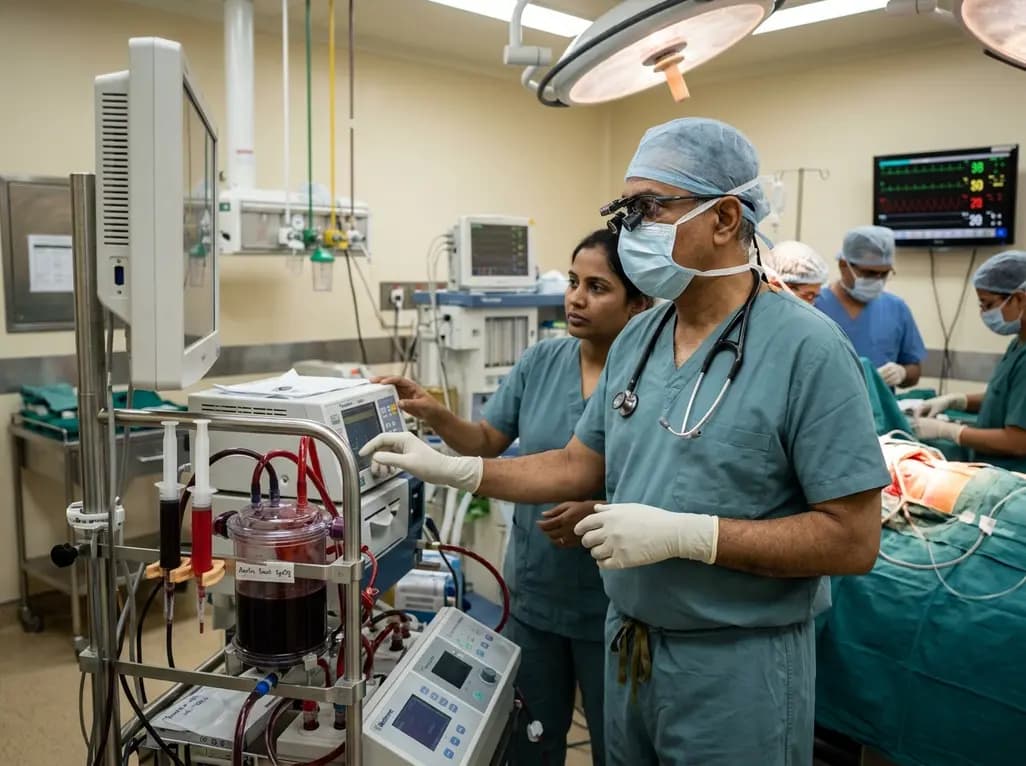
Differential oxygenation during peripheral TA-NRP can cause undetected coronary hypoxemia due to arch vessel clamping. A novel circuit with continuous aortic root monitoring detects desaturation early, facilitating left ventricular unloading and preventing allograft dysfunction and unnecessary heart discard.
Today

India faces significant opportunities to expand medical device exports to high-growth markets like Mexico, Brazil, and the UK. By addressing its trade deficit, advancing domestic component manufacturing, and aligning with global regulatory standards, the country aims to become an international healthcare hub.
Today

A post hoc analysis of the PARM-T2D study shows pemafibrate exerts baseline-dependent effects on LDL-C and particle size in type 2 diabetes and hypertriglyceridemia. It lowers triglycerides and remnants while favorably remodeling atherogenic LDL particles based on initial lipid control status.
Today
