

Loading, please wait...
Loading, please wait...

Neurodevelopmental disorders resulting from de novo pathogenic variants in the STXBP1 gene cause severe developmental and epileptic encephalopathies worldwide. Affected pediatric patients typically experience early-onset epileptic seizures, severe intellectual disability, profound expressive communication deficits, and diverse movement disorders. Historically, clinical specialists evaluated therapeutic efficacy primarily through caregiver seizure diaries. However, non-seizure manifestations like motor impairment, tremors, and visual disturbances substantially dictate long-term quality of life. Consequently, establishing the STXBP1 clinical severity assessment fulfills a vital diagnostic necessity by providing a validated, standardized instrument to measure functional abilities systematically across prospective natural history registries.
Clinicians frequently encounter significant hurdles when assessing severely affected children using conventional developmental scales. Standardized psychometric tools frequently demonstrate pronounced floor effects, where severely impaired individuals score at the absolute minimum baseline. Consequently, subtle developmental gains or meaningful clinical stabilizations remain entirely undetected during routine clinical follow-ups. Furthermore, emerging translational therapeutics, including targeted antisense oligonucleotides and precision gene replacement strategies, require responsive clinical outcome measures to satisfy regulatory approval standards. Therefore, clinical researchers urgently need tailored clinician-reported tools that bridge bedside neurodevelopmental examinations with tangible functional outcomes.
To develop an optimized clinician-reported outcome measure, investigators modified a validated framework previously designed for CDKL5 deficiency disorder. Specifically, researchers conducted structured expert consensus conferences with experienced pediatric neurologists, geneticists, and neurodevelopmental specialists. Although both conditions represent severe developmental and epileptic encephalopathies, STXBP1 presents unique motor and visual phenotypes that required purposeful adaptation. Clinicians observed that tremor, involuntary movement patterns, and visual tracking issues lacked sufficient coverage in the original CDKL5 instrument. Therefore, the expert panel incorporated specific motor tremor items and detailed visual behavior metrics to enhance phenotypic sensitivity.
Following expert adaptation, investigators prospectively administered the measure to 123 individuals with confirmed STXBP1-related disorders across multiple academic institutions. The study population displayed an even sex distribution of fifty percent males, with a median age of seven years and eight months. Consequently, the cohort encompassed an extensive developmental range, spanning from infancy to early adulthood. During routine clinical assessments, trained child neurologists scored each item systematically without imposing excessive testing fatigue on vulnerable patients. Furthermore, this rigorous multicenter implementation confirmed that the adapted scoring guidelines provided clear, reproducible criteria for clinicians across diverse clinical environments.
Establishing statistical validity represents a foundational requirement before any outcome measure enters regulatory clinical trials. Therefore, researchers conducted comprehensive psychometric evaluations on the prospective registry dataset, analyzing structural validity through confirmatory factor analysis. The results strongly confirmed a clear three-domain model encompassing motor function, expressive and receptive communication, and visual processing. Importantly, all evaluated items exhibited robust factor loadings exceeding the 0.50 threshold. This high loading confirms that each individual question reliably contributes to its designated clinical domain without generating statistical noise or confounding overlap.
Furthermore, the psychometric analysis demonstrated outstanding internal consistency and composite reliability across all three subscales. Cronbach's alpha surpassed the recommended psychometric threshold of 0.70, while composite reliability attained a remarkable 0.88. In addition, average variance extracted and distinctiveness indices met strict methodological criteria, proving that motor, communication, and vision domains assess distinct neurological functions. Crucially, the evaluation revealed neither ceiling nor floor effects across the entire cohort. Consequently, the scoring system reliably distinguishes varying levels of impairment, enabling investigators to track genuine functional changes longitudinally across diverse patient age groups.
Analyzing domain score distributions revealed valuable insights into the clinical presentation of STXBP1-related encephalopathy. The motor domain exhibited minimal skewness at 0.34, while the communication domain displayed slight negative skewness at -0.16. These near-normal distributions demonstrate that motor and communication impairments span a balanced continuum across affected individuals. In stark contrast, the vision domain demonstrated a pronounced positive skewness of 2.2. Rather than exposing a psychometric flaw, this statistical asymmetry effectively distinguished patients with comorbid cortical visual impairment from those maintaining preserved visual responsiveness.
Cortical visual impairment represents a frequent yet routinely underrecognized comorbidity across many severe neurogenetic conditions. Affected children struggle with visual fixation, gaze latency, and visual complexity processing despite possessing completely intact ocular structures. Consequently, this clinician-reported vision subscale functions as an invaluable bedside screening instrument for central visual deficits. Early identification of visual impairment enables physicians to implement timely visual rehabilitation therapies, modify home environments, and optimize educational communication aids. Therefore, the vision domain provides vital prognostic clarity that directly enhances multidisciplinary rehabilitative care for affected pediatric patients.
The successful validation of this severity scale marks a major breakthrough for clinical trial readiness in rare neurodevelopmental disorders. International regulatory authorities increasingly demand multifaceted, validated clinical outcome assessments that capture holistic patient improvement beyond seizure reduction alone. Because this instrument reliably captures motor dexterity, functional communication, and visual behavior, clinical trialists can use it to measure real-world therapeutic benefits. Consequently, future gene replacement and targeted molecular trials can establish meaningful primary and secondary clinical endpoints that satisfy rigorous international regulatory requirements with greater diagnostic certainty.
Furthermore, this study provides an adaptable methodological roadmap for assessing other rare developmental and epileptic encephalopathies worldwide. Similar conditions, including SYNGAP1, SLC6A1, and SCN2A disorders, present overlapping constellations of intractable epilepsy, cognitive impairment, and severe motor dysfunction. Adopting standardized clinician-reported severity frameworks across these synaptic channelopathies promotes data harmonization across international multicenter registries. Additionally, pediatric neurologists practicing in tertiary centers across India can readily integrate this structured evaluation into outpatient workflows, facilitating systematic longitudinal tracking and positioning local clinical sites for future global therapeutic trials.
Conventional developmental scales frequently produce severe floor effects when evaluating children with profound epileptic encephalopathies. Consequently, affected individuals who lack expressive speech or independent ambulation score at baseline, obscuring incremental clinical improvements. In contrast, this clinician-reported tool evaluates specific functional capabilities across motor, communication, and visual domains. Therefore, clinicians can sensitively track subtle milestones, disease stabilization, and treatment responses that generic developmental scales routinely fail to capture.
The vision domain specifically assesses cortical visual impairment, a frequent central processing deficit that standard ocular examinations often overlook. Because structural eye evaluations usually appear normal, central visual dysfunction often remains undetected. However, this validated subscale successfully discriminates children with cortical visual impairment from those with intact visual tracking. Consequently, early identification guides targeted vision stimulation therapies, environmental adaptations, and educational accommodations that significantly improve overall daily functioning.
Yes, clinicians can efficiently administer this clinician-reported instrument during standard outpatient neurology consultations. Because the scale relies on direct clinical observations and targeted assessments, it requires minimal specialized equipment while avoiding patient testing fatigue. Furthermore, administering the tool longitudinally enables pediatric neurologists to track developmental trajectories, evaluate multidisciplinary therapy responses, and objectively monitor functional outcomes alongside anti-seizure medication adjustments in busy tertiary hospital settings.
Disclaimer: This content is for informational and educational purposes only and should not be considered medical advice. Always consult a qualified healthcare professional regarding any medical condition or treatment. Refer to the latest local and national guidelines for clinical practice.
References
Abbott M et al. Psychometric validation of a clinician-reported clinical severity assessment in STXBP1-related disorder. Dev Med Child Neurol. 2026 Oct 25. doi: 10.1111/dmcn.70570. PMID: 42927656.
Demarest S, Saldaris J, Benke TA, et al. Severity Assessment in CDKL5 Deficiency Disorder. Pediatr Neurol. 2019;97:48-54.
Abbott M, Angione K, Stringfellow M, et al. Cortical visual impairment across a range of neurodevelopmental disorders: clinical characterization, diagnostic tool evaluation, and association with developmental outcomes. J Child Neurol. 2026;41(4):470-477.

Read summarized clinical updates, watch expert medical content, and earn CME certifications right from your smartphone.
Open your smartphone camera to scan and install.





A prospective natural history study validates the STXBP1 Clinical Severity Assessment (S-CSA), adapted from CDKL5 deficiency disorder. Demonstrating robust reliability across motor, communication, and vision domains, the tool establishes clinical trial readiness for developmental and epileptic encephalopathies.
Today

Health authorities in Kenya have confirmed two fatalities among nine cases of Ebola linked to regional transmission. Clinicians worldwide must maintain heightened vigilance, screen international travelers promptly, enforce strict infection prevention, and deliver immediate supportive care for suspected cases.
Today

A novel folate-conjugated tecto-dendrimer nanoplatform successfully delivers siRNA to achieve targeted HK2 silencing, disrupting ovarian cancer glycolysis and suppressing lactate output.
Today
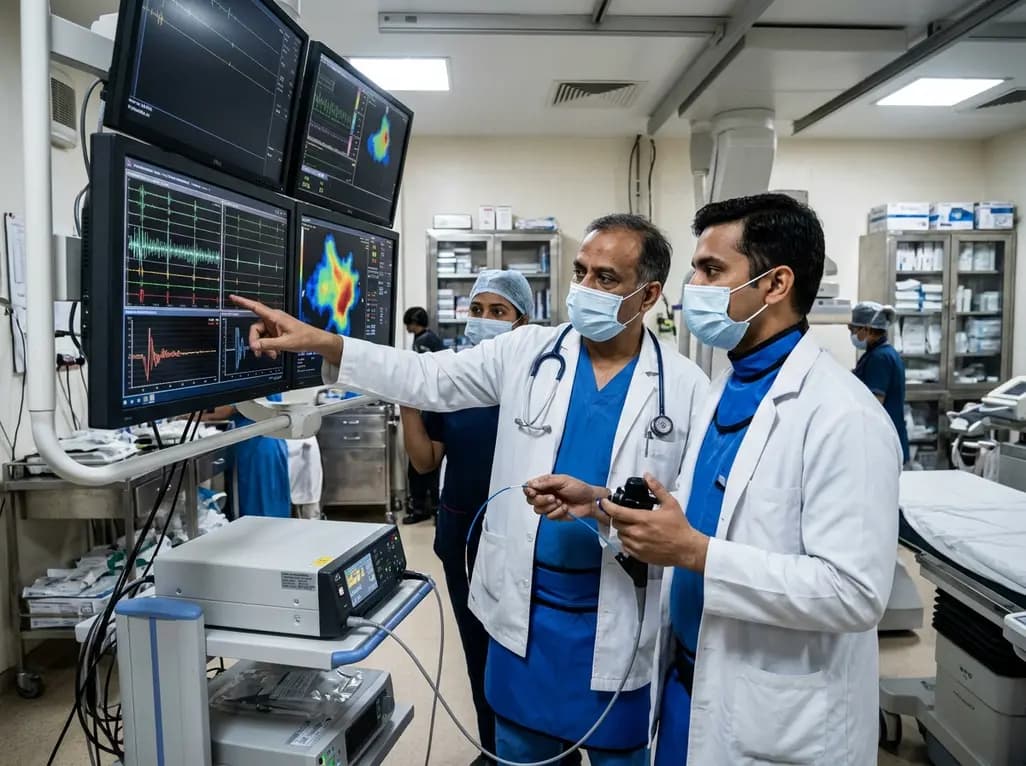
A comparative non-contact study reveals that high-power radiofrequency delivery with the QDOT MICRO catheter induces an artifactual contact force rise. Electrophysiologists must understand this power-dependent thermal and electrical phenomenon to avoid inadvertent catheter withdrawal and ineffective ablation.
Today
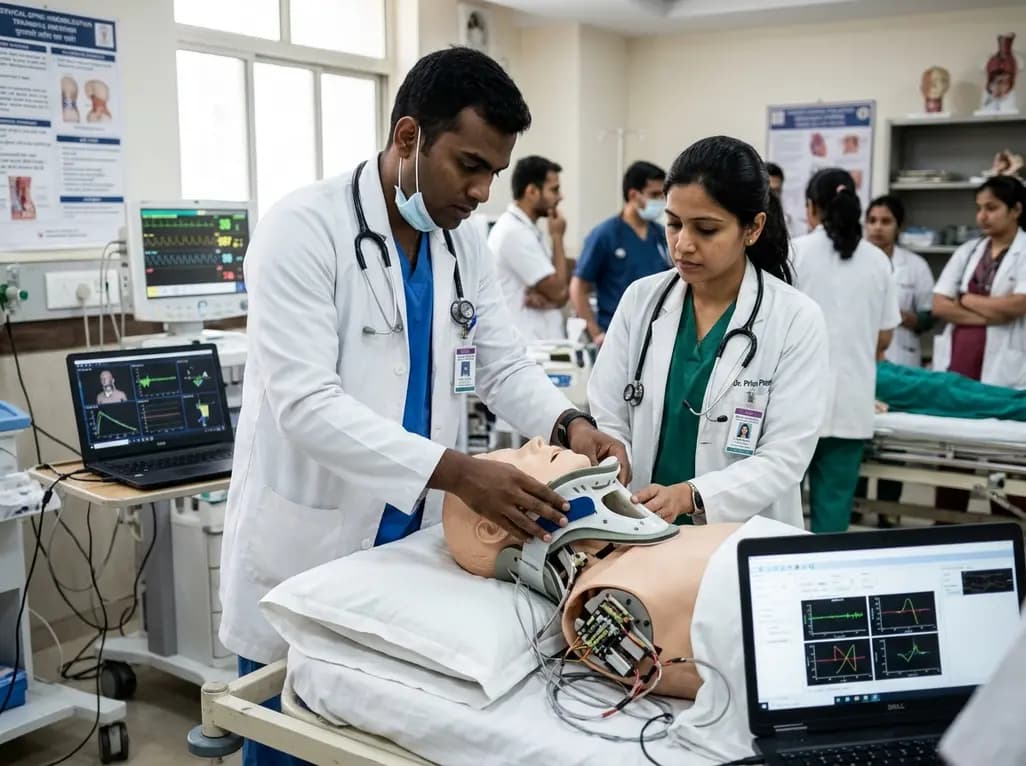
A novel proof-of-concept study presents a six-degree-of-freedom articulated manikin neck equipped with linear potentiometers. The system provides real-time kinematic motion feedback during cervical immobilisation, delivering sub-degree tracking accuracy to improve pre-hospital trauma training and patient safety.
Today

Novel glucose-responsive mPEG-PSA nanocarriers deliver insulin aspart on demand, achieving dual postprandial and basal glycemic control without hypoglycemia in diabetic models. This biomaterial breakthrough offers promising clinical implications for physiologic diabetes management.
Today
