.webp&w=384&q=75)

Loading, please wait...
Loading, please wait...

Metastatic ameloblastoma with intracranial involvement presents a unique therapeutic challenge, especially when surgical options are exhausted. In these complex cases, staged Gamma Knife radiosurgery has emerged as a promising local therapy. This approach allows clinicians to target distinct anatomical compartments while minimizing the risk of adverse radiation effects. Furthermore, it offers a focal alternative to invasive resections. Moreover, clinicians must monitor these patients closely over time. Because the disease follows a longitudinal course, long-term surveillance remains vital. Consequently, radiosurgical sequencing preserves future treatment options. Patients often experience clinical improvement without the morbidity associated with radical surgery. Therefore, this case highlights the efficacy of sequenced radiation in managing skull base progression.
In this illustrative case, the patient faced multicompartment progression despite six previous resections. The surgical team successfully targeted the cavernous sinus-sellar region and the infratemporal fossa separately. Each target received doses between 13 Gy and 14 Gy. Following treatment, imaging confirmed a nearly complete disappearance of the lesions. Most importantly, the patient showed significant clinical improvement without experiencing radiation toxicity. This success suggests that radiosurgical sequencing can manage disease progression while preserving vital anatomical structures. Furthermore, long-term surveillance ensures that any future recurrences are caught early.
It involves delivering focused radiation to distinct anatomical targets in a sequenced manner over time. This method is particularly useful for complex tumors spread across different skull base compartments.
Yes, while ameloblastoma is traditionally considered radioresistant, stereotactic radiosurgery (SRS) can provide significant tumor regression and local control in recurrent or metastatic cases where surgery is not feasible.
Disclaimer: This content is for informational and educational purposes only. It is not intended as medical advice or a substitute for professional healthcare. Consult a qualified specialist for diagnosis and treatment. Refer to the latest local and national guidelines for clinical practice.
References

Read summarized clinical updates, watch expert medical content, and earn CME certifications right from your smartphone.
Open your smartphone camera to scan and install.





Staged Gamma Knife radiosurgery achieves 93-100% volumetric response in complex skull base metastatic ameloblastoma cases when surgery is no longer feasible...
6 months ago

Recent epidemiological data reveals a dramatic surge in summer heat mortality driven by human-induced climate warming. This analysis explores the pathophysiological impacts on cardiac and renal systems, diagnostic dilemmas in death certification, and essential emergency cooling protocols for acute clinical care.
Today
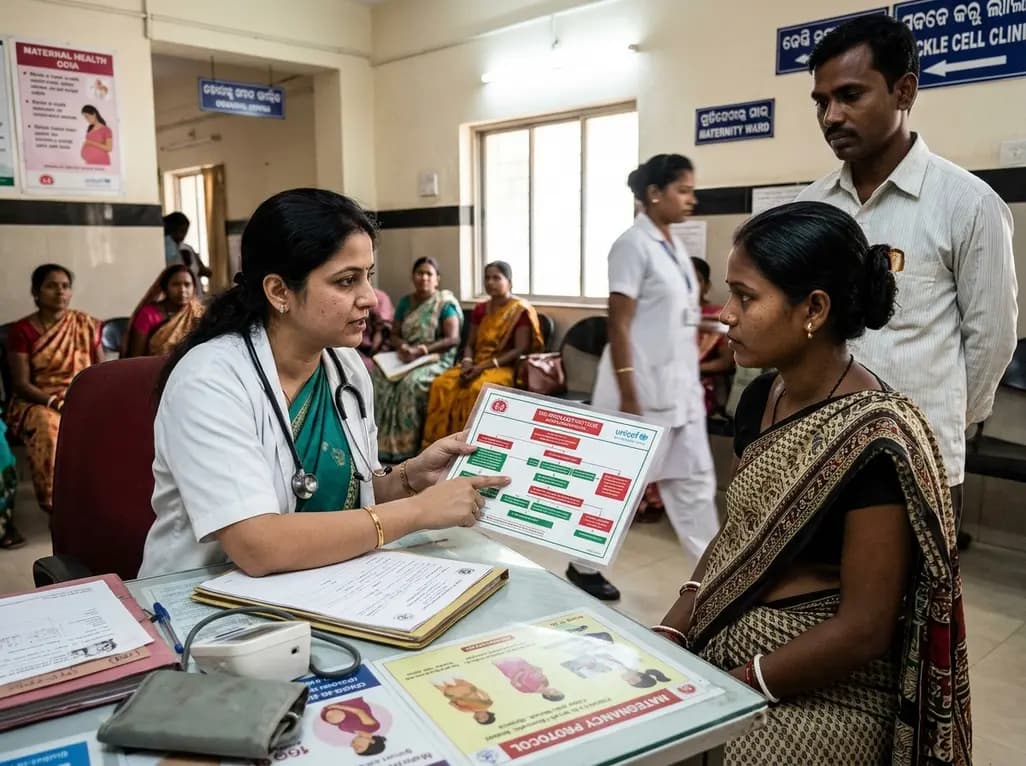
Odisha has established India's first state-level clinical protocol specifically tailored for pregnant women with sickle cell disease. Developed with NHM and UNICEF, the framework provides structured antenatal screening, crisis mitigation, standardized referral pathways, and specialized interdisciplinary care.
Today

India is advancing preventive healthcare by integrating genomics, artificial intelligence, and quantum technologies. With the SANGAM programme sequencing one million Indian genomes, clinicians can unlock personalized therapies, detect cardiometabolic risks early, and curb the burden of diabetes and heart disease.
Today

A randomized controlled trial demonstrates that an eight-week dual-task training intervention significantly improves static and dynamic postural control over standard balance exercises in individuals with chronic ankle instability, addressing critical neurocognitive deficits during athletic and daily activities.
Today

A retrospective cohort study of 7,716 ICU patients from the MIMIC-IV database demonstrates that Gradient Boosting Decision Trees significantly outperform traditional SOFA scores in predicting in-hospital mortality among patients with sepsis and diabetes, with SHAP analysis providing clinical interpretability.
Today
