.webp&w=384&q=75)

Loading, please wait...
Loading, please wait...
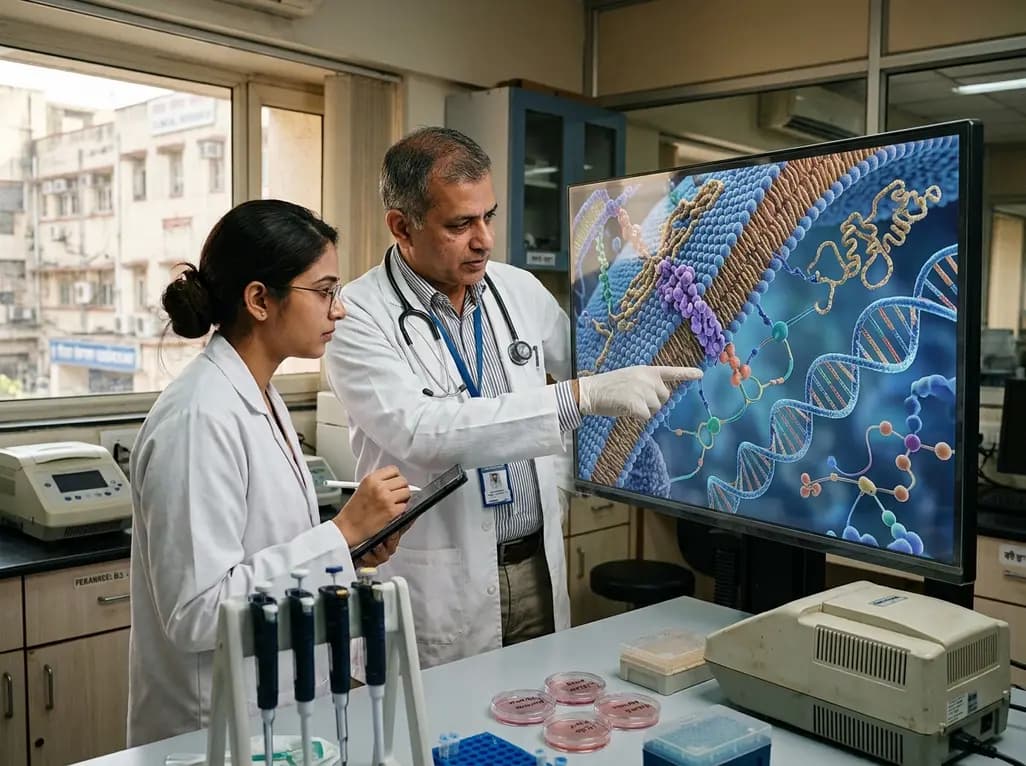
Sialylation of glycans remains a cornerstone of cellular signaling and health. Specifically, the ST3GAL sialyltransferases specificity determines how sialic acid attaches to galactose residues. Such processes are vital for skin cell function. Researchers recently used CRISPR/Cas9 technology to investigate these enzymes in N/TERT-1 keratinocytes.
The study explored how different ST3GAL enzymes influence glycan biosynthesis. For instance, removing ST3GAL1 significantly reduced sialylation on type 3 epitopes. However, the scientists only saw a complete loss of sialylation when they combined ST3GAL1 and ST3GAL2 knockouts. This suggests that these enzymes have overlapping roles in the skin.
Furthermore, ST3GAL4 and ST3GAL6 appear to target type 1 and type 2 epitopes. While ST3GAL4 has a major impact, ST3GAL6 functions mostly in tandem with it. Interestingly, ST3GAL5 remains the primary regulator for lactosylceramide sialylation. In contrast, ST3GAL3 does not show a clear preference between different substrates. Consequently, enzyme competition and substrate availability shape the final glycosylation landscape. These findings help explain how dysregulation leads to diseases like squamous cell carcinoma.
ST3GAL enzymes regulate the sialylation of proteins and lipids in keratinocytes. Abnormal expression of these enzymes often correlates with skin cancer progression and inflammatory disorders. Understanding their specificities helps identify potential therapeutic targets.
ST3GAL1 primarily targets type 3 epitopes on O-glycans. While ST3GAL2 has a more limited effect on its own, it works together with ST3GAL1 to ensure complete sialylation of core 1 structures.
Disclaimer: This content is for informational and educational purposes only. It does not constitute medical advice or a professional relationship. Refer to the latest local and national guidelines for clinical practice.
References
Hipgrave Ederveen AL et al. Mapping ST3GAL Transferase Specificities in the Glycosylation Landscape of N/TERT-1 Keratinocytes Using Glycogenomics and Mass Spectrometry. Glycobiology. 2026 Jun 11. doi: undefined. PMID: 42275133.
de-Freitas-Junior JC et al. Expression patterns of α2,3-Sialyltransferase I and α2,6-Sialyltransferase I in human cutaneous epithelial lesions. PMC. 2016.
Büll C et al. Sialyltransferase Inhibitors for the Treatment of Cancer Metastasis: Current Challenges and Future Perspectives. MDPI. 2021.

Read summarized clinical updates, watch expert medical content, and earn CME certifications right from your smartphone.
Open your smartphone camera to scan and install.





A study uses CRISPR/Cas9 to map the specificities of the ST3GAL sialyltransferase family in N/TERT-1 keratinocytes. Researchers identified how ST3GAL1-6 cooperate to regulate protein and lipid sialylation, providing key insights into the glycosylation landscape of human skin.
4 months ago

As monsoon seasons elevate arboviral disease threats, Tamil Nadu has initiated an ICMR-monitored evaluation of the tetravalent dengue vaccine in Tenkasi district. Clinicians emphasize clinical monitoring, public prevention, and high-quality early pediatric care to reduce disease morbidity across endemic regions.
Today

Leucine Rich Bio has introduced South Asia's first comprehensive vaginal microbiome test, BugSpeaks. By profiling microbial dysbiosis, pathogens, and antimicrobial resistance, this next-generation diagnostic platform provides clinicians with deeper insights into recurrent infections, fertility, and reproductive health.
Today

Review how tailored exercise programs benefit frail older patients with heart failure. Explore pathophysiological mechanisms, individualized training prescriptions, and strategies to overcome adherence barriers in clinical practice.
Today

This comparative study evaluates posterior labral tears with and without glenohumeral instability, highlighting distinct demographic patterns, MRI underestimation in stable shoulders, and successful arthroscopic repair outcomes.
Today

A clinical study demonstrates that early intervention with tocilizumab, either as monotherapy or bridged with corticosteroids, achieves significant proptosis reduction and resolves active inflammation in treatment-naive thyroid eye disease.
Today
