.webp&w=384&q=75)

Loading, please wait...
Loading, please wait...
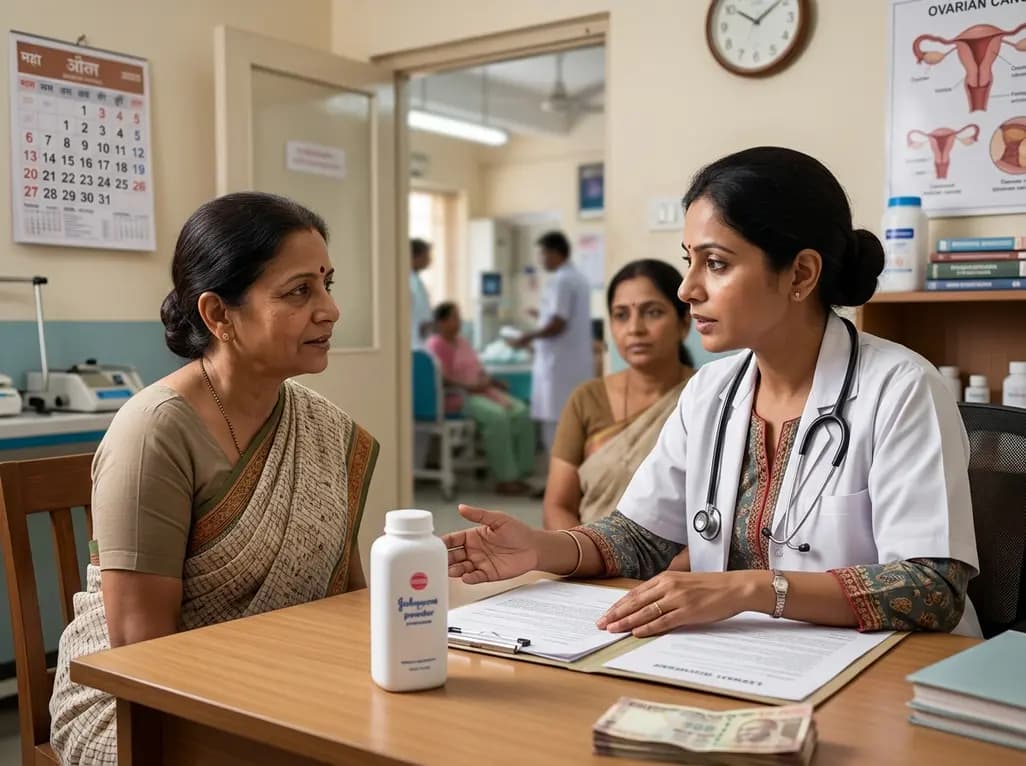
The recent announcement of the landmark J&J talc settlement marks a pivotal moment in product liability litigation, resolving tens of thousands of long-standing legal disputes. Johnson & Johnson agreed to pay $5.5 billion to resolve claims asserting that its talc-based baby powder and related personal care products caused ovarian cancer. This comprehensive agreement encompasses approximately 69,000 cases consolidated in New Jersey federal court alongside related state court litigation. Consequently, the agreement resolves roughly 99.75% of remaining talc-related claims against the healthcare giant. For healthcare providers, this major resolution offers a valuable opportunity to examine the complex intersection between environmental exposures, oncologic risk assessment, regulatory standards, and patient communication in clinical practice.
The multi-billion dollar agreement represents one of the largest medical product liability resolutions in modern legal history. For over a decade, plaintiffs alleged that chronic perineal application of talcum powder allowed microscopic mineral particles to migrate through the female reproductive tract, culminating in ovarian malignancy. The agreement specifically targets existing legal claims across federal and state jurisdictions. However, unlike previous structural proposals submitted through corporate bankruptcy filings, this direct settlement addresses existing lawsuits exclusively without restricting prospective future litigation.
Plaintiffs' law firms acknowledged the resolution as a good outcome after a decade-long courtroom battle. Nevertheless, the deal must still be approved by the federal judge overseeing the consolidated multidistrict litigation in New Jersey. Johnson & Johnson executives emphasized that the decision to settle does not constitute an admission of liability or legal wrongdoing. Instead, company leadership articulated that resolving these claims enables the organization to eliminate ongoing legal expenses and remain focused on developing life-saving medicines and medical devices. Meanwhile, legal analysts note that resolving nearly ninety-nine point seven five percent of active cases substantially reduces corporate exposure to unpredictable jury verdicts and ongoing legal fees.
The physiological link between cosmetic talc and ovarian cancer has generated intense debate within the medical and scientific communities for decades. Talc is a naturally occurring mineral mined from underground deposits that frequently form near naturally occurring asbestos veins. Consequently, concerns persist regarding potential asbestos contamination during raw material extraction. Additionally, independent toxicological researchers hypothesized that fine talc particles themselves might induce chronic tissue inflammation within the ovarian epithelium upon retrograde migration through the fallopian tubes.
Despite extensive epidemiological research, definitive causal consensus remains elusive. Several observational case-control studies reported a modest statistically significant increase in epithelial ovarian cancer risk among long-term talc users. Conversely, large prospective cohort studies failed to demonstrate a consistent dose-response relationship or conclusive causative cellular mechanism. Furthermore, recent judicial rulings highlighted these scientific uncertainties. A federal judge recently cast doubt on individual plaintiffs' ability to establish that talc specifically caused their ovarian cancer. Johnson & Johnson maintained throughout litigation that its commercial talc products were safe and asbestos-free. Nevertheless, public concern prompted global health organizations, including the World Health Organization's International Agency for Research on Cancer, to continuously evaluate environmental mineral exposures and toxicological safety standards.
Reaching the final agreement required overcoming years of complex procedural maneuvering and repeated judicial hurdles. The legal proceedings resumed in March 2025 after federal courts previously stalled proceedings during repeated corporate bankruptcy attempts. Johnson & Johnson had previously attempted to resolve its talc liabilities by creating a dedicated subsidiary, Red River Talc LLC, to seek Chapter 11 bankruptcy protection. However, federal bankruptcy judges repeatedly rejected these bankruptcy maneuvers, ruling that the parent corporation lacked the financial distress necessary to justify bankruptcy protection.
Consequently, the litigation returned to standard multidistrict trial courts, where active claims expanded rapidly to nearly seventy thousand cases. Faced with mounting defense litigation expenses and sporadic high-value jury verdicts, corporate strategy shifted toward a direct global settlement framework. Notably, Johnson & Johnson achieved key evidentiary victories shortly before finalizing the deal, casting doubt on the admissibility of plaintiff expert testimony. Therefore, negotiating a consolidated five point five billion dollar payout provided a definitive exit strategy. While this settlement resolves existing domestic claims, litigation continues in other international jurisdictions, such as the United Kingdom High Court. This complex legal evolution demonstrates how corporate risk management must balance judicial defense strategies against broader commercial viability and public reputation.
Physicians frequently face patient inquiries regarding consumer product safety, environmental carcinogens, and personal cancer risk. When patients ask about past talc exposure, healthcare providers must deliver balanced, evidence-based communication. Clinicians should explain that while historical observational studies suggested weak statistical associations, definitive individual causation remains difficult to establish clinically. Moreover, reassuring patients who previously used talcum powder is essential, as absolute individual risk remains very low even among long-term users.
In response to public health concerns and shifting consumer demand, major manufacturers modified product formulations. Johnson & Johnson phased out talc-based baby powder in the United States in 2020, transitioning completely to cornstarch-based alternatives globally by 2023. Pure cornstarch consists of large organic carbohydrate molecules that do not pose asbestos contamination risks or mineral particle migration concerns. Consequently, physicians can confidently advise patients that modern commercial baby powders present no recognized oncologic hazard. Additionally, clinicians should encourage patients concerned about ovarian cancer to focus on established, evidence-based risk factors, including family genetic history, BRCA mutation status, reproductive history, and oral contraceptive use, rather than past cosmetic exposures.
The resolution of mass tort talc litigation highlights broader professional obligations for gynecologists, oncologists, and primary care practitioners. Medical specialists must stay informed about consumer product safety developments to address patient anxiety effectively. Furthermore, understanding the distinction between epidemiological correlation and legal causation is vital when reviewing medical records or testifying as expert witnesses in toxic tort cases. Toxicological evaluation requires rigorous demonstration of biological plausibility, adequate exposure dosage, and clear temporal relationships.
Additionally, this high-profile legal battle highlights the critical importance of public health surveillance and post-market safety monitoring for cosmetic products. Historically, regulatory oversight for personal care items differed significantly from strict pharmaceutical approval processes. Consequently, product liability litigation often filled regulatory gaps by forcing corporate accountability, encouraging consumer transparency, and driving product reform. Moving forward, healthcare providers should incorporate accurate environmental health histories into routine patient examinations without causing unnecessary alarm. By providing objective, scientific context regarding consumer product ingredients, clinicians empower patients to make safe, informed choices regarding personal hygiene, lifestyle habits, and preventive health care.
Q1: What are the main terms of the J&J talc settlement?
Johnson & Johnson agreed to pay $5.5 billion to resolve approximately 69,000 pending lawsuits in federal and state courts. This landmark agreement covers roughly 99.75% of remaining talc claims alleging that baby powder caused ovarian cancer. However, the settlement applies exclusively to existing claims and requires official judicial approval from the presiding federal judge overseeing the consolidated multidistrict litigation in New Jersey.
Q2: Does scientific evidence conclusively prove that talcum powder causes ovarian cancer?
Scientific evidence remains mixed and inconclusive. While some observational epidemiological studies observed weak statistical associations between perineal talc use and epithelial ovarian cancer, major prospective cohort studies found no definitive causal link. Furthermore, federal judges have questioned whether plaintiffs can prove that talc specifically caused cancer in individual clinical cases, although concerns regarding potential historical asbestos contamination persist among toxicological researchers.
Q3: How should clinicians advise patients who previously used talc baby powder?
Clinicians should reassure patients that absolute individual risk remains low. Manufacturers replaced talc with safe cornstarch formulations in consumer baby powders years ago. Healthcare providers should advise patients to focus on well-established ovarian cancer risk factors, such as genetic predisposition, age, reproductive history, and family genetic history, rather than past cosmetic exposure.
Disclaimer: This content is for informational and educational purposes only. It does not constitute medical advice or replace professional judgment. Refer to the latest local and national guidelines for clinical practice.
References

Read summarized clinical updates, watch expert medical content, and earn CME certifications right from your smartphone.
Open your smartphone camera to scan and install.





Johnson & Johnson announced a $5.5 billion settlement to resolve nearly 69,000 lawsuits alleging its talc-based baby powder caused ovarian cancer. This comprehensive deal covers 99.75% of active claims. Read about the legal strategy, scientific evidence on talc exposure, and clinical counseling for patients.
last month

Diaphragmatic dysfunction affects over a third of chronic stroke patients, worsening sleep, mood, and functional mobility. Ultrasound assessment and inspiratory training improve outcomes.
Today

The ClinGen Prenatal Gene Curation Expert Panel evaluated 63 disease relationships across 61 genes, establishing clinical validity for severe fetal phenotypes like hydrops and stillbirth to enhance prenatal genomic interpretation and clinical care.
Yesterday

Wearable sleep health technology provides continuous biometric monitoring to augment cardiovascular risk assessment. By tracking autonomic proxies and sleep architecture, these digital tools empower clinicians to guide cardiometabolic interventions, despite persistent challenges in wake detection specificity.
Today

A prospective study reveals that piriformis syndrome coexists in nearly 85% of patients diagnosed with lumbosacral radiculopathy. Ultrasound-guided diagnostic injections achieve significant pain reduction, highlighting the necessity of assessing peripheral entrapments alongside spinal pathologies.
Today

SWEDEPAD-1 trial insights show paclitaxel-coated devices do not improve long-term limb salvage in patients with chronic limb-threatening ischemia and tissue loss. While one-year reinterventions decreased, the devices were linked to a higher risk of major amputation at three months.
Today
