.webp&w=384&q=75)

Loading, please wait...
Loading, please wait...

Modern neurosurgery and orthopedics have witnessed a significant shift toward precision medicine, where individual patient characteristics guide clinical decisions. Accurate spine surgery risk prediction is no longer just a luxury but a fundamental component of preoperative planning and informed consent. For years, surgeons have debated whether complex surgical calculators, single laboratory markers, or frailty-based indices offer the most reliable insights into postoperative outcomes. This debate is particularly relevant in complex spinal procedures where the interplay between surgical invasiveness and patient physiology determines the recovery trajectory. Consequently, researchers have sought to benchmark these various tools to determine which provides the most accurate forecast for mortality, major complications, and infectious risks.
The quest for the ideal risk-stratification tool is driven by the need to optimize patient selection and resource allocation. While frailty has emerged as a popular metric in geriatric medicine, its utility compared to established surgical calculators remained poorly characterized until recently. Establishing a hierarchy of predictive tools allows clinicians to streamline their preoperative assessments, focusing on the metrics that offer the highest discriminatory power. Moreover, understanding the strengths of each tool enables a more tailored approach to patient care. For instance, some metrics may excel at predicting life-threatening events, while others might be more attuned to predicting prolonged hospital stays or infectious morbidity. By refining these predictive strategies, surgical teams can significantly improve safety profiles for patients undergoing elective or emergent spinal interventions.
To address the existing gaps in surgical risk assessment, a massive national registry analysis was conducted, examining data from 362,145 adult spine surgery patients. This robust study utilized the American College of Surgeons National Surgical Quality Improvement Program (ACS NSQIP) database, covering a five-year period from 2017 to 2022. The researchers aimed to compare five distinct risk metrics: the American College of Surgeons Surgical Risk Calculator (ACS SRC), serum albumin levels, the Risk Analysis Index (RAI), the modified 5-item frailty index (mFI-5), and the Geriatric Nutritional Risk Index (GNRI). By utilizing multivariable logistic regression, the study adjusted for critical confounders such as age, sex, procedure urgency, and the specific type of surgical procedure performed.
Furthermore, the analysis was meticulously stratified by various diagnosis categories. This included patients undergoing surgery for degenerative diseases, tumors, trauma, spinal deformity, and infections. Such a broad scope ensured that the findings were applicable across the diverse spectrum of spinal surgery. The researchers evaluated the performance of these tools using C-statistics, which measure the area under the receiver operating characteristic (ROC) curve. Higher C-statistics indicate better discrimination, meaning the tool is more effective at distinguishing between patients who will and will not experience a complication. This benchmarking approach provides a transparent and data-driven comparison of tools that many surgeons use daily, often without knowing their relative accuracy in different clinical scenarios.
The results of the analysis clearly identified the ACS Surgical Risk Calculator as the top-performing tool across almost all endpoints. The ACS SRC demonstrated exceptional predictive accuracy, particularly for mortality, with a C-statistic of 0.908. It also showed strong discrimination for Clavien-Dindo grade IV complications and other major adverse events. This high level of performance is likely due to the comprehensive nature of the ACS SRC, which incorporates a wide array of patient-specific and procedure-specific variables. Unlike single-point metrics, the calculator considers the cumulative impact of comorbidities alongside the planned surgical approach, providing a multidimensional view of risk.
However, the utility of the ACS SRC extends beyond mere mortality prediction. It proved to be a versatile tool for general major complications, consistently outperforming the more specialized frailty-based metrics. While some clinicians may find the input process for the ACS SRC time-consuming compared to checking a single lab value, the depth of its predictive power justifies its routine use in high-risk spine surgery cases. The study highlights that the thoroughness of the ACS SRC makes it the benchmark against which other tools should be measured. For surgeons seeking the most rigorous preoperative assessment, the ACS SRC remains the gold standard for identifying patients at high risk for severe postoperative morbidity. Consequently, integrating this calculator into the clinical workflow can facilitate better-informed shared decision-making with patients and their families.
Perhaps the most striking finding of the study was the impressive performance of serum albumin. Despite being a single laboratory value, albumin ranked as the second-best predictive tool, surpassing sophisticated frailty indices in several categories. Albumin showed a strong correlation with mortality and major complications, but its greatest strength lay in predicting infectious outcomes. Specifically, it demonstrated high discrimination for sepsis, septic shock, surgical site infections (SSI), and urinary tract infections (UTI). Furthermore, low preoperative albumin was a potent predictor of extended hospital length of stay and nonhome discharge, reflecting its role as a surrogate marker for overall physiologic reserve and nutritional status.
In many clinical settings, especially in countries where malnutrition or chronic illness is prevalent, serum albumin serves as an invaluable and easily accessible screening tool. Because it is a routine part of most preoperative lab panels, it provides a high-yield assessment with minimal additional effort. The study underscores that hypoalbuminemia is not merely a nutritional deficit but a systemic marker of vulnerability. For spine surgeons, monitoring albumin levels can pinpoint patients who require aggressive preoperative optimization or closer postoperative surveillance for infection. Although it lacks the procedural detail of the ACS SRC, its predictive weight for infectious morbidity makes it an essential component of the surgical risk-stratification toolkit. Therefore, clinicians should prioritize albumin assessment as a high-impact, low-cost intervention to enhance surgical safety.
One of the study's primary objectives was to compare nutritional and laboratory markers with frailty-based metrics like the RAI and mFI-5. Surprisingly, serum albumin showed significantly better predictive value than all frailty-based metrics (p < 0.001) across multiple outcomes. While the Risk Analysis Index (RAI) performed better than the simpler mFI-5, neither could match the predictive power of the ACS SRC or serum albumin. This finding challenges the growing clinical reliance on frailty scores alone to determine surgical candidacy. The researchers suggest that while frailty indices capture functional decline, they may miss the acute physiologic and nutritional stressors that serum albumin effectively reflects.
Moreover, the performance gap between albumin and frailty tools remained consistent across various surgical subgroups, including trauma and degenerative disease. This indicates that physiological resilience, as measured by albumin, might be a more fundamental determinant of surgical outcome than the functional deficits captured by current frailty tools. However, this does not mean frailty indices are useless; rather, it suggests they should be viewed as complementary rather than primary risk-stratification tools. For complex spine surgery, where the metabolic demand of recovery is high, the objective nature of a biochemical marker like albumin may provide a more reliable safety net than subjective frailty assessments. By understanding these nuances, surgeons can avoid over-relying on a single metric and instead adopt a more balanced approach to evaluating patient risk.
The clinical implications of this national registry analysis are profound for spine surgery departments worldwide. By establishing that the ACS SRC and serum albumin are the most reliable predictors of outcomes, surgeons can standardize their preoperative protocols. In busy clinical environments, where time is limited, focusing on these two high-performing metrics ensures that the most critical risks are identified. Additionally, these findings provide a clear pathway for preoperative optimization. If a patient is identified as high-risk by the ACS SRC or presents with low albumin, multidisciplinary teams can intervene with nutritional support or medical management before proceeding to the operating room.
Furthermore, this data supports the use of spine surgery risk prediction tools to manage patient expectations. Being able to provide a quantified risk for mortality or infection allows for more transparent communication. For patients in the Indian subcontinent, where surgical outcomes are often scrutinized, having data-backed risk assessments can help in managing both clinical and medico-legal risks. While no tool is perfect, the benchmarking provided by this study gives surgeons the confidence to choose the most validated metrics. Ultimately, the goal of using these tools is to shift from reactive complication management to proactive risk mitigation. By leveraging the superior accuracy of the ACS SRC and the simplicity of serum albumin, the surgical community can continue to push the boundaries of safety in spine surgery.
Serum albumin serves as a precise biochemical marker for a patient's nutritional status and systemic inflammatory state. Unlike frailty indices, which primarily measure functional deficits and chronic comorbidities, albumin reflects the immediate physiological reserve needed to withstand surgical stress. The study demonstrated that albumin's objective nature allows it to more accurately predict infectious complications and overall mortality compared to more subjective frailty assessments like the mFI-5.
The American College of Surgeons Surgical Risk Calculator (ACS SRC) integrates a much broader range of data, including specific surgical procedure codes and multiple patient health factors. This multidimensional approach allows it to account for both the patient's baseline health and the inherent risk of the surgery itself. In contrast, frailty calculators often focus on a limited set of functional criteria, which may not capture the full complexity of spinal interventions.
For complex cases involving tumors or deformities, these findings suggest that surgeons should prioritize using the ACS SRC for comprehensive risk assessment and serum albumin for infectious risk screening. This dual approach ensures that both procedural risks and physiological vulnerabilities are addressed. Identifying high-risk patients preoperatively allows for better resource allocation, such as planned ICU admissions or specialized nutritional interventions, which are critical for improving long-term outcomes in spine surgery.
Disclaimer: This content is for informational and educational purposes only. It does not constitute medical advice or establish a doctor-patient relationship. Surgical decisions should be based on comprehensive clinical evaluation and individualized patient factors. Refer to the latest local and national guidelines for clinical practice.
References
Farid M et al. Benchmarking risk prediction tools in spine surgery: a national registry analysis of albumin, frailty, and surgical calculators. J Neurosurg Spine. 2026 Jul 10. doi: 10.3171/2026.2.SPINE251657. PMID: 42430800.
Lubelski D, Hersh A, Azad TD, et al. Prediction models in degenerative spine surgery: a systematic review. Glob Spine J. 2021;11(1_suppl):79S-88S.
Bilimoria KY, Liu Y, Paruch JL, et al. Development and evaluation of the universal ACS NSQIP surgical risk calculator: a decision aid and informed consent tool for patients and surgeons. J Am Coll Surg. 2013;217(5):833-42.
"
Read summarized clinical updates, watch expert medical content, and earn CME certifications right from your smartphone.
Open your smartphone camera to scan and install.





A landmark study of 362,145 spine surgery patients reveals that the ACS Surgical Risk Calculator and preoperative serum albumin levels offer superior predictive accuracy for complications compared to traditional frailty-based metrics, providing vital benchmarks for surgeons.
3 months ago
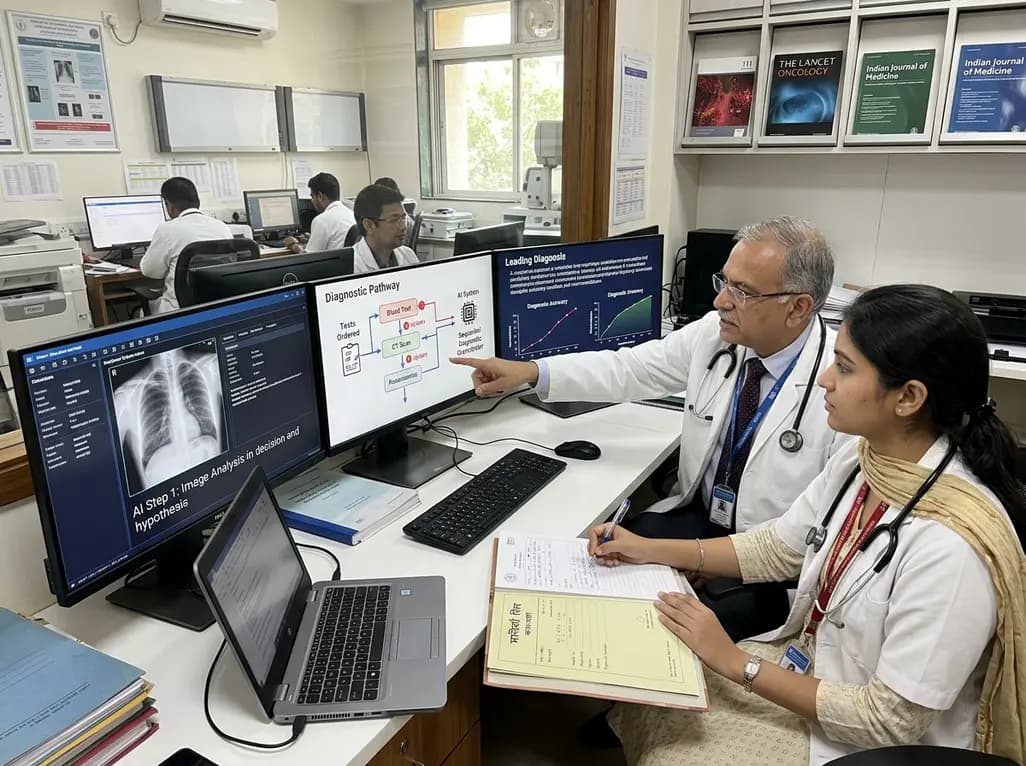
A breakthrough peer-reviewed study demonstrates that a sequential AI diagnosis system can mirror real-world clinical reasoning. By ordering stepwise tests and updating hypotheses dynamically, this multi-agent orchestrator achieved superior diagnostic accuracy while reducing investigative costs.
Today

A prenatal case highlights severe glutaric acidemia type II presenting as bilateral hyperechoic cystic kidneys at 18 weeks. Whole-exome sequencing revealed a novel homozygous ETFDH frameshift variant, demonstrating the power of rapid genetic testing in fetal renal anomalies.
Today

Review how tailored exercise programs benefit frail older patients with heart failure. Explore pathophysiological mechanisms, individualized training prescriptions, and strategies to overcome adherence barriers in clinical practice.
Yesterday

This comparative study evaluates posterior labral tears with and without glenohumeral instability, highlighting distinct demographic patterns, MRI underestimation in stable shoulders, and successful arthroscopic repair outcomes.
Yesterday

A clinical study demonstrates that early intervention with tocilizumab, either as monotherapy or bridged with corticosteroids, achieves significant proptosis reduction and resolves active inflammation in treatment-naive thyroid eye disease.
Yesterday
