.webp&w=384&q=75)

Loading, please wait...
Loading, please wait...

Recent research underscores the critical role that specialized nursing expertise plays in modern hospital settings. A comprehensive study by Ryamukuru D et al. (2026) investigates specialty nurse certification outcomes across four major hospitals. The analysis linked data from over 42,000 patients to nearly 2,700 nurses. Consequently, the findings suggest that certifications represent more than just professional milestones. They act as vital drivers of clinical safety. Furthermore, the researchers discovered that higher proportions of care from certified nurses directly improve recovery rates. This effect remains consistent even after adjusting for patient characteristics and individual nurse profiles.
The core findings of this retrospective study emphasize the positive link between certification and patient safety. Although formal education provides a strong foundation, specialty certification validates advanced clinical judgment and expertise. Therefore, the study found that the benefits of certification remain robust independent of the nurses' formal degree levels. This indicates that specific expertise in fields like critical care or surgery provides a unique layer of protection. Moreover, hospitals that prioritize these credentials often reduce the costs of preventable complications. Additionally, these institutions tend to retain their highly skilled staff longer, fostering a stable work environment.
Healthcare administrators should view nursing certification as a strategic investment rather than an optional credential. Since certified nurses demonstrate a higher mastery of specialized tasks, they handle complex patient needs more effectively. For instance, many high-performing hospitals now offer tuition reimbursement or dedicated study time for certification exams. Consequently, these facilities often experience fewer adverse events like patient falls or hospital-acquired infections. In addition, promoting a culture of lifelong learning boosts nurse morale and professional pride. Ultimately, focusing on specialized training creates a safer, more efficient environment for every patient.
Certified nurses reduce the incidence of expensive, preventable complications. Therefore, hospitals that support certification programs often see lower overall costs related to length of stay and adverse events. This investment pays for itself through improved efficiency and safety.
The study indicates that both are valuable, but certification provides independent benefits for patient safety. While degrees offer broad academic knowledge, certifications confirm the specific clinical expertise required for specialized care in complex environments.
Disclaimer: This content is for informational and educational purposes only. It does not constitute professional medical advice, diagnosis, or treatment. Always seek the advice of your physician or other qualified healthcare providers with any questions regarding a medical condition. Refer to the latest local and national guidelines for clinical practice.
References
Ryamukuru D et al. Associations between specialty registered nurse certification and patient outcomes: A nurse-patient-level analysis. Nurs Outlook. 2026 Jun 08. doi: undefined. PMID: 42258900.
Bautista MGF et al. Pathway to Excellence Through Nursing Specialty Certification. ICN Congress 2025.
Coelho P. The relationship between specialty nurse certification and patient, nurse and organizational outcomes: A systematic review. PubMed. 2019.

Read summarized clinical updates, watch expert medical content, and earn CME certifications right from your smartphone.
Open your smartphone camera to scan and install.





A study of 42,000+ patients shows that specialty nurse certification significantly improves patient outcomes, independent of a nurse's formal education leve...
4 months ago

A retrospective analysis reveals that cavotricuspid isthmus ablation using a variable-loop pulsed field ablation catheter achieves acute conduction block safely and efficiently during concomitant atrial fibrillation procedures.
Today
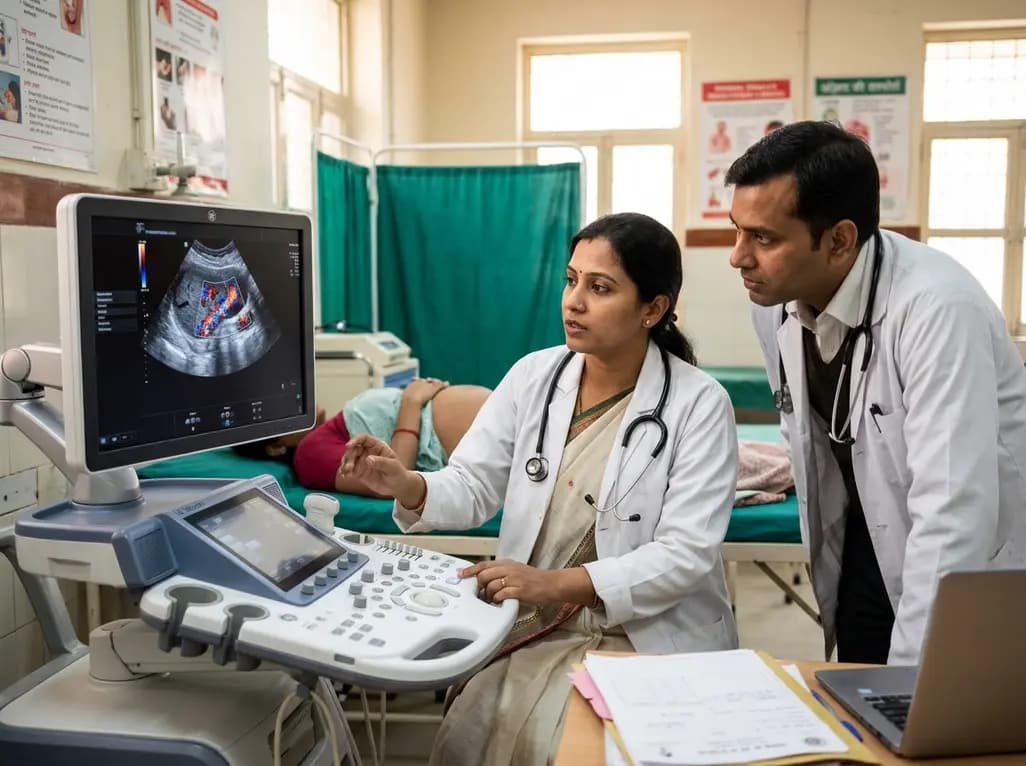
A study in Ultrasound in Obstetrics & Gynecology shows that quantitative vascularization of the anterior fornix/cervix with transvaginal ultrasound reliably identifies placenta accreta spectrum and predicts severe intraoperative hemorrhage, offering vital objective risk stratification.
Today
A clinical study highlights how coupling interval variability assessed through Poincaré plots differentiates right ventricular outflow tract premature ventricular contractions from left ventricular origins, optimizing patient selection and procedural strategy for radiofrequency catheter ablation.
Today

A novel proof-of-concept study presents a six-degree-of-freedom articulated manikin neck equipped with linear potentiometers. The system provides real-time kinematic motion feedback during cervical immobilisation, delivering sub-degree tracking accuracy to improve pre-hospital trauma training and patient safety.
Today

Protein O-GlcNAcylation couples cellular nutrient status to vital neuronal functions. This review explores how disrupted O-GlcNAc cycling drives both neurodevelopmental delays and neurodegenerative cascades, positioning metabolic post-translational modifications as therapeutic targets in clinical neurology.
Today
