.webp&w=384&q=75)

Loading, please wait...
Loading, please wait...
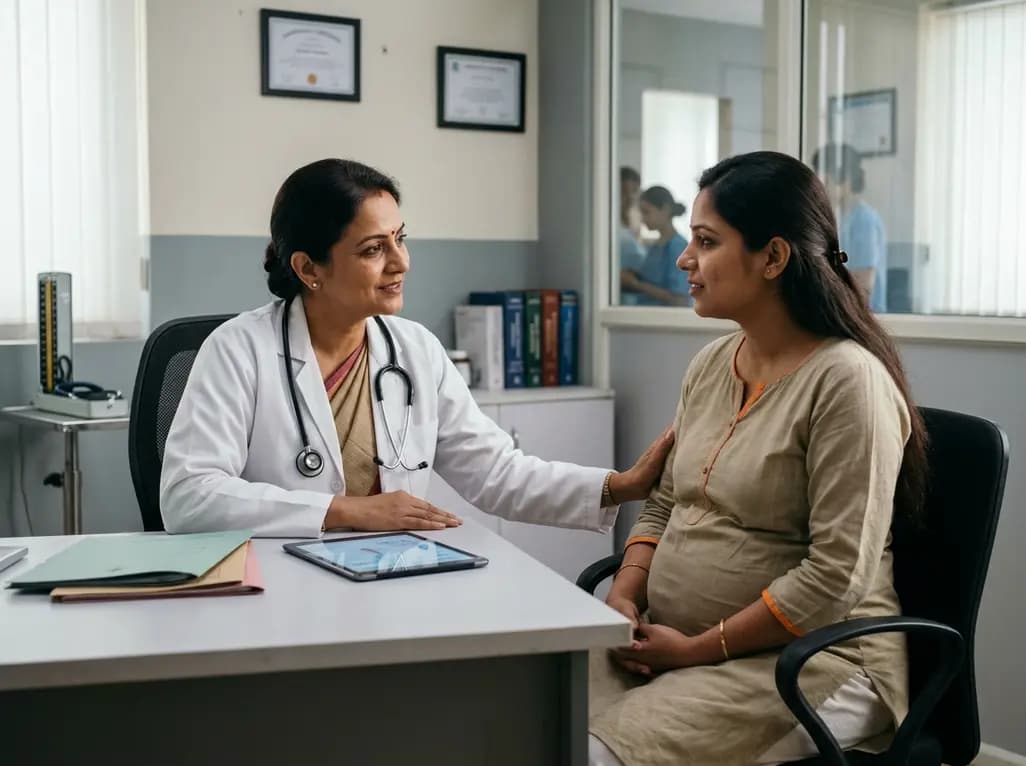
Female Genital Mutilation or Cutting (FGM/C) remains a significant global health challenge, affecting millions of women who require specialized medical attention during pregnancy and childbirth. Establishing effective specialist maternity care for FGM/C is essential for mitigating the physical and psychological complications associated with this practice. In Europe alone, approximately 600,000 women live with the long-term consequences of FGM/C, with Germany hosting over 100,000 affected residents. These women often face unique obstetric risks, including prolonged labor, extensive perineal tearing, and significant psychological distress. Addressing these needs requires more than standard obstetric protocols; it necessitates a deeply integrated, specialized approach. By focusing on individualized care pathways, healthcare systems can better support survivors through one of the most vulnerable periods of their lives. Specialist services aim to provide a safe environment where clinical expertise meets cultural sensitivity. This approach ensures that women do not just receive medical treatment but are also empowered and respected throughout their maternal journey. Implementing such services involves complex organizational changes and a commitment to continuous quality improvement within maternity units.
A cornerstone of specialist maternity care for FGM/C is the adoption of a trauma-informed care model. This approach recognizes that survivors of FGM/C may experience childbirth as a retraumatizing event due to the physical proximity of the birth process to the original site of trauma. Clinical practitioners must be trained to recognize signs of psychological distress and respond with empathy and specialized techniques. Trauma-informed care involves transparent communication, ensuring the patient feels in control of her body and the medical decisions being made. In the German study, birth plans were utilized to record specific individual needs, allowing for a personalized experience that respects the patient's history. This proactive documentation helps all members of the multidisciplinary team understand the patient's triggers and preferences before labor begins. Furthermore, a trauma-informed lens shifts the focus from "what is wrong with you" to "what happened to you," fostering a therapeutic alliance. Such an environment reduces anxiety and can lead to improved obstetric outcomes by promoting relaxation and cooperation during labor. By prioritizing emotional safety alongside physical health, providers can significantly improve the overall patient experience for FGM/C survivors.
Successfully integrating specialized services into routine hospital operations requires several key supportive mechanisms. One of the most vital elements is the presence of "champions"—dedicated staff members with sufficient authority and intrinsic motivation to drive change within the department. These individuals serve as advocates for the service, ensuring it receives the necessary attention and resources. Additionally, having experienced colleagues who can provide mentorship and share clinical expertise is crucial for building staff confidence. Specialist maternity care for FGM/C thrives when expert advice is easily accessible, allowing junior staff to consult on complex cases without delay. This collaborative environment fosters a culture of learning and continuous improvement. The implementation process is also bolstered when the mission of the service aligns with the personal values of the healthcare providers. When staff are intrinsically motivated to provide equitable care, they are more likely to overcome the administrative and clinical hurdles that arise during the rollout of a new intervention. These internal drivers are essential for moving a service from a pilot project to a sustainable component of routine maternity care.
Despite the best intentions, the implementation of specialist maternity care for FGM/C often faces significant systemic barriers. One common challenge identified in clinical settings is the late initial contact between pregnant women and midwifery services. Early access is critical for performing necessary assessments, such as determining the need for deinfibulation and discussing the birth plan. Furthermore, a lack of dedicated time during consultations can prevent providers from addressing the complex psychosocial needs of FGM/C survivors. Fragmented postnatal care also poses a risk, as women may lose the specialized support they received during pregnancy once they are discharged. These gaps in the care pathway can lead to suboptimal health outcomes and a sense of abandonment for the patient. To address these issues, healthcare systems must prioritize structural support, such as extending consultation times and creating seamless transitions between antenatal and postnatal teams. Similarly, improving clinical coding is necessary to accurately track service utilization and ensure adequate funding. Overcoming these barriers requires a high-level commitment from hospital administration to support the frontline staff in delivering high-quality, continuous care.
To understand how specialist maternity care for FGM/C becomes part of routine practice, researchers often apply Normalization Process Theory (NPT). NPT provides a framework for analyzing the work that health professionals do to implement, embed, and integrate new ways of working. It focuses on four main constructs: coherence, cognitive participation, collective action, and reflexive monitoring. Coherence involves staff reaching a shared understanding of why the specialist service is necessary. Cognitive participation describes how staff engage with the new service and commit to its success. Collective action refers to the actual work required to deliver the care, while reflexive monitoring involves evaluating the service's impact and making necessary adjustments. By using NPT, clinical leaders can identify specifically where implementation might be failing. For example, if staff do not see the value of the service (low coherence), they are unlikely to participate actively. Applying this theory helps in moving beyond simple checklists to understanding the complex human behaviors and organizational structures that influence clinical practice. This theoretical approach ensures that the service is not just introduced but becomes a "normalized" and indispensable part of the maternity unit's culture.
The lessons learned from implementing specialist maternity care for FGM/C in Western contexts like Germany have significant implications for global maternal health, including in countries like India. While the prevalence and types of FGM/C vary across regions, the fundamental principles of trauma-informed care and interprofessional collaboration remain universal. In India, where certain communities practice forms of FGM/C, there is an urgent need to raise awareness among obstetricians and gynecologists about the specific needs of these women. Future research should focus on developing standardized care pathways that address the fragmentation seen in existing models. Improving clinical coding and data collection will also be vital for understanding the true scope of the issue and advocating for policy changes. Moreover, fostering partnerships with community leaders can help bridge the gap between healthcare providers and affected women, encouraging earlier access to care. By building on best-practice models, healthcare systems worldwide can ensure that every woman, regardless of her history, receives individualized and dignified maternity care. The goal is to move toward a future where specialized support is not an exception but a standard component of global obstetric practice.
Disclaimer: This content is for informational and educational purposes only and does not constitute medical advice, diagnosis, or treatment. Always seek the advice of your physician or other qualified health provider with any questions you may have regarding a medical condition. Never disregard professional medical advice or delay in seeking it because of something you have read here. Refer to the latest local and national guidelines for clinical practice.
References
Welcland L et al. Understanding the implementation of specialist maternity services for pregnant women with FGM/C in Germany: a situation analysis applying normalization process theory. Reprod Health. 2026 Jul 03. doi: undefined. PMID: 42400005.
World Health Organization. WHO guideline on the prevention of female genital mutilation and clinical management of complications. Geneva: World Health Organization; 2016.
Royal College of Obstetricians and Gynaecologists. Female Genital Mutilation and its Management (Green-top Guideline No. 53). London: RCOG; 2015.
Trauma-informed care improves outcomes by creating a safe psychological environment that reduces the risk of retraumatization during childbirth. By acknowledging the patient's history of trauma and incorporating specific preferences into birth plans, healthcare providers can lower maternal anxiety. This collaborative approach fosters trust and patient empowerment, which often results in better cooperation during labor, reduced need for emergency interventions, and more positive overall psychological wellbeing for the mother following delivery.
Implementation barriers often include systemic issues such as fragmented care pathways and limited consultation time, which prevent thorough psychosocial assessments. Late access to midwifery services also delays the creation of essential birth plans. Additionally, a lack of standardized clinical coding makes it difficult to track outcomes and secure funding. Resistance to change within hospital hierarchies and a lack of specialized training for all staff members can further hinder the successful integration of these services.
Accurate clinical coding is vital because it provides the data necessary for healthcare systems to recognize the prevalence of FGM/C and allocate appropriate resources. Without correct coding, the specific needs of these patients remain invisible in hospital statistics, leading to underfunding and inadequate staffing for specialist clinics. Furthermore, precise coding ensures that clinical information is communicated effectively across different departments, supporting continuity of care and enabling researchers to identify areas for service improvement and better patient outcomes.

Read summarized clinical updates, watch expert medical content, and earn CME certifications right from your smartphone.
Open your smartphone camera to scan and install.





A situation analysis in Germany explores implementing specialist maternity services for women with FGM/C. Using Normalization Process Theory, the study highlights trauma-informed care and systemic barriers like fragmented pathways, offering a model for individualized maternity care globally.
3 months ago

A breakthrough study evaluated H5N1 transmission efficiency across mammalian isolates. Researchers discovered that human-derived D1.1 harboring the PB2 D701N mutation spread efficiently in ferrets, unlike strains carrying PB2 E627K. This finding highlights critical genetic markers for zoonotic surveillance.
Today

A comparative cohort study evaluates vNOTES vs TLH hysterectomy for benign conditions, demonstrating shorter operative duration, faster return to daily activities, and equivalent female sexual function scores without increased dyspareunia.
Today

Review how tailored exercise programs benefit frail older patients with heart failure. Explore pathophysiological mechanisms, individualized training prescriptions, and strategies to overcome adherence barriers in clinical practice.
Yesterday

This comparative study evaluates posterior labral tears with and without glenohumeral instability, highlighting distinct demographic patterns, MRI underestimation in stable shoulders, and successful arthroscopic repair outcomes.
Yesterday

A clinical study demonstrates that early intervention with tocilizumab, either as monotherapy or bridged with corticosteroids, achieves significant proptosis reduction and resolves active inflammation in treatment-naive thyroid eye disease.
Today
