

Loading, please wait...
Loading, please wait...
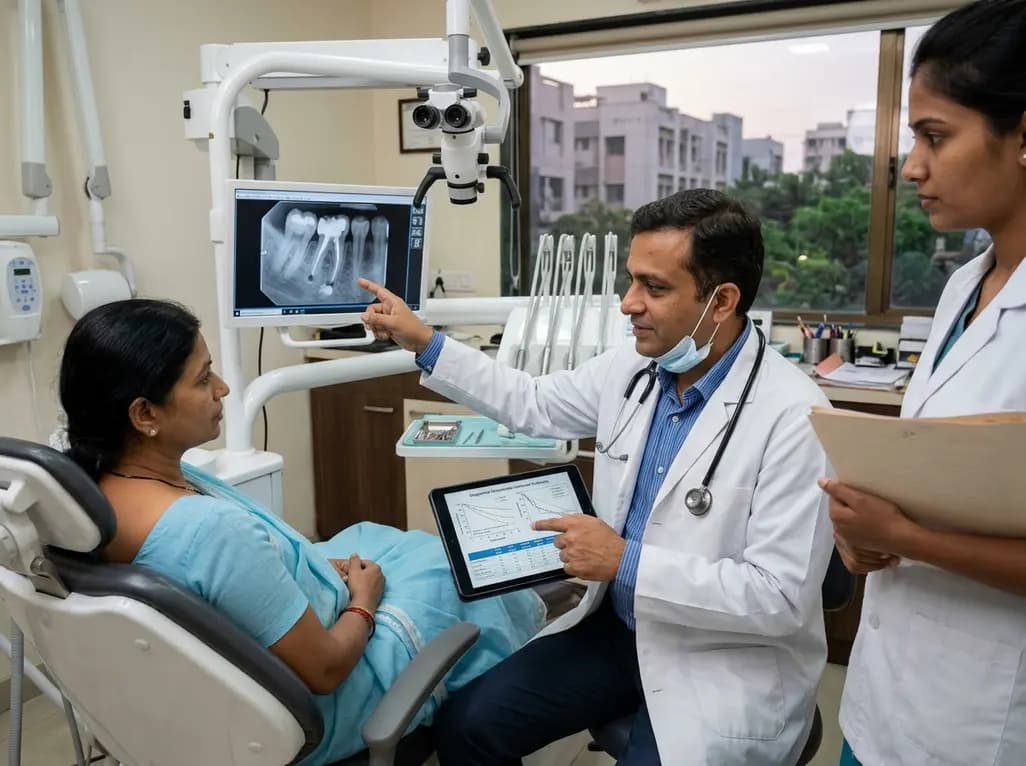
Root canal treatment remains one of the most common procedures in modern restorative dentistry. General dental practitioners perform the vast majority of primary pulp therapies worldwide. However, clinical literature consistently demonstrates that specialist endodontic therapy achieves significantly higher apical healing rates and long-term functional survival. Endodontists routinely utilize operating surgical microscopes, ultrasonic debridement systems, and cone-beam computed tomography to manage intricate canal anatomies. In contrast, general practitioners often manage broad restorative demands without dedicated microscopic visualization equipment. Consequently, procedural variations between provider types generate measurable differences in clinical outcomes. While specialist care elevates technical precision, it also commands higher initial fees within statutory and private health reimbursement systems. Therefore, healthcare providers and policy planners frequently debate whether superior specialist outcomes justify elevated upfront costs. Dental professionals face the challenge of preserving natural dentition while maintaining financial affordability for diverse patient populations. Understanding how provider experience shapes tooth longevity is essential for improving clinical referral guidelines and public health standards.
Researchers evaluated the long-term cost-effectiveness of different endodontic delivery strategies using a Markov decision-analytic model. The simulation followed an initially 25-year-old patient requiring root canal therapy over a full lifetime horizon. Specifically, the investigation analyzed three clinical pathways to compare realistic clinical workflows. The first pathway evaluated primary treatment and all subsequent endodontic revisions performed solely by a general dental practitioner. The second pathway modeled primary therapy and all subsequent revision procedures delivered exclusively by a recognized endodontic specialist. The third pathway simulated a stepped sequential referral strategy, where a general practitioner executes the primary treatment, but refers failed cases to a specialist for endodontic retreatment. Transition probabilities between health states reflected robust clinical literature and long-term epidemiological datasets. Moreover, researchers estimated cumulative lifetime costs using German public and private dental fee schedules, discounting financial expenditures at an annual rate of 3%. Monte Carlo microsimulations rigorously quantified uncertainty across clinical and economic variables. By examining lifetime tooth retention and incremental cost-effectiveness ratios, the investigation provided objective guidance for modern practice management.
The microsimulation demonstrated substantial differences in cumulative tooth preservation among the three comparative models. Primary treatment delivered exclusively by an endodontic specialist achieved the highest longevity, yielding an average tooth retention time of 49.5 years. In contrast, care managed exclusively within general practice resulted in an average retention time of only 36.8 years. This significant difference of nearly 13 years highlights the clinical value of advanced specialized techniques. Specialists routinely identify missed canal orifices, eradicate resistant intracanal microbial biofilms, and avoid procedural complications such as ledge formation or instrument separation. Interestingly, the sequential referral pathway attained an intermediate tooth retention time of 44.2 years. In this pathway, patients retained their natural teeth for over seven years longer than those treated solely by general practitioners. Furthermore, patient-reported outcome measures aligned closely with retention metrics. Patients treated directly by specialists reported the highest satisfaction scores throughout their therapeutic journey. Consequently, timely expert intervention effectively resolves persistent periapical infections and extends the functional life of natural dentition.
Cost calculations revealed intriguing economic findings that challenge traditional assumptions regarding specialist healthcare expenses. Pure specialist treatment incurred cumulative lifetime expenses of 1475.89 EUR, representing the highest overall tooth retention. Conversely, exclusive general practitioner therapy generated lifetime costs of 1376.81 EUR while delivering markedly lower tooth longevity. Surprisingly, the sequential referral pathway proved to be the least expensive option overall, totaling 1326.17 EUR over the patient's lifetime. Although specialist retreatment carries higher procedural fees than generalist retreatment, its superior healing rate halts progressive treatment failure. When primary endodontic interventions fail in general practice, repeated low-cost interventions often fail to resolve apical periodontitis. As a result, teeth undergo extraction, necessitating costly dental implants, fixed prostheses, or removable restorations. In addition, managing implant failures and peri-implantitis introduces major long-term financial liabilities. Sequential referral efficiently curtails these escalating downstream costs through targeted specialist intervention. Therefore, sequential referral combines low initial expenditure with definitive secondary care, creating a highly balanced economic pathway for healthcare systems.
These economic findings offer vital guidance for contemporary dental clinicians and healthcare policymakers worldwide. While primary specialist care yields maximum tooth retention, universal specialist delivery may strain healthcare budgets and outstrip specialist workforce availability. Therefore, structured referral guidelines present the most pragmatic solution for standard clinical practice. General dental practitioners should assess case complexity before initiating therapy by examining canal curvature, calcification, and access difficulty. Routine cases with straightforward anatomy can proceed safely within general practice to control upfront treatment costs. However, clinicians should promptly refer teeth with anatomical abnormalities, persistent symptoms, or previous endodontic failures to specialists. In developing dental markets such as India, where out-of-pocket healthcare expenses predominate, avoiding expensive implant therapies represents a major financial relief for patients. Moreover, interdisciplinary collaboration between general practitioners and endodontists fosters stronger practice networks and elevated patient trust. By instituting objective triage systems, dental teams ensure timely access to specialist expertise without imposing unnecessary primary costs on patients. Ultimately, standardized referral algorithms protect patient dentition, optimize healthcare resource utilization, and enhance overall public dental health.
Specialist endodontic therapy entails advanced diagnostic equipment, operating microscopes, and specialised rotary instrumentation that raise chairside expenditures. Furthermore, specialists undergo extended post-graduate training to handle complicated root canal anatomies and complex pathologies. Consequently, private and public reimbursement schedules bill specialist treatments at higher base rates. However, this upfront investment significantly reduces procedural complications, which lowers the lifetime probability of costly extractions, bone grafts, or dental implant rehabilitations over the patient's lifespan.
The sequential referral model capitalises on low primary intervention costs while mitigating the financial burden of persistent failures. In this pathway, general practitioners perform initial root canal procedures on routine teeth, thereby containing baseline expenses. If persistent apical periodontitis or procedural errors occur, the patient receives prompt specialist retreatment. Consequently, this targeted escalation prevents premature extractions and costly prosthetic replacements, producing the lowest cumulative lifetime expenditure among all evaluated endodontic care strategies.
Clinicians should systematically evaluate case difficulty before initiating root canal treatment using validated assessment guidelines. Key referral indicators include severe canal curvatures, calcified pulp chambers, unusual root anatomies, and complex retreatments. In addition, persistent symptomatic apical periodontitis or previous procedural complications warrant direct specialist intervention. By identifying challenging morphological factors early, general dental practitioners can avoid intraoperative failures and ensure optimal long-term tooth retention for their patients.
Disclaimer: This content is for informational and educational purposes only... Refer to the latest local and national guidelines for clinical practice.
References

Read summarized clinical updates, watch expert medical content, and earn CME certifications right from your smartphone.
Open your smartphone camera to scan and install.





A health economic Markov model demonstrates that while specialist endodontic therapy provides the longest tooth retention, a structured sequential referral protocol achieves the lowest overall lifetime treatment cost while maintaining superior clinical tooth preservation.
Today

A multicenter cohort study reveals that the 30-minute C-peptide response during OGTT independently predicts cystic fibrosis-related diabetes in patients with normal glucose tolerance, offering an early risk-stratification biomarker.
Today

The GESS-AEEM consensus establishes a clear clinical implementation framework for testosterone therapy in postmenopausal women with hypoactive sexual desire disorder, focusing on transdermal dosing, precise laboratory monitoring, and safety communication.
Today

A Bayesian component network meta-analysis of 130 RCTs reveals that self-monitoring and gamification provide the clearest positive effects in mHealth physical activity interventions, while social comparison may have adverse psychological trade-offs.
Today
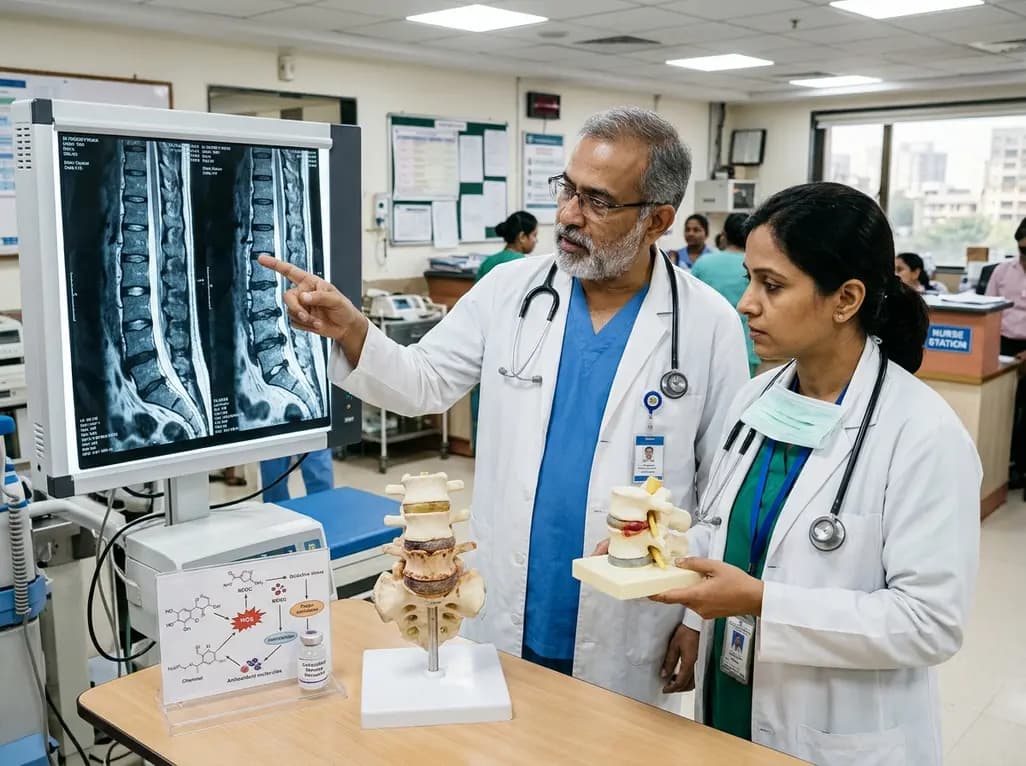
Intervertebral disc degeneration is a primary driver of chronic low back pain. Emerging evidence highlights reactive oxygen species and redox imbalance as central mechanisms. Targeted antioxidant strategies and biomaterial delivery systems offer promising disease-modifying therapies for spine health.
Today

As digital nutrition platforms and automated diet algorithms expand into chronic disease management, clinicians must prioritize verified biochemical outcomes over user engagement metrics. Learn how medical oversight, culturally tailored nutrition, and comprehensive testing safeguard long-term patient health.
Today
