

Loading, please wait...
Loading, please wait...
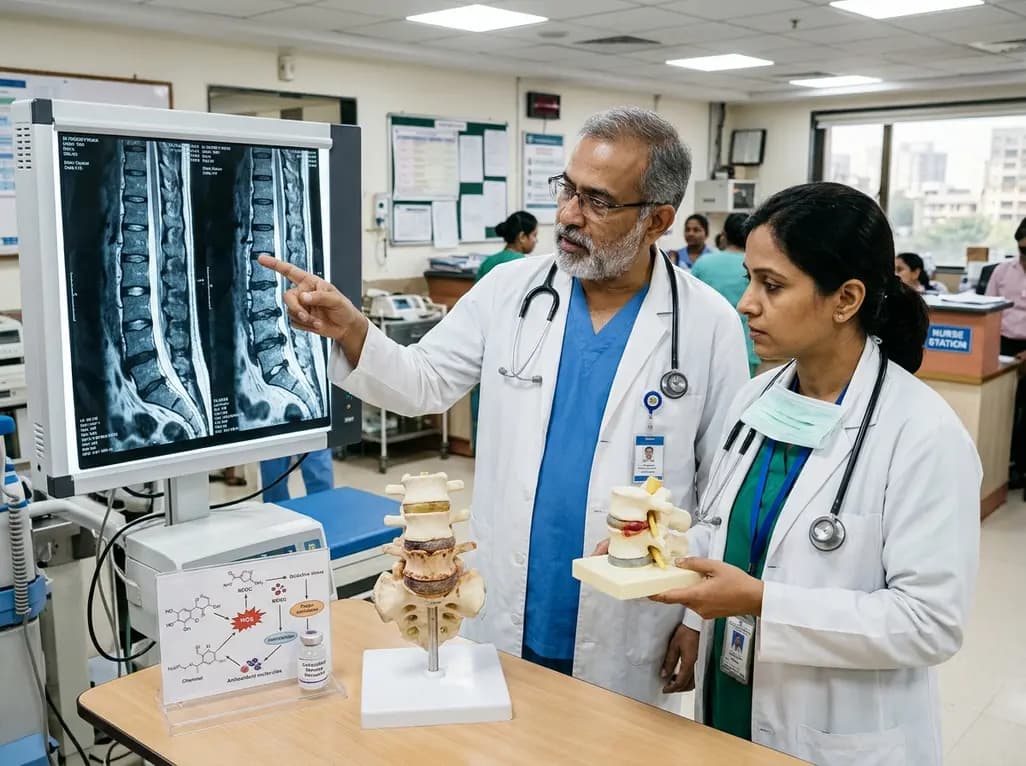
Low back pain represents a leading cause of chronic disability worldwide. In most patients, intervertebral disc degeneration acts as the primary contributor to this debilitating spinal condition. Traditional clinical treatments provide symptomatic relief through analgesics, physical therapy, or decompressive surgery. However, these interventions fail to halt structural degeneration. Consequently, researchers focus on deciphering the underlying molecular cascades that propagate tissue breakdown. Recent investigations highlight oxidative stress as a principal driver of disc pathology, uncovering novel avenues for targeted biotherapies.
Under physiological conditions, native disc cells maintain a delicate balance between free radicals and cellular antioxidants. Physiological concentrations of reactive oxygen species regulate critical signaling networks, including cellular differentiation and cytokine release. Moreover, moderate redox signaling supports basal metabolic adaptation within the avascular disc microenvironment. However, excessive mechanical loading and aging disrupt this delicate equilibrium. When production outpaces cellular clearance, sustained oxidative stress develops. Consequently, elevated levels of reactive species compromise cellular viability and extracellular stability.
This sustained redox imbalance damages structural proteins and essential lipids. Furthermore, unchecked reactive species impair mitochondrial function, which decreases cellular ATP production. As a result, the protective antioxidant defense system becomes overwhelmed. Endogenous enzymes like superoxide dismutase and catalase decline markedly in degenerated tissues. Therefore, reactive species transform from vital physiological messengers into cytotoxic agents. This molecular shift initiates a cascade of phenotypic alterations that accelerates matrix catabolism. Ultimately, understanding this transition provides crucial clues for timely therapeutic intervention before irreversible structural collapse occurs.
Excessive reactive oxygen species drive disc degradation through multiple interconnected biochemical pathways. First, oxidative stress promotes extensive extracellular matrix degradation by shifting cellular metabolism toward catabolism. Elevated reactive species stimulate the transcription of matrix metalloproteinases and aggrecanases. Consequently, nucleus pulposus cells lose type II collagen and aggrecan, diminishing the disc's water-binding capacity. This biochemical breakdown leads to progressive disc dehydration, height loss, and mechanical instability.
In addition, oxidative damage triggers intense inflammatory responses within the disc niche. Reactive species activate the nuclear factor kappa B pathway, stimulating excessive release of pro-inflammatory cytokines. These cytokines recruit immune cells and accelerate nerve ingrowth into annular tears. Furthermore, persistent oxidative stress induces endoplasmic reticulum stress and activates apoptotic cascades. Damaged mitochondria release cytochrome c, which activates caspase-3 and accelerates cell death. Simultaneously, oxidative injury forces functional disc cells into irreversible senescence. Senescent cells release deleterious secretomes, worsening tissue degradation across neighboring cells. Thus, oxidative stress orchestrates structural collapse, inflammation, and cell depletion simultaneously.
Current clinical approaches to degenerative spinal disease focus predominantly on symptom palliation rather than structural preservation. Pharmacological strategies rely on oral nonsteroidal anti-inflammatory drugs, muscle relaxants, and epidural corticosteroid injections. Although these modalities offer short-term pain relief, they do not repair matrix architecture or restore cellular viability. Furthermore, prolonged analgesic use carries notable gastrointestinal, renal, and cardiovascular risks. When conservative measures fail, surgical options such as discectomy or spinal fusion become necessary. Nevertheless, surgery permanently alters spinal biomechanics and frequently accelerates adjacent segment disease.
Because conventional treatments leave the fundamental degenerative pathology untouched, regenerative biotherapies represent a necessary paradigm shift. Clinicians increasingly recognize that halting disc degeneration requires direct intervention at the cellular level. By neutralizing local reactive species, targeted therapies can preserve nucleus pulposus cellularity and protect matrix integrity. Moreover, restoring redox balance mitigates secondary inflammatory signaling, reducing discogenic nociception at its origin. Consequently, targeting oxidative stress provides an encouraging bridge between conservative symptom management and invasive spinal surgery.
Investigators are evaluating diverse pharmacological agents to counteract oxidative damage within the disc microenvironment. Natural phytochemicals have gained substantial attention due to their favorable safety profiles and potent scavenging properties. Specifically, polyphenols such as curcumin, resveratrol, and quercetin effectively attenuate intracellular reactive species in disc cells. In preclinical trials, these compounds activate the Nrf2 signaling pathway. This activation upregulates downstream antioxidant enzymes, including heme oxygenase-1 and superoxide dismutase. Consequently, treated cells exhibit decreased apoptosis and enhanced matrix synthesis.
Additionally, small molecule compounds and synthetic antioxidants show significant therapeutic promise. Molecules like N-acetylcysteine, metformin, and mito-TEMPO specifically target mitochondrial free radicals, preserving organelle function and halting cellular senescence. However, systemically administered antioxidants encounter substantial pharmacokinetic hurdles. The intervertebral disc lacks direct vasculature, relying on passive diffusion across cartilaginous endplates. As a result, oral or intravenous compounds achieve suboptimal intradiscal bioavailability. Furthermore, rapid systemic clearance necessitates high doses, raising toxicity concerns. Therefore, developing specialized local delivery approaches remains critical for clinical success.
To overcome diffusion barriers and rapid systemic clearance, bioengineers are designing advanced ROS-scavenging biomaterials. Nanotechnology offers targeted drug delivery systems capable of sustaining therapeutic drug concentrations directly within the disc. For instance, stimuli-responsive nanoparticles release antioxidant payloads exclusively in environments with elevated reactive species concentrations. These smart nanocarriers prolong drug retention, reduce off-target toxicity, and enhance cellular uptake. In addition, researchers are developing functional nanozymes that mimic natural antioxidant enzymes. These nanomaterials catalytically decompose hazardous peroxides into harmless water and oxygen molecules.
Furthermore, injectable hydrogels and polymeric nanocomposite scaffolds represent revolutionary platforms for disc repair. These hydrogel networks mimic the mechanical compliance of healthy nucleus pulposus while delivering antioxidants and regenerative stem cells. When injected intradiscally, the biomaterial fills microstructural voids, restores disc height, and continuously scavenges cytotoxic reactive oxygen species. Consequently, this engineered microenvironment promotes endogenous cell survival and fosters matrix regeneration. While these platforms show exceptional efficacy in laboratory models, successful clinical translation requires rigorous evaluations of long-term biostability and safety.
Oxidative stress develops when reactive oxygen species overwhelm cellular antioxidant defenses within the intervertebral disc. Excessive free radicals damage DNA, structural proteins, and membrane lipids in nucleus pulposus cells. Furthermore, this redox imbalance activates matrix-degrading enzymes and inflammatory pathways, while promoting mitochondrial dysfunction and cellular senescence. Over time, these combined insults deplete viable disc cells, degrade collagen and proteoglycans, and collapse the spinal structural matrix.
Conventional oral antioxidants achieve poor clinical efficacy because the intervertebral disc lacks direct blood vessels. Nutrients and therapeutic molecules must passively diffuse across the dense cartilaginous endplates to reach the central nucleus pulposus. Consequently, systemic antioxidants achieve extremely low concentrations inside disc tissues. Furthermore, rapid hepatic metabolism and renal clearance prevent therapeutic accumulation without dangerously high systemic doses, making targeted biomaterial delivery systems necessary.
Advanced biomaterials provide mechanical support while serving as localized drug delivery platforms directly within degenerative disc segments. Injectable hydrogels, nanocomposites, and enzyme-mimicking nanozymes neutralize reactive oxygen species in a controlled, sustained fashion. Moreover, these biomaterials protect encapsulated stem cells and therapeutic molecules from harsh inflammatory environments. By restoring redox balance and biomechanical height, biomaterials foster intrinsic tissue repair and offer a minimally invasive alternative to spinal surgery.
Disclaimer: This content is for informational and educational purposes only... Refer to the latest local and national guidelines for clinical practice.
References

Read summarized clinical updates, watch expert medical content, and earn CME certifications right from your smartphone.
Open your smartphone camera to scan and install.





Intervertebral disc degeneration is a primary driver of chronic low back pain. Emerging evidence highlights reactive oxygen species and redox imbalance as central mechanisms. Targeted antioxidant strategies and biomaterial delivery systems offer promising disease-modifying therapies for spine health.
Today

Explore how computational gastronomy and artificial intelligence transform clinical nutrition. By making food computable, clinicians can tailor culturally acceptable, disease-specific dietary interventions that effectively address India's dual burden of malnutrition and non-communicable diseases.
Today

The GESS-AEEM consensus establishes a clear clinical implementation framework for testosterone therapy in postmenopausal women with hypoactive sexual desire disorder, focusing on transdermal dosing, precise laboratory monitoring, and safety communication.
Today

A Bayesian component network meta-analysis of 130 RCTs reveals that self-monitoring and gamification provide the clearest positive effects in mHealth physical activity interventions, while social comparison may have adverse psychological trade-offs.
Today

India faces an unprecedented metabolic crisis, with millions living with diabetes and prediabetes. Standard static dietary advice often falls short because individual metabolism fluctuates continuously. AI-driven digital twin models predict meal responses, restore insulin sensitivity, and assist clinical de-escalation.
Today
