.webp&w=384&q=75)

Loading, please wait...
Loading, please wait...

Recent neuroimaging investigations reveal that somatomotor network reorganization acts as a pivotal neuroprotective adaptation during early neurodegeneration. In Parkinson's disease, loss of nigrostriatal dopaminergic projections disrupts basal ganglia circuits long before classic motor manifestations appear. However, the human brain deploys active compensatory wiring to preserve physiological function. Network attack tolerance provides an objective mathematical framework to measure how well neural systems maintain communication when critical hub regions fail. Consequently, understanding these network dynamics offers clinicians deeper diagnostic and prognostic insights into early neurodegenerative changes.
Network attack tolerance measures how effectively a neural connectome preserves information transfer despite progressive nodal damage. In graph theory, researchers construct topological maps where brain regions serve as nodes connected by functional pathways. Clinicians recognize that targeted damage to central hub regions normally triggers severe communication breakdown across interconnected cerebral structures. However, resilient networks successfully reroute signals through alternative pathways and peripheral nodes. In Parkinson's disease, the progressive loss of dopaminergic neurons functions as a continuous pathological attack on basal ganglia hubs. Therefore, computational neuroscientists simulate iterative node removal to assess functional network stability under progressive disease conditions. By measuring global efficiency under simulated sequential attacks, investigators quantify how resilient specific brain circuits remain during pathological stress. Earlier pilot investigations suggested that lifestyle factors and frontoparietal connectivity might support cognitive resilience. Nevertheless, the precise relationship between dopaminergic depletion and motor network resilience remained unresolved across the disease continuum. Consequently, evaluating attack tolerance across both prodromal and manifest stages provides crucial insights into neural compensation mechanisms.
To investigate these neurobiological phenomena, investigators analyzed cross-sectional resting-state functional magnetic resonance imaging data from a well-characterized clinical cohort. The final study sample comprised twenty-eight healthy controls, sixty prodromal individuals, and ninety-four patients with established clinical Parkinson's disease. First, the researchers constructed graph-theoretical networks at multiple network densities to prevent arbitrary threshold bias. Next, they calculated network attack tolerance across global and subnetwork levels by tracking efficiency during iterative node removal. In addition, the team quantified dopamine transporter binding in the putamen using single-photon emission computed tomography. The researchers then implemented robust linear mixed-effects models to control for age, sex, educational attainment, and network density. Importantly, they followed one hundred forty-five patients longitudinally to determine whether baseline somatomotor resilience predicted subsequent motor decline. This meticulous experimental design allowed the investigators to distinguish between true dopaminergic effects and general demographic confounding factors. Consequently, the findings offer rigorous mathematical evidence regarding functional brain reorganization during early neurodegenerative progression across distinct patient subgroups.
The experimental analysis demonstrated that somatomotor network reorganization directly responds to progressive striatal dopamine deficiency. Specifically, lower dopamine transporter binding in the putamen strongly correlated with higher attack tolerance exclusively within the somatomotor network. Furthermore, patients with clinical Parkinson's disease exhibited significantly elevated somatomotor attack tolerance compared to healthy control participants. Interestingly, neither whole-brain global networks nor other functional subnetworks showed similar architectural changes. Topological evaluations revealed that subcortical and cerebellar nodes developed denser regional connections within the motor network. Therefore, the brain actively reroutes critical motor signals through alternative cerebellar and subcortical pathways as nigrostriatal projections degenerate. This targeted rewiring prevents catastrophic system failure when primary striatal hubs lose functional efficacy. Clinicians have long observed that early motor symptoms often stay mild despite substantial dopaminergic terminal loss. These imaging findings provide a clear neurobiological explanation for this clinical paradox. Hence, the somatomotor system does not simply decay passively; instead, it dynamically adapts to sustain vital sensorimotor communication across affected circuits. Moreover, this distinct subnetwork specificity underscores the unique adaptive capacity of motor coordination centers during dopaminergic failure.
Understanding how these topological adaptations influence long-term functional mobility represents a vital objective for movement disorder specialists. Across standard longitudinal models, baseline somatomotor attack tolerance showed no statistically significant linear effect on overall motor progression. However, the researchers conducted an exploratory Johnson-Neyman technique to uncover non-linear relationships across varying levels of network resilience. This sophisticated moderator analysis revealed that higher somatomotor attack tolerance linked to slower motor symptom decline across most observed resilience ranges. Thus, enhanced network robustness effectively dampens symptom acceleration in patients who sustain adequate compensatory wiring. In contrast, individuals with diminished attack tolerance experienced steeper functional deterioration as dopamine deficiency worsened over time. Moreover, these observations suggest that compensatory somatomotor rewiring maintains motor stability until pathological burden exhausts reserve capacity. Consequently, researchers need extended prospective trials to verify whether this reorganization reflects true functional compensation or progressive pathological adaptation. Longitudinal tracking will ultimately clarify whether preserving network tolerance alters the long-term natural history of parkinsonian disability.
These neuroimaging discoveries deliver meaningful translational value for neurologists, geriatricians, and general physicians managing movement disorders in India. Parkinson's disease represents an escalating public health challenge across India due to rapid demographic aging and expanding life expectancy. Although advanced functional neuroimaging remains limited to tertiary centers, graph-theoretical insights inform everyday clinical care. Specifically, these findings highlight neural plasticity as an active therapeutic target during early and prodromal phases. Clinicians in India can leverage these concepts to advocate for structured physical activity and early neurorehabilitation. Emerging neurobiological data suggest that regular aerobic exercise reinforces network connectivity and enhances functional resilience. Furthermore, identifying prodromal markers like rapid eye movement sleep behavior disorder enables earlier supportive management before motor collapse occurs. Ultimately, recognizing somatomotor resilience shifts clinical perspective from passive symptom management toward actively augmenting neural network integrity. Indian healthcare providers should therefore integrate multidisciplinary physical therapies early into standard Parkinson's disease management protocols.
Network attack tolerance quantifies the capacity of a complex neural connectome to preserve information flow when critical brain nodes experience progressive damage. Investigators mathematically model targeted attacks by iteratively deleting highly connected hub regions and measuring residual global communication efficiency. In neurodegenerative diseases, this metric reflects how effectively surviving neural circuits compensate for localized neuronal loss, thereby providing an objective measure of structural and functional brain resilience.
As striatal dopamine depletion progresses, the brain initiates compensatory plastic adaptations to preserve vital sensorimotor control. The somatomotor network specifically recruits auxiliary pathways through subcortical structures and cerebellar circuits, creating alternative communication channels. Consequently, this topological reorganization elevates network attack tolerance, shielding the motor system against sudden functional collapse. However, ongoing neurodegeneration eventually overwhelms these compensatory mechanisms as the disease advances into late stages.
While advanced resting-state functional neuroimaging remains primarily an academic tool, these findings demonstrate that neural reserve dynamically protects motor function. Therefore, clinicians should actively prescribe early physical exercise, structured gait therapy, and multidisciplinary neurorehabilitation to stimulate compensatory neural plasticity. Promoting lifestyle interventions during prodromal and early stages may help patients preserve somatomotor attack tolerance, potentially slowing functional decline and improving long-term clinical outcomes.
Disclaimer: This content is for informational and educational purposes only and does not constitute medical advice, diagnosis, or treatment regimens. Healthcare professionals must evaluate individual clinical circumstances and verify findings independently. Refer to the latest local and national guidelines for clinical practice.
References

Read summarized clinical updates, watch expert medical content, and earn CME certifications right from your smartphone.
Open your smartphone camera to scan and install.





A landmark neuroimaging study reveals how somatomotor network reorganization and attack tolerance preserve brain connectivity despite early dopamine depletion in Parkinson's disease, offering vital insights into neural resilience and motor progression.
4 weeks back

Hospitalization for severe viral lower respiratory tract disease causes lasting physical, psychological, and productivity burdens for patients and their caregivers. Real-world multinational data reveal major gaps in discharge planning, emphasizing the urgent need for structured transitional pulmonary care.
Today
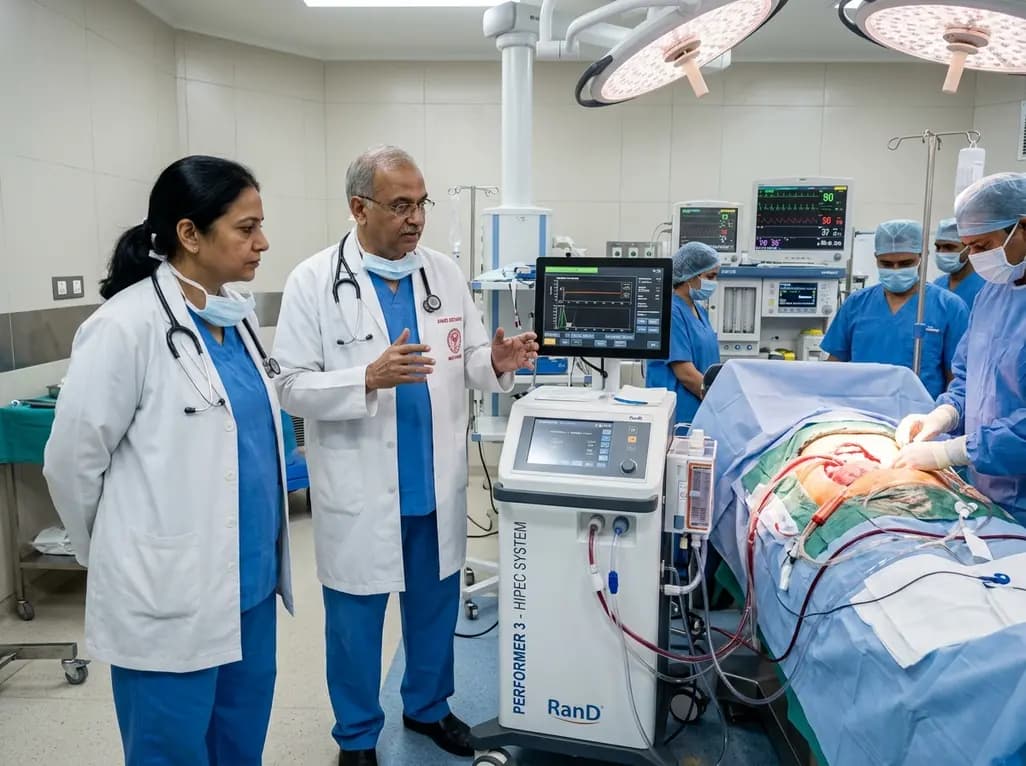
AIIMS Bathinda has inaugurated a specialized peritoneal oncology service featuring the RanD Performer 3 HIPEC platform. The facility offers cytoreductive surgery alongside hyperthermic intraperitoneal chemotherapy, transforming regional management for advanced ovarian, colorectal, and appendiceal malignancies.
Today
Cinematic rendering utilizes advanced global illumination to transform coronary CT angiography datasets. This imaging technique provides lifelike depth perception, helping cardiologists and surgeons precisely evaluate anomalous coronary artery origins, high-risk interarterial courses, and post-surgical anatomy.
Today
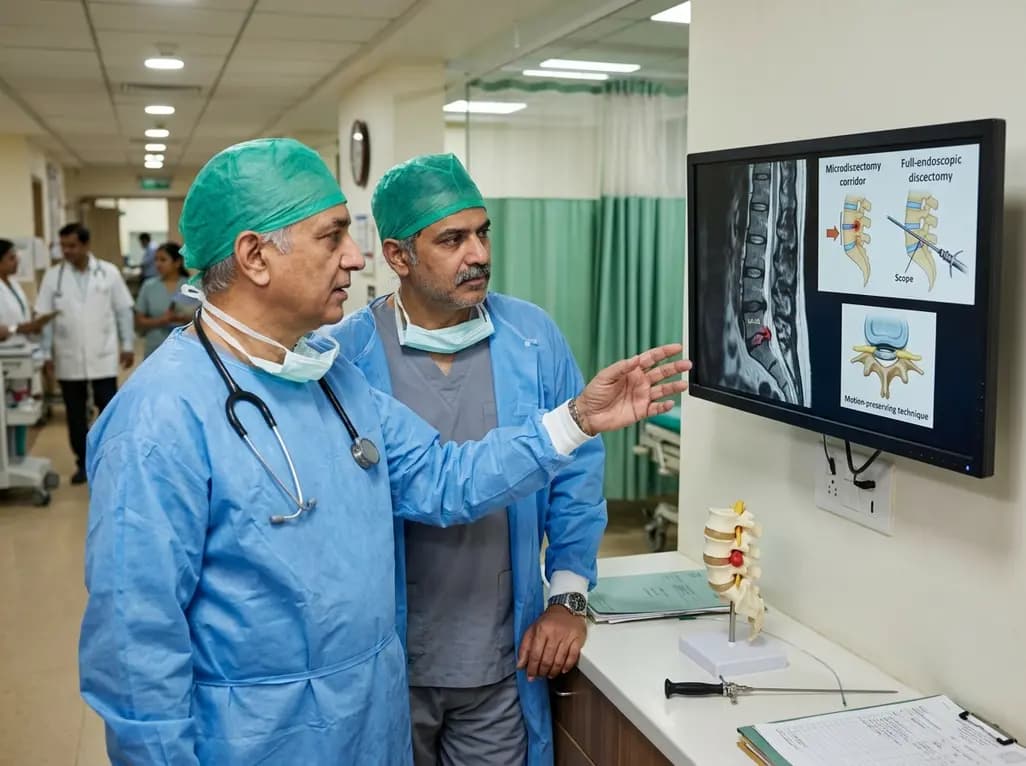
This clinical overview examines recent advancements in lumbar disc herniation surgery, comparing microscopic and full-endoscopic discectomy while highlighting biportal techniques and emerging motion-preserving innovations for spine specialists.
Yesterday

A breakthrough study reveals that loss of SELENOT in hypothalamic POMC neurons triggers premature cellular senescence, ATF6α stress activation, and ER calcium depletion, linking neuroendocrine decay to metabolic disease.
Today
