

Loading, please wait...
Loading, please wait...

Modern healthcare increasingly relies on digital platforms to monitor patient well-being outside the traditional clinic setting. In recent years, smartphone-based stress assessment has emerged as a popular technique to capture psychological tension during ordinary routines. Researchers and clinicians frequently deploy ecological momentary assessment methods on mobile devices to evaluate real-time emotional fluctuations. Consequently, this continuous monitoring approach avoids the recall bias typical of retrospective paper questionnaires. Traditional clinical evaluations often require patients to summarize stress experienced over preceding weeks or months. However, such retrospective recall frequently misrepresents acute episodes, daily peak strains, and emotional recovery patterns. Digital mobile tools now allow prompt and repeated data collection during work, family time, and leisure activities. Therefore, clinicians can observe dynamic psychological shifts as they unfold across changing daily environments. In countries like India, where smartphone adoption has expanded rapidly, digital self-assessment presents immense clinical opportunities. Patients readily carry smartphones everywhere, making brief digital surveys both practical and unobtrusive. Nevertheless, the rapid proliferation of varied mobile survey tools has created considerable methodological variability. Understanding how these digital self-reports function is essential for physicians who interpret patient-generated health metrics.
A comprehensive scoping review recently mapped 108 studies evaluating self-reported perceived stress among healthy adult populations. The researchers systematically examined investigations across multiple major biomedical databases to characterize modern digital assessment methodologies. Most included studies utilized observational research designs combined with ecological momentary assessment prompting schedules. Furthermore, the prompting frequencies varied substantially across the published literature. Some protocols prompted participants only once weekly, whereas others delivered multiple automated notifications each day. In fact, intensive approaches demanding three or more notifications daily represented the most frequent sampling strategy. These recurrent prompts help capture acute stress responses triggered by immediate daily hassles and workplace demands. Additionally, the overall duration of assessment periods varied widely among individual studies. Some investigations monitored participants for only a few days, while other longitudinal protocols lasted several months. This extensive variation in sampling frequency directly influences both participant burden and survey completion rates. Consequently, clinicians must recognize that demanding notification schedules may lead to user fatigue or skipped prompts. Selecting an optimal prompting schedule therefore requires balancing data granularity against ongoing patient compliance.
Interestingly, the majority of evaluated mobile protocols utilized extremely brief measurement tools to minimize participant burden. Specifically, nearly three-quarters of the instruments identified in the review consisted of just a single item. These single questions typically asked individuals to rate their current stress level on a structured rating format. For instance, most mobile platforms implemented numerical Likert-type scales or continuous visual analog scales. Visual sliders and five-point scales allow participants to record their subjective feelings within seconds. As a result, response rates often remain acceptable even during busy professional or domestic routines. Moreover, investigators frequently adapted established psychometric tools, such as the Perceived Stress Scale, into ultra-short momentary questions. However, condensing comprehensive multidimensional questionnaires into a single momentary question creates notable measurement trade-offs. While brief questions enhance practical compliance, they may fail to capture nuanced emotional and somatic facets of tension. Single items also struggle to differentiate transient environmental pressure from severe chronic psychological distress. Therefore, clinicians evaluating digital self-reports must recognize the diagnostic limitations inherent in ultra-brief momentary tools.
Despite the widespread deployment of smartphone instruments, robust psychometric validation remains surprisingly sparse in current literature. The scoping review demonstrated that only a small minority of published investigations reported formal reliability or validity data. Furthermore, when researchers did offer validation evidence, it typically consisted merely of simple bivariate correlations. These correlations usually compared mobile responses to legacy paper surveys or general affective questionnaires. Only a tiny fraction of research teams completed advanced psychometric analyses, such as within-person reliability testing or factor structure invariance. Consequently, clinicians encounter a critical challenge when translating mobile research findings into everyday patient management. Without documented psychometric validation, physicians cannot easily confirm whether a single-item smartphone prompt accurately measures perceived stress. Moreover, undetected measurement error can distort observed associations between perceived stress, cardiovascular diseases, and metabolic disturbances. Because modern clinical decisions increasingly integrate patient-generated digital health data, rigorous validation becomes an urgent medical necessity. Healthcare professionals must advocate for standardized, psychometrically validated smartphone questionnaires before routinely adopting these tools into clinical practice.
Digital health interventions and mobile mental health monitoring hold enormous promise across India. Rapid urbanization, intense occupational demands, and shifting social structures have generated substantial psychosocial stress across diverse adult populations. Primary care physicians, internists, and psychiatrists in India frequently encounter patients presenting with psychosomatic complaints linked to underlying emotional tension. Therefore, smartphone-based monitoring can serve as an accessible adjunct for tracking patient stress between outpatient consultations. Digital assessments can identify specific situational triggers, track therapeutic responses, and facilitate timely lifestyle counseling in busy clinical settings. However, Indian practitioners must interpret commercial wellness apps and digital stress reports with appropriate caution. Many commercially available consumer applications use unvalidated single-item questionnaires that lack established clinical cut-offs. Additionally, cultural perceptions of distress, linguistic diversity, and variable digital literacy may influence how patients interpret momentary survey prompts. Furthermore, practitioners should encourage patients to discuss their digital logs during consultations rather than relying solely on automated application scores. By contextualizing digital findings within comprehensive clinical histories, doctors can deliver personalized and evidence-informed interventions.
Ecological momentary assessment captures perceived stress repeatedly in real time during a person's everyday environment, using automated smartphone prompts. In contrast, traditional stress questionnaires require patients to retrospectively recall their experiences over weeks or months. Consequently, retrospective instruments often suffer from recall bias and current mood distortion. By collecting repeated momentary evaluations, digital assessments provide granular insights into dynamic fluctuations, acute environmental triggers, and emotional recovery patterns throughout the day.
Researchers predominantly select single-item questions to minimize participant burden during intensive sampling schedules. When digital protocols prompt individuals three or more times daily, lengthy questionnaires frequently induce survey fatigue and prompt non-adherence. Brief questions, often answered via visual analog or Likert scales, take only seconds to complete. Therefore, single items maintain high participant engagement. However, they sacrifice psychometric depth and cannot adequately distinguish transient momentary tension from complex chronic psychological distress.
Clinicians should approach commercial smartphone stress data with careful skepticism because most consumer applications lack rigorous psychometric validation. Rather than treating raw app scores as definitive clinical diagnostic markers, physicians should use this data to initiate open discussions about lifestyle stressors and coping mechanisms. Evaluating temporal trends alongside patient history, occupational demands, sleep hygiene, and somatic symptoms enables clinicians to contextualize mobile findings and recommend evidence-based medical or psychotherapeutic interventions.
Disclaimer: This content is for informational and educational purposes only. It is not intended to provide medical advice, diagnosis, or treatment. Refer to the latest local and national guidelines for clinical practice.
References

Read summarized clinical updates, watch expert medical content, and earn CME certifications right from your smartphone.
Open your smartphone camera to scan and install.





A scoping review of 108 studies examines smartphone-based stress assessment in healthy adults, revealing widespread use of single-item measures but a lack of formal psychometric validation.
Today
A comparative analysis of ChatGPT and Google Gemini reveals how generative AI models explain atrial fibrillation and treatment options. The study highlights vital perceptual gaps between cardiologists and laypersons regarding medical bias, formatting, and untreated clinical consequences.
Today
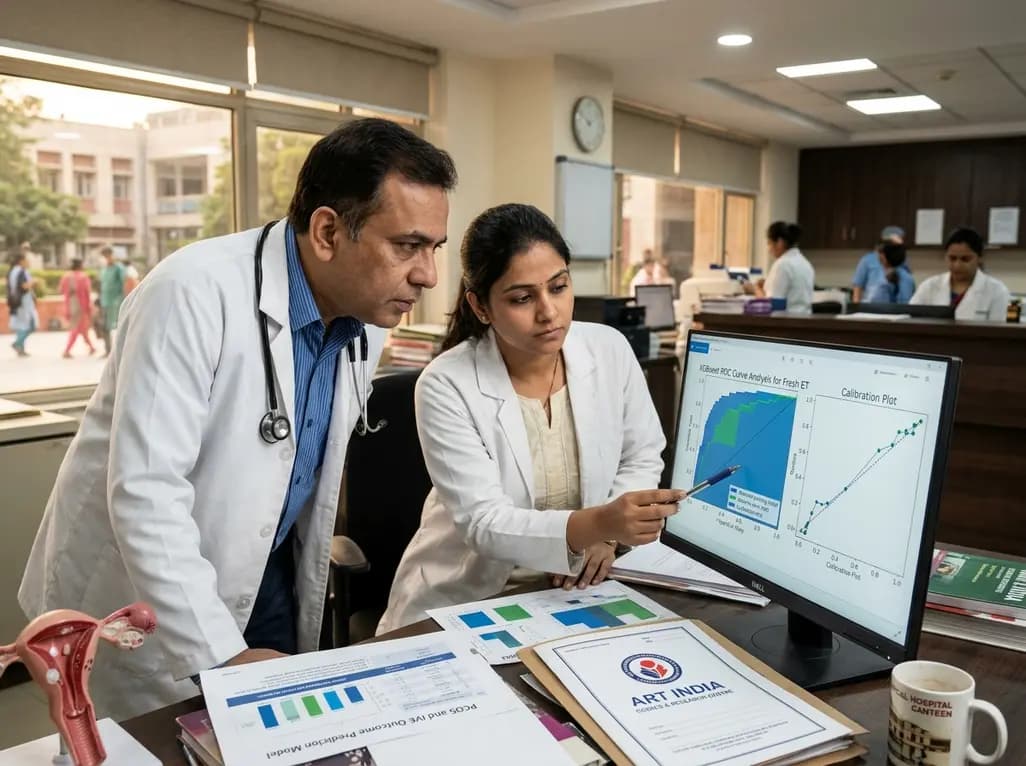
A multicenter study evaluates an XGBoost machine learning model to predict miscarriage risk in PCOS after fresh embryo transfer. While discrimination was strong internally, cross-cohort calibration drift emphasizes its role as a risk-ranking tool rather than a standalone diagnostic instrument.
Today

A landmark study reveals structured variation in daily emotional experiences using mobile cardiac monitoring and machine learning. Uncovering a many-to-many mapping between autonomic states and feelings, this research offers key insights for managing psychosomatic and psychiatric conditions in clinical practice.
Today
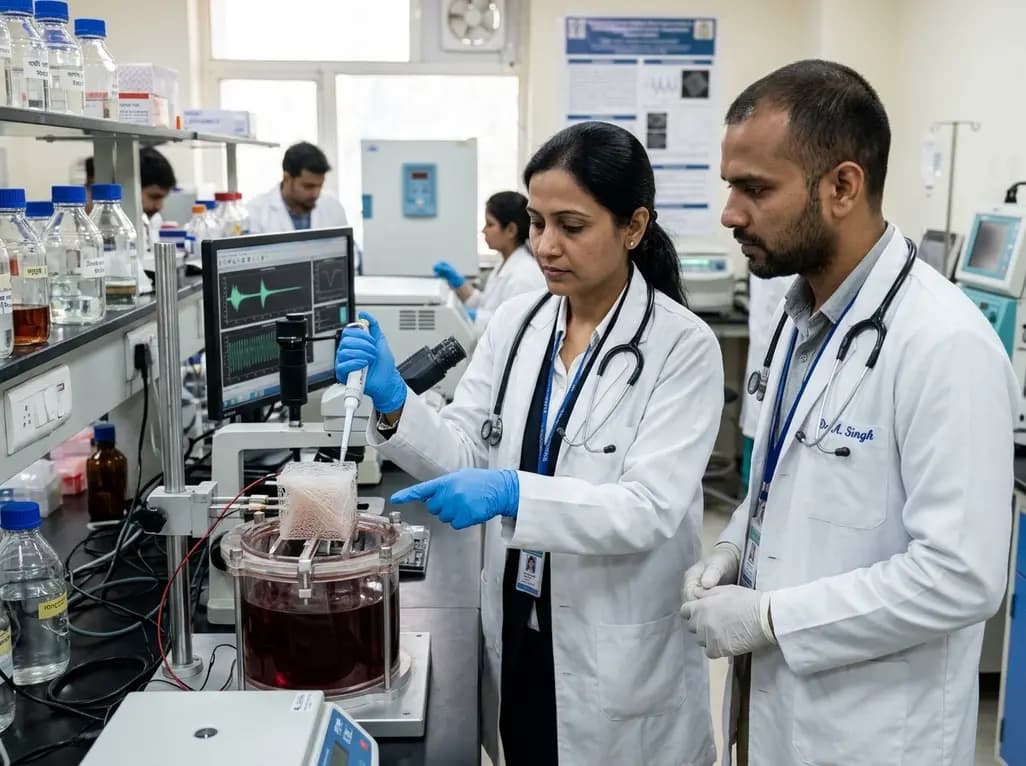
Engineered 3D piezoelectric PHBV scaffolds generate electrical charges during mechanical strain, mimicking native muscle electromechanics to promote cellular alignment, myogenic differentiation, and functional tissue repair in severe volumetric muscle loss.
Today
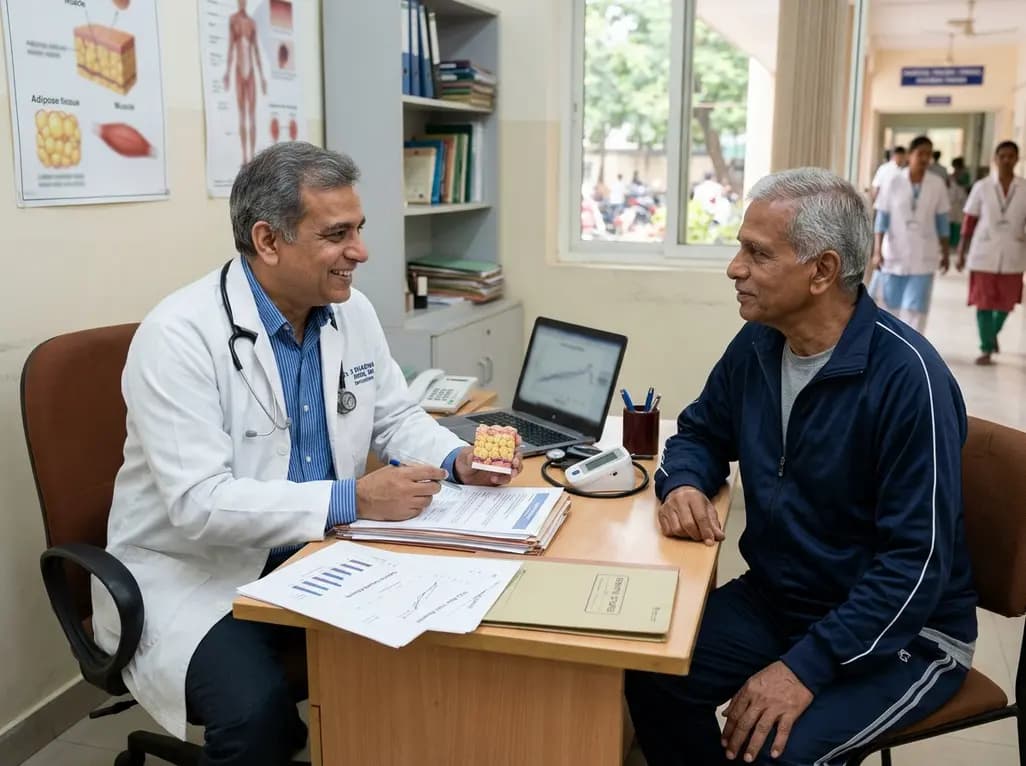
A study in aged rats reveals that caloric restriction broadly upregulates adipose macrophage genes, whereas concurrent endurance training buffers this response. Despite these tissue-level transcriptional changes, systemic glycemic and lipid markers remain unchanged, highlighting the complexity of geriatric metabolism.
Today
