.webp&w=384&q=75)

Loading, please wait...
Loading, please wait...
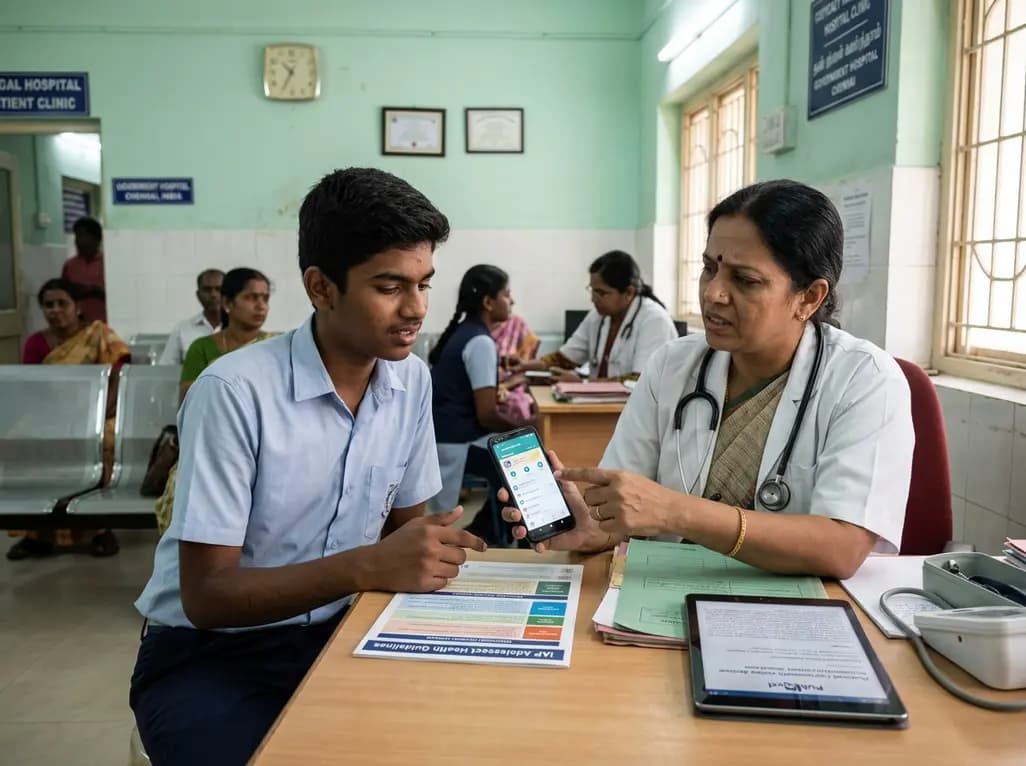
Modern primary care clinicians recognize that adolescent health apps offer substantial potential to enhance routine preventive care. Identifying risky behaviors during early adolescence remains vital for reducing long-term morbidity and mortality. Consequently, general practitioners and pediatricians actively search for digital tools that streamline screening during busy outpatient consultations. However, clinicians face significant uncertainty regarding the clinical relevance, privacy standards, and scientific validity of commercial applications. Without rigorous validation, healthcare providers cannot reliably distinguish evidence-based clinical aids from unverified digital products. Therefore, primary care teams urgently require clear guidance and standardized benchmarks to select dependable mobile applications. Adolescent preventive consultations demand a comprehensive perspective that covers physical, behavioral, and emotional wellness. When clinicians lack robust digital screening resources, critical opportunities for early behavioral intervention slip away unnoticed. In addition, adolescent patients frequently hesitate to discuss sensitive concerns without structured conversational prompts. Thus, systematic quality assessments are essential before integrating digital tools into everyday clinical practice. Addressing this clinical demand requires thorough evaluation of public app repositories to safeguard teenage patients.
To establish clarity, a dedicated research team conducted a systematic review following established PRISMA guidelines. The researchers surveyed major consumer software repositories, specifically searching both the Apple App Store and Google Play Store. Initially, the investigative team identified 976 mobile applications potentially targeting adolescent preventive healthcare. However, platform volatility became immediately apparent when 49 applications disappeared completely before formal evaluation commenced. The investigators applied precise eligibility criteria to isolate clinically practical and scientifically sound tools for medical providers. Specifically, apps had to offer free access, demonstrate recent updates, and provide complete availability in French or English. Furthermore, the content needed to present clear preventive relevance to adolescents while demonstrating foundational scientific validation. Four independent healthcare professionals evaluated the applications to confirm provider relevance. After rigorous initial screening, only nine candidate applications qualified for comprehensive evaluation. This dramatic attrition highlights a pervasive lack of scientific rigor across commercial digital marketplaces. Consequently, healthcare providers must approach unverified commercial health apps with marked clinical skepticism.
To evaluate software quality objectively, medical evaluators graded the shortlisted applications using the validated Mobile App Rating Scale. This standardized instrument measures software aesthetics, operational functionality, clinical information quality, and user engagement. Following detailed scoring, only seven applications met acceptable inclusion standards, representing a mere 0.72 percent of the initial pool. The mean interrater scores ranged modestly between 2.5 and 3.8 out of 5 points. Moreover, statistical analyses revealed a pooled standard deviation of 0.60 across the primary evaluation metrics. The calculated intraclass correlation coefficient yielded a value of 0.0003, reflecting substantial divergence among individual clinicians during grading. In addition, the investigators observed a standard error of measurement of 0.60 and a mean absolute error of 0.53. These quantitative variances demonstrate that even experienced clinicians interpret digital utility, interface appeal, and functional reliability differently. Therefore, subjective user ratings on public app storefronts cannot substitute for standardized clinical validation. Clinicians require reliable, reproducible instruments to identify trustworthy digital aids for youth consultations.
Comprehensive adolescent healthcare encompasses eight foundational preventive domains recognized worldwide by pediatric organizations. These vital areas include orthopedics, mental health, substance abuse, risk behaviors, sexual health, routine vaccinations, social relationships, and healthy nutrition. Surprisingly, the validated applications addressed only three of these essential clinical categories. Five of the seven qualifying apps focused exclusively on sexual health, with three centering solely on contraceptive methods. Meanwhile, only two applications targeted adolescent mental health concerns, such as mood tracking or distress screening. Alarmingly, the systematic analysis revealed zero validated applications addressing adolescent substance use, nutritional guidance, or orthopedic screening. Similarly, researchers found no qualified professional apps covering immunization schedules, peer relationships, or general risk behaviors. Consequently, the commercial app ecosystem displays profound structural imbalance, neglecting critical areas of preventative medicine. This narrow focus leaves clinicians without digital assistance for the most common adolescent lifestyle hazards. Thus, current mobile tools remain fundamentally inadequate for comprehensive preventative consultations in primary care.
These findings carry immediate practical significance for general practitioners, family physicians, and pediatricians treating young people. Primary care providers frequently face intense time constraints when navigating sensitive adolescent consultations. Although digital screening instruments could streamline workflow, unverified tools risk generating incorrect advice or data privacy breaches. For this reason, practitioners cannot view commercial app stores as dependable sources for clinical screening tools. Instead, clinicians must actively evaluate digital solutions against established clinical guidelines before recommending them. In addition, healthcare organizations should curate accredited digital resources that reflect national clinical standards. To overcome current gaps, future digital development must prioritize collaboration between clinical researchers, software engineers, and pediatric specialists. Developers frequently duplicate existing tools without consulting medical experts, creating redundant software that adds minimal therapeutic value. Therefore, systematic marketplace reviews must precede software design to channel creative energy into neglected domains like substance abuse and nutrition. Furthermore, establishing clear regulatory pathways will accelerate the adoption of trustworthy digital tools in youth healthcare. Ultimately, rigorous scientific validation will ensure that mobile health tools genuinely empower clinicians during adolescent consultations.
Most commercial applications prioritize commercial engagement, user interface gamification, and advertising monetization over scientific rigor. Furthermore, commercial software developers rarely collaborate with pediatricians or academic researchers during early development cycles. Consequently, the overwhelming majority of apps lack formal clinical validation, evidence-based content, and strict data privacy compliance. For healthcare professionals, recommending unverified mobile tools introduces significant liability risks and potential misinformation during crucial developmental stages of young adolescent patients.
The systematic evaluation revealed absolute digital voids in substance use prevention, dietary guidance, orthopedic evaluation, and vaccination tracking. Although adolescence represents a critical window for establishing lifelong healthy habits, zero validated commercial applications currently assist healthcare providers in these vital areas. In addition, digital tools addressing social relationships and bullying remain completely absent. Therefore, primary care physicians must continue relying entirely on conventional clinical interviewing and validated clinical questionnaires during routine consultations.
Primary care physicians should assess mobile health applications using validated evaluation instruments like the Mobile App Rating Scale. Specifically, clinicians must examine the scientific credibility of the software developers, the accuracy of medical information, data encryption protocols, and user interface usability. Moreover, doctors should confirm whether peer-reviewed clinical studies support the software before endorsing it. Until national regulatory agencies establish rigorous app accreditation registries, clinicians should exercise extreme caution when recommending software.
Disclaimer: This content is for informational and educational purposes only... Refer to the latest local and national guidelines for clinical practice.
References

Read summarized clinical updates, watch expert medical content, and earn CME certifications right from your smartphone.
Open your smartphone camera to scan and install.





A systematic review reveals that current mobile health applications fail to provide primary care clinicians with comprehensive tools for adolescent preventive care. Evaluating 976 apps showed only seven met scientific quality standards, leaving major gaps in substance use, nutrition, and vaccination.
last month
Explore vital recurrent stroke predictors in lacunar stroke patients managed with intensive blood pressure lowering. This analysis examines trial findings from SPS3 to uncover residual vascular risks, metabolic factors, and targeted secondary prevention strategies for high-risk neurological patients.
Today
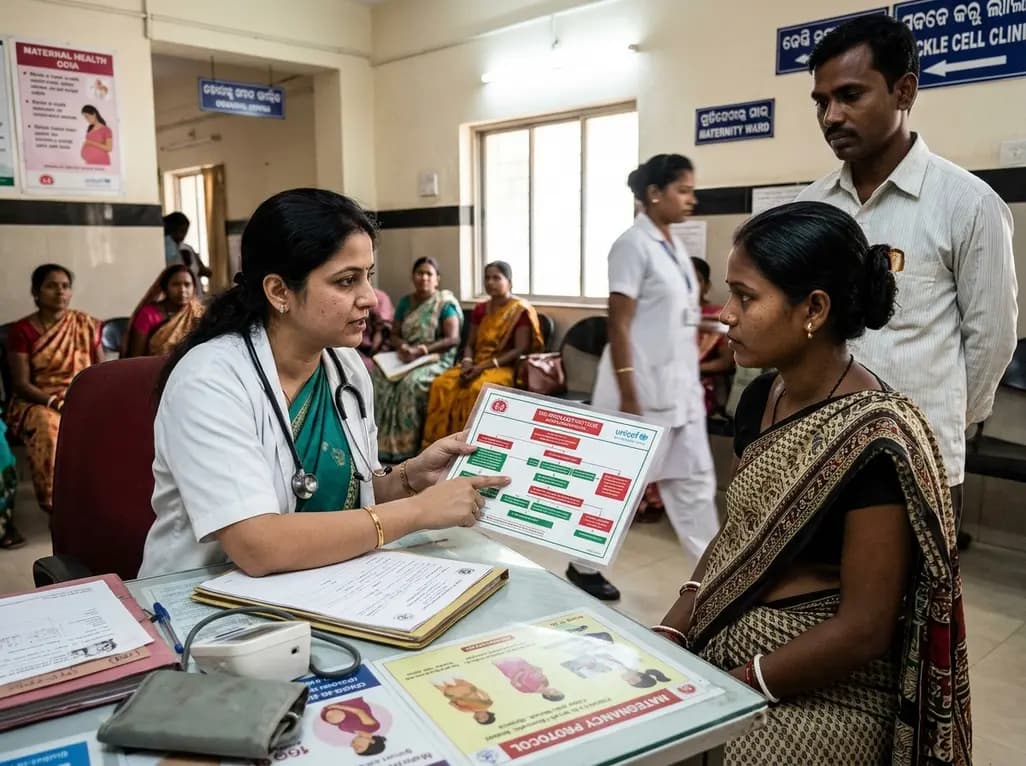
Odisha has established India's first state-level clinical protocol specifically tailored for pregnant women with sickle cell disease. Developed with NHM and UNICEF, the framework provides structured antenatal screening, crisis mitigation, standardized referral pathways, and specialized interdisciplinary care.
Today

The Directorate General of Health Services directs Indian states to halt the hazardous reuse and reprocessing of single-use medical devices. Discover regulatory implications under the Drugs and Cosmetics Act, critical infection risks, legal liabilities, and operational changes required across clinical specialties.
Today

Mitochondria-targeted nanoparticles self-assembled from EGCG and L-glutamic acid effectively restore mitochondrial homeostasis, suppress synovial inflammation, and attenuate chondrocyte senescence in osteoarthritis, offering a promising disease-modifying nanotherapy.
Today

India is advancing preventive healthcare by integrating genomics, artificial intelligence, and quantum technologies. With the SANGAM programme sequencing one million Indian genomes, clinicians can unlock personalized therapies, detect cardiometabolic risks early, and curb the burden of diabetes and heart disease.
Today
