.webp&w=384&q=75)

Loading, please wait...
Loading, please wait...

Wearable physiological monitoring has become a vital asset for sports training and personalized health management. However, researchers often encounter difficulties when capturing accurate data during intense physical exertion. Consequently, a team led by Liu S et al. developed a smart headband to overcome these persistent challenges. This innovative device utilizes thermal-sensation-based electronic skin (e-skin) to monitor key vitals continuously. For instance, the headband tracks heart rate and forehead temperature with high precision. Furthermore, it measures pulse pressure waveforms and total metabolic energy cost during both static and dynamic activities.
The proposed headband offers robust performance in diverse environments, from indoor gyms to outdoor running tracks. Specifically, the technology uncovers significant physiological variations associated with athlete fatigue. This information is crucial because it reveals insights into cardiac load and potential cardiovascular risks. Therefore, medical professionals can use these real-time metrics to optimize exercise rehabilitation programs. Moreover, the lightweight design ensures that patients remain comfortable during long-term monitoring. As a result, this advancement represents a significant leap forward in sports medicine and preventive care.
Integrating multimodal sensors into a wearable format simplifies the acquisition of high-quality clinical data. Traditional sensors often struggle with motion artifacts, but the thermal-sensation e-skin maintains stability. Because clinicians can now access continuous data, they can better understand the cardiovascular conditions of their patients during real-world activities. Consequently, this technology bridges the gap between clinical assessment and daily exercise habits.
The device monitors heart rate, forehead temperature, pulse pressure waveforms, and total metabolic energy cost accurately.
The device uses thermal-sensation-based electronic skin to maintain accuracy and robustness during dynamic activities like hill climbing.
Fatigue tracking helps identify cardiac load variations and cardiovascular risks, which are vital for preventing overexertion and injury.
Disclaimer: This content is for informational and educational purposes only. It is not a substitute for professional medical advice, diagnosis, or treatment. Refer to the latest local and national guidelines for clinical practice.
References
Liu S et al. A smart headband for multimodal physiological monitoring in human exercises. Adv Sci (Weinh). 2026 Feb 08. doi: 10.1002/advs.74279. PMID: 41655188.
Gaharwar AK et al. 3D Printed Electronic Skin Provides Promise For Human-Machine Interaction. Texas A&M Engineering News. 2024 Jan 26.
Liu J et al. Wearable Wireless Physiological Monitoring System Based on Multi-Sensor. Sensors (Basel). 2021 Apr 21;21(9):2937.

Read summarized clinical updates, watch expert medical content, and earn CME certifications right from your smartphone.
Open your smartphone camera to scan and install.





A new smart headband uses thermal-sensation-based e-skin to track pulse, metabolism, and heart rate accurately during intense physical activities....
8 months ago

Review how tailored exercise programs benefit frail older patients with heart failure. Explore pathophysiological mechanisms, individualized training prescriptions, and strategies to overcome adherence barriers in clinical practice.
Today

Leucine Rich Bio has introduced South Asia's first comprehensive vaginal microbiome test, BugSpeaks. By profiling microbial dysbiosis, pathogens, and antimicrobial resistance, this next-generation diagnostic platform provides clinicians with deeper insights into recurrent infections, fertility, and reproductive health.
Today
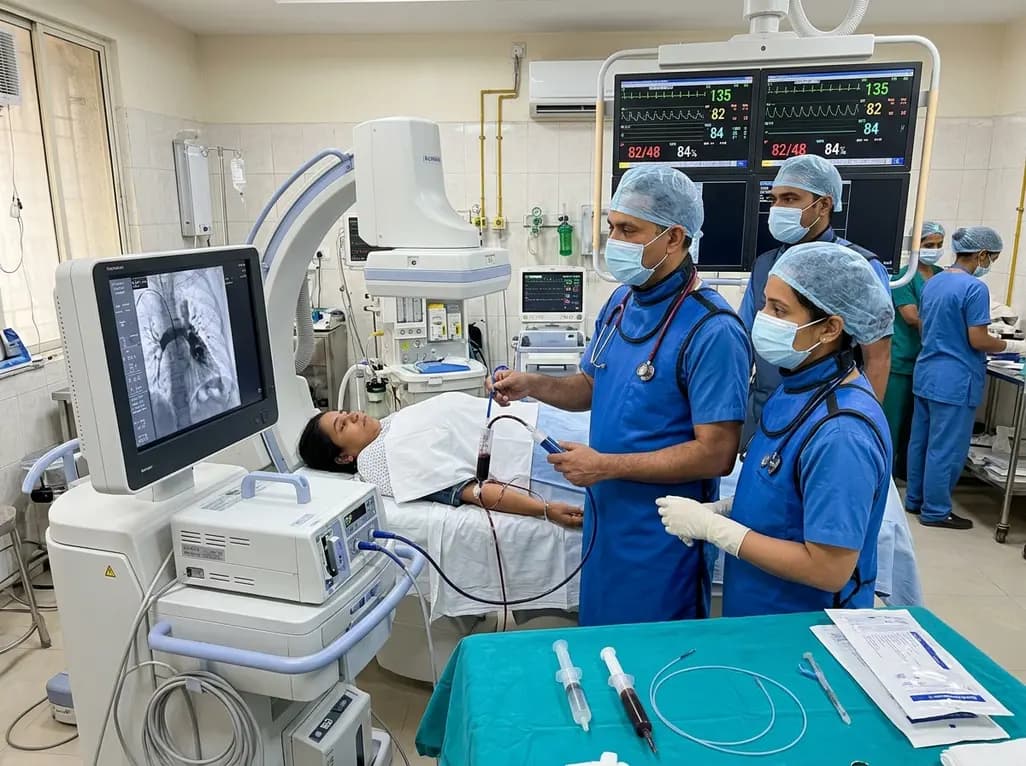
In high-risk pulmonary embolism complicated by severe anemia and active uterine bleeding, systemic thrombolysis is contraindicated. Large-bore aspiration thrombectomy provides rapid hemodynamic rescue without fibrinolysis, supported by inferior vena cava filter placement and multidisciplinary critical care.
Today

This comparative study evaluates posterior labral tears with and without glenohumeral instability, highlighting distinct demographic patterns, MRI underestimation in stable shoulders, and successful arthroscopic repair outcomes.
Today

A clinical study demonstrates that early intervention with tocilizumab, either as monotherapy or bridged with corticosteroids, achieves significant proptosis reduction and resolves active inflammation in treatment-naive thyroid eye disease.
Today
