.webp&w=384&q=75)

Loading, please wait...
Loading, please wait...

Randomized controlled trials provide essential scientific evidence supporting modern drug development for systemic lupus erythematosus. However, rheumatology researchers continuously confront critical questions regarding whether clinical study cohorts adequately capture real-world patient diversity. Recent investigations analyzing SLE clinical trials demonstrate that internal methodological rigor does not inherently guarantee representative demographic enrollment, exposing a substantial disconnect in contemporary therapeutic research.
Evaluating research quality requires systematically assessing risks that threaten study validity. In a cross-sectional assessment of industry-sponsored systemic lupus erythematosus trials, researchers examined fifty-one studies enrolling over eighteen thousand participants. The investigators utilized the Cochrane Risk of Bias 2 tool to categorize trial execution. Notably, thirty-seven percent of evaluated studies demonstrated a low risk of bias, reflecting robust randomization schemes, protocol adherence, and transparent outcome reporting. Meanwhile, thirty-five percent of trials raised some methodological concerns, and twenty-seven percent exhibited a high risk of bias. These quality variations typically stemmed from deviations from intended interventions, missing outcome data, or selective outcome reporting. Consequently, clinicians must recognize that published literature on lupus therapies encompasses a wide spectrum of investigative quality. Although rigorous study protocols remain indispensable for establishing internal validity, technical excellence alone cannot resolve underlying sample selection issues. Therefore, evaluating study methodology represents only the initial step in determining true clinical applicability.
Systemic lupus erythematosus disproportionately affects specific demographic groups, making equitable representation clinically necessary. The study utilized participation-to-prevalence ratios to compare trial demographics against real-world disease prevalence derived from meta-analyzed registry data. A participation-to-prevalence ratio of at least 0.8 denoted adequate representation. Interestingly, trials achieved adequate enrollment for female participants, with a median ratio of 1.03. Similarly, Hispanic and Asian participants achieved robust inclusion, showing median ratios of 1.37 and 2.40, respectively. In contrast, Black participants faced profound underrepresentation, recording a median ratio of only 0.32. This deficit is alarming because Black individuals historically experience severe lupus manifestations, including accelerated lupus nephritis and elevated mortality. Furthermore, White participants demonstrated proportional enrollment with a median ratio of 1.03. When trial populations skew away from high-burden cohorts, clinicians struggle to predict true drug efficacy. Consequently, persistent racial disparities weaken clinical confidence when translating therapeutic trial findings to the most vulnerable patient populations.
Geographic access plays a decisive role in shaping clinical trial diversity. The analysis classified United States study sites according to the National Center for Health Statistics Urban-Rural Classification System. Most investigative centers were heavily concentrated in large metropolitan areas. Academic medical centers in major urban hubs naturally possess established research infrastructure and specialized staff. However, this geographic centralization inadvertently erects barriers for patients residing in suburban, rural, or economically disadvantaged communities. Patients who live far from major metropolitan centers face substantial travel burdens, logistical challenges, and indirect financial costs. In addition, rural healthcare providers often lack formal referral pathways to connect their lupus patients with active research protocols. As a result, trial cohorts predominantly reflect metropolitan demographics, neglecting environmental, economic, and cultural factors unique to non-urban regions. Thus, expanding site distribution beyond metropolitan hubs remains crucial for achieving truly equitable and comprehensive trial representation.
A pivotal finding of the cross-sectional study is the complete lack of correlation between methodological quality and demographic or geographic representativeness. Trials exhibiting low risk of bias did not recruit more diverse cohorts than trials marked by methodological concerns or high risk. This finding highlights a fundamental conceptual divergence between internal validity and external applicability. Internal validity ensures that trial results reflect true drug effects within the selected study sample. Conversely, external validity dictates whether clinicians can generalize those findings to broader clinical populations. An exquisitely designed double-blind trial cannot inform clinical practice if its cohort systematically excludes patients who bear the greatest disease burden. Moreover, regulatory agencies increasingly emphasize diversity action plans to rectify these historical blind spots. Therefore, peer reviewers, guideline committees, and clinicians must stop treating low risk of bias as a proxy for comprehensive generalizability.
The observed disparities carry profound implications for international rheumatology practice. Clinicians across the world frequently rely on Western industry-sponsored clinical trials to guide treatment decisions involving novel targeted biologics and small molecules. However, systemic lupus erythematosus exhibits significant clinical heterogeneity driven by genetic ancestry, socioeconomic factors, and environmental triggers. For instance, South Asian, African, and East Asian populations display variable frequencies of lupus nephritis, cytopenias, and drug metabolizing phenotypes. When international evidence stems from narrowly defined metropolitan cohorts, treating physicians must extrapolate efficacy and safety data with caution. Additionally, global trials must actively invest in diverse recruiting strategies, community engagement, and decentralized trial designs to bridge existing representation gaps. By addressing these foundational inequities, the medical community can ensure that scientific advances reach every patient segment. Only by harmonizing strict methodological rigor with authentic demographic inclusion can medical research produce evidence that safely benefits all patients living with lupus.
Black individuals face a disproportionate burden of systemic lupus erythematosus, experiencing higher prevalence, accelerated organ damage, and greater disease-related mortality. When clinical studies fail to recruit representative cohorts, clinicians encounter difficulty assessing true therapeutic efficacy and toxicity in high-risk patients. Therefore, underrepresentation directly compromises the generalizability of evidence, leading to clinical uncertainty when selecting targeted biologics or immunosuppressive therapies in everyday rheumatology practice.
Concentrating clinical trial sites within major metropolitan academic centers restricts geographic diversity and excludes rural or semi-urban patient populations. Consequently, these geographic hurdles prevent individuals with varied socioeconomic backgrounds and distinct healthcare access barriers from enrolling. Because environmental exposures, travel capabilities, and local resources affect long-term treatment adherence, geographically restricted trial data fail to reflect the diverse clinical realities that healthcare providers encounter in broader, community-based practice.
High methodological quality minimizes internal bias through meticulous randomization, blinding, and protocol adherence. However, internal validity does not guarantee external validity. Even a flawlessly executed clinical trial cannot clarify how a drug acts in underrepresented demographic groups if those cohorts were systematically excluded. Therefore, regulatory evaluators and clinicians must evaluate demographic representativeness alongside traditional risk-of-bias tools when determining whether trial findings genuinely apply to diverse patient populations.
Disclaimer: This content is for informational and educational purposes only and does not constitute medical advice, diagnosis, or treatment. Healthcare professionals should exercise independent clinical judgment. Refer to the latest local and national guidelines for clinical practice.
References
Leland A et al. Associations between methodological quality and representation in clinical trials of systemic lupus erythematosus therapies. Lupus. 2026 Oct 16. doi: 10.1177/09612033261499150. PMID: 42886897.
Falasinnu T, et al. Diversity in clinical Trials: The example of systemic lupus erythematosus. Lupus Sci Med. 2023;10(1):e000889.
Sheikh SZ, et al. Addressing Racial Disparities in Lupus Clinical Trials. Lupus Sci Med. 2025;12(1):e001357.

Read summarized clinical updates, watch expert medical content, and earn CME certifications right from your smartphone.
Open your smartphone camera to scan and install.





A cross-sectional study reveals that while methodological quality in SLE clinical trials varies, it does not correlate with demographic or geographic representation, raising concerns about the real-world generalizability of lupus therapeutics.
Today

A mixed-methods within-subject study reveals that patients report significantly higher overall satisfaction, clearer communication, and greater staff courtesy in an acute palliative care unit compared to prior non-palliative hospital stays, despite persistent logistical challenges like nursing response times.
Today

A recent cohort study reveals that reproductive-age women with cerebral venous thrombosis have nearly double the odds of developing intracranial hypertension compared to older women. Superior sagittal and lateral sinus occlusions heighten this risk, predisposing patients to persistent visual impairment.
Today
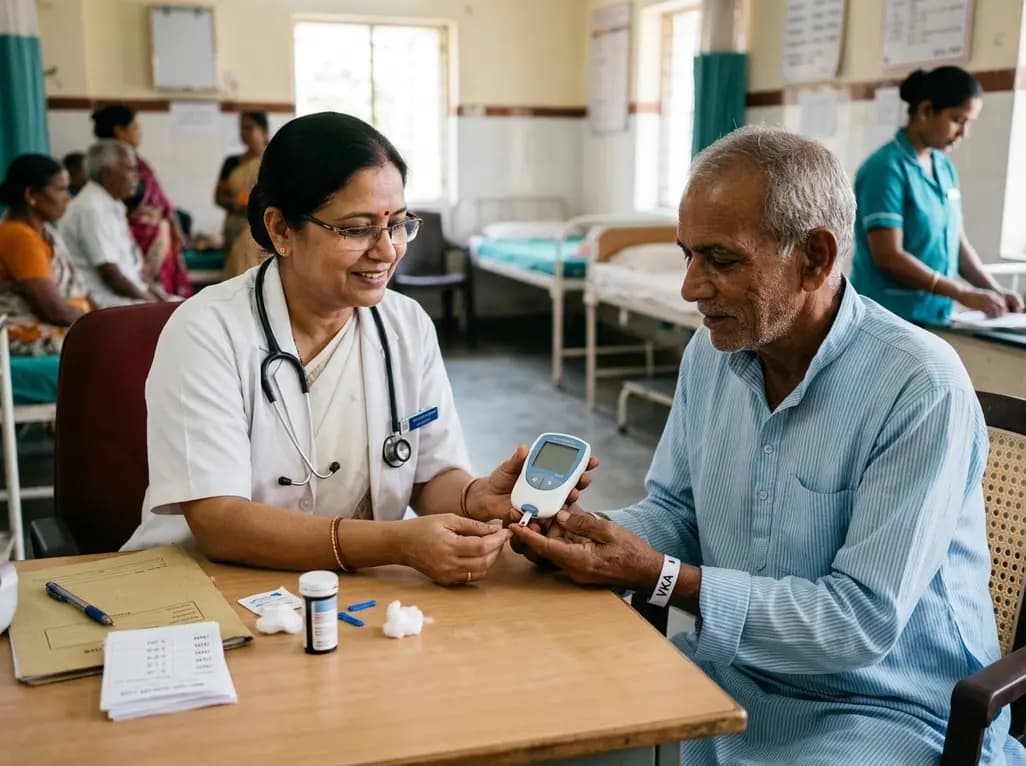
A new implementation study demonstrates that an integrated home INR monitoring network for vitamin K antagonist therapy cuts test turnaround times from three hours to 20 minutes, enhancing clinical oversight, diagnostic accuracy, and patient quality of life.
Today

Diagnostic data shows that nearly one in four spine investigations now involve patients younger than 40 years. This comprehensive overview explores the drivers behind this demographic trend, evaluates ergonomic hazards, clarifies red-flag signs, and highlights clinical indications for judicious diagnostic imaging.
Today

A study reveals how adrenal hormones maintain glucose homeostasis during prolonged fasting when glucagon is absent. In glucagon-deficient mice, corticosterone-driven lipolysis prevents severe hypoglycemia, offering key insights for managing counterregulatory failure and fasting in diabetes.
Today
