.webp&w=384&q=75)

Loading, please wait...
Loading, please wait...

Long-term oral anticoagulation remains a cornerstone in managing atrial fibrillation, prosthetic heart valves, and venous thromboembolic disease. However, traditional management poses continuous logistical challenges for vulnerable populations. The integration of structured home INR monitoring addresses these persistent barriers by decentralized testing and rapid clinical oversight. Consequently, healthcare providers can now achieve superior anticoagulation stability while sparing frail individuals the physical strain of frequent hospital commutes.
Vitamin K antagonists, such as warfarin and acenocoumarol, provide effective thromboembolic prophylaxis across several cardiovascular indications. Nevertheless, these agents possess an exceptionally narrow therapeutic window. Therefore, clinicians must routinely monitor the International Normalized Ratio to prevent either hemorrhagic complications or ischemic strokes. In routine hospital practice, laboratory turnaround times frequently exceed three hours. Moreover, patients must often travel to centralized collection centers, which causes significant discomfort for elderly and bedbound individuals. Consequently, missed appointments and erratic testing schedules often compromise therapeutic adherence. In contrast, decentralized monitoring brings diagnostic capabilities directly to the bedside. Recent implementation data demonstrate that point-of-care coagulation testing bridges the gap between tertiary care supervision and community healthcare delivery. As a result, home-based models prevent dangerous under-anticoagulation and mitigate toxic bleeding risks. Furthermore, decentralized care alleviates the severe overcrowding commonly observed in outpatient hematology clinics. Because clinicians receive immediate diagnostic feedback, they can optimize dosing without delay. Ultimately, transitioning from central phlebotomy to integrated community testing represents a critical evolution in modern cardiovascular therapeutics.
A successful decentralized anticoagulation service requires robust organizational infrastructure rather than isolated testing meters. Specifically, the model implemented by the Local Health Authority of Bologna illustrates how hospital laboratories can govern community diagnostics. In this network, seventeen dedicated home care units provide comprehensive geographic coverage for more than seventeen hundred patients. Community nurses perform point-of-care testing during scheduled home visits using portable analyzers such as the Xprecia Prime system. Furthermore, these handheld devices integrate seamlessly with central hospital information architecture via encrypted digital channels. As a result, every coagulation value automatically uploads to the hospital laboratory platform for systematic verification. Laboratory personnel maintain strict oversight by applying automated validation algorithms that match institutional laboratory standards. Therefore, the network guarantees analytical precision without requiring venous phlebotomy or physical transport of specimens. In addition, automated self-verification flags unexpected anomalies or out-of-range deviations for immediate expert review. Because central specialists supervise the entire diagnostic chain, community nurses operate with complete clinical confidence. Consequently, this digital architecture eliminates errors, preserves analytical traceability, and unites disparate healthcare sectors into a single collaborative care ecosystem.
The primary operational achievement of an integrated home monitoring framework is the dramatic reduction in turnaround time. Traditionally, venous blood draws require sample transportation, centrifugation, laboratory handling, and manual clerical validation. Consequently, standard hospital laboratory workflows frequently require three to four hours before clinicians obtain actionable coagulation results. In acute scenarios, such prolonged delays place unstable patients at unnecessary risk. In contrast, point-of-care capillary blood testing generates verified values in approximately twenty minutes. Because results become available during the home encounter, visiting healthcare workers can immediately coordinate with prescribing physicians. Therefore, clinicians can modify oral anticoagulant dosages on the same day without prolonged uncertainty. Additionally, rapid feedback substantially improves time in therapeutic range, which directly correlates with reduced stroke and hemorrhage rates. Moreover, real-time reporting eliminates the frustrating communication lags that typically overburden outpatient administrative staff. When critical values arise, clinical teams initiate corrective measures, such as administering oral vitamin K, within minutes. Thus, shortening the diagnostic cycle transforms passive record-keeping into active, preventative patient management. Ultimately, rapid turnaround time provides both clinicians and patients with essential peace of mind.
A common concern among medical specialists involves the analytical equivalence between portable coagulometers and automated laboratory analyzers. However, contemporary microfluidic and electrochemical point-of-care devices demonstrate exceptional concordance with standard thromboplastin assays. For instance, the Bologna implementation study processed over twenty thousand home samples annually while sustaining rigorous diagnostic accuracy. Furthermore, automated validation algorithms analyze duplicate measurements, strip integrity, and internal controls before accepting any reading. If an analytical discrepancy occurs, the digital system prompts an immediate re-test or schedules a confirmatory laboratory draw. In addition, hospital pathologists conduct regular external quality assessments and perform mandatory instrument calibrations. Therefore, clinical teams receive diagnostic data that meet accredited laboratory standards without compromise. Moreover, utilizing capillary blood from a simple finger prick reduces hematoma formation in patients who already take active anticoagulants. This micro-sampling technique preserves venous access for future medical interventions. Consequently, high analytical accuracy combines with minimal physical trauma to elevate patient safety. As healthcare systems expand point-of-care testing, laboratory-directed governance remains essential. Ultimately, integrating laboratory supervision into community care guarantees that diagnostic accuracy never yields to convenience.
Frequent clinic attendance imposes substantial physical, psychological, and financial hardships on frail individuals and their caregivers. For example, elderly patients with osteoarthritis, stroke deficits, or severe congestive heart failure often struggle with standard clinic transportation. Furthermore, ambulance transfers and taxi expenses place notable economic strain on families. By shifting testing to the home environment, healthcare systems preserve patient dignity and drastically reduce logistical distress. Moreover, patients feel more engaged in their ongoing therapy, which fosters better medication compliance. In addition, home visits allow community nurses to assess overall health status, dietary variations, and medication adherence during every interaction. Consequently, clinicians detect early signs of clinical deterioration, drug interactions, or bleeding complications before emergency hospitalization becomes necessary. Similarly, family caregivers experience reduced absenteeism from work because they no longer coordinate routine diagnostic transport. Therefore, home-based testing optimizes clinical outcomes while simultaneously reducing broader societal costs. As populations age globally, decentralized healthcare models offer a sustainable approach to chronic disease management. Ultimately, delivering compassionate, individualized care within the home setting substantially improves long-term patient satisfaction and overall well-being.
The principles demonstrated by the European implementation model carry profound implications for developing healthcare systems, including India. Specifically, India harbors a substantial burden of rheumatic heart disease and mechanical prosthetic valve replacements requiring mandatory vitamin K antagonist therapy. Although direct oral anticoagulants offer convenient dosing for non-valvular atrial fibrillation, economic constraints and mechanical valve indications necessitate lifelong warfarin or acenocoumarol use. However, patients living in rural or semi-urban regions must travel extensive distances to access accredited pathology laboratories. Consequently, many patients suffer from subtherapeutic anticoagulation or fatal bleeding due to erratic follow-up. Integrating portable point-of-care coagulation analyzers into primary health centers and community nursing programs can bridge this critical healthcare divide. Furthermore, telemedicine platforms enable central cardiologists to interpret digitized INR reports and adjust dosages remotely. In addition, training community healthcare workers to conduct capillary fingerstick testing decentralizes chronic care cost-effectively. Therefore, implementing digitally supervised monitoring networks can drastically reduce preventable strokes and valve thrombosis across diverse demographics. Ultimately, scalable home and community diagnostic models empower clinicians to deliver equitable, life-saving anticoagulation care everywhere.
Modern point-of-care coagulometers demonstrate excellent analytical correlation with standard central laboratory thromboplastin assays. Specifically, these portable devices utilize pre-calibrated test strips that measure clotting time electrochemically or microfluidically. When integrated into supervised networks with automated self-verification algorithms, point-of-care analyzers achieve precision comparable to accredited venous laboratory testing. Consequently, clinicians can reliably base acute dosing decisions on these rapid home measurements without requiring confirmatory hospital phlebotomy.
Elderly, homebound, and frail individuals on long-term vitamin K antagonist therapy benefit most significantly from decentralized monitoring. Specifically, patients with mechanical prosthetic heart valves, recurrent venous thromboembolism, or atrial fibrillation who experience mobility impairments avoid stressful hospital travel. Furthermore, individuals residing in rural or medically underserved communities gain timely access to precise monitoring. Consequently, this model dramatically enhances treatment compliance and prevents serious hemorrhagic or thromboembolic complications.
Digital integration connects handheld community analyzers directly with the hospital's central clinical records. Therefore, test results undergo immediate automated validation based on predefined laboratory protocols. When unexpected INR fluctuations occur, the software instantly alerts attending physicians for urgent therapeutic intervention. Additionally, this seamless data transfer generates digital reports within twenty minutes. As a result, medical teams can adjust anticoagulant dosages immediately, eliminating communication delays and enhancing therapeutic safety.
Disclaimer: This content is for informational and educational purposes only... Refer to the latest local and national guidelines for clinical practice.
References

Read summarized clinical updates, watch expert medical content, and earn CME certifications right from your smartphone.
Open your smartphone camera to scan and install.





A new implementation study demonstrates that an integrated home INR monitoring network for vitamin K antagonist therapy cuts test turnaround times from three hours to 20 minutes, enhancing clinical oversight, diagnostic accuracy, and patient quality of life.
Today

A retrospective cohort study of 5,481 children aged 3–6 years evaluated whether surgical sperm retrieval for ICSI affects offspring cognitive and physical growth compared with ejaculated sperm and IVF. Results demonstrate comparable IQ scores and growth parameters, providing reassuring safety evidence for clinical practice.
Today
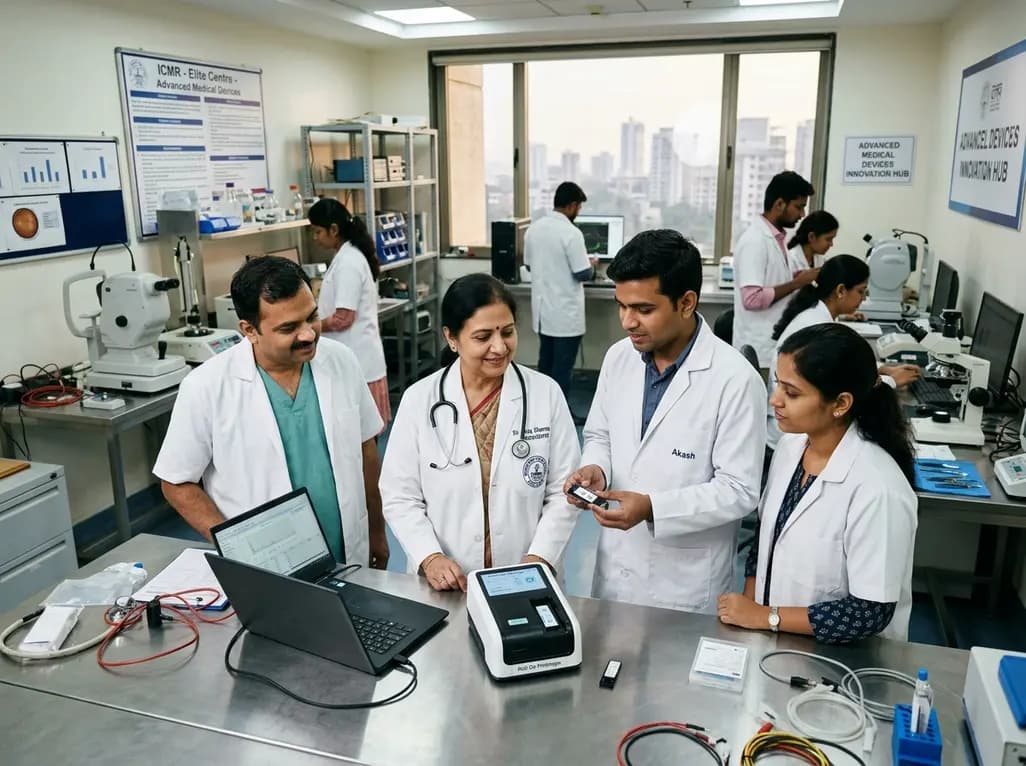
The Indian Council of Medical Research has funded seven top academic hubs to build indigenous healthcare technologies. Targeting point-of-care diagnostics, biomaterials, and ophthalmology, these multidisciplinary centres aim to tackle unmet clinical needs and make medical care affordable across India.
Today

Diagnostic data shows that nearly one in four spine investigations now involve patients younger than 40 years. This comprehensive overview explores the drivers behind this demographic trend, evaluates ergonomic hazards, clarifies red-flag signs, and highlights clinical indications for judicious diagnostic imaging.
Today

A multicenter cross-sectional study of 1,315 adults with type 1 diabetes reveals that the GMI/HbA1c ratio does not independently predict microvascular complications. Clinicians should prioritize sustained time in range and blood pressure management over glycation discordance metrics.
Today
