

Loading, please wait...
Loading, please wait...

Flow cytometric immunophenotyping remains essential for diagnosing and classifying pediatric acute leukemias. Historically, clinical laboratories have relied on conventional flow cytometry protocols that require multiple aliquots and separate reagent tubes. However, conventional methodologies demand large bone marrow aspirate volumes, creating significant challenges when evaluating critically ill infants. Spectral flow cytometry addresses these diagnostic barriers by recording the complete emission spectrum across multiple lasers for each fluorochrome. Consequently, this innovative optical technology enables high-dimensional single-cell analysis that far surpasses traditional bandpass optical configurations. Furthermore, pediatric leukemia classification demands rapid identification of lymphoid, myeloid, and ambiguous lineages to guide urgent risk-adapted therapies. In recent years, researchers have sought single-tube strategies to streamline laboratory operations and preserve irreplaceable diagnostic tissue. The newly developed SJIP38 panel represents a major technological leap forward in pediatric oncology. By consolidating complex multi-tube diagnostic protocols into a unified assay, this platform improves cellular resolution. Therefore, hematopathologists can now detect rare aberrant populations while conserving precious clinical specimens during initial diagnostic evaluations. Additionally, clinicians gain immediate clarity to initiate targeted induction therapies without unnecessary delay. Consequently, timely diagnosis prevents acute complications and enhances patient survival.
Designing an advanced 38-parameter panel requires rigorous reagent optimization and careful fluorochrome selection. To achieve this milestone, investigators developed the SJIP38 panel using the Sony ID7000 six-laser spectral cytometry platform. Moreover, the assay condenses diagnostic markers that previously required a 13-tube conventional flow cytometry workflow into a single tube. Panel designers systematically evaluated fluorochrome spillover spread matrices to minimize optical interference between closely emitting fluorophores. In addition, the team carefully matched antigen density with fluorophore brightness to prevent fluorochrome saturation. Highly expressed surface antigens received dimmer dyes, whereas low-density antigens paired with exceptionally bright fluorochromes. Consequently, the panel maintains robust signal separation across all thirty-eight parameters without sacrificing resolution. The engineering strategy also prioritized commercially available reagents to facilitate broader clinical translation across specialized reference laboratories. Furthermore, this streamlined architecture reduces manual antibody pipetting steps, which directly minimizes potential human error. Thus, the single-tube format ensures dependable analytical reproducibility and enhances specimen throughput in high-volume pathology settings. Ultimately, this rigorous design establishes a scalable standard for future spectral cytometry assays. Moreover, this standardized approach supports consistent multi-center clinical trials.
Accurate lineage assignment forms the bedrock of therapy selection in pediatric acute leukemias. The SJIP38 panel integrates an extensive repertoire of antibodies targeting lineage-defining, maturation-associated, and aberrantly expressed antigens. For example, the panel assesses essential B-cell markers alongside critical T-cell determinants and myeloid antigens. In doing so, it reliably distinguishes B-cell lymphoblastic leukemia from T-cell acute lymphoblastic leukemia and acute myeloid leukemia. Furthermore, the panel effectively identifies challenging mixed-phenotype acute leukemias and undifferentiated neoplasms. Because the assay evaluates all markers simultaneously on every individual cell, pathologists can track co-expression patterns with exceptional precision. Consequently, clinicians gain immediate insight into lineage infidelity and aberrant antigen expression profiles. Moreover, characterization of stemness markers and maturational antigens clarifies the exact stage of leukemic arrest. Such comprehensive multiparametric depth prevents diagnostic misclassification that could lead to inappropriate therapeutic protocols. Therefore, the single-tube platform ensures exhaustive immunophenotyping from the very first diagnostic evaluation. Additionally, simultaneous interrogation captures minor aberrant subclones that standard panels frequently overlook. Instead of reviewing fragmented data across multiple tubes, pathologists evaluate unified cellular distributions.
Beyond its diagnostic precision, the SJIP38 panel offers transformative operational advantages for clinical laboratories. Conventional multi-tube protocols consume substantial bone marrow volumes, which pediatric hematologists often struggle to obtain from fragile patients. In contrast, this single-tube approach substantially reduces specimen volume requirements, allowing successful diagnostic evaluations from paucicellular samples. Furthermore, consolidating thirteen tubes into one drastically lowers reagent waste and diminishes consumption of expensive preparation buffers. Laboratory workflows become noticeably simpler, faster, and more cost-effective. Technicians spend significantly less time performing complex manual preparations, which accelerates diagnostic turnaround times during acute clinical presentations. Consequently, oncologists receive definitive immunophenotypic reports much earlier, allowing prompt initiation of life-saving induction chemotherapy. Additionally, fewer manual preparation steps markedly reduce inter-operator variability across laboratory shifts. Quality control procedures also become far more straightforward when analyzing a single, harmonized panel. Thus, diagnostic laboratories enhance their overall testing capacity while improving diagnostic consistency and specimen stewardship. Similarly, standardizing a single antibody cocktail simplifies inventory tracking across hospital centers. As a result, healthcare systems conserve valuable resources and achieve greater analytical efficiency. Furthermore, reduced technician fatigue substantially improves daily laboratory safety standards.
The establishment of the SJIP38 panel carries far-reaching clinical implications for leukemia monitoring and future translational research. By cataloging precise leukemia-associated immunophenotypes at initial diagnosis, the panel provides a detailed fingerprint for subsequent measurable residual disease monitoring. Consequently, clinicians can track minuscule lingering blast populations during remission with unmatched analytical sensitivity. Furthermore, the standardized 38-fluorochrome palette serves as a modular foundation for expanding specialized hematological malignancy panels in the future. In countries like India, pediatric leukemia represents a major burden, where diagnostic delays and limited marrow sample volumes present frequent hurdles. Therefore, adopting high-dimensional spectral platforms in regional cancer centers across India can substantially optimize patient triage and risk classification. Although spectral cytometers require initial capital investment, consolidating multiple diagnostic tubes into single assays ultimately reduces per-test operational costs. In addition, national academic institutions and reference laboratories can collaborate to validate harmonized spectral workflows tailored to local resource settings. Ultimately, embracing this high-dimensional technology will advance pediatric cancer care and improve survival outcomes across diverse healthcare systems. Hence, spectral immunophenotyping represents an indispensable asset for advancing pediatric hematology outcomes globally.
Conventional flow cytometry measures discrete peak emission wavelengths using individual optical bandpass filters, which limits the number of detectable fluorophores per tube. In contrast, spectral flow cytometry captures the full emission spectrum across all lasers for every fluorochrome. Advanced unmixing algorithms then distinguish fluorophores with overlapping spectra. Consequently, laboratories can evaluate up to thirty-eight markers simultaneously in one tube, whereas conventional assays require multiple tubes and higher specimen volumes.
Pediatric patients with suspected leukemia frequently yield paucicellular or low-volume bone marrow aspirates that restrict multi-tube testing. The SJIP38 panel consolidates thirteen conventional diagnostic tubes into a single tube, dramatically reducing the required cellular input. Furthermore, single-tube staining shortens laboratory preparation times and accelerates diagnostic turnarounds during oncologic emergencies. As a result, clinicians receive comprehensive lineage assignment much faster, enabling prompt, personalized induction therapy while minimizing specimen rejection rates.
Mixed-phenotype acute leukemias and undifferentiated neoplasms exhibit intricate co-expression of lymphoid and myeloid antigens that standard panels often fail to resolve. By measuring thirty-eight lineage-defining, maturational, and aberrant antigens simultaneously on single blasts, SJIP38 delineates complex cross-lineage expression patterns without ambiguity. Moreover, pathologists evaluate complete immunophenotypic profiles within an identical cellular context. This high-dimensional resolution prevents misinterpretation between separate tubes, ensuring accurate lineage assignment and optimal risk-stratified treatment selection.
Disclaimer: This content is for informational and educational purposes only and should not be considered medical advice. Always consult a qualified healthcare provider for diagnosis and treatment decisions. Refer to the latest local and national guidelines for clinical practice.
References

Read summarized clinical updates, watch expert medical content, and earn CME certifications right from your smartphone.
Open your smartphone camera to scan and install.





The 38-parameter SJIP38 spectral flow cytometry panel consolidates a 13-tube assay into a single tube, enabling comprehensive lineage classification and immunophenotyping of pediatric acute leukemias while conserving precious bone marrow samples.
Today

A Canadian multicenter study reveals that older adults who survive past age 65 with HIV have similar burdens of cardiovascular, renal, and pulmonary comorbidities regardless of duration since diagnosis, highlighting the decisive impact of lifestyle factors, routine screening, and metabolic health.
Today

Large genomic databases like gnomAD and All of Us offer crucial insights into the population prevalence of partial RHD genotypes. Identifying these variants helps clinicians mitigate anti-D alloimmunization risks in transfusion medicine and obstetric care across diverse ancestral populations.
Today

A novel magnetoactive hydrogel platform demonstrates that vascular curvature independently guides endothelial mechanosensing. Elevated curvature triggers nuclear YAP translocation, VE-cadherin junction thinning, and eNOS membrane shifts, offering critical insights into arterial tortuosity and aneurysm pathology.
Today
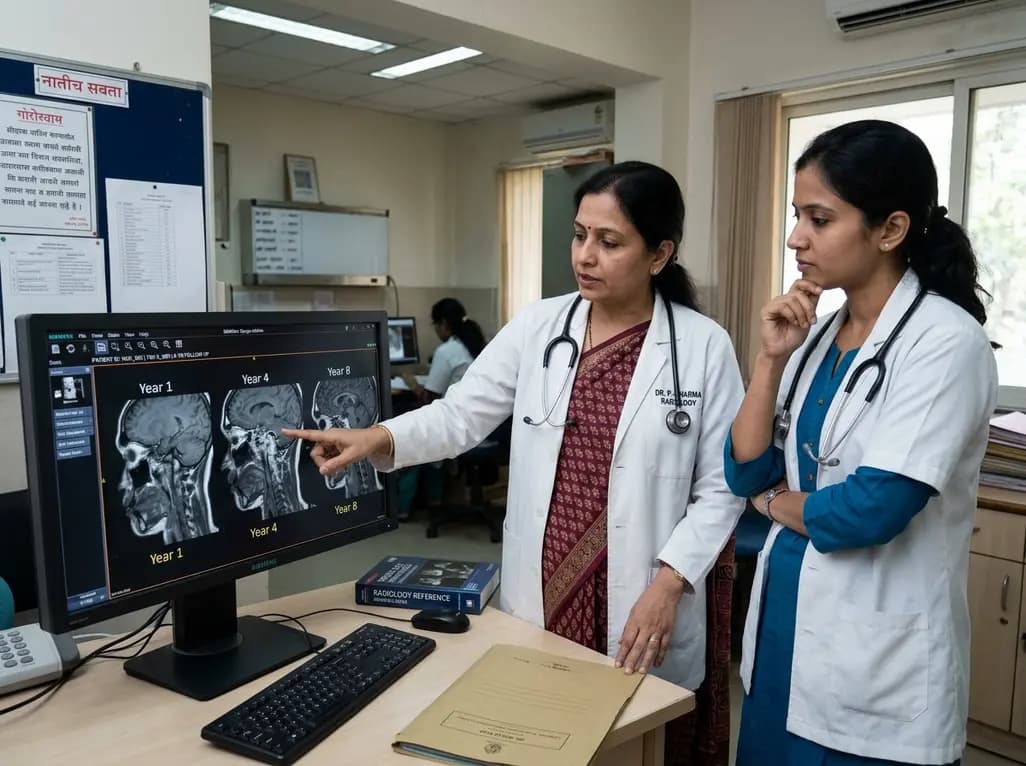
An eight-year longitudinal imaging follow-up reveals severe temporomandibular joint remodeling in nodulosis-arthropathy-osteolysis (NAO) syndrome. Despite extensive osseous destruction, the patient maintained functional jaw opening without TMJ interventions, highlighting the role of conservative management.
Today

Discover essential clinical insights into AGLP1-type amyloidosis, a rare localized complication of glucagon-like peptide-1 analog injections. Learn how histopathology and mass spectrometry differentiate benign iatrogenic amyloidomas from systemic disease, preventing misdiagnosis and unwarranted therapies.
Today
