

Loading, please wait...
Loading, please wait...
Siemens Healthineers Karnataka operations are expanding through a strategic partnership with the state government. IT/BT Minister Priyank Kharge recently met the leadership team to discuss vital opportunities. These discussions focused on skilling, joint incubation, and upcoming centers of excellence. Specifically, the state aims to strengthen its deeptech ecosystem through these high-level partnerships. This initiative will likely create a robust framework for future medical innovations.
The government plans to establish centers of excellence in life sciences and medical products. Consequently, these facilities will drive innovation and support the local startup environment. Furthermore, the collaboration aligns with the state's Deeptech Decade initiative. This program encourages global firms to deepen their presence within the state's innovation ecosystem. Because of Karnataka's strong talent base, Siemens Healthineers views Bengaluru as a critical global innovation hub.
Currently, the company actively partners with various deeptech startups in India. These partnerships primarily focus on improving healthcare delivery and medical technology. Moreover, the Minister emphasized that global companies help validate the state's innovation infrastructure. This collaboration serves as a cornerstone for the state's upcoming healthtech advancements.
The Bengaluru global innovation hub already manages data analytics and artificial intelligence projects. Additionally, the company is developing a new integrated campus in the city. This facility will combine research, manufacturing, and training functions in one location. This integration supports the state's vision for a robust medical technology sector. Therefore, the partnership will likely accelerate the development of advanced healthcare solutions for the global market.
Q1: What are the primary focus areas of the Siemens Healthineers Karnataka collaboration?
The partnership focuses on building centers of excellence for life sciences, healthtech, and medical products. Additionally, it targets skilling, joint incubation, and supporting the deeptech startup ecosystem in Bengaluru.
Q2: What technologies does the Siemens innovation hub in Bengaluru prioritize?
The hub specializes in data analytics, artificial intelligence, and immersive technologies. These tools are central to the company's global research and development strategy and its manufacturing functions.
Disclaimer: This content is for informational and educational purposes only. It does not constitute medical advice or replace professional judgment. Refer to the latest local and national guidelines for clinical practice.
References

Read summarized clinical updates, watch expert medical content, and earn CME certifications right from your smartphone.
Open your smartphone camera to scan and install.





Siemens Healthineers partners with the Karnataka government to build centers of excellence for healthtech and life sciences at its major Bengaluru hub....
6 months ago

A multicenter study from Southeastern Türkiye identified rare alpha-1 antitrypsin deficiency variants, including the homozygous Malton genotype, among COPD patients. Half were never-smokers, highlighting the critical need for comprehensive genetic screening beyond common S and Z alleles.
Today
A comprehensive scoping review synthesises evidence linking prenatal maternal mental health to long-term offspring neurodevelopment, evaluating neuroendocrine, inflammatory, and epigenetic pathways while highlighting clinical screening and future research priorities.
Today
The Directorate General of Health Services directs Indian states to halt the hazardous reuse and reprocessing of single-use medical devices. Discover regulatory implications under the Drugs and Cosmetics Act, critical infection risks, legal liabilities, and operational changes required across clinical specialties.
Today
A 25-year multi-institutional cohort reveals high recurrence rates in pediatric giant cell tumor of bone, particularly in patients with open physes and bone marrow edema on preoperative MRI. Early surveillance and careful balance between growth plate preservation and tumor clearance are essential.
Today
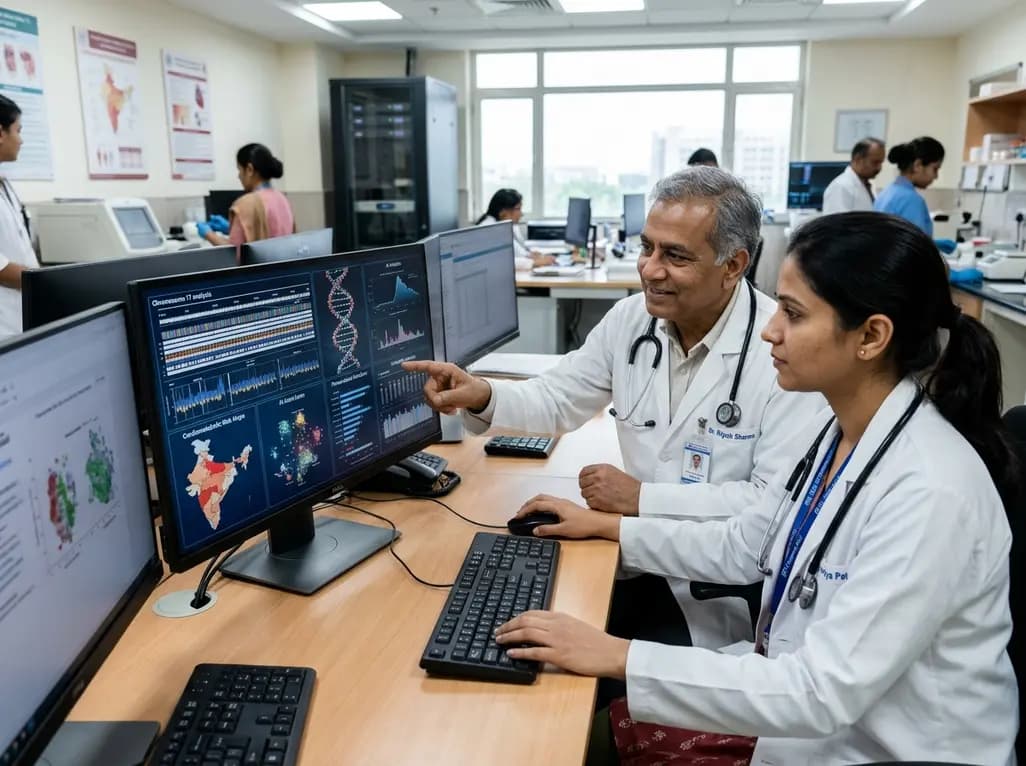
India is advancing preventive healthcare by integrating genomics, artificial intelligence, and quantum technologies. With the SANGAM programme sequencing one million Indian genomes, clinicians can unlock personalized therapies, detect cardiometabolic risks early, and curb the burden of diabetes and heart disease.
Today
