.webp&w=384&q=75)

Loading, please wait...
Loading, please wait...

Depressive disorders represent a principal contributor to disability and lost productivity worldwide. Clinicians frequently encounter patients who require medical leave due to acute affective crises. Understanding long-term career trajectories after sickness absence in depression is vital for establishing realistic prognoses and rehabilitation plans. A landmark prospective cohort study from Sweden tracked 9,139 working-age residents across a 15-year observation period to address this critical knowledge gap. All participants, aged 25 to 40 years, initiated a new sickness absence spell for major depression in 2005. Researchers utilized sequence analysis and cluster techniques to evaluate yearly dominant labor market outcomes across the subsequent decade and a half.
Encouragingly, the empirical findings deliver a reassuring perspective for healthcare professionals. Over 70% of individuals maintained predominant economic activity over the subsequent 15 years. Furthermore, another 14.4% sustained active employment despite experiencing intermittent bouts of sickness absence or temporary disability pensions. Consequently, more than 85% of affected individuals remained actively connected to the labor force throughout the study. This robust evidence challenges overly pessimistic assumptions that clinical depression inevitably derails professional careers. Nevertheless, a vulnerable minority navigated persistent unemployment, protracted disability pensions, or early mortality. Therefore, identifying early prognostic markers helps clinicians pinpoint patients who require proactive, specialized vocational and therapeutic rehabilitation.
Researchers identified 4,373 unique employment sequences and synthesized them into seven distinct labor market typologies. The dominant category, comprising 70.7% of the cohort, represented individuals with continuous and predominant economic activity. In contrast, 14.4% belonged to a typology characterized by sustained economic activity interspersed with periodic sickness absence or disability pensions. Together, these two categories prove that most individuals recover vocational function successfully following an acute depressive episode.
However, the investigation also uncovered vulnerable subgroups who suffered severe labor detachment. Approximately 8.0% of participants fell into a predominant long-term sickness absence or disability pension trajectory. Additionally, 2.2% experienced protracted sickness absence that culminated in complete withdrawal from economic activity without formal pension support. Another 1.6% displayed intermittent sickness absence with only marginal economic participation. Finally, external exits included emigration in 1.7% of cases and premature mortality in 1.4% of participants. These divergent pathways emphasize that post-depression recovery is highly heterogeneous. While most workers resume productive employment, approximately one in ten faces persistent labor market marginalization. Therefore, clinicians cannot rely solely on acute symptom relief to gauge functional recovery.
The identification of distinct typologies illustrates the complex interaction between psychiatric illness and longitudinal occupational functioning. Most patients demonstrated remarkable occupational resilience, returning swiftly to full-time work once the acute affective episode resolved. Their ability to remain economically active highlights the effectiveness of comprehensive healthcare, workplace sick leave protections, and timely psychiatric intervention. Furthermore, individuals in the intermittent sickness absence group managed to retain employment continuity despite periodic symptom recurrences.
In contrast, the trajectories characterized by persistent disability pensions and complete economic disengagement demonstrate a compounding cycle of impairment. For these individuals, initial sickness absence served as a gateway to enduring workforce exclusion. Sequence analysis demonstrated that individuals who entered long-term disability rarely transitioned back into active economic participation in later years. This observation underscores the permanence of vocational marginalization once disability benefits become entrenched. Consequently, secondary prevention must prioritize keeping recovering workers connected to the labor market. Occupational health strategies should intervene before temporary sickness spells solidify into irreversible, long-term disability claims.
Understanding the determinants that steer patients toward permanent disability pensions is crucial for preventive clinical practice. The Swedish register study utilized multinomial logistic regression to identify key sociodemographic, clinical, and employment-related risk factors. Notably, a prolonged index episode of sickness absence served as the single strongest predictor of adverse outcomes. Patients with prolonged index absence exhibited an adjusted odds ratio of 4.81 for belonging to the long-term disability typology. Similarly, a previous history of long-term sickness absence raised these odds by 3.60-fold.
Furthermore, educational background strongly influenced vocational stability. Individuals with lower educational attainment faced a 3.20-fold higher likelihood of enduring long-term disability pensions compared to highly educated peers. Pre-existing unemployment also doubled the odds of persistent vocational detachment, displaying an odds ratio of 2.00. In addition, individuals born outside the host country encountered significantly greater hurdles, showing a 61% higher risk of long-term disability. These findings indicate that socio-economic disadvantage compounds psychological vulnerability. When depressive illness strikes individuals with limited employment options, the risk of functional displacement multiplies substantially. Consequently, healthcare providers must look beyond standard pharmacotherapy to address wider social determinants of health.
While multiple risk factors threaten workforce participation, the cohort analysis identified critical protective elements that support sustainable employment. Most prominent among these was family structure. Living with children correlated with a 32% reduction in the odds of entering the long-term disability typology. Family responsibilities likely provide essential daily structure, social connectedness, and psychological motivation to re-engage with routine activities. In addition, parenthood often compels individuals to maintain financial self-sufficiency through structured employment.
Similarly, higher educational attainment provided robust defense against vocational decline. Higher education often corresponds with greater occupational flexibility, autonomy, and supportive work environments. In contrast, lower-skilled employment frequently involves rigid schedules, repetitive physical tasks, and elevated psychosocial strain. Consequently, educated workers often negotiate remote working arrangements, adjusted responsibilities, or flexible hours during recovery periods. Furthermore, supportive social welfare systems and progressive return-to-work policies buffer against permanent employment loss. When healthcare systems coordinate early with occupational health services, patients achieve smoother transitions back into the workforce. Therefore, incorporating family dynamics and social resources into clinical consultations provides vital insight into patient recovery potential.
Mitigating the risk of long-term vocational disability requires structured clinical protocols within general practice and psychiatry. First, physicians should avoid writing extended, open-ended medical leave certificates whenever possible. Prolonged absence from work fosters social isolation, diminishes self-efficacy, and exacerbates avoidance behaviors. Instead, clinicians should recommend time-limited sick leave coupled with frequent follow-up reviews.
Second, implementing graded return-to-work schedules facilitates functional adaptation. Recommending part-time hours or modified duty tasks allows the recovering brain to adapt to cognitive demands without overwhelming fatigue. In addition, cognitive behavioral therapy focused on work-related self-efficacy significantly improves functional resilience. Pharmacotherapy should target residual cognitive deficits, such as executive dysfunction and poor concentration, which directly impede workplace performance. Furthermore, clinicians should encourage transparent communication between employees and occupational health professionals. Addressing high-strain working conditions, unmanageable workloads, and unsupportive supervisory relationships prevents recurrent depressive episodes. By actively managing vocational milestones alongside psychiatric symptom rating scales, clinicians empower patients to achieve sustainable functional recovery.
The findings of this 15-year prospective cohort carry profound implications for clinicians globally, including practitioners in rapidly modernizing healthcare landscapes. As corporate environments evolve, workplace stress and affective disorders increasingly drive outpatient consultations. Primary care physicians often serve as the sole gatekeepers determining sick leave authorization and mental health referrals. Therefore, recognizing that prolonged sick leave itself creates an iatrogenic barrier to employment is paramount.
Clinicians must adopt a proactive rehabilitation mindset from the very first consultation. When evaluating an adult experiencing depressive illness, doctors should routinely discuss occupational functioning. Evaluating job security, baseline educational support, and household stability allows physicians to stratify patients into risk categories. Patients presenting with prior employment instability or complex sociodemographic disadvantages warrant intensive monitoring and rapid specialist consultation. Moreover, cross-disciplinary collaboration between psychiatrists, general practitioners, and clinical psychologists improves clinical outcomes. Structured medical certificates should detail functional capabilities rather than merely listing diagnosis codes. Educating employers about gradual work re-entry and realistic expectations prevents premature relapses. Ultimately, protecting workforce participation enhances individual self-esteem, secures family livelihoods, and prevents long-term socioeconomic disenfranchisement.
A prolonged initial sickness absence spell strongly predicts future work disability and labor market detachment. Clinicians observe that patients off work for extended durations face compounding psychosocial barriers. Therefore, initiating targeted functional rehabilitation and structured return-to-work plans during early sick leave remains critical to preserve sustained occupational attachment over time.
Living with dependent children and achieving higher educational levels provide substantial protective benefits against permanent disability pensions. These social anchors foster daily structure, emotional support, and broader employment opportunities. Consequently, clinicians should evaluate familial context and socioeconomic resources when formulating individualized rehabilitation programs to support long-term economic stability.
Clinical symptom remission does not automatically restore complete occupational capability. Adverse workplace factors, such as low job autonomy and high psychological demands, accelerate depression relapses and prolonged absenteeism. Therefore, clinicians must assess workplace ergonomics, collaborate with occupational specialists, and recommend graded job adjustments to ensure sustainable return-to-work outcomes.
Disclaimer: This content is for informational and educational purposes only and does not constitute formal medical advice. Healthcare professionals must exercise independent clinical judgement and adapt interventions to individual patient needs. Refer to the latest local and national guidelines for clinical practice.
References

Read summarized clinical updates, watch expert medical content, and earn CME certifications right from your smartphone.
Open your smartphone camera to scan and install.





A 15-year cohort study reveals that over 85% of individuals returning from sickness absence due to depression maintain long-term labor market activity, while prior absence and lower education increase disability risk.
Today

A mixed-methods within-subject study reveals that patients report significantly higher overall satisfaction, clearer communication, and greater staff courtesy in an acute palliative care unit compared to prior non-palliative hospital stays, despite persistent logistical challenges like nursing response times.
Today

A recent cohort study reveals that reproductive-age women with cerebral venous thrombosis have nearly double the odds of developing intracranial hypertension compared to older women. Superior sagittal and lateral sinus occlusions heighten this risk, predisposing patients to persistent visual impairment.
Today
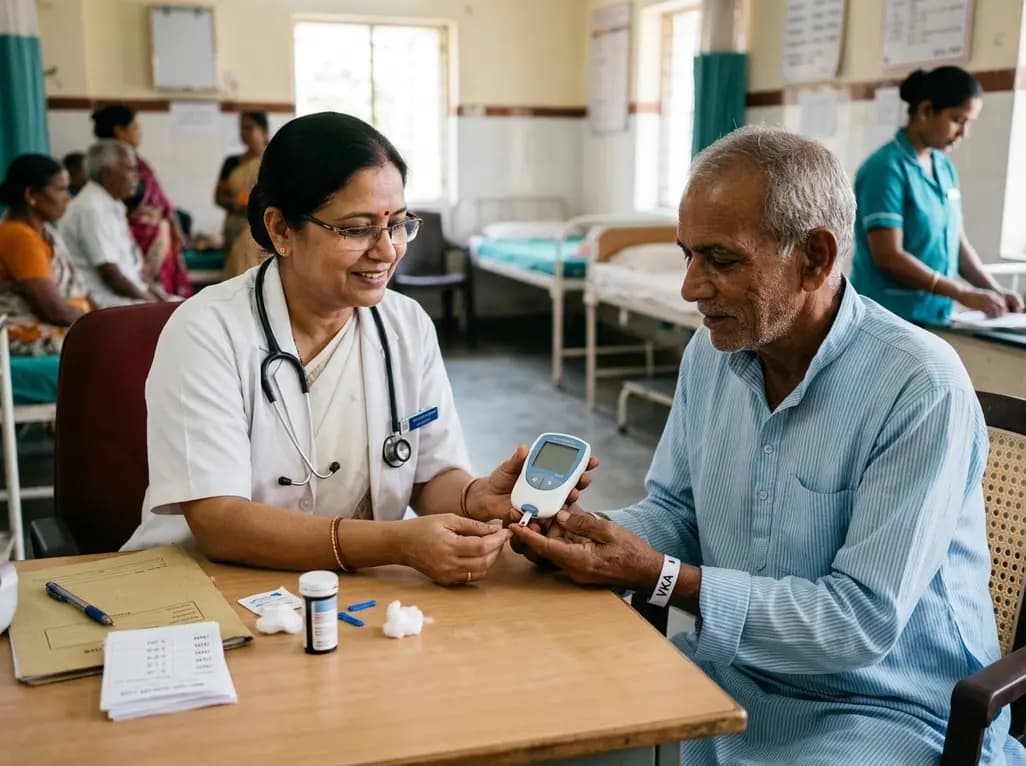
A new implementation study demonstrates that an integrated home INR monitoring network for vitamin K antagonist therapy cuts test turnaround times from three hours to 20 minutes, enhancing clinical oversight, diagnostic accuracy, and patient quality of life.
Today

Diagnostic data shows that nearly one in four spine investigations now involve patients younger than 40 years. This comprehensive overview explores the drivers behind this demographic trend, evaluates ergonomic hazards, clarifies red-flag signs, and highlights clinical indications for judicious diagnostic imaging.
Today

A study reveals how adrenal hormones maintain glucose homeostasis during prolonged fasting when glucagon is absent. In glucagon-deficient mice, corticosterone-driven lipolysis prevents severe hypoglycemia, offering key insights for managing counterregulatory failure and fasting in diabetes.
Today
