.webp&w=384&q=75)

Loading, please wait...
Loading, please wait...

Understanding sexual health literacy represents a crucial yet historically overlooked determinant of global reproductive outcomes. For decades, public health initiatives placed the burden of contraception almost exclusively upon women. However, contemporary family medicine recognizes that sustainable demographic stabilization and reproductive justice require equitable male engagement. When young men lack accurate scientific information, they often harbor misconceptions regarding fertility, contraceptive methods, and shared domestic responsibility. Therefore, improving sexual health literacy serves as an indispensable foundation for fostering positive attitudes toward reproductive autonomy. Additionally, young adulthood represents a pivotal window when personal behaviors, relationship dynamics, and family expectations coalesce. Consequently, primary care clinicians must evaluate health literacy during routine consultations. Educational deficits during these formative years frequently lead to unprotected sexual intercourse, unintended pregnancies, and heightened transmission of sexually transmitted infections. Furthermore, patriarchal norms frequently discourage young men from seeking formal sexual healthcare services. By systematically addressing foundational knowledge gaps, clinicians empower young men to become proactive, supportive partners in reproductive decision-making. Ultimately, elevating sexual literacy dismantles harmful masculine stigmas, transforms gender power dynamics, and enhances overall community health metrics.
A recent descriptive, cross-sectional investigation conducted in Ankara, Türkiye evaluated 370 young men aged 18 to 25 years. The investigators utilized validated diagnostic tools, specifically the Family Planning Attitude Scale and the Sexual Health Literacy Scale. Through rigorous parametric evaluations, including independent samples t-tests, one-way ANOVA, and multiple regression models, researchers uncovered meaningful behavioral trends. Specifically, the cohort demonstrated a mean Family Planning Attitude Scale score of 116.26 with a standard deviation of 26.20. Most importantly, statistical analysis revealed a significant positive correlation between sexual health literacy and favorable family planning attitudes. Young men who scored higher on functional and critical literacy subscales displayed markedly more progressive perspectives toward modern contraceptive methods. Furthermore, regression analysis demonstrated that comprehensive sexual knowledge independently predicted an individual's readiness to adopt shared reproductive responsibility. However, the study also identified persistent deficits in knowledge regarding modern male methods, such as non-scalpel vasectomy and proper condom usage. These observational findings clearly underscore that general academic education does not guarantee adequate reproductive proficiency. Therefore, healthcare providers must deliberately deliver tailored sexual health instruction to adolescent and young adult male populations.
Sociocultural misinformation frequently distorts young men's perceptions of contraceptive safety and physiological mechanisms. In many societies, pervasive misconceptions suggest that barrier methods reduce virility or that modern female hormonal contraceptives cause permanent infertility. Consequently, young men often deter their female partners from seeking clinical reproductive guidance. Furthermore, deep-seated anxieties regarding surgical sterilization persist across diverse cultural cohorts. For instance, many young males mistakenly equate vasectomy with physical castration or chronic occupational weakness. Therefore, targeted educational counseling must directly confront and dismantle these widespread fallacies. When healthcare clinicians explain the anatomic realities of spermatogenesis, ejaculation, and vasal occlusion, patient anxiety dissipates rapidly. In addition, transparent discussions regarding the dual-protection benefit of condoms against both unplanned conception and sexually transmitted pathogens reinforce responsible behaviors. Reproductive educators must also highlight that modern long-acting reversible contraceptives offer excellent safety profiles for female partners. By replacing folklore with evidence-based physiology, healthcare providers enable young men to make informed, empathetic choices. Thus, structured literacy campaigns directly translate into elevated contraceptive concordance and mutually respectful domestic relationships.
These Turkish findings hold immediate clinical relevance for medical practitioners across India. Data from the National Family Health Survey-5 reveal that male involvement in family planning remains disproportionately low. In fact, female sterilization accounts for over 67 percent of modern contraceptive prevalence in India, while male sterilization comprises less than one percent. Moreover, nearly four out of ten Indian men continue to believe that contraception is solely a woman's responsibility. Consequently, primary care physicians, sexologists, and urologists encounter an urgent imperative to intervene. Under the Rashtriya Kishor Swasthya Karyakram, Indian healthcare providers are uniquely positioned to engage adolescent boys and young men in adolescent-friendly health clinics. Furthermore, primary care clinics must integrate male-focused reproductive counseling during routine immunization visits, premarital screenings, and outpatient consultations. When clinicians routinely invite male partners into reproductive discussions, couple communication improves dramatically. In addition, promoting Mission Parivar Vikas spacing methods requires active male consent and encouragement. Therefore, Indian practitioners must recognize low sexual health literacy as an addressable clinical vulnerability, actively championing male engagement across all tiers of public and private healthcare delivery.
Primary care physicians can implement several pragmatic strategies to enhance reproductive health literacy among young adult males. First, practitioners should normalize sexual history taking during standard wellness examinations. Clinicians can introduce nonjudgmental, open-ended questions about relationship intentions, condom practices, and contraceptive awareness. Furthermore, waiting areas should feature culturally sensitive, male-friendly educational pamphlets that clearly outline spacing and terminal options. Second, healthcare centers must establish dedicated adolescent and youth counseling hours to ensure patient confidentiality and minimize embarrassment. Consequently, young men will feel comfortable discussing sensitive sexual topics without fear of judgment. Third, physicians should proactively utilize digital health tools, validated mobile applications, and telehealth portals to disseminate peer-reviewed reproductive information. In addition, clinicians must emphasize the simplicity, safety, and rapid recovery associated with modern non-scalpel vasectomy techniques. Medical teams should also train community healthcare workers and frontline staff to deliver consistent, non-stigmatizing messages. Ultimately, integrating structured reproductive education into routine clinical encounters will cultivate informed male advocates, alleviate the disproportionate contraceptive burden borne by women, and advance population-level health equity.
Sexual health literacy equips young men with accurate anatomical and pharmacological knowledge, enabling them to comprehend modern contraceptive options. When young men understand reproductive physiology, they shed entrenched myths regarding lost virility or surgical debility. Furthermore, literate men communicate more effectively with their intimate partners, support female contraceptive choices, and actively utilize barrier methods. Consequently, elevated health literacy transforms young men from passive observers into proactive, collaborative decision-makers in reproductive family planning.
Male participation in India remains low primarily due to entrenched sociocultural patriarchy, inadequate sex education, and pervasive misinformation. According to national health surveys, female sterilization dominates the contraceptive method mix, while vasectomy rates remain under one percent. Many men mistakenly believe that vasectomy impairs physical stamina, diminishes sexual function, or causes permanent occupational disability. Additionally, reproductive clinics cater overwhelmingly to females, creating psychological barriers that discourage young men from seeking professional guidance.
Primary care physicians should routinely initiate nonjudgmental conversations about sexual health and family planning during general health visits. Clinicians must actively dispel common rumors regarding condom failure, vasectomy side effects, and female hormonal methods. Furthermore, practices can establish male-friendly counseling hours, provide anonymous informational brochures, and engage male partners during premarital or antenatal consultations. Demonstrating proper condom usage and explaining non-scalpel vasectomy procedures demystifies contraception, fostering collaborative spousal partnerships.
Disclaimer: This content is for informational and educational purposes only and does not substitute professional medical advice, diagnosis, or clinical judgment. Refer to the latest local and national guidelines for clinical practice.
References

Read summarized clinical updates, watch expert medical content, and earn CME certifications right from your smartphone.
Open your smartphone camera to scan and install.





A recent study demonstrates that sexual health literacy significantly influences family planning attitudes among young men. Enhancing reproductive health knowledge helps dismantle persistent myths, fosters shared contraceptive responsibility, and improves maternal and child outcomes globally and in India.
Today
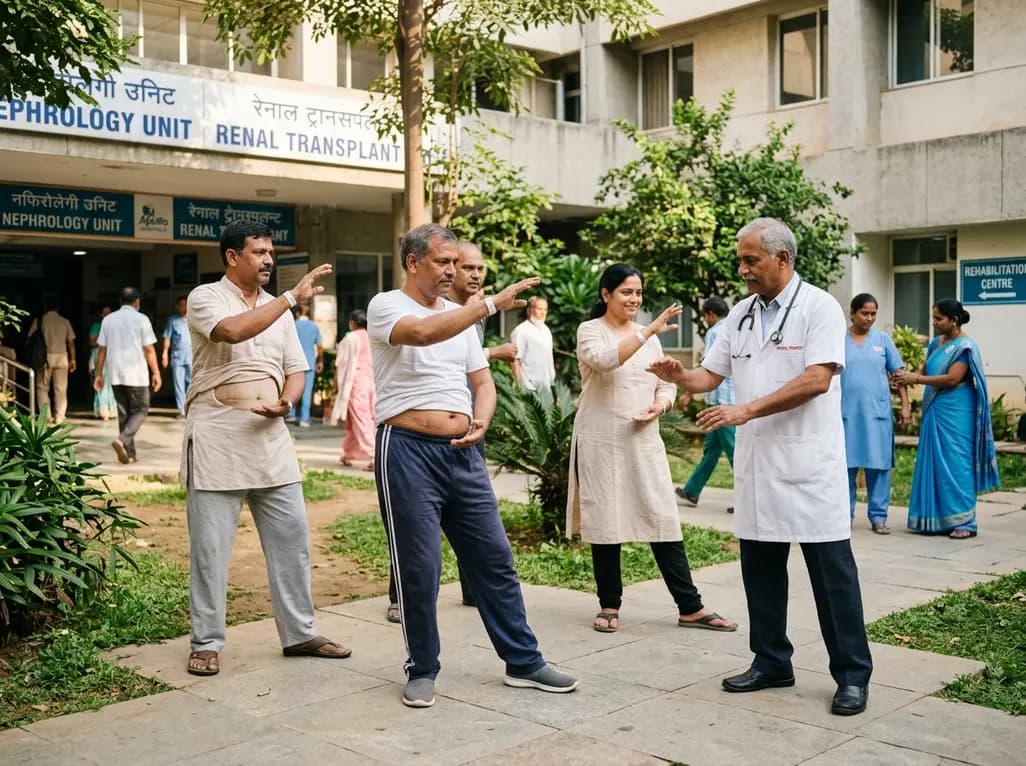
A randomized controlled trial demonstrates that a 12-week Tai Chi program significantly reduces post-transplant fatigue, enhances sleep quality, and increases 6-minute walk distance in renal transplant recipients, providing a safe and effective non-pharmacological rehabilitative exercise therapy.
Today

A cross-sectional study of 276 couples highlights that 42% suffer from combined male and female infertility. With 67% of men showing abnormal spermiograms and 65% of women having female-factor causes, clinicians must prioritize concurrent evaluations and early referral to improve assisted reproductive outcomes.
Today

A study shows that the aggregate index of systemic inflammation (AISI) significantly associates with elevated myocardial injury markers, including cardiac troponin T and CK-MB, in patients with coronary heart disease, highlighting its potential utility for cardiovascular risk stratification.
Today

The state government is deploying helicopter emergency medical services across the Mumbai-Pune Expressway, Samruddhi Mahamarg, and Mumbai-Goa Highway. This initiative establishes unified standard operating procedures to enable rapid triage, advanced prehospital resuscitation, and seamless trauma care transfers.
Today

Calcimimetic therapy for primary hyperparathyroidism can induce profound tumor fibrosis, necrosis, and reduced vascularity. These changes alter ultrasound and 4D-CT imaging and cause dense recurrent laryngeal nerve adhesions, requiring heightened surgical vigilance during definitive parathyroidectomy.
Today
