

Loading, please wait...
Loading, please wait...

Understanding biological and clinical distinctions between men and women remains a cornerstone of psychiatric medicine. Comprehensive research demonstrates that sex differences in schizophrenia influence disease presentation, therapeutic responsiveness, and long-term functional recovery. While clinicians often recognize earlier symptom onset and prominent negative symptoms in male patients, multifaceted psychosocial dimensions demand deeper investigation. In addition, novel computational tools like machine learning offer powerful methodologies to explore these clinical variations. Consequently, modern psychiatric research leverages computational modeling to parse these nuances and optimize individualized patient care.
The Italian DiAPAson project evaluated 619 adult individuals diagnosed with schizophrenia spectrum conditions, including 421 men and 198 women across residential and outpatient facilities. The researchers gathered detailed multidimensional data using validated clinical rating instruments. Specifically, they recorded psychiatric symptom severity, psychosocial functioning, subjective quality of life, positivity traits, and temporal perspective alongside baseline demographic parameters.
Furthermore, the team introduced advanced computational strategies rather than relying exclusively on conventional linear statistics. By deploying Principal Component Analysis alongside Gaussian Mixture Models, the investigators established distinct clinical clusters based on multidimensional feature profiles. Subsequently, they conducted leave-one-group-out cross-validation to substantiate the diagnostic stability and reproducibility of the derived models. This rigorous computational framework provides a reproducible blueprint for psychiatric classification. It bridges classical clinical observation with objective data analytics to clarify patient heterogeneity across real-world community healthcare networks.
The investigation identified pronounced divergences across symptomatic domains between male and female participants. Male patients exhibited substantially greater psychiatric illness severity on standard psychometric evaluations such as the Brief Psychiatric Rating Scale. Specifically, men displayed significantly more severe negative symptoms on the Brief Negative Symptom Scale, including prominent blunted affect, avolition, and social withdrawal. These clinical deficits frequently hinder rehabilitation and undermine independent community living.
In contrast, female participants demonstrated distinct clinical patterns characterized by relatively preserved functional capacities. Clinicians prescribed non-antipsychotic psychotropic agents, such as mood stabilizers and antidepressants, significantly more often to female individuals. This prescribing pattern aligns with their higher frequency of affective symptoms and depressive complaints. Meanwhile, male patients received antipsychotics far more frequently and at higher intensities. Hence, these findings emphasize that treating psychiatrists must recognize diverse symptomatologic profiles. Tailoring pharmacotherapy to specific symptom clusters rather than applying uniform treatment protocols will notably enhance therapeutic success and reduce secondary adverse drug burdens.
Sociodemographic characteristics revealed striking differences that directly influence recovery trajectories. In this cohort, male participants were significantly more likely to remain single and achieved lower educational attainment. Conversely, female participants maintained stronger interpersonal networks and achieved notably higher interpersonal functioning scores on functional assessments. These supportive social bonds likely provide vital psychological buffers against severe disability and hospitalization.
However, the analysis uncovered unexpected lifestyle vulnerabilities among female patients. In particular, women showed significantly higher rates of tobacco smoking compared to their male counterparts within this cohort. This finding demands targeted clinical attention, because cardiovascular and metabolic conditions disproportionately shorten the lifespan of psychiatric patients. Therefore, healthcare providers must address physical health risks alongside psychiatric treatment. Clinicians should implement structured smoking cessation protocols, routine metabolic tracking, and active lifestyle programs. Addressing both psychosocial barriers and medical comorbidities ensures comprehensive long-term recovery for all patients.
Beyond overt symptoms, the investigators evaluated underexplored psychological constructs, including subjective positivity and time perspective. Surprisingly, male patients reported a less negative perception of their past experiences and expressed a more positive view of their psychological condition. This self-assessment might reflect emotional blunting, reduced cognitive insight, or protective psychological reframing.
Conversely, female individuals reported greater subjective distress regarding past events and their current psychological state. This heightened emotional awareness frequently correlates with higher affective burdens and reactive dysphoria. Furthermore, altered temporal perspectives influence motivation and active participation in rehabilitation programs. When individuals maintain a pessimistic outlook on past difficulties, they often experience diminished enthusiasm for future therapeutic goals. Consequently, psychiatric rehabilitation teams should integrate specialized psychotherapeutic modalities, such as cognitive behavioral therapy and acceptance-based approaches. By directly reshaping time perception and cognitive appraisals, clinicians can effectively bolster resilience and subjective quality of life.
By employing unsupervised machine learning algorithms, the study isolated two main phenotypic clusters that exhibited significant sex-based distribution differences. These data-driven groupings captured complex interactions between negative symptom severity, functional autonomy, and cognitive perspectives. Thus, machine learning successfully differentiated clinical phenotypes that standard diagnostic criteria might otherwise group together homogeneously.
Moreover, these computational findings offer immediate relevance for global psychiatric practice, including resource-conscious healthcare environments such as India. Clinicians cannot approach schizophrenia spectrum disorders with rigid, uniform paradigms. Instead, male patients require targeted interventions addressing early social withdrawal, functional deficits, and vocational rehabilitation. Meanwhile, female patients require dedicated support for affective instability, lifestyle risk factors, and subjective distress. Incorporating machine learning tools into clinical workflows will accelerate precision medicine in psychiatry. Ultimately, recognizing distinct biological and psychosocial phenotypes empowers multidisciplinary teams to design tailored interventions that improve functional autonomy and holistic patient well-being.
Male patients typically experience an earlier onset and more prominent negative symptoms, such as blunted affect and social avolition. Conversely, female patients frequently exhibit more affective symptoms, later disease onset, and relatively preserved interpersonal functioning, although they may experience higher subjective psychological distress.
Male patients often report less negative perceptions of past difficulties due to reduced cognitive insight, affective blunting, or distinct psychological defense mechanisms. In contrast, female patients usually retain greater emotional awareness, which can heighten their subjective distress regarding their illness and past experiences.
Clinicians should adopt personalized care plans instead of uniform treatment protocols. Specifically, practitioners must target negative symptoms and social skills in male patients, while proactively addressing affective symptoms, cardiovascular lifestyle factors like smoking, and psychotherapeutic resilience building in female patients.
Disclaimer: This content is for informational and educational purposes only. It does not constitute medical advice and is not a substitute for professional clinical judgment, diagnosis, or treatment. Healthcare providers should make decisions based on individual patient assessment and clinical evaluation. Refer to the latest local and national guidelines for clinical practice.
References

Read summarized clinical updates, watch expert medical content, and earn CME certifications right from your smartphone.
Open your smartphone camera to scan and install.





The DiAPAson study utilizes machine learning to uncover key sex differences in schizophrenia spectrum disorders, showing distinct symptom patterns, social functioning levels, and lifestyle factors between men and women to guide personalized psychiatric care.
Today

Novel glucose-responsive mPEG-PSA nanocarriers deliver insulin aspart on demand, achieving dual postprandial and basal glycemic control without hypoglycemia in diabetic models. This biomaterial breakthrough offers promising clinical implications for physiologic diabetes management.
Today
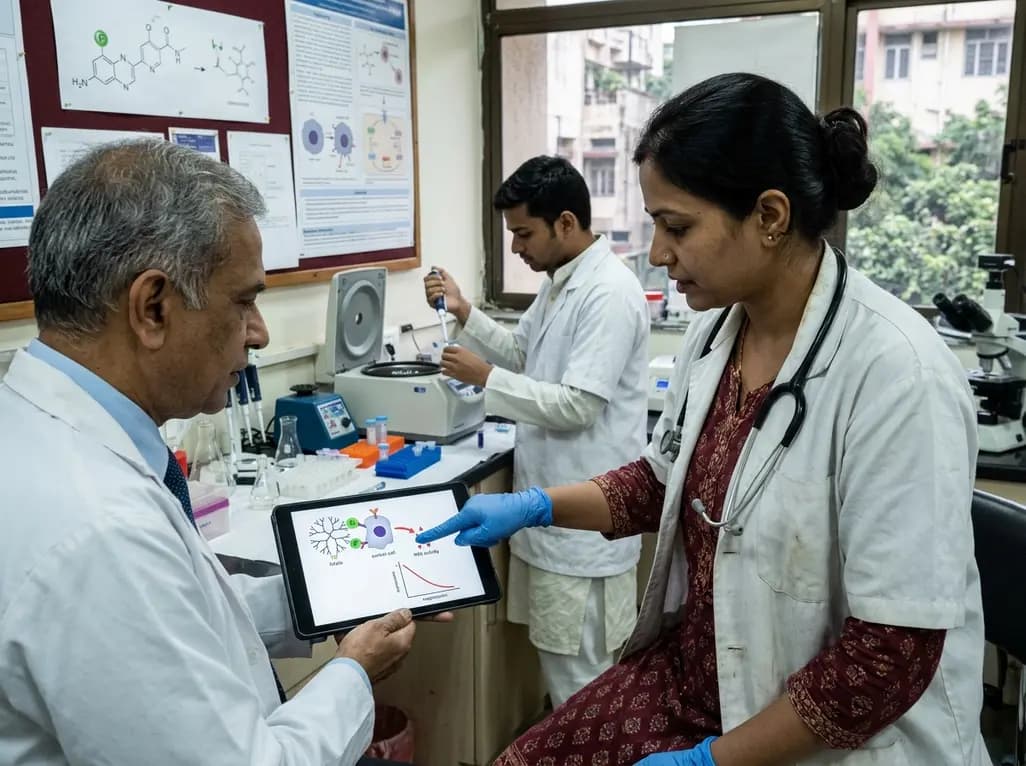
A novel folate-conjugated tecto-dendrimer nanoplatform successfully delivers siRNA to achieve targeted HK2 silencing, disrupting ovarian cancer glycolysis and suppressing lactate output.
Today

A comparative non-contact study reveals that high-power radiofrequency delivery with the QDOT MICRO catheter induces an artifactual contact force rise. Electrophysiologists must understand this power-dependent thermal and electrical phenomenon to avoid inadvertent catheter withdrawal and ineffective ablation.
Today

A novel proof-of-concept study presents a six-degree-of-freedom articulated manikin neck equipped with linear potentiometers. The system provides real-time kinematic motion feedback during cervical immobilisation, delivering sub-degree tracking accuracy to improve pre-hospital trauma training and patient safety.
Today

A retrospective comparative cohort study evaluated genitourinary safety in HFpEF between dapagliflozin and empagliflozin over six months. Rates of symptomatic UTI and asymptomatic bacteriuria showed no statistically significant differences, supporting comparable safety profiles across both SGLT2 inhibitors.
Today
