

Loading, please wait...
Loading, please wait...
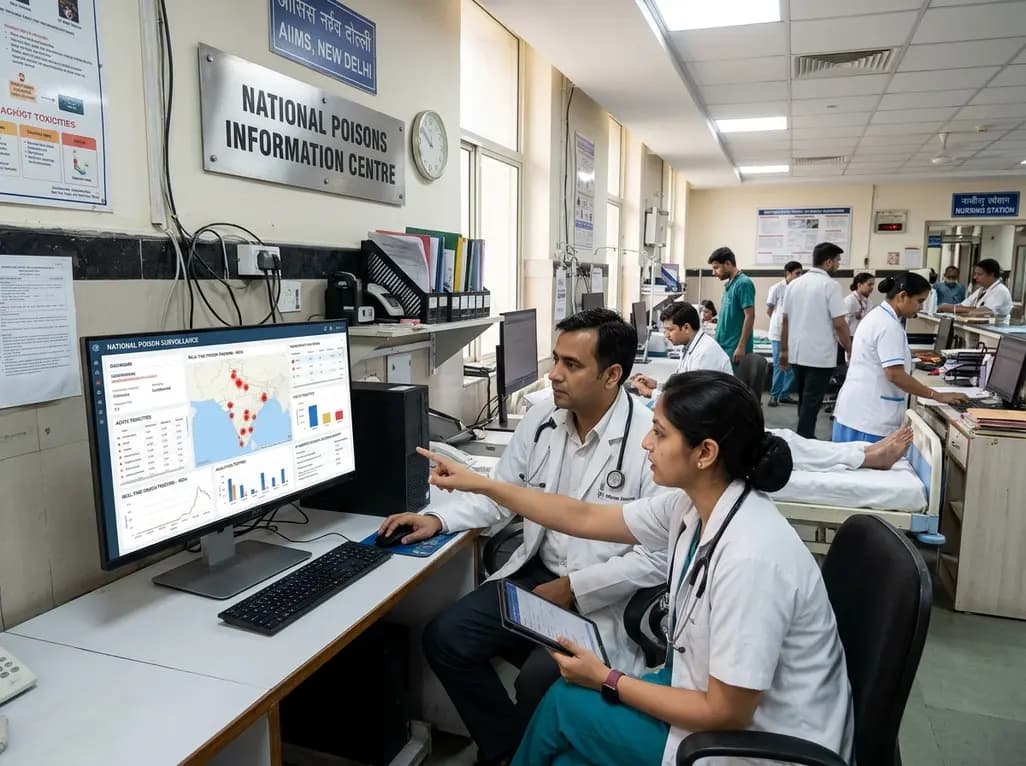
The All India Institute of Medical Sciences, New Delhi, is spearheading an initiative to build a unified National Poisoning Registry. This centralized digital platform monitors acute toxic exposures and systemic poisoning patterns across India. Currently, regional healthcare units often operate in isolation without cohesive data-sharing mechanisms. Therefore, establishing a real-time surveillance network addresses a longstanding gap in national acute care infrastructure. The proposed model modernizes the National Poisons Information Centre into an interconnected nodal ecosystem. Consequently, clinicians nationwide will gain standardized access to vital toxicological data and clinical decision support.
Acute poisoning represents a frequent and lethal clinical presentation in Indian emergency departments. However, healthcare practitioners often manage these acute crises without access to standardized regional epidemiology. Most available data stem from sporadic, single-center retrospective observational studies. Consequently, public health authorities lack unified visibility into systemic exposure risks across Indian states. The establishment of the National Poisoning Registry bridges this critical analytical divide. By aggregating verified epidemiological data, this system provides accurate tracking of circulating hazardous toxins. In addition, rural healthcare centers frequently encounter complex toxic syndromes without specialized diagnostic laboratory support. Therefore, frontline clinicians often face diagnostic uncertainty when managing unfamiliar chemical compounds. This centralized registry intends to link decentralized healthcare providers with expert toxicological resources in real time. Moreover, continuous data aggregation will assist policymakers in evaluating the lethality of specific hazardous formulations. As a result, authorities can implement timely regulatory interventions and import restrictions. Ultimately, this coordinated architecture enhances acute medical readiness and shortens diagnostic latency. Furthermore, participating hospital registries will submit structured toxicovigilance reports systematically. This collective reporting will expose seasonal spikes, pediatric poisoning surges, and localized occupational contamination hazards.
Established in 1995 under the Department of Pharmacology at AIIMS, the NPIC represents India’s pioneer poison advisory service. Initially, the centre functioned as a dedicated 24x7 telephone helpline assisting medical professionals during acute toxic emergencies. Over three decades, the centre documented more than 65,000 telephonic queries involving varied toxic exposures. These calls spanned across acute agrochemical ingestions, accidental pharmaceutical overdoses, corrosive fluids, and venomous bites. However, modern emergency medicine demands proactive clinical surveillance rather than purely reactive telephone counsel. Therefore, AIIMS leadership, spearheaded by Prof D.S. Arya and Dr Swati Sharma, proposed restructuring the centre. The expansion transforms the facility into the National Nodal Centre for Toxicological Sciences & Research. This significant transition expands the facility’s role from a telephonic advice bureau to a high-capacity nodal research enterprise. Specifically, the nodal hub will supervise digitally linked regional satellite units deployed across several medical colleges nationwide. As a result, toxicological expertise will decentralize effectively, reaching distant healthcare providers. Additionally, this network architecture standardizes diagnostic protocols across all administrative tiers. Through structured scientific research, the reformed institution will advance toxicological science and promote physician training. Consequently, Indian emergency healthcare will gain a formalized framework capable of confronting complex modern chemical hazards.
Modernizing toxicological management requires robust technological infrastructure alongside advanced analytical instrumentation. To achieve this, the proposed expansion incorporates real-time reporting software linked to intelligent, AI-assisted diagnostic clinical support systems. Because acute toxicities present with overlapping toxidromes, accurate differential diagnosis frequently challenges emergency room practitioners. Artificial intelligence algorithms can synthesize patient vital signs, laboratory biomarkers, and physical presentations to pinpoint likely causative agents rapidly. Furthermore, the registry framework establishes an analytical testing facility equipped for comprehensive toxicological screening and chromatographic quantification. In addition to diagnostic software, the initiative introduces a strategically coordinated National Antidote Bank. At present, critical antidotes such as fomepizole, specific fab fragments, pralidoxime, and methylene blue remain scarce in semi-urban emergency departments. Consequently, patients often experience severe clinical deterioration while families search for life-saving pharmaceuticals. The centralized antidote banking system will track regional inventories digitally and maintain strategic stocks across designated nodal centers. Therefore, clinicians can secure rare antidotes rapidly through coordinated logistical dispatch mechanisms. As a result, this technological synergy will substantially reduce time-to-treatment intervals during life-threatening toxic emergencies. Moreover, integrating advanced analytics ensures prompt identification of adulterated synthetic compounds, designer recreational substances, and misidentified botanical exposures.
A comprehensive review of longitudinal NPIC historical data reveals notable epidemiological shifts across Indian demographics. Historically, organophosphate pesticides, aluminium phosphide, and corrosive agents constituted the vast majority of severe adult poisoning inquiries. While agrochemical ingestions remain prominent, recent metrics reveal escalating numbers of pharmaceutical overdoses. For example, queries regarding psychotropic medications, including tricyclic antidepressants, antipsychotics, and sedatives, have surged markedly. Additionally, snakebites represent an enduring and prominent clinical burden nationwide. NPIC records demonstrate that snake envenomation formed the largest component of sting-and-bite consultations between 2010 and 2025. Furthermore, unintentional household exposures continue to threaten pediatric cohorts disproportionately. Children frequently ingest caustic cleaning detergents, dishwashing concentrates, button batteries, and improperly stored liquid medications. Therefore, establishing consistent epidemiological monitoring through the registry will quantify evolving toxic hazards accurately. Consequently, medical teams can anticipate seasonal surges, such as monsoon-related snakebite spikes or post-harvest agricultural exposures. Similarly, toxicologists can detect emergent drug abuse trends quickly, ensuring that intensive care units prepare appropriate management pathways. Importantly, accurate regional stratification will help public health epidemiologists formulate targeted prevention initiatives that address geographically unique risks.
For critical care teams and emergency physicians, the national registry framework delivers practical clinical advantages. Managing poisoned patients requires rapid stabilization, airway protection, and prompt gastrointestinal decontamination when clinically indicated. However, non-evidence-based practices, such as routine unindicated emesis induction or blind gastric lavage, continue to cause iatrogenic harm. By establishing standardized digital pathways, the nodal centre provides verified, evidence-based resuscitation algorithms to emergency clinicians. Additionally, access to advanced analytical validation will eliminate diagnostic guesswork in comatose or obtunded patients presenting without collateral history. Consequently, intensivists can deploy targeted therapy rather than relying exclusively on empirical supportive care. Furthermore, the centralized network facilitates direct tele-toxicology consultations with medical toxicologists during critical resuscitation phases. Beyond emergency wards, the initiative integrates public awareness drives, community capacity-building, and an annual National Poison Awareness Day. Educational outreach will train industrial laborers, agricultural workers, and school teachers in chemical safety and poison prevention. Therefore, secondary facilities can manage moderate toxicity locally while arranging early transfers for severe multi-organ toxicity. Ultimately, standardizing care protocols through a connected national registry optimizes clinical recovery rates and curtails intensive care stay.
Q1: What is the primary role of the proposed National Poisoning Registry?
The proposed National Poisoning Registry functions as a unified digital platform connecting poison-control centers and hospitals across India. It collects real-time clinical reports of toxic exposures, monitors epidemiological trends, and facilitates centralized data aggregation. Furthermore, the registry supports frontline medical practitioners by providing standardized toxicological treatment guidelines. Additionally, it offers AI-assisted diagnostic guidance and coordinates with regional satellite centers to optimize clinical outcomes.
Q2: How will the transition from NPIC to NNCTSR improve clinical poison management?
Transitioning from the National Poisons Information Centre (NPIC) to the National Nodal Centre for Toxicological Sciences & Research (NNCTSR) expands operations beyond a reactive telephone helpline. The nodal centre will supervise digitally linked satellite facilities, conduct advanced analytical toxicology testing, and drive specialized research. Additionally, it will manage a centralized National Antidote Bank. The centre will also deploy AI-assisted diagnostic support, ensuring healthcare facilities receive timely, evidence-based guidance nationwide.
Q3: Which toxic exposures are most frequently reported to Indian poison centers?
According to historical registry data, common toxic exposures in India include agricultural pesticides, household chemicals, industrial cleaning agents, and prescription pharmaceuticals. Over-the-counter and psychotropic drug overdoses have increased significantly in recent years. Furthermore, venomous snakebites consistently represent the largest component of bite and sting queries. Accidental pediatric poisonings involving caustic household detergents, button batteries, and liquid medications also remain highly prevalent. Consequently, clinicians must maintain high suspicion for mixed toxidromes.
Disclaimer: This content is for informational and educational purposes only. It does not constitute medical advice or replace professional judgment. Refer to the latest local and national guidelines for clinical practice.
References

Read summarized clinical updates, watch expert medical content, and earn CME certifications right from your smartphone.
Open your smartphone camera to scan and install.





AIIMS New Delhi is establishing a real-time digital surveillance network to track acute toxicities nationwide. Upgrading the National Poisons Information Centre into a nodal research hub, this initiative introduces central antidote banking, analytical testing, and AI-assisted clinical decision support for clinicians.
Today

Public health experts urge policymakers to review rigorous clinical evidence before scaling up double fortified salt. With only half of India's anaemia cases stemming from iron deficiency, specialists highlight structural trial limitations, dietary diversity needs, and pending data from the SAMPADA national survey.
Today
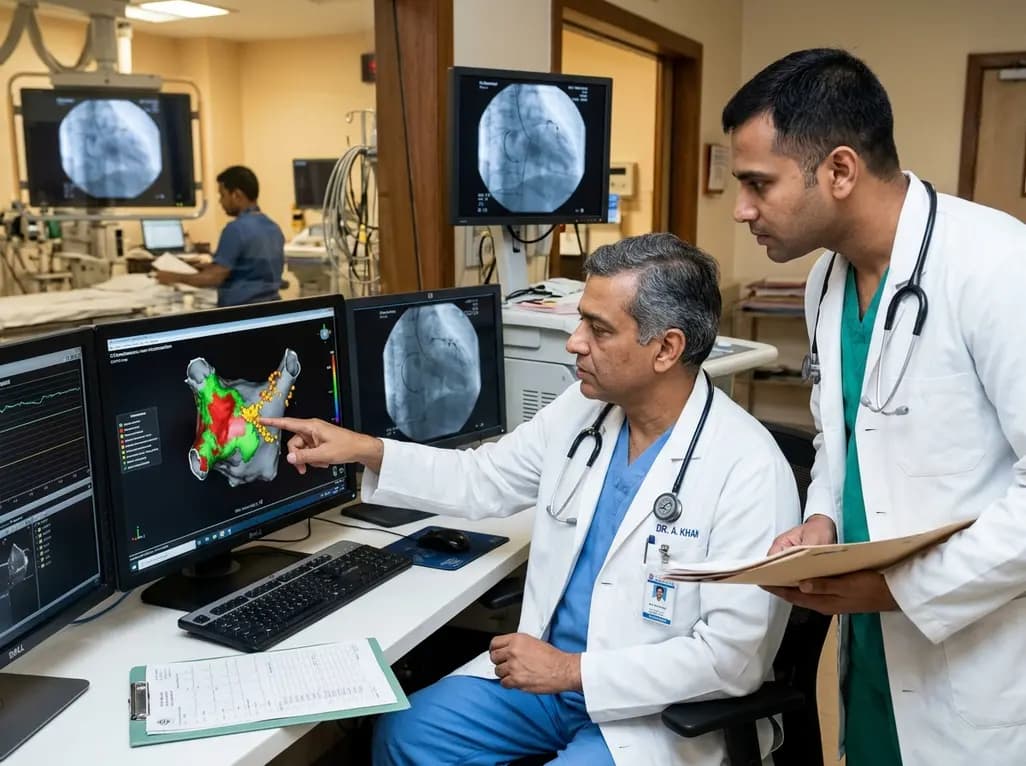
A multicenter registry of 854 patients shows that re-isolating multiple reconnected pulmonary veins during second catheter ablation significantly lowers atrial arrhythmia recurrence, particularly in patients without heart failure, whereas extra-PV ablation provided no clear additive benefit.
Today

A clinical overview of resveratrol supplementation in mitigating exercise-induced muscle damage. This narrative review explores physiological mechanisms, reductions in soreness markers like creatine kinase, dosage strategies, and bioavailability enhancements for sports medicine and nutrition practitioners.
Today
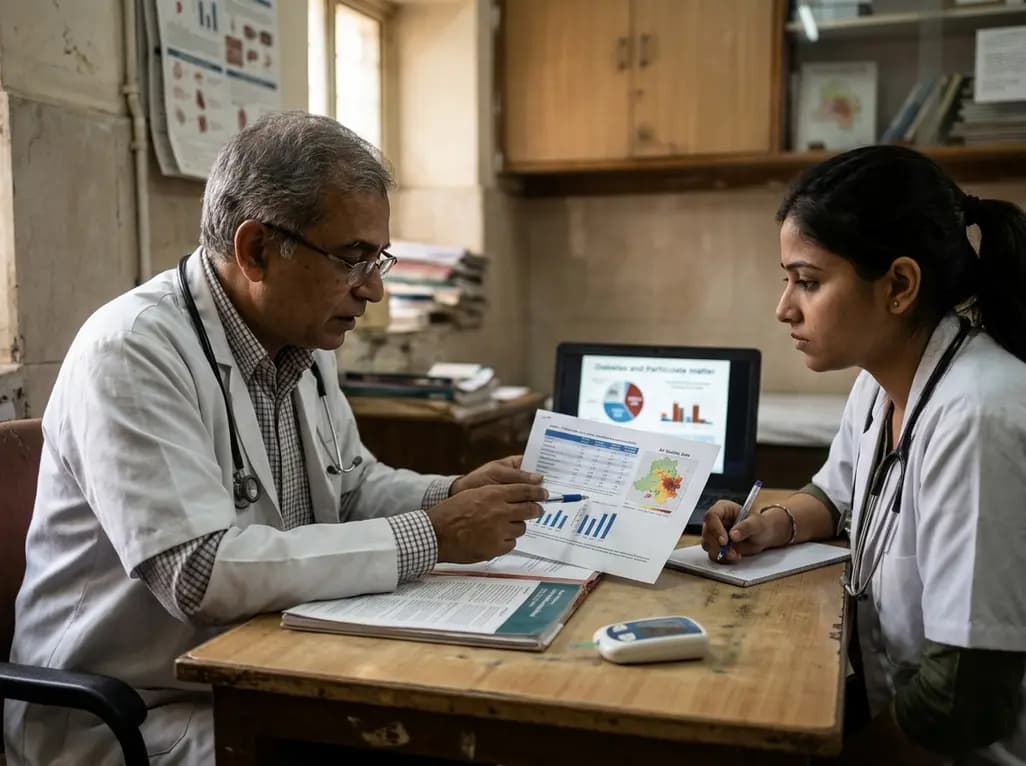
The global APEX-T2D umbrella review synthesises data from over 200 million individuals, establishing that long-term PM2.5 exposure raises type 2 diabetes risk by 10% to 16% per 10 ug/m3. Clinicians must recognize ambient air pollution as an independent systemic metabolic disruptor alongside traditional risk factors.
Today
