.webp&w=384&q=75)

Loading, please wait...
Loading, please wait...

Early exposure to adverse life events represents a significant risk factor for emotional and behavioral challenges during youth. Recent findings from large population-based cohort studies demonstrate that fostering school connectedness mental health resilience can substantially mitigate these developmental risks. By examining longitudinal data across critical developmental milestones, researchers have identified key institutional protective factors that buffer vulnerable youth against long-term psychological harm. Consequently, understanding how educational environments influence emotional trajectories helps healthcare professionals design targeted early screening and intervention strategies.
Childhood adversity encompasses a broad range of negative exposures, including economic hardship, family dysfunction, parental neglect, and social maltreatment. Consequently, children subjected to these stressful conditions face elevated risks for both internalizing disorders, such as anxiety and depression, and externalizing disorders, including conduct problems and aggression. Furthermore, chronic environmental stressors can impair neurobiological stress response systems and disrupt healthy emotional regulation during childhood.
Longitudinal cohort studies show that cumulative adversity correlates directly with diminished positive mental health markers, such as life satisfaction, emotional resilience, and self-esteem. In addition, affected youth frequently struggle with social relationships and academic performance, which further compounds their vulnerability. Therefore, identifying modifiable protective factors that disrupt this harmful pathway is essential for pediatricians, psychiatrists, and public health practitioners. While family and community resources remain important, the school environment represents a unique setting where structured social support can alter developmental outcomes. By recognizing early signs of environmental adversity, clinicians and educators can proactively implement supportive strategies before behavioral difficulties escalate during early adolescence.
School connectedness reflects a student's belief that adults and peers in the school community care about their learning and individual well-being. Furthermore, research demonstrates that strong school connectedness mental health benefits operate as powerful promotive factors across diverse patient populations. Students who feel connected experience fewer internalizing and externalizing difficulties regardless of their background or personal history.
Additionally, feeling connected to school promotes positive psychological development, fostering greater life satisfaction, emotional stability, and academic motivation. Consequently, connected students exhibit healthier coping mechanisms when encountering interpersonal conflicts or academic challenges. This institutional sense of belonging provides a psychological buffer, enabling youth to develop trusting relationships with adult mentors and supportive peers. Moreover, strong school connection counteracts feelings of isolation and alienation that frequently accompany childhood adversity. As a result, schools function not merely as educational centers, but as essential public health settings capable of promoting long-term emotional well-being. Integrating social-emotional learning into academic curricula further strengthens these protective relationships. Therefore, clinicians evaluating vulnerable adolescents must routinely assess school engagement as part of comprehensive psychosocial evaluations.
The developmental timing of protective interventions plays a critical role in mitigating the impact of childhood adversity. Longitudinal evidence indicates that school connectedness measured at age eleven specifically buffers against internalizing and externalizing problems evaluated at age fourteen. In contrast, feeling connected at later ages does not demonstrate the same strong protective effect against prior childhood adversity.
This key finding highlights the existence of a sensitive developmental window during late childhood and early adolescence. Consequently, fostering strong school relationships around age eleven can effectively disrupt the maladaptive trajectories linking early adversity to adolescent psychopathology. During this transitional period, children undergo substantial neurodevelopmental maturation and shift toward broader social networks outside the immediate family. Therefore, establishing a solid sense of institutional belonging during early middle school years equips youth with critical emotional resources. Furthermore, early protective effects prevent the onset of entrenched behavioral patterns that often require intensive psychiatric intervention later in life. Healthcare providers must recognize this critical timeframe and advocate for targeted school-based mental health initiatives during primary-to-secondary school transitions.
For pediatricians, child psychiatrists, and primary care physicians, these longitudinal findings offer actionable insights for daily clinical practice. Clinicians should incorporate structured questions regarding school belonging and peer relationships during routine health examinations. When caring for children with known histories of adversity, evaluating school connectedness helps identify individuals who require additional psychosocial support.
Furthermore, physicians can serve as vital advocates by collaborating with school nurses, counselors, and administrators. By sharing evidence-based insights regarding protective factors, clinicians can encourage schools to implement trauma-informed educational environments. Additionally, when managing internalizing or externalizing symptoms, physicians should consider school-based interventions alongside standard therapeutic modalities. Recommending extracurricular participation, peer mentorship programs, and structured academic support can actively strengthen a patient's institutional ties. Moreover, primary care providers can guide parents on how to foster strong communication with educators, creating a cohesive support network for the child. Consequently, integrating school connectedness evaluations into pediatric health maintenance visits enhances early detection and therapeutic outcomes for at-risk youth.
Creating educational environments that nurture school connectedness requires coordinated action across educational, clinical, and community domains. Schools must establish inclusive policies that prioritize positive teacher-student relationships, clear behavioral expectations, and collaborative learning opportunities. Furthermore, implementing peer-support initiatives and anti-bullying programs helps build a safe, welcoming atmosphere where all students feel valued.
Additionally, educators should receive training in trauma-informed care to better recognize emotional distress and support vulnerable pupils. Providing accessible school-based mental health services ensures that at-risk students receive timely psychological support without external barriers. Consequently, these structural enhancements benefit the entire student body while offering focused protection for children exposed to early adversity. Community organizations and healthcare systems can further support these efforts by providing resources for extracurricular activities and mentorship initiatives. Ultimately, fostering school connectedness represents a scalable, cost-effective public health strategy that mitigates health disparities and promotes lifelong resilience. By working together, clinicians, educators, and policymakers can transform schools into powerful protective environments for all young people.
School connectedness refers to the degree to which students feel accepted, valued, and supported by peers and educators in their academic environment. It serves as a vital promotive factor that enhances positive psychological well-being and reduces internalizing and externalizing mental health symptoms during key developmental transitions.
Research indicates that school connectedness measured at age eleven provides crucial protective effects against childhood adversity. Early feelings of belonging disrupted the negative developmental pathways linking adverse experiences to internalizing and externalizing mental health difficulties observed later at age fourteen.
Clinicians can screen vulnerable youth for childhood adversity and school engagement during routine physical examinations. By collaborating with parents, school counselors, and educators, healthcare professionals can encourage supportive school-based relationships and early interventions that foster institutional belonging for all children.
Disclaimer: This content is for informational and educational purposes only and does not constitute medical advice. Refer to the latest local and national guidelines for clinical practice.
References

Read summarized clinical updates, watch expert medical content, and earn CME certifications right from your smartphone.
Open your smartphone camera to scan and install.





A large longitudinal study demonstrates that school connectedness at age 11 buffers against childhood adversity, reducing internalizing and externalizing mental health symptoms at age 14. Discover key findings and actionable clinical insights for pediatricians and mental health professionals.
2 months ago
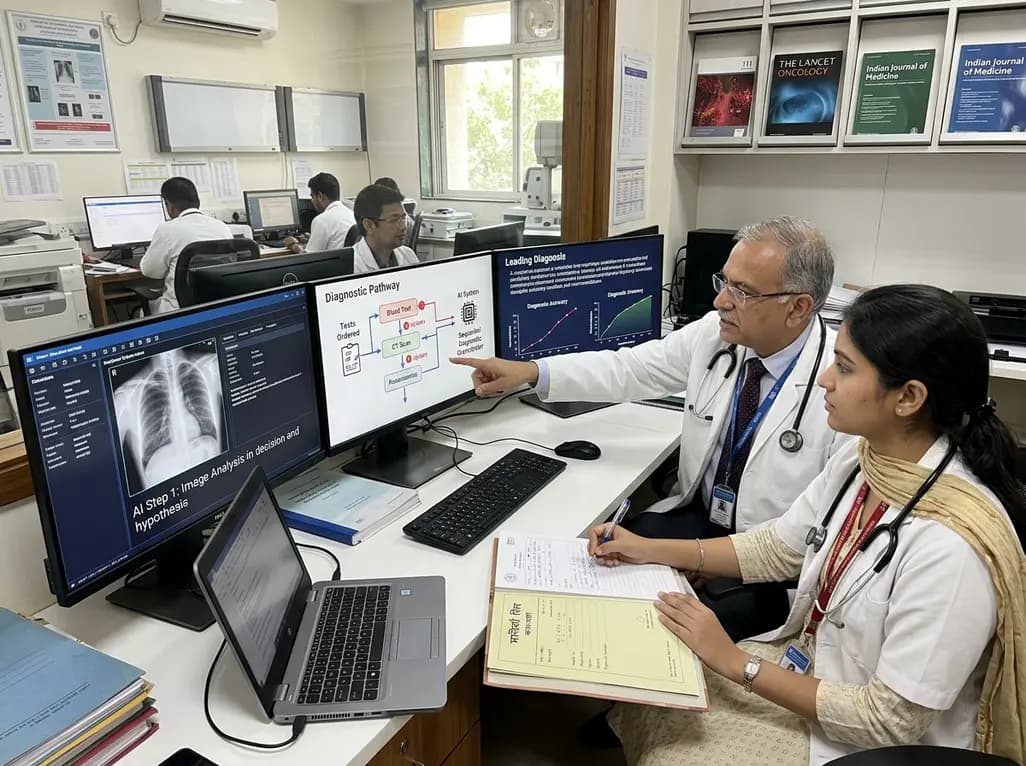
A breakthrough peer-reviewed study demonstrates that a sequential AI diagnosis system can mirror real-world clinical reasoning. By ordering stepwise tests and updating hypotheses dynamically, this multi-agent orchestrator achieved superior diagnostic accuracy while reducing investigative costs.
Today

A prenatal case highlights severe glutaric acidemia type II presenting as bilateral hyperechoic cystic kidneys at 18 weeks. Whole-exome sequencing revealed a novel homozygous ETFDH frameshift variant, demonstrating the power of rapid genetic testing in fetal renal anomalies.
Today

Review how tailored exercise programs benefit frail older patients with heart failure. Explore pathophysiological mechanisms, individualized training prescriptions, and strategies to overcome adherence barriers in clinical practice.
Yesterday

This comparative study evaluates posterior labral tears with and without glenohumeral instability, highlighting distinct demographic patterns, MRI underestimation in stable shoulders, and successful arthroscopic repair outcomes.
Yesterday

A clinical study demonstrates that early intervention with tocilizumab, either as monotherapy or bridged with corticosteroids, achieves significant proptosis reduction and resolves active inflammation in treatment-naive thyroid eye disease.
Yesterday
