

Loading, please wait...
Loading, please wait...

Schizophrenia represents a multifaceted psychiatric disorder characterised by complex neurodevelopmental, structural, and neurochemical disruptions. Although large-scale genetic studies have historically focused on cohorts of European descent, diverse global ancestries remain vastly underrepresented. Recent advances in schizophrenia exome sequencing are beginning to address this critical diagnostic and biological disparity. Specifically, researchers conducted a groundbreaking genomic evaluation in the genetically distinct and endogamous Mizo population of Northeast India. By investigating twenty individuals diagnosed with schizophrenia and twenty-seven healthy control subjects, the study elucidated the genomic architecture underlying neuropsychiatric pathology in this unique cohort. The investigative team identified significant associations between rare coding mutations and clinical disease manifestations. Ultimately, these findings underscore how studying genetically isolated communities enhances our broader biological understanding of psychiatric illnesses.
Historically, psychiatric genomics has relied heavily on European cohorts, thereby leaving substantial gaps in clinical knowledge. However, genetic isolate populations offer an invaluable opportunity to uncover rare risk variants because founder effects and endogamy enrich specific alleles. Therefore, executing schizophrenia exome sequencing within the indigenous Mizo population provides unprecedented insight into regional disease vulnerability. To achieve comprehensive genomic resolution, the investigators implemented a tiered methodological strategy. They initially utilized a curated panel of 95 established schizophrenia-associated genes for preliminary descriptive profiling and pathway analysis. Subsequently, the researchers applied an expanded 239-gene neuropsychiatric panel for standardized case-control comparisons, recurrent allele characterization, and rare variant burden testing. Consequently, this stratified approach allowed investigators to capture subtle coding alterations that broader global panels frequently overlook. Furthermore, studying indigenous demographics directly aligns with contemporary global health initiatives aimed at promoting precision psychiatry in historically neglected populations. Clinicians in South Asia now recognize that genetic risk architectures can display distinct patterns across diverse ethnic groups. Thus, expanding exome studies to understudied communities remains vital for equitable psychiatric research and targeted therapeutic development worldwide.
The descriptive phase of the investigation revealed substantial genomic diversity across several well-documented neuropsychiatric loci. Specifically, researchers identified 321 distinct genetic variants across 32 individual genes within the study cohort. Among these findings, recurrent variants emerged prominently across critical synaptic and structural genes. For instance, recurrent alterations in PCLO and RELN appeared in 100% of participants, reflecting profound baseline genetic variation. Additionally, NRG1 variants manifested in 95% of individuals, while CACNA1B variants were present in 90%. Variants in BRCA1 occurred in 85% of subjects, and both APOE and PLXNA2 showed variation in 80% of individuals. Because many of these genes regulate presynaptic vesicle transport, cell adhesion, and neurodevelopmental migration, their widespread involvement highlights extensive disruption across neural networks. Moreover, these observations demonstrate that certain coding changes may represent population-specific ancestral variants rather than universally pathogenic lesions. Consequently, medical geneticists must exercise caution when interpreting raw variant counts without population-matched baseline controls. Nonetheless, the high recurrence of these molecular signatures emphasizes the crucial role that neurodevelopmental pathways play within the Mizo demographic. Therefore, establishing local variant frequencies remains indispensable for accurate diagnostic reporting.
Determining the exact clinical significance of rare variants represents a primary challenge in psychiatric exome analytics. In this investigation, pathogenicity assessments revealed several recurrent coding variants with conflicting classifications across major clinical registries. Specifically, conflicting annotations appeared within CNTNAP2, VDR, APOE, CHD8, and ERBB4. Because clinical databases rely heavily on data from non-indigenous populations, standard computational algorithms frequently misclassify novel or rare alleles in isolated groups. For example, variants in CNTNAP2 and ERBB4 directly influence neuregulin signaling and cortical interneuron development, yet their pathogenic thresholds remain debated globally. Furthermore, CHD8 plays a pivotal role in chromatin remodeling, while VDR participates in steroid-mediated neuroprotection. Thus, finding contradictory classifications indicates that existing global curation systems require continuous recalibration. Consequently, psychiatrists and genetic counselors must interpret single-gene reports cautiously in non-European patients. Instead of relying solely on automated variant filters, clinicians should contextualize findings within aggregate pathway burdens. Moreover, collaborative efforts between local tertiary centers and international databases will prove essential to resolve these classification discrepancies and improve genetic diagnostic reliability.
A pivotal finding of this study centers on the standardized case-control burden analysis. Specifically, individuals with schizophrenia carried a significantly higher cumulative burden of rare damaging coding single-nucleotide variants compared to healthy control participants. More importantly, investigators observed a direct clinical correlate that bridges molecular findings with phenotypic presentation. The calculated synaptic burden score demonstrated a statistically significant positive correlation with negative-symptom severity, as measured by the Positive and Negative Syndrome Scale (PANSS). In contrast, the association between rare synaptic burden and PANSS positive symptoms did not reach statistical significance. This selective divergence carries profound clinical implications for modern psychiatry. Historically, clinicians have struggled to manage negative symptoms, including avolition, blunted affect, and social withdrawal, using traditional dopamine-blocking antipsychotics. Because positive symptoms frequently fluctuate with environmental stressors and respond well to standard dopamine D2 receptor antagonism, their genetic architecture may differ from negative symptom clusters. Conversely, primary deficit states and negative symptoms appear intimately anchored to structural synaptic decay and neurodevelopmental lesions. Consequently, synaptic burden scores could eventually serve as prognostic biomarkers for persistent functional impairment.
Downstream pathway enrichment analyses revealed critical biological networks implicated in schizophrenia pathogenesis. Most notably, the study highlighted prominent dysregulation in the mitogen-activated protein kinase (MAPK) signaling cascade and dopaminergic synapse pathways. Additionally, significant enrichment occurred within neuroactive ligand-receptor interactions and GABAergic synapse signaling networks. Together, these intersecting pathways govern crucial neuronal functions, including signal transduction, synaptic plasticity, and excitatory-inhibitory balance within the cerebral cortex. Furthermore, the convergence of GABAergic and dopaminergic disruptions aligns perfectly with contemporary models of cortical hypofunction and subcortical hyperdopaminergia. Therefore, identifying these dysregulated networks provides tangible mechanistic clues for future drug development. Rather than focusing exclusively on monoaminergic receptor blockade, novel psychopharmacological agents might successfully target synaptic scaffolding and intracellular cascades. Moreover, Indian psychiatrists can utilize these emerging genomic insights to contextualize the heterogeneous clinical trajectories observed in indigenous patients. Ultimately, this pioneering investigation lays a foundational groundwork for future multi-omic research across South Asian populations. By bridging ancestral genomic discovery with granular clinical phenotyping, psychiatry moves closer toward genuine personalized medicine.
The study revealed that Mizo individuals with schizophrenia carry a significantly higher burden of rare damaging coding variants compared to healthy controls. Recurrent variants appeared prominently in synaptic genes like PCLO, RELN, and NRG1. Furthermore, this genetic burden correlated positively with PANSS negative-symptom severity rather than positive symptoms.
Endogamous populations share distinct genetic architecture shaped by founder effects, which can enrich rare disease-relevant variants that larger outbred cohorts dilute. Studying these unique communities helps psychiatrists uncover novel risk genes, clarify contradictory variant classifications, and ensure that precision medicine frameworks reflect diverse global ancestries rather than European cohorts alone.
In this cohort, higher synaptic variant burden selectively correlated with greater severity of PANSS negative symptoms such as affective flattening and avolition. Conversely, positive symptoms showed no significant association. This finding suggests that intrinsic synaptic disruptions drive enduring deficit symptoms, which often remain refractory to standard dopamine-receptor antipsychotic therapies.
Disclaimer: This content is for informational and educational purposes only. It does not constitute medical advice, diagnosis, or treatment. Healthcare professionals should exercise their independent clinical judgment when evaluating research findings. Refer to the latest local and national guidelines for clinical practice.
References

Read summarized clinical updates, watch expert medical content, and earn CME certifications right from your smartphone.
Open your smartphone camera to scan and install.





A landmark whole-exome sequencing study in Northeast India's indigenous Mizo cohort links rare damaging coding variants in synaptic genes to schizophrenia negative-symptom severity, highlighting the critical role of neurodevelopmental pathways in underrepresented ancestral populations.
Today

Standardizing continuous physiological waveforms in EHRs has long challenged clinical teams. The novel TIDE framework leverages HL7 FHIR R4 to decouple queryable clinical metadata from massive raw signal repositories, unlocking scalable telemetry exchange for bedside care and predictive research.
Today

A secondary analysis of the MOMS clinical trial reveals that infant sex does not influence neonatal opioid withdrawal syndrome severity in buprenorphine-exposed newborns. Maternal co-exposures and clinical factors drive outcomes, highlighting the need for objective assessment and supportive breastfeeding.
Today
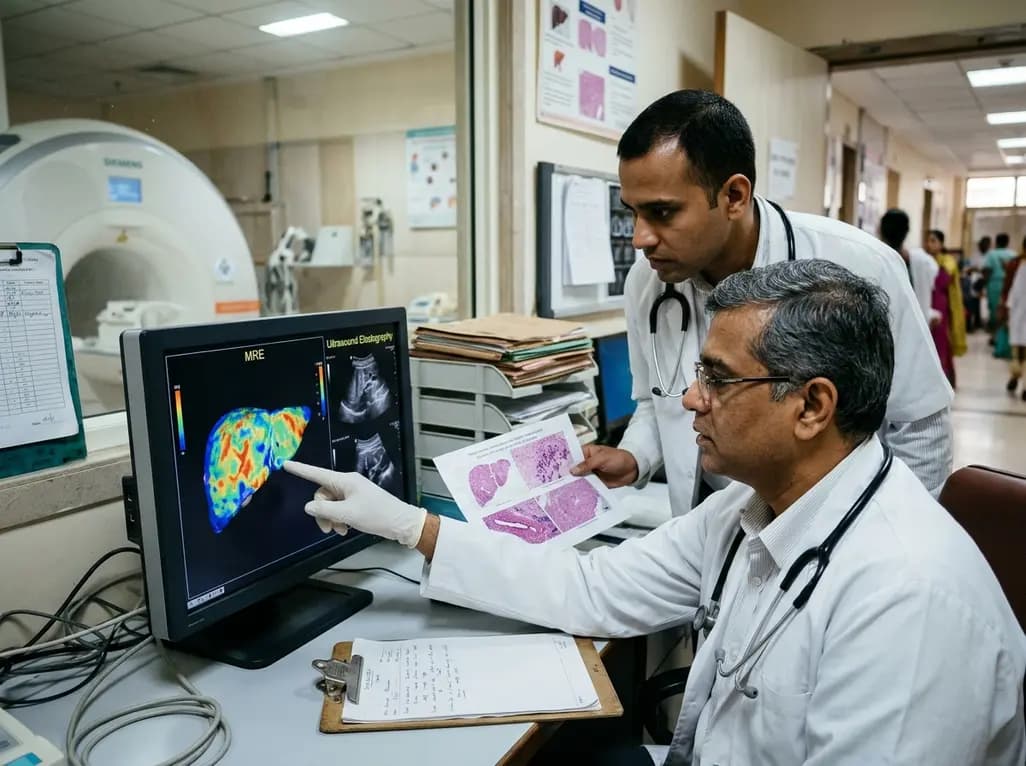
A comparative study reveals magnetic resonance elastography outperforms ultrasound elastography in assessing liver fibrosis in Fontan-associated liver disease, demonstrating stronger histological agreement and superior discrimination.
Today

A systematic review and meta-analysis highlights the substantial impact of plyometric jump training on jump performance, reactive strength, and landing kinematics in female team-sport athletes, providing evidence-based programming guidelines for sports medicine and orthopedics.
Today

A comprehensive review of the role of growth hormone in diabetic kidney disease and podocytopathy. Learn how elevated GH activates ZEB2, Notch, and TGF-beta1, driving podocyte loss and glomerulosclerosis, and explore novel targeted therapeutic approaches.
Today
