

Loading, please wait...
Loading, please wait...

Modern intensive care units and telemetry wards generate immense volumes of high-frequency monitoring data every second. Clinicians rely heavily on continuous physiological signals, such as electroencephalograms, multichannel electrocardiograms, and invasive arterial lines, to detect acute decompensation. However, hospital systems frequently store these rich data streams in proprietary, isolated formats that cannot interact with electronic health record platforms. Consequently, bedside teams struggle to extract longitudinal trends, and researchers face major barriers when developing real-time decision algorithms. To resolve this longstanding informatics challenge, investigators have developed the Time Series Integration and Data in Endpoints framework. This methodology standardizes continuous telemetry through modern web standards without overloading central medical databases.
Continuous bedside telemetry produces high-density physiological streams that quickly overwhelm standard electronic medical record architectures. For example, a multichannel electroencephalography montage sampled at five hundred hertz generates millions of distinct data points within a few hours. In most hospitals, vendors isolate these waveforms inside proprietary hardware silos. Therefore, attending clinicians cannot view raw physiological signals alongside routine laboratory findings, medication charts, and physician notes. Furthermore, traditional interfaces lack unified data quality indicators. Clinicians must manually verify whether an irregular rhythm reflects genuine cardiac instability or simple electrode displacement. In addition, existing health data standards primarily focus on discrete clinical values, such as single blood pressure readings or intermittent temperature checks. Because standard protocols do not accommodate continuous waveform telemetry, interdepartmental data sharing remains fragmented. As a result, critical care specialists lose vital opportunities to deploy automated early warning scores and advanced physiological monitoring at the bedside.
To overcome these structural limitations, researchers designed the Time Series Integration and Data in Endpoints framework using Fast Healthcare Interoperability Resources Release 4. Importantly, the framework introduces an architectural separation between descriptive clinical metadata and high-volume raw waveform files. Traditional electronic health record systems crash when servers attempt to ingest gigabytes of continuous waveform tracings directly into standard database tables. Consequently, the TIDE architecture retains the dense binary telemetry files in specialized external object repositories. Meanwhile, the framework represents all associated clinical metadata, device parameters, and analytical summaries within standard FHIR Observation resources. Standardized FHIR Endpoint instances establish clear references between the clinical record and external binary storage. Therefore, healthcare providers can execute rapid database queries for specific patient conditions without downloading overwhelming payloads. Furthermore, this decoupled paradigm allows institutions to maintain their existing data archives while instantly unlocking standards-based semantic interoperability.
The TIDE framework provides seven foundational FHIR profiles that structure complex telemetry into sixteen distinct component slices. Specifically, these artifacts capture essential recording context, including sampling frequencies, channel designations, filter bandwidths, and electrode placements. Through pattern slicing, the architecture documents both technical acquisition variables and precomputed statistical metrics within unified clinical resources. Furthermore, the framework integrates data quality slices that instantly signal lead disconnections, muscle artifacts, and signal attenuation. To achieve semantic precision, developers mapped concepts to international terminologies, incorporating SNOMED CT and LOINC codes for monitoring modalities. In addition, the authors created custom code systems for specialized engineering attributes and raw connection parameters that existing terminologies lack. Consequently, any FHIR-compliant application can consume these structured profiles unambiguously. Clinicians can rapidly determine which sensor recorded an abnormal signal and whether interference degraded the recording quality.
Standardizing physiological waveforms transforms clinical workflows across several critical care disciplines. In neuro-intensive care units, continuous electroencephalography monitoring provides early detection of non-convulsive status epilepticus and delayed cerebral ischemia. By exposing electroencephalographic power spectra and raw waveforms through standardized interfaces, neurointensivists can access synchronized trend analyses across hospital networks. Similarly, cardiology services benefit immensely from unified telemetry data. Standardized arterial pressure contours and continuous vectorcardiography allow predictive algorithms to alert intensivists hours before septic shock or cardiogenic collapse occurs. Furthermore, this interoperable exchange supports tele-ICU programs, which are vital in resource-constrained environments and tier-two cities. Specialists at central academic hubs can monitor high-frequency physiologic waveforms from peripheral hospitals in real time. Ultimately, this seamless interoperability minimizes diagnostic delays, reduces unnecessary interfacility transfers, and helps medical teams deliver timely, life-saving interventions.
Beyond immediate patient care, the TIDE framework provides profound advantages for translational biomedical research and artificial intelligence development. Machine learning models require vast, diverse physiological datasets to learn reliable predictive patterns. However, researchers historically spent months writing custom ingestion scripts for incompatible hospital proprietary data formats. Because TIDE standardizes technical metadata and waveform pointers using international open standards, multicenter research consortiums can harmonize petabytes of intensive care records efficiently. Furthermore, this structured approach aligns directly with national digital health initiatives, such as India's Ayushman Bharat Digital Mission, which promotes FHIR R4 adoption. By establishing compliant endpoints, healthcare institutions can contribute to national clinical registries while protecting sensitive health information. Moreover, hospitals avoid expensive vendor lock-in because third-party software developers can build vendor-neutral clinical decision tools. Thus, the framework accelerates medical innovation from research laboratories to active clinical practice.
The primary benefit is architectural decoupling. TIDE separates structured clinical metadata, queryable summaries, and signal quality metrics from large raw time-series files. The metadata resides in lightweight, searchable FHIR Observation resources, while high-volume waveforms remain in external object storage. Consequently, clinicians can query clinical records efficiently without overloading electronic health record systems or modifying underlying hardware infrastructure.
TIDE ensures semantic interoperability through a hybrid terminology binding strategy. It maps clinical modalities and observation types to established international standards, including SNOMED CT and LOINC. Furthermore, it defines custom FHIR CodeSystems for specialized waveform parameters, technical channel identifiers, and network connection types. This rigorous standardization ensures that diverse computer systems interpret telemetry traces without ambiguity.
Yes, healthcare systems can deploy TIDE without replacing their operational telemetry monitors or signal storage archives. Because the framework links to external raw data repositories using standard FHIR Endpoint extensions, it acts as an interoperable integration layer. Hospitals simply generate FHIR-compliant metadata wrappers around their existing waveform repositories, enabling modern digital health applications to access legacy records seamlessly.
Disclaimer: This content is for informational and educational purposes only, and should not be used as a substitute for direct clinical judgment or vendor implementation protocols. Refer to the latest local and national guidelines for clinical practice.
References
Kaya SE et al. Exchange of High-Frequency Medical Monitoring Data Using Fast Healthcare Interoperability Resources for Interoperable Integration Into Clinical Practice and Research: Methodological Development Study. JMIR Med Inform. 2026 Nov 02. doi: 10.2196/94282. PMID: 42970757.
Bender D, Sartipi K. HL7 FHIR: An Agile and RESTful Approach to Healthcare Information Exchange. Proceedings of the IEEE International Symposium on Computer-Based Medical Systems. 2013;326-331. doi: 10.1109/CBMS.2013.6627810.
Johnson AEW, Pollard TJ, Shen L, et al. MIMIC-III, a freely accessible critical care database. Sci Data. 2016;3:160035. doi: 10.1038/sdata.2016.35.

Read summarized clinical updates, watch expert medical content, and earn CME certifications right from your smartphone.
Open your smartphone camera to scan and install.





Standardizing continuous physiological waveforms in EHRs has long challenged clinical teams. The novel TIDE framework leverages HL7 FHIR R4 to decouple queryable clinical metadata from massive raw signal repositories, unlocking scalable telemetry exchange for bedside care and predictive research.
Today

A secondary analysis of the MOMS clinical trial reveals that infant sex does not influence neonatal opioid withdrawal syndrome severity in buprenorphine-exposed newborns. Maternal co-exposures and clinical factors drive outcomes, highlighting the need for objective assessment and supportive breastfeeding.
Today
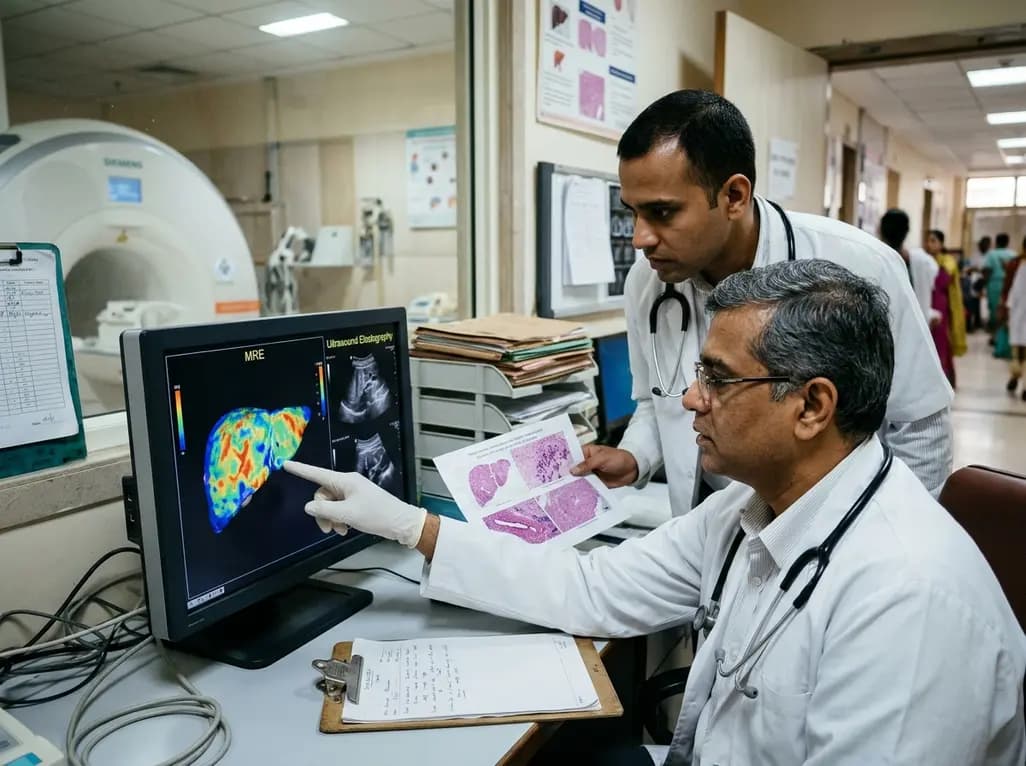
A comparative study reveals magnetic resonance elastography outperforms ultrasound elastography in assessing liver fibrosis in Fontan-associated liver disease, demonstrating stronger histological agreement and superior discrimination.
Today

A systematic review and meta-analysis highlights the substantial impact of plyometric jump training on jump performance, reactive strength, and landing kinematics in female team-sport athletes, providing evidence-based programming guidelines for sports medicine and orthopedics.
Today

A comprehensive review of the role of growth hormone in diabetic kidney disease and podocytopathy. Learn how elevated GH activates ZEB2, Notch, and TGF-beta1, driving podocyte loss and glomerulosclerosis, and explore novel targeted therapeutic approaches.
Today
