.webp&w=384&q=75)

Loading, please wait...
Loading, please wait...

Recent neuroimaging research has identified a distinct schizophrenia dementia-like phenotype that mirrors the structural patterns of behavioral variant frontotemporal dementia (bvFTD). While clinicians traditionally associate schizophrenia with excessive dopamine activity, this specific patient subgroup presents a contradictory neurochemical profile. Researchers discovered that these individuals actually possess lower striatal dopamine synthesis capacity and elevated iron accumulation. This finding suggests that disease heterogeneity in schizophrenia may be driven by underlying neurodegenerative mechanisms.
The study analyzed 76 patients using structural MRI to quantify bvFTD-like expression through a validated machine-learning classifier. Furthermore, subsets of the cohort underwent PET scans for dopamine synthesis and quantitative susceptibility mapping (QSM) for brain iron measurement. Interestingly, the researchers found that higher expression of the bvFTD-like pattern significantly correlated with lower dopamine synthesis. Specifically, the data showed a correlation of r = -0.343 (p = 0.032).
Simultaneously, these patients exhibited increased striatal iron levels as measured by QSM. However, the researchers found no significant association with midbrain dopaminergic integrity. Consequently, this indicates that the biological alterations are localized to the striatum rather than the global dopaminergic system. This localization highlights a potential shift from the standard hyperdopaminergic model toward a localized neurodegenerative process.
Understanding this specific schizophrenia dementia-like phenotype is vital for refining psychiatric diagnostics in clinical practice. Because these features are hallmark indicators of bvFTD, their presence in schizophrenia patients implies a possible shared pathophysiological pathway. Moreover, the study found no significant associations with current medication or negative symptom severity. This suggests that the observed brain changes are intrinsic to the disease biology rather than a side effect of antipsychotic treatment.
Additionally, the research emphasized that this subgroup might require tailored management. Standard treatments that focus on reducing dopamine levels might not be appropriate for patients who already exhibit a hypodopaminergic state. Therefore, identifying these neuroanatomical and neurochemical markers could pave the way for personalized therapeutic interventions. Future longitudinal studies are necessary to determine if this phenotype predicts a more progressive clinical decline.
Unlike the traditional hyperdopaminergic model of schizophrenia, this specific phenotype involves lower striatal dopamine synthesis. This profile more closely resembles the neurodegenerative changes seen in behavioral variant frontotemporal dementia (bvFTD).
Patients with this phenotype exhibit elevated striatal iron accumulation. This is a characteristic feature of neurodegeneration and suggests that oxidative stress or metabolic dysfunction may be contributing to the specific disease process in the striatum.
No, the study observed no significant association between the bvFTD-like patterns and current medication use. This implies that the structural and neurochemical changes are core biological components of this specific disease subtype rather than secondary effects of drugs.
Disclaimer: This content is for informational and educational purposes only. It does not constitute professional medical advice, diagnosis, or treatment. Always seek the advice of your physician or other qualified healthcare provider with any questions you may have regarding a medical condition. Refer to the latest local and national guidelines for clinical practice.
References
Chang X et al. A frontotemporal dementia-like phenotype in schizophrenia: links to striatal dopamine and iron accumulation. Neuropsychopharmacology. 2026 Apr 25. doi: 10.1038/s41386-026-02426-x. PMID: 42034849.
Koutsouleris N et al. Exploring Links Between Psychosis and Frontotemporal Dementia Using Multimodal Machine Learning: Dementia Praecox Revisited. JAMA Psychiatry. 2022;79(9):907-919. doi:10.1001/jamapsychiatry.2022.2075.
Vano L. Multimodal Imaging Links Elevated Striatal Dopamine Synthesis in Schizophrenia with High Neuromelanin and Brain Iron Deficiency. King's College London Research Portal. 2025. https://kclpure.kcl.ac.uk/portal/en/publications/multimodal-imaging-links-elevated-striatal-dopamine-synthesis-in-schizophrenia-with-high-neuromelanin-and-brain-iron-deficiency.
"
Read summarized clinical updates, watch expert medical content, and earn CME certifications right from your smartphone.
Open your smartphone camera to scan and install.





A neuroimaging study identifies a schizophrenia subset mirroring frontotemporal dementia, characterized by low striatal dopamine and elevated brain iron lev...
5 months ago
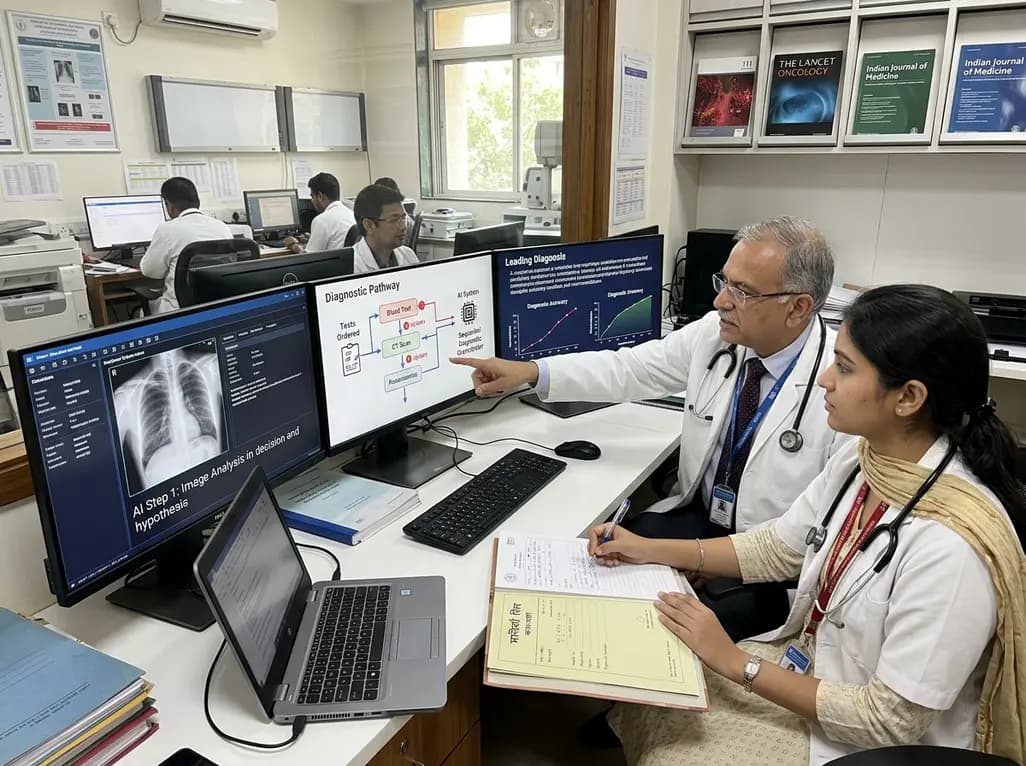
A breakthrough peer-reviewed study demonstrates that a sequential AI diagnosis system can mirror real-world clinical reasoning. By ordering stepwise tests and updating hypotheses dynamically, this multi-agent orchestrator achieved superior diagnostic accuracy while reducing investigative costs.
Today

A prenatal case highlights severe glutaric acidemia type II presenting as bilateral hyperechoic cystic kidneys at 18 weeks. Whole-exome sequencing revealed a novel homozygous ETFDH frameshift variant, demonstrating the power of rapid genetic testing in fetal renal anomalies.
Today

Review how tailored exercise programs benefit frail older patients with heart failure. Explore pathophysiological mechanisms, individualized training prescriptions, and strategies to overcome adherence barriers in clinical practice.
Yesterday

This comparative study evaluates posterior labral tears with and without glenohumeral instability, highlighting distinct demographic patterns, MRI underestimation in stable shoulders, and successful arthroscopic repair outcomes.
Yesterday

A clinical study demonstrates that early intervention with tocilizumab, either as monotherapy or bridged with corticosteroids, achieves significant proptosis reduction and resolves active inflammation in treatment-naive thyroid eye disease.
Yesterday
