

Loading, please wait...
Loading, please wait...

Cardiothoracic surgeons currently encounter an expanding cohort of adult congenital heart disease patients worldwide. Because pediatric interventional and surgical therapies improved dramatically over recent decades, most children with structural heart defects now survive well into adulthood. Consequently, adult congenital heart disease represents a distinct and fast-growing clinical entity in daily practice. However, aging congenital patients frequently develop late sequelae that require secondary cardiovascular operations. Residual hemodynamic lesions, systemic ventricular dysfunction, conduit stenosis, and progressive valve regurgitation commonly prompt surgical re-intervention. Furthermore, these individuals often accumulate acquired cardiovascular comorbidities alongside their primary congenital malformations. Adult cardiac surgeons and pediatric cardiologists must therefore collaborate closely to evaluate perioperative risks accurately. Historical risk models designed for traditional acquired heart disease or pediatric congenital repairs frequently fail to predict outcomes in mature adults. Therefore, robust epidemiological registries provide crucial real-world insights into modern procedural survival. Understanding these clinical trajectories helps clinicians optimize preoperative medical management and choose appropriate surgical timings for complex cases.
To clarify surgical risks, researchers examined nationwide registry data from the Japanese Registry of All Cardiac and Vascular Disease-Diagnostic Procedure Combination. The comprehensive investigation evaluated 10,535 adult patients who underwent cardiovascular surgery between April 2013 and March 2023. Notably, the cohort displayed a median age of 53 years, with an interquartile range spanning 36 to 68 years. Female patients comprised 50.4 percent of the total population, reflecting balanced gender representation. Investigators classified the participants into three anatomical complexity strata, including 6,831 mild, 2,388 moderate, and 1,316 severe cases. Across the entire cohort, 146 in-hospital deaths occurred, establishing an overall in-hospital mortality rate of 1.4 percent. This favorable baseline metric confirms that specialized centers achieve excellent contemporary operative outcomes. Nevertheless, mortality increased sharply with advancing anatomical complexity. Patients in the severe complexity group experienced an in-hospital mortality rate of 2.4 percent, which was substantially higher than the rates observed in milder categories. These epidemiological findings clearly illustrate that anatomical complexity remains a fundamental driver of postoperative outcomes, demanding vigilant monitoring during hospitalization.
Multivariable regression analysis isolated several powerful clinical predictors of in-hospital death across the analyzed population. Specifically, increasing patient age contributed independently to mortality, carrying an adjusted hazard ratio of 1.15. Severe disease complexity increased the risk of death by 77 percent compared to milder presentations. In addition, preexisting noncardiac organ dysfunction conferred significant vulnerability. Renal disease emerged as a strong independent prognostic factor, associated with a hazard ratio of 1.74. Similarly, pulmonary hypertension requiring targeted medications doubled the risk of mortality, demonstrating a hazard ratio of 2.01. The presence of chromosomal abnormalities demonstrated the most striking impact, raising the mortality hazard by more than sixfold with a ratio of 6.22. Procedural factors also governed postoperative survival significantly. High-risk surgical procedures, specifically Fontan operations or concomitant coronary artery bypass grafting, increased the hazard ratio to 1.67. Therefore, preoperative risk stratification cannot rely exclusively on anatomical diagrams. Instead, surgical teams must evaluate underlying genetic syndromes, pulmonary vascular resistance, and end-organ resilience. Identifying these high-risk features preoperatively allows clinicians to implement targeted hemodynamic protection protocols before entering the operating suite.
Subgroup analyses from the registry revealed crucial divergences in risk profiles based on anatomical category. In patients with mild complexity defects, advancing chronological age, baseline renal dysfunction, and high-risk surgical procedures significantly predicted adverse outcomes. For instance, an older patient undergoing simple atrial septal defect repair combined with bypass grafting faces elevated risk primarily due to acquired vascular pathology and nephropathy. Conversely, patient age lost its statistical significance as an independent predictor among individuals in the moderate and severe complexity cohorts. In these complex groups, anatomical pathology and hemodynamic derangements overshadow standard age-related risks. A younger adult with failing univentricular circulation or severe pulmonary hypertension experiences profound surgical vulnerability despite their youth. Consequently, clinicians must not assume that young patients with complex anatomy tolerate operative stress easily. Subgroup findings reinforce the necessity of tailoring preoperative evaluations to anatomical complexity rather than relying on uniform assessment tools. Stratified protocols allow care teams to address lesion-specific failure modes, such as single ventricle congestion or subpulmonic ventricular failure, directly before initiating surgery.
These registry insights offer vital lessons for cardiologists and cardiothoracic surgeons practicing in India. Across Indian medical centers, adult congenital cases present unique challenges, including delayed diagnoses, neglected shunts, and advanced Eisenmenger syndrome. Many Indian adults undergo initial corrective procedures decades after optimal pediatric windows have closed. Consequently, these patients frequently present with entrenched pulmonary arterial hypertension, advanced right ventricular cardiomyopathy, and secondary renal impairment. Clinicians must actively optimize pulmonary hemodynamics with targeted pulmonary vasodilators before recommending surgical intervention. Moreover, screening for subclinical nephropathy and systemic collateral circulation remains essential during preoperative workups. High-volume Indian tertiary centers should establish multidisciplinary adult congenital heart teams comprising specialized congenital surgeons, adult cardiologists, cardiac anesthesiologists, and intensivist colleagues. When high-risk procedures such as Fontan conversions or combined valve and coronary surgeries arise, these specialized teams deliver coordinated perioperative pathways. Furthermore, comprehensive counseling regarding genetic conditions and individual operative risks empowers patients and families to make informed choices. By embedding individualized, complexity-based risk modeling into routine clinical pathways, Indian surgical units can significantly minimize postoperative mortality and enhance long-term quality of life.
Pulmonary hypertension substantially elevates surgical mortality because elevated pulmonary vascular resistance strains the subpulmonic ventricle during cardiopulmonary bypass weaning. When patients require targeted pulmonary vasodilators preoperatively, they possess precarious cardiopulmonary physiology vulnerable to acute postoperative hypertensive crises and right-sided heart failure. Furthermore, prolonged bypass can induce inflammatory endothelial injury, exacerbating pulmonary pressures. Consequently, managing these patients demands rigorous pre-procedural pulmonary vasodilator optimization, specialized anesthetic hemodynamics, and targeted right ventricular support strategies throughout the perioperative timeframe.
In mild congenital defects, advancing age correlates with acquired systemic comorbidities, including coronary atherosclerosis, vascular stiffness, and chronic renal disease, which drive surgical mortality. Conversely, in moderate and severe congenital cohorts, profound hemodynamic derangements, univentricular physiology, and cyanosis dictate surgical risk far more than chronological years. Therefore, young adults with severe lesions face elevated mortality regardless of age. Consequently, risk stratification models must emphasize lesion complexity and functional status rather than traditional age-based cardiovascular scoring systems.
Preoperative renal dysfunction significantly increases the hazard of in-hospital death by impairing fluid clearance, worsening electrolyte shifts, and complicating cardiopulmonary bypass kinetics. Clinicians must identify baseline renal impairment early through estimated glomerular filtration rate calculations and cystatin C screening. Furthermore, perioperative management requires minimizing nephrotoxic pharmacological agents, adjusting bypass perfusion pressures, and avoiding severe intraoperative hemodilution. Close collaboration with nephrology teams and proactive postoperative renal replacement protocols help stabilize high-risk surgical patients and mitigate acute kidney injury.
Disclaimer: This content is for informational and educational purposes only... Refer to the latest local and national guidelines for clinical practice.
References

Read summarized clinical updates, watch expert medical content, and earn CME certifications right from your smartphone.
Open your smartphone camera to scan and install.





A nationwide Japanese registry study of 10,535 patients reveals an overall in-hospital mortality rate of 1.4% following cardiovascular surgery in adult congenital heart disease. Predictors of adverse outcomes include severe lesion complexity, renal disease, and advanced pulmonary hypertension.
Today
Even older heart failure patients with high SPPB scores (≥10) exhibit high 1-year mortality and readmission rates. Adding sarcopenia assessments—grip strength, chair stand test, and calf circumference—reveals critical residual risks, enabling targeted post-discharge interventions.
Today

A new comparative study demonstrates that intraoperative imprint cytology achieves 96.6% diagnostic accuracy in ovarian tumours, outperforming frozen section in sensitivity for borderline lesions and offering an accessible, rapid alternative for resource-constrained surgical centres.
Today
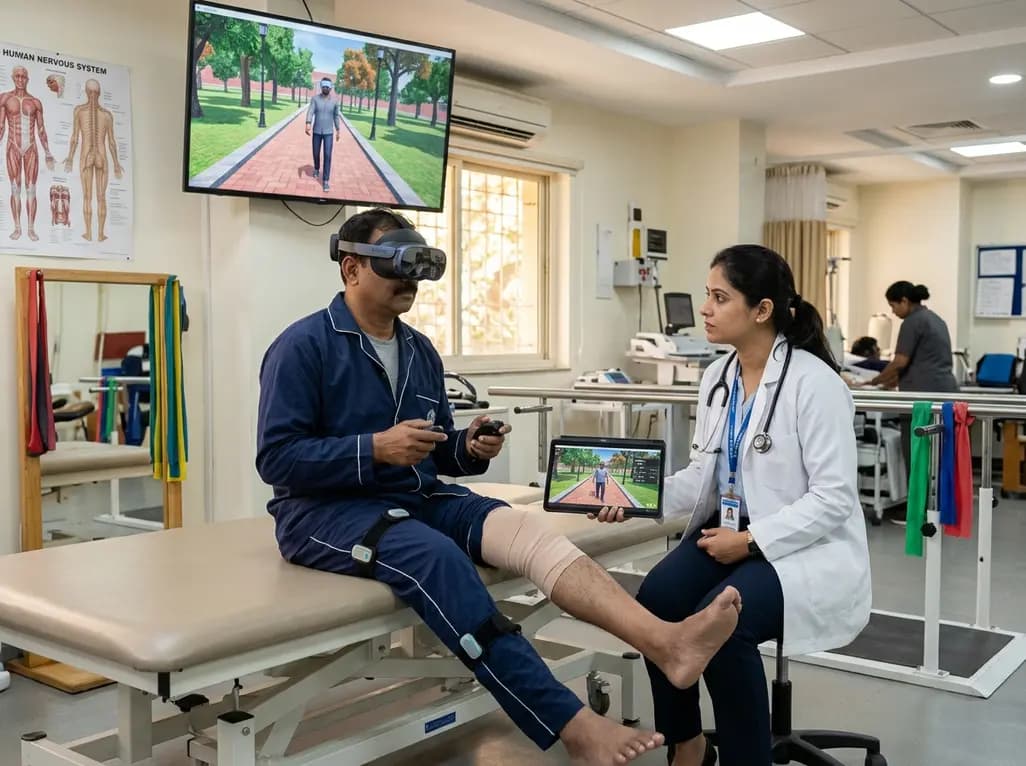
Discover how extended reality (XR) serious games transform post-amputation rehabilitation. This review highlights significant phantom limb pain reduction, motor cortex restoration, enhanced gait and balance, and superior myoelectric prosthetic adoption through immersive, sensorimotor training.
Today

A systematic review evaluates psychological interventions for smoking cessation in diabetes, showing short-term success but highlighting challenges in long-term abstinence.
Yesterday
