.webp&w=384&q=75)

Loading, please wait...
Loading, please wait...

Recent scientific investigations have unveiled a critical link between salivary agglutinin and oral cancer development. Salivary agglutinin, encoded by the DMBT1 (Deleted in Malignant Brain Tumors 1) gene, is a multi-functional protein. It serves as an essential component of the innate immune system and a known tumor suppressor. While clinical data previously showed reduced levels of this protein in patients with oral squamous cell carcinoma (OSCC), a new study establishes a causal relationship between its loss and accelerated malignancy.
Using a murine carcinogen model to simulate human OSCC, researchers examined how the absence of the Dmbt1 gene affects disease outcomes. They found that mice lacking this gene exhibited significantly higher tumor prevalence and more aggressive invasion compared to wild-type subjects. Notably, the study demonstrated that the loss of this protein causes a distinct shift in the salivary microbiome. Even when microbial environments were standardized between groups, the genetic absence of DMBT1 independently drove dysbiosis.
Furthermore, the researchers identified specific longitudinal patterns in microbial families such as Lachnospiraceae and Sphingomonas. These bacterial groups showed differential abundance specifically in mice that progressed toward OSCC. Consequently, these findings suggest that DMBT1 maintains oral homeostasis by regulating microbial communities. Therefore, the suppression of this protein creates a biological environment that favors tumor growth and aggressive progression.
These findings hold substantial weight in India, where oral cancer accounts for roughly one-third of the global burden. Given the high prevalence and mortality rates in the region, identifying biomarkers like DMBT1 is vital for early detection. Additionally, understanding the microbial shifts associated with this protein could lead to novel therapeutic strategies. Restoring oral homeostasis or targeting specific microbial pathways might provide a way to mitigate the risk of aggressive cancer invasion in high-risk populations.
Salivary agglutinin, or DMBT1, acts as both a tumor suppressor and a pattern-recognition molecule. It regulates the oral microbiome and prevents the aggressive invasion of cancer cells into healthy tissue.
The loss of DMBT1 leads to an increase or decrease in specific bacterial families, notably Lachnospiraceae and Sphingomonas. These microbial shifts are linked to the transition from precancerous lesions to aggressive oral cancer.
Current research suggests that low levels of DMBT1 in saliva correlate with active OSCC, while levels often rise after successful treatment. This indicates its potential as a post-treatment or diagnostic biomarker.
Disclaimer: This content is for informational and educational purposes only... Refer to the latest local and national guidelines for clinical practice.
References

Read summarized clinical updates, watch expert medical content, and earn CME certifications right from your smartphone.
Open your smartphone camera to scan and install.





A new study reveals that losing salivary agglutinin (DMBT1) triggers microbial dysbiosis and accelerates the progression of oral squamous cell carcinoma....
6 months ago

Recent epidemiological data reveals a dramatic surge in summer heat mortality driven by human-induced climate warming. This analysis explores the pathophysiological impacts on cardiac and renal systems, diagnostic dilemmas in death certification, and essential emergency cooling protocols for acute clinical care.
Today
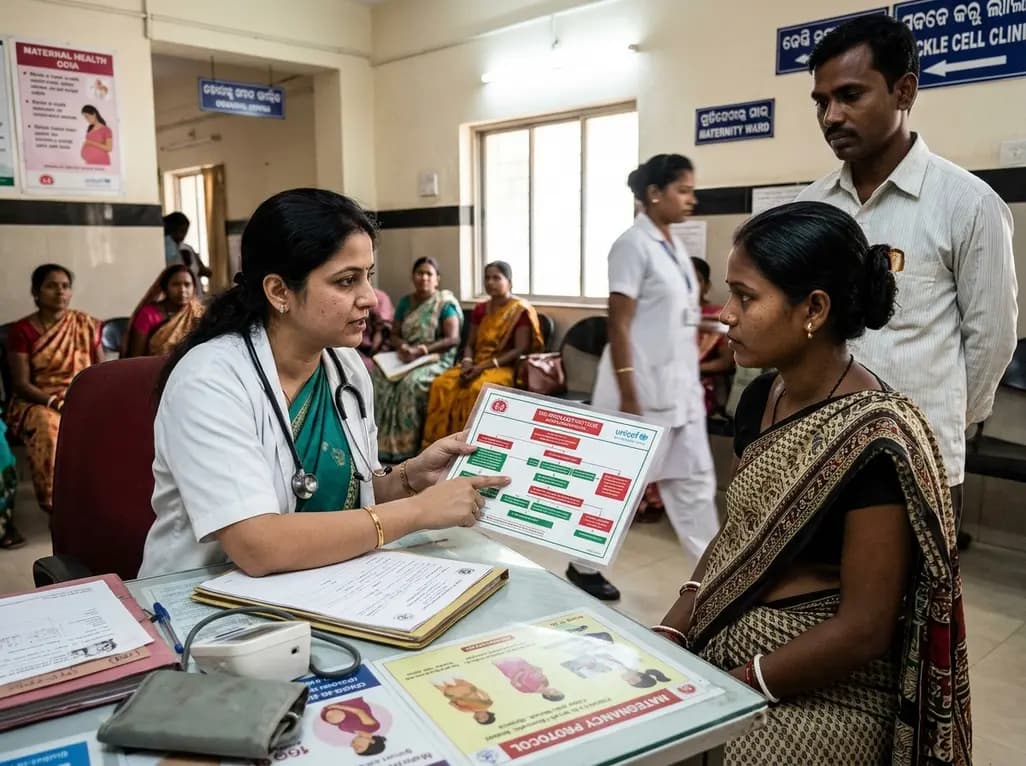
Odisha has established India's first state-level clinical protocol specifically tailored for pregnant women with sickle cell disease. Developed with NHM and UNICEF, the framework provides structured antenatal screening, crisis mitigation, standardized referral pathways, and specialized interdisciplinary care.
Today

India is advancing preventive healthcare by integrating genomics, artificial intelligence, and quantum technologies. With the SANGAM programme sequencing one million Indian genomes, clinicians can unlock personalized therapies, detect cardiometabolic risks early, and curb the burden of diabetes and heart disease.
Today

A randomized controlled trial demonstrates that an eight-week dual-task training intervention significantly improves static and dynamic postural control over standard balance exercises in individuals with chronic ankle instability, addressing critical neurocognitive deficits during athletic and daily activities.
Today

A retrospective cohort study of 7,716 ICU patients from the MIMIC-IV database demonstrates that Gradient Boosting Decision Trees significantly outperform traditional SOFA scores in predicting in-hospital mortality among patients with sepsis and diabetes, with SHAP analysis providing clinical interpretability.
Today
