.webp&w=384&q=75)

Loading, please wait...
Loading, please wait...

Respiratory syncytial virus poses a major clinical burden on pediatric populations across the world. Specifically, it causes severe lower respiratory tract disease that often requires hospital admission and intensive care. To protect vulnerable infants, healthcare systems recently introduced monoclonal antibody immunoprophylaxis into clinical practice. However, establishing the real-world safety of nirsevimab remains an essential priority for clinicians. Post-marketing surveillance actively captures adverse drug reactions that clinical trials might miss due to sample size constraints. Consequently, researchers examined spontaneous safety reports submitted to the European pharmacovigilance database between 2023 and 2025. This post-marketing assessment confirms reassuring real-world safety findings for infants and young children aged 0 to 24 months.
Clinical trials provided strong initial evidence regarding monoclonal antibody efficacy against lower respiratory tract infections. Nevertheless, regulatory agencies emphasize that passive surveillance programs remain crucial once mass rollout begins across diverse infant cohorts. During real-world administration, children receive immunizations across varying gestational ages, underlying clinical vulnerabilities, and diverse healthcare settings. Therefore, continuous pharmacovigilance offers vital reassurances to pediatricians and parents alike.
Researchers evaluated spontaneous adverse event notifications collected systematically within the EudraVigilance system over a two-year timeframe. During this surveillance interval, multiple European nations launched seasonal immunization campaigns using nirsevimab. Healthcare providers and guardians submitted suspected adverse drug reactions following routine prophylactic injections in infants aged 0 to 24 months. Importantly, the analysis examined 1,923 suspected adverse drug reactions, which corresponded to 808 individual patient cases. These data points provide a broad, pragmatic window into everyday clinical usage. Moreover, the observed reporting patterns align closely with expectations for a newly deployed preventive biologic. Clinicians observed no novel or unexpected safety signals throughout the evaluation. Thus, the collected evidence firmly reinforces previous trial findings.
To interpret spontaneous reporting data accurately, clinicians must understand how pharmacovigilance databases categorize clinical symptoms. The Medical Dictionary for Regulatory Activities organizes reports into distinct System Organ Classes and Preferred Terms. Consequently, this standardized structure allows investigators to isolate systemic reactions from localized procedural effects.
In the EudraVigilance cohort, general disorders and administration site conditions accounted for the largest category, comprising 28.4% of all reported adverse reactions. These manifestations included injection site erythema, transient localized swelling, and brief systemic malaise. Furthermore, infections and infestations constituted 23.3% of the total submitted events. Respiratory, thoracic, and mediastinal disorders represented 12.2% of reported reactions. Notably, mild systemic symptoms such as pyrexia, transient cutaneous rash, and local tenderness occurred frequently among recipients. These events typically resolved quickly without requiring aggressive therapeutic intervention. Because parents frequently report temporary crying or localized tenderness after any pediatric injection, high reporting in this category is completely normal. In addition, the absence of disproportionate severe hypersensitivity cases reinforces the overall therapeutic tolerability. Overall, the recorded events demonstrate that infants tolerate passive prophylaxis exceptionally well in routine clinical environments.
A granular review of specific Preferred Terms reveals crucial insights into patient presentations following monoclonal antibody administration. Within the dataset, the most frequently coded Preferred Term was drug ineffectiveness, representing 12.6% of total events. Concurrently, respiratory syncytial virus bronchiolitis accounted for 9.6% of reported cases. Clinicians must contextualize these two specific terms within real-world epidemiological dynamics.
Because nirsevimab provides passive immunity, parents and healthcare workers often report breakthrough respiratory illnesses as potential product failures. In reality, no preventive intervention guarantees complete immunity against all viral exposures. Although clinical trials confirmed that the monoclonal antibody reduces severe medical encounters by roughly 80%, mild breakthrough cases still occur. Furthermore, young infants encounter co-circulating seasonal pathogens such as rhinovirus and human metapneumovirus that cause similar bronchiolitis symptoms. When an infant develops viral wheezing despite immunization, caregivers frequently submit a spontaneous report. Nonetheless, real-world hospital data consistently indicate that immunized infants with breakthrough disease experience milder courses than unimmunized peers. In addition, cutaneous eruptions and transient fever appeared in a small minority of cases, matching the safety parameters seen in early pre-licensure studies.
Differentiating between true immunoprophylaxis failure and expected statistical non-responder rates remains vital for pediatric clinicians. Pharmacovigilance registries inevitably receive reports when an infant develops acute respiratory symptoms after receiving an immunization. Therefore, interpreting the high frequency of perceived ineffectiveness requires careful epidemiological perspective.
Spontaneous databases record subjective practitioner concerns rather than verified diagnostic endpoints. When severe bronchiolitis epidemics surge, healthcare facilities encounter numerous infants with overlapping respiratory conditions. Consequently, a small proportion of recipients inevitably require outpatient evaluation or supportive oxygen therapy. Studies indicate that infants with breakthrough infections often carry underlying risk factors, including extreme prematurity or chronic cardiac disorders. Furthermore, antibody concentrations can gradually wane toward the end of an extended epidemic season. However, robust epidemiological studies show that nirsevimab dramatically slashes intensive care admissions and invasive mechanical ventilation rates across populations. Thus, reports of drug ineffectiveness reflect known mathematical limitations of population-level prophylaxis rather than diminished biologic potency. Healthcare providers should therefore reassure parents that immunization provides substantial protection against critical lower respiratory failure.
The real-world safety findings provide actionable reassurance for neonatologists and pediatricians managing seasonal respiratory disease. Pediatric providers frequently weigh the risks and benefits before administering novel biologics to neonates and premature infants. Fortunately, the EudraVigilance dataset demonstrates that severe adverse drug reactions remain remarkably uncommon in routine healthcare settings.
In clinical practice, physicians can safely integrate nirsevimab into neonatal discharge protocols and routine well-child visits. Moreover, co-administration studies demonstrate that giving nirsevimab alongside standard childhood immunizations does not compromise immunological responses or increase severe complications. Although concurrent administration slightly increases transient local soreness, the systemic tolerability remains excellent. Pediatric teams should educate parents regarding expected mild post-injection symptoms, including low-grade fever and mild injection site redness. In addition, clinicians must advise caregivers to seek prompt medical attention if an infant exhibits rapid breathing, poor feeding, or chest indrawing. Continued pharmacovigilance will refine dosing guidelines for complex pediatric populations, including children with hemodynamically significant congenital heart disease. Ultimately, the consistent safety profile supports widespread adoption to protect vulnerable infants from life-threatening respiratory syncytial virus infections.
The most frequently reported adverse reactions include transient injection site conditions such as erythema and swelling, low-grade pyrexia, and cutaneous rashes. Furthermore, many pharmacovigilance reports list perceived drug ineffectiveness when an infant experiences an upper or lower respiratory illness during the season. Fortunately, these reactions are typically mild, self-limiting, and fully consistent with findings from pre-licensure randomized controlled clinical trials.
Extensive real-world pharmacovigilance systems, including EudraVigilance and national registry databases, show no evidence whatsoever of antibody-dependent enhancement. Although theoretical concerns exist for experimental monoclonal antibodies, clinical studies demonstrate that children with breakthrough infections do not suffer heightened disease severity compared to unvaccinated infants. Consequently, the safety profile remains dependable across all evaluated neonatal and infant age cohorts.
Clinicians must interpret drug ineffectiveness reports as expected breakthrough cases rather than pharmacological product failure. Nirsevimab provides approximately 80% real-world protection against severe lower respiratory illness requiring hospitalization. Consequently, a small percentage of immunized infants still develop mild bronchiolitis. Furthermore, overlapping viral infections from rhinoviruses or enteroviruses often prompt clinicians to file spontaneous ineffectiveness reports before confirming causative etiology.
Disclaimer: This content is for informational and educational purposes only and does not constitute formal medical advice, diagnosis, or treatment. Healthcare professionals must exercise independent clinical judgement and verify all therapeutic details. Refer to the latest local and national guidelines for clinical practice.
References
Morciano C et al. Safety of nirsevimab in children aged 0-24 months: Analysis based on EudraVigilance data (2023-2025). Hum Vaccin Immunother. 2026 Dec undefined. doi: 10.1080/21645515.2026.2739001. PMID: 42851207.
Ares-Gomez S, et al. Post-Marketing Surveillance of Nirsevimab: Safety Profile and Adverse Event Analysis from Spain's 2023–2024 RSV Immunisation Campaign. Vaccines (Basel). 2025;13(6):623.
Drysdale SB, et al. Efficacy and Safety of Nirsevimab in Preventing Respiratory Syncytial Virus Infection in Infants: A Systematic Review and Meta-Analysis. N Engl J Med. 2023;388(12):1065-1076.

Read summarized clinical updates, watch expert medical content, and earn CME certifications right from your smartphone.
Open your smartphone camera to scan and install.





A comprehensive EudraVigilance analysis evaluates the safety of nirsevimab in infants aged 0-24 months. The findings demonstrate a favorable safety profile consistent with clinical trials, characterized predominantly by mild injection site reactions, pyrexia, and manageable non-serious adverse events.
Today

India's antidepressant market crossed Rs 2,842 crore in 2026 even as unit sales declined. Clinicians analyze the shift toward newer drugs, widespread clonazepam combination use, social media-driven self-diagnosis, and persistent treatment gaps to assess genuine therapeutic recovery across diverse patient groups.
Today

Integrating adult genetic services into reproductive and pregnancy care substantially alters clinical management. A study reveals that diagnostic genetic evaluations directly inform maternal, fetal, and neonatal care in nearly 57% of tested patients, highlighting the value of preconception and antenatal genomics.
Today
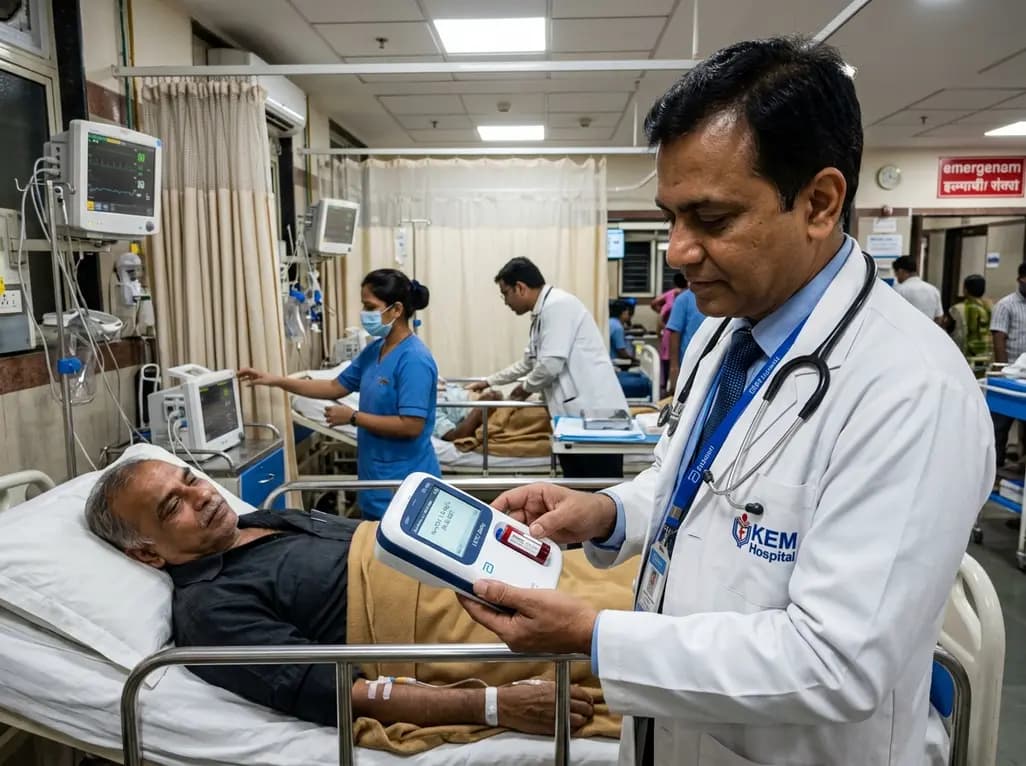
A real-world emergency department evaluation demonstrates that the Abbott i-STAT Alinity point-of-care high-sensitivity troponin I assay achieves excellent analytical precision and safely rules out myocardial infarction without false negatives, offering rapid bedside results to decongest acute care pathways.
Today

A recent scoping review highlights the efficacy, usability, and patient satisfaction of virtual reality pain management for chronic musculoskeletal pain, emphasizing psychotherapy-based VR protocols.
Today
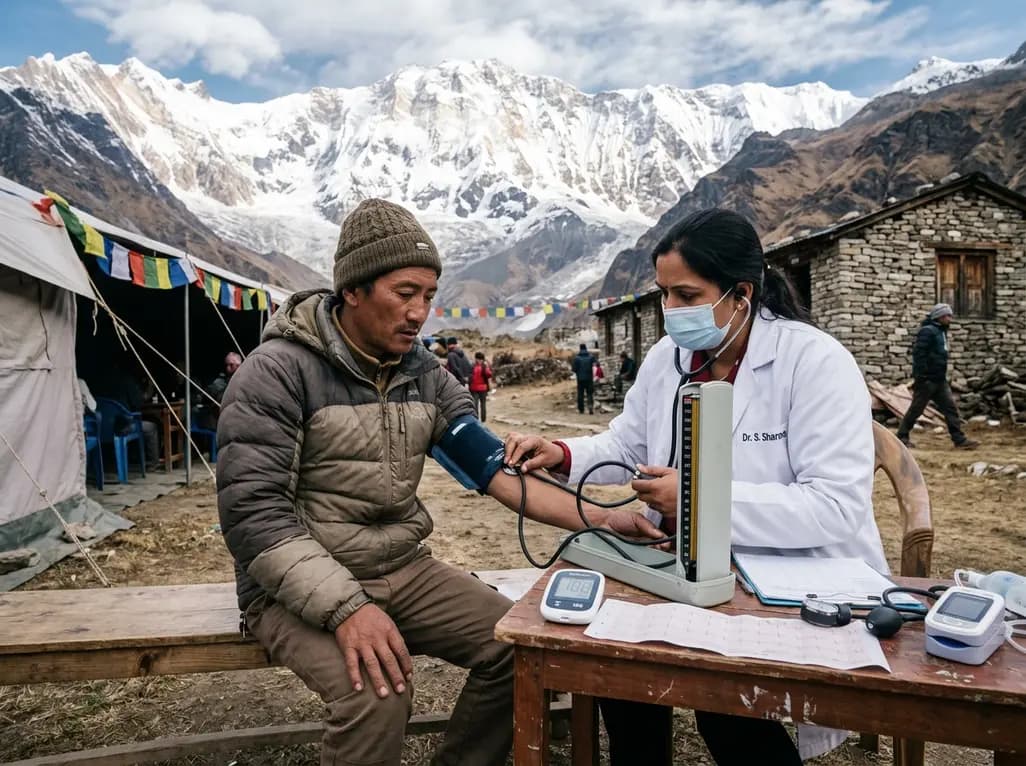
A cross-sectional study in Nepal evaluates cardiovascular risk factors among adults working above 4,000 meters. The findings reveal unexpected rates of diabetes, hypertension, and mountain sickness, underscoring the urgent need for targeted cardiometabolic screening in high-altitude occupational cohorts.
Today
