.webp&w=384&q=75)

Loading, please wait...
Loading, please wait...

Mild traumatic brain injuries account for nearly 90% of all head trauma cases presenting to emergency departments. Clinicians frequently order cranial computed tomography to identify acute intracranial hemorrhage. However, up to 99% of scanned patients show no visible brain injury. This widespread imaging practice exposes patients to unnecessary radiation and escalates medical expenses. To resolve this challenge, international guidelines incorporated serum biomarkers into triage protocols. Specifically, measuring S100B in mild TBI gained significant attention as an objective screening strategy. S100B is a calcium-binding protein concentrated within cerebral glial cells and astrocytes. When trauma damages the blood-brain barrier, this protein enters systemic circulation. Consequently, clinicians hoped that normal serum concentrations drawn within six hours could safely rule out intracranial lesions. Despite this promise, real-world utility remains highly controversial. S100B has a brief biological half-life of roughly ninety minutes. Furthermore, extracranial trauma readily releases the protein into circulation, compromising test specificity. Therefore, clinicians must re-examine whether routine biomarker testing genuinely reduces unnecessary cranial imaging.
To evaluate this clinical question, researchers analyzed data from an urban Level I trauma center between 2017 and 2022. The retrospective investigation included adult patients with mild head injuries who underwent both serum S100B measurement and subsequent cranial CT imaging. Notably, investigators excluded high-risk patients who met immediate imaging criteria under the Canadian CT Head Rule. They also excluded individuals receiving antithrombotic therapy. This rigorous selection strategy allowed researchers to isolate the biomarker's diagnostic performance specifically in low-risk presentations. Overall, the final cohort comprised 391 adult patients with an average age of 46 years. Emergency teams collected blood samples promptly and applied the standard cutoff value of 0.105 micrograms per liter. The researchers systematically recorded radiological findings, neurosurgical interventions, and baseline clinical parameters. In addition, they calculated annual scanning rates to determine real-world operational impact. By focusing exclusively on low-risk presentations, the investigation evaluated whether biomarker integration truly optimized emergency trauma workflows.
The study revealed critical insights into the diagnostic accuracy of the serum biomarker. Among the 391 patients evaluated, cranial CT scans identified intracranial hemorrhage in 23 individuals, representing an incidence of 5.9%. Notably, only two patients, or 0.51% of the cohort, required emergency neurosurgical intervention. The mean S100B concentration across all patients was 0.21 micrograms per liter. Patients with positive cranial CT findings exhibited a significantly higher mean level of 0.31 micrograms per liter, compared to 0.21 micrograms per liter in negative cases. However, intracranial hemorrhage occurred in 6.1% of patients with elevated S100B and 4.2% of patients with normal values. Although the biomarker demonstrated a negative predictive value of 95.8%, its specificity was strikingly low at just 12.5%. Furthermore, the positive predictive value was a dismal 6.1%. Consequently, an elevated biomarker result failed to reliably predict intracranial injury. These data demonstrate a clear disconnect between guideline expectations and clinical reality.
The poor specificity of the biomarker produced significant clinical consequences in routine emergency care. Because the threshold was exceeded so frequently, false-positive results occurred routinely. Extracranial sources, such as scalp contusions, soft-tissue lacerations, and bone fractures, readily release S100B into the blood. In addition, baseline physiological variations can elevate circulating levels. As a result, clinicians ordered cranial CT scans for dozens of stable patients who harbored no intracranial injury. The researchers estimated that false-positive biomarker measurements caused 57 unnecessary cranial CT scans each year at their institution. Therefore, instead of curtailing imaging use, biomarker testing actively increased scanning frequency. This diagnostic cascade exposed younger patients to avoidable ionizing radiation risks. Furthermore, these unneeded examinations prolonged hospital stays and increased emergency department crowding. Clinicians must recognize that an oversensitive biomarker with inadequate specificity paradoxically increases healthcare utilization rather than reducing clinical burdens.
Emergency departments need efficient diagnostic pathways that safeguard patients while conserving hospital resources. International bodies originally adopted serum biomarkers to help clinicians safely rule out serious neurosurgical emergencies. However, this study underscores the significant pitfalls of relying on biomarker thresholds in low-risk head trauma. When clinicians treat an isolated laboratory elevation as an absolute imaging indication, unnecessary scans multiply rapidly. Therefore, emergency protocols should prioritize comprehensive clinical assessments over standalone laboratory tests. Physicians must evaluate trauma mechanisms, transient loss of consciousness, and persistent vomiting. In addition, clinical teams should monitor patients for post-traumatic amnesia and drug intoxication before ordering computed tomography. Meticulous physical examinations and serial neurological checks provide far greater diagnostic reliability than non-specific blood markers. Furthermore, hospitals should critically reconsider protocols that mandate routine biomarker testing. If an assay triggers dozens of unneeded radiological scans without improving diagnostic yield, its clinical rationale collapses.
This investigation delivers practical lessons for emergency physicians, neurologists, and general practitioners managing mild head injuries. First, clinicians should understand that elevated S100B levels in low-risk mild TBI patients do not reliably signify intracranial hemorrhage. In the absence of ongoing or new neurological symptoms, an elevated biomarker level should not trigger a cranial CT scan. Second, validated clinical decision instruments, such as the Canadian CT Head Rule, remain essential triage tools. These established rules reliably identify surgical emergencies while minimizing unnecessary imaging. Third, healthcare administrators must evaluate laboratory turnaround times and institutional costs before purchasing biomarker assays. Delayed test results can prolong emergency room stays without offering meaningful clinical clarity. Ultimately, structured observation and clear discharge warnings deliver safer, more cost-effective patient care than indiscriminate blood tests. Clinicians should maintain disciplined clinical judgment, educate patients on warning signs, and reserve neuroimaging for patients with genuine clinical indications.
Clinicians initially introduced serum S100B as a rapid rule-out biomarker for acute intracranial hemorrhage. When drawn within six hours of injury, low serum levels theoretically allow clinicians to safely discharge low-risk patients. Consequently, this approach aims to reduce unnecessary cranial CT examinations and mitigate radiation exposure in emergency departments.
The biomarker demonstrated an extremely low specificity of only 12.5% in this trauma cohort. Therefore, elevated protein concentrations occurred frequently without any underlying intracranial injury. Because physicians ordered imaging for every elevated test, false-positive results triggered approximately 57 unneeded cranial CT scans each year rather than reducing hospital radiation burdens.
Emergency physicians should prioritize validated clinical decision rules and thorough neurological examinations over isolated biomarkers. If patients present without progressive headaches, vomiting, focal neurological deficits, or antithrombotic therapy, clinicians can safely avoid imaging. Furthermore, isolated biomarker elevations without clinical symptoms should not automatically prompt cranial CT scans in low-risk individuals.
Disclaimer: This content is for informational and educational purposes only and does not substitute for professional medical judgment, diagnosis, or treatment. Refer to the latest local and national guidelines for clinical practice.
References
Wagner R et al. Is there a clinical benefit of S100B for the management of mild traumatic brain injury? J Neurosurg. 2025 Aug 01. doi: 10.3171/2024.10.JNS241516. PMID: 40053931.
Undén J, Ingebrigtsen T, Romner B; Scandinavian Neurotrauma Committee (SNC). Scandinavian guidelines for initial management of minimal, mild and moderate head injuries in adults: an evidence and consensus-based update. BMC Med. 2013;11:50.
Faisal M, Vedin T, Edelhamre M, Forberg JL. Diagnostic performance of biomarker S100B and guideline adherence in routine care of mild head trauma. Scand J Trauma Resusc Emerg Med. 2023;31(1):2.

Read summarized clinical updates, watch expert medical content, and earn CME certifications right from your smartphone.
Open your smartphone camera to scan and install.





A retrospective study evaluated S100B in mild TBI to determine if it safely reduces cranial CT scans. Although guidelines recommend it, low specificity of 12.5% caused 57 unnecessary scans yearly without improving hemorrhage detection, urging clinicians to rely primarily on persistent neurological symptoms.
last month
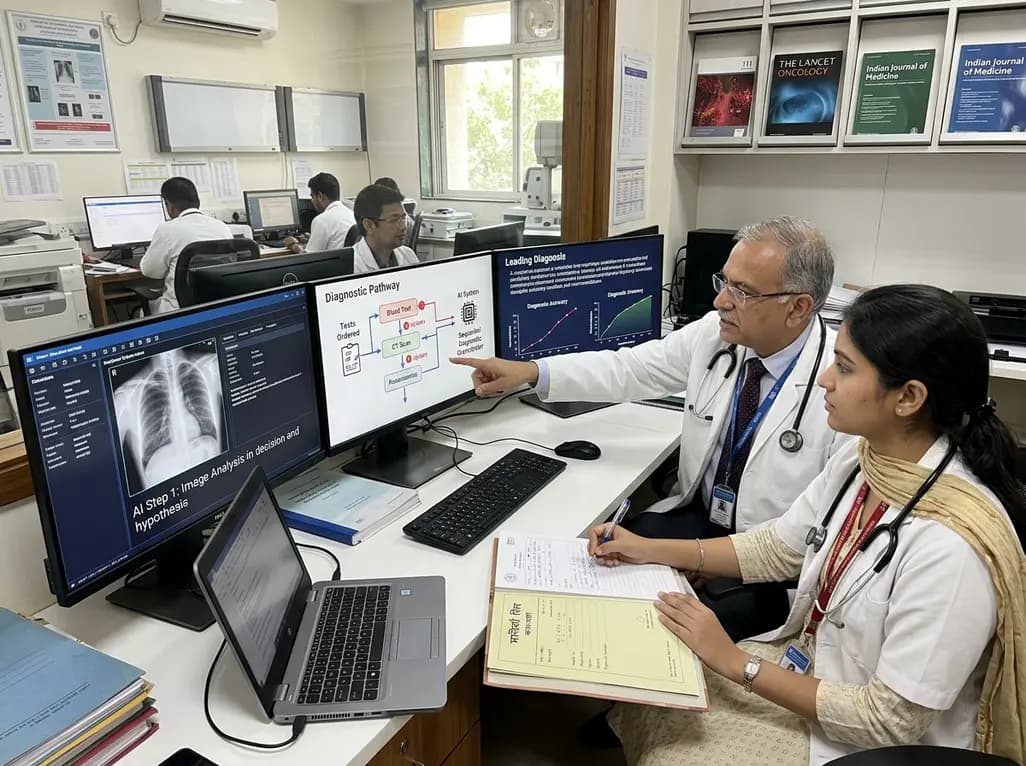
A breakthrough peer-reviewed study demonstrates that a sequential AI diagnosis system can mirror real-world clinical reasoning. By ordering stepwise tests and updating hypotheses dynamically, this multi-agent orchestrator achieved superior diagnostic accuracy while reducing investigative costs.
Today

A prenatal case highlights severe glutaric acidemia type II presenting as bilateral hyperechoic cystic kidneys at 18 weeks. Whole-exome sequencing revealed a novel homozygous ETFDH frameshift variant, demonstrating the power of rapid genetic testing in fetal renal anomalies.
Today

Review how tailored exercise programs benefit frail older patients with heart failure. Explore pathophysiological mechanisms, individualized training prescriptions, and strategies to overcome adherence barriers in clinical practice.
Yesterday

This comparative study evaluates posterior labral tears with and without glenohumeral instability, highlighting distinct demographic patterns, MRI underestimation in stable shoulders, and successful arthroscopic repair outcomes.
Yesterday

A clinical study demonstrates that early intervention with tocilizumab, either as monotherapy or bridged with corticosteroids, achieves significant proptosis reduction and resolves active inflammation in treatment-naive thyroid eye disease.
Yesterday
