.webp&w=384&q=75)

Loading, please wait...
Loading, please wait...
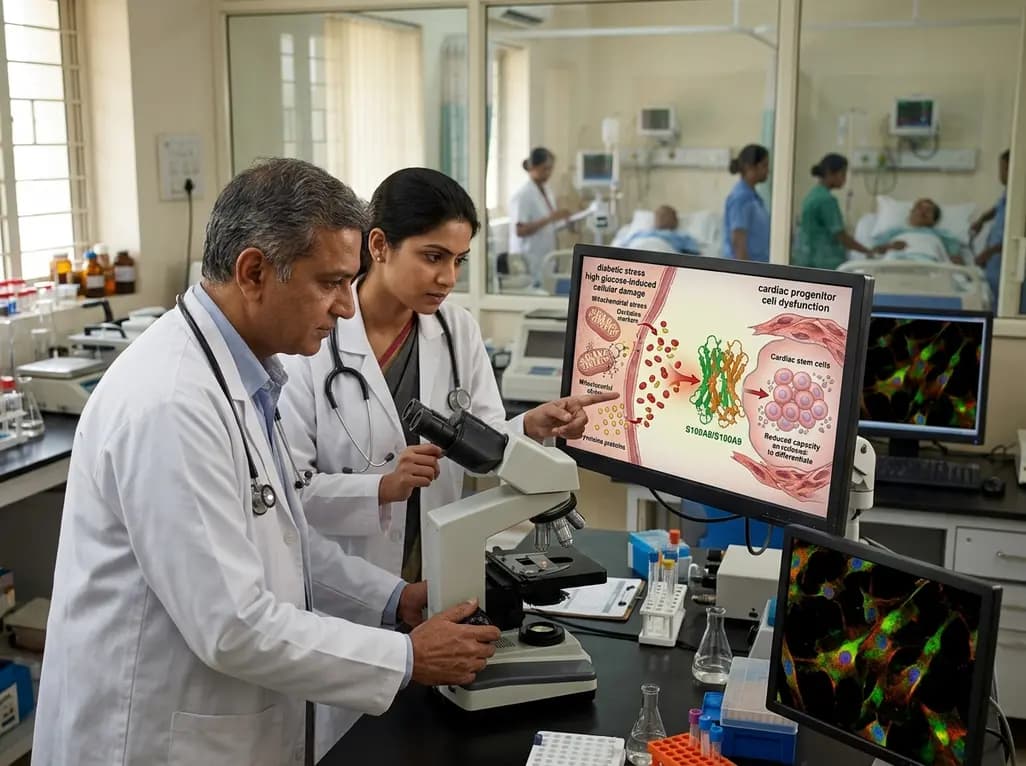
Diabetes mellitus is a global health crisis that significantly increases the risk of developing heart failure. In India, where the prevalence of metabolic disorders is rising sharply, understanding the link between hyperglycemia and myocardial damage is critical for clinical practice. Recent research has focused on identifying the specific molecular signals that connect metabolic stress to cardiac fibrosis and impaired repair mechanisms. Among these signals, the proteins S100A8 and S100A9 have emerged as central players in the progression of diabetic heart disease. The study of S100A8/S100A9 heart failure mechanisms reveals how these alarmins act as a bridge between chronic inflammation and structural heart changes. Specifically, these proteins appear to drive the dysfunction of cardiac progenitor cells, which are essential for maintaining the heart's regenerative capacity. Furthermore, the persistent activation of these pathways under high glucose conditions creates a state of metabolic inflexibility. Consequently, the heart becomes more susceptible to fibrotic remodeling and eventual failure. Therefore, identifying these hub genes provides a more nuanced understanding of why diabetic patients face such high cardiovascular risks despite standard glycemic control.
Understanding the molecular architecture of S100A8 and S100A9 is vital for grasping their role in cardiovascular pathology. These proteins typically form a heterodimer known as calprotectin, which is traditionally associated with acute inflammatory responses. However, in the context of diabetic cardiomyopathy, their role extends far beyond simple inflammation. Research using integrated transcriptomic and protein-protein interaction analysis has identified S100A8 as a critical fibrosis-related hub. Notably, this gene is specifically enriched in hearts affected by diabetic stress compared to non-diabetic controls. These findings suggest that the metabolic environment of diabetes uniquely reprograms cellular pathways to favor the expression of these alarmins. Moreover, single-cell RNA sequencing has demonstrated that these genes are predominantly expressed in cardiac progenitor cells rather than mature cardiomyocytes. This cellular distribution is significant because it implies that the primary damage occurs at the level of the heart's repair system. Resultantly, the therapeutic targeting of this specific axis could potentially prevent the irreversible fibrotic changes that characterize end-stage heart failure in diabetic individuals.
The dysfunction of cardiac progenitor cells (CPCs) represents a major hurdle in the quest to reverse heart failure. These cells are responsible for replacing damaged tissue and maintaining the extracellular matrix balance. When exposed to high glucose levels, CPCs undergo a profound shift in their transcriptomic profile, characterized by the upregulation of S100A8 and S100A9. This upregulation is directly linked to the activation of profibrotic and proinflammatory genes. Consequently, the progenitor cells lose their ability to proliferate and instead begin to contribute to collagen fibril organization and aberrant extracellular matrix interactions. This process is often referred to as fibrotic reprogramming. Additionally, the presence of recombinant S100A8/A9 proteins has been shown to exacerbate this dysfunction, confirming their role as causative agents rather than mere bystanders. By neutralizing S100A9 through targeted antibodies, researchers have been able to partially restore the regenerative potential of these cells. This highlights the possibility of using immunomodulatory therapies to enhance cardiac repair in patients with diabetes. Furthermore, it shifts the focus from managing muscle cells alone to protecting the underlying progenitor population.
Metabolic inflexibility is a hallmark of the diabetic heart, where the organ loses its ability to switch between different energy substrates efficiently. The S100A8/S100A9 axis plays a significant role in this bioenergetic failure. Studies have shown that high levels of these proteins lead to increased production of total and mitochondrial reactive oxygen species (ROS). This oxidative stress directly impairs mitochondrial respiration, reducing basal and maximal oxygen consumption rates. Specifically, ATP-linked respiration and spare respiratory capacity are severely diminished in the presence of S100A9 overexpression. This bioenergetic deficit prevents the heart from meeting the increased demands placed upon it during physiological stress. Furthermore, the reduction in fatty acid oxidation and oxidative phosphorylation further traps the heart in a state of energy starvation. Therefore, the link between S100A8/S100A9 and mitochondrial health is a primary driver of the transition from adaptive hypertrophy to overt heart failure. Addressing this metabolic dysfunction requires a multi-pronged approach that targets both the inflammatory signals and the underlying mitochondrial integrity.
One of the most intriguing aspects of recent research into S100A8/S100A9 is its relevance across multiple disease states, including oncology. Pan-cancer analyses using large cohorts have shown that high expression of S100A8 is associated with an adverse prognosis in several tumor types. This discovery is particularly relevant for the field of cardio-oncology, which examines the intersection of heart disease and cancer. The correlation between S100A8 expression, increased tumor mutation burden, and altered immune infiltration suggests that these proteins modulate the systemic immune environment. Moreover, patients with both diabetes and cancer may face a double burden, as the S100A8/S100A9 axis promotes both tumor progression and cardiac damage. Specifically, the immune-related signaling pathways activated by these proteins appear to be shared between the heart and the tumor microenvironment. This shared biology offers a unique opportunity for developing biomarkers that can predict outcomes in both cardiovascular and oncological settings. Consequently, a deeper understanding of this interface could lead to more holistic treatment strategies for complex patients who suffer from multiple comorbidities simultaneously.
Given the central role of S100A9 in driving cardiac dysfunction, it has become a high-priority target for therapeutic intervention. Experimental models have demonstrated that S100A9 knockdown can effectively restore redox balance and improve mitochondrial function in cardiac progenitor cells. Furthermore, the use of neutralizing S100A9 antibodies has shown promise in attenuating the profibrotic effects of hyperglycemia. This approach is particularly appealing because it targets an upstream mediator of inflammation and metabolic stress. Unlike broad-spectrum anti-inflammatory drugs, which can have significant side effects, targeting a specific alarmin like S100A9 may offer a more precise clinical benefit. Additionally, clinical trials involving S100A8/A9 inhibitors in other inflammatory conditions provide a foundation for repurposing these agents for diabetic heart failure. However, further research is needed to determine the optimal timing and dosage for such interventions in humans. Notably, the ability to monitor circulating S100A8/A9 levels could serve as a valuable tool for personalized medicine. By identifying patients with high levels of these alarmins, clinicians can potentially intervene before irreversible myocardial damage occurs.
The identification of S100A8/S100A9 as a bridge between metabolic stress and heart failure marks a significant advancement in the field of immunometabolism. This axis provides a clear link between the high-glucose environment of diabetes and the specific cellular failures that lead to cardiac fibrosis. By understanding how these proteins influence cardiac progenitor cells and mitochondrial bioenergetics, researchers are opening new doors for both diagnosis and treatment. Furthermore, the prognostic value of S100A8 across both cardiology and oncology highlights its importance as a systemic biomarker. For practitioners in India, these insights underscore the need for a more comprehensive approach to managing diabetic patients. Specifically, protecting the heart's regenerative capacity and metabolic health may require more than just blood sugar control. Therefore, future therapies targeting the S100A8/S100A9 pathway could significantly improve the quality of life and survival rates for millions of patients. As we continue to unravel the complexities of this molecular axis, the hope for more effective, targeted treatments for diabetic heart failure becomes increasingly tangible.
S100A8 and S100A9 act as inflammatory alarmins that are upregulated in response to high glucose levels. In the heart, they primarily target cardiac progenitor cells, causing them to lose their regenerative capacity and instead promote fibrosis. Furthermore, these proteins trigger the production of reactive oxygen species, which damages mitochondria and leads to metabolic inflexibility. Consequently, the heart cannot produce enough energy, eventually resulting in structural remodeling and heart failure symptoms.
Cardiac progenitor cells are the heart's internal repair system. Under normal conditions, they help maintain the health of the heart tissue. However, diabetic stress causes these cells to express high levels of S100A8 and S100A9. This molecular shift leads to fibrotic reprogramming, where the progenitor cells begin creating excessive scar tissue instead of healthy cells. Protecting these cells from S100A8/S100A9-mediated damage is therefore essential for preserving the heart's long-term function and regenerative potential.
Yes, research indicates that S100A8 and S100A9 are valuable biomarkers. High levels of these proteins are associated with a poor prognosis in both heart failure and several types of cancer. Because they are detectable in the blood, they offer a non-invasive way to monitor the intensity of systemic inflammation and metabolic stress. Clinicians can use these levels to identify high-risk patients who might benefit from more aggressive therapy or early interventions to prevent advanced cardiac fibrosis.
Disclaimer: This content is for informational and educational purposes only. It is not intended to be a substitute for professional medical advice, diagnosis, or treatment. Always seek the advice of your physician or other qualified health provider with any questions you may have regarding a medical condition. Refer to the latest local and national guidelines for clinical practice.
References
Yang Y et al. S100A8/S100A9 Links Diabetic Stress to Cardiac Progenitor Cell Dysfunction and Fibrotic Heart Failure: An Integrated Transcriptomic, Single-Cell, and Functional Study. Hum Mutat. 2026 undefined undefined. doi: 10.1155/humu/1662522. PMID: 42437006.
Marinkovic G et al. S100A8/A9 Proteins in Cardiac Inflammation and Failure. Frontiers in Cardiovascular Medicine. 2020. doi: 10.3389/fcvm.2020.00054.
Schiopu A et al. S100A8/A9: A Potential Target in Cardiovascular Disease. International Journal of Molecular Sciences. 2021. doi: 10.3390/ijms22115602.

Read summarized clinical updates, watch expert medical content, and earn CME certifications right from your smartphone.
Open your smartphone camera to scan and install.





New research identifies S100A8/S100A9 as a central mediator linking hyperglycemia-induced oxidative stress to cardiac progenitor cell dysfunction. This discovery highlights the role of these proteins in promoting diabetic heart failure and suggests potential as biomarkers and therapeutic targets.
3 months ago

Novel diimide and hydrazone scaffolds, particularly compound #C4, synergistically reactivate latent HIV-1 when combined with JQ1 or PKC activators. Demonstrating donor-matched proviral transcription ex vivo and non-canonical signaling, these findings advance shock and kill strategies toward reservoir eradication.
Today

A comparative cohort study evaluates vNOTES vs TLH hysterectomy for benign conditions, demonstrating shorter operative duration, faster return to daily activities, and equivalent female sexual function scores without increased dyspareunia.
Today

Review how tailored exercise programs benefit frail older patients with heart failure. Explore pathophysiological mechanisms, individualized training prescriptions, and strategies to overcome adherence barriers in clinical practice.
Yesterday

This comparative study evaluates posterior labral tears with and without glenohumeral instability, highlighting distinct demographic patterns, MRI underestimation in stable shoulders, and successful arthroscopic repair outcomes.
Yesterday

A clinical study demonstrates that early intervention with tocilizumab, either as monotherapy or bridged with corticosteroids, achieves significant proptosis reduction and resolves active inflammation in treatment-naive thyroid eye disease.
Today
