.webp&w=384&q=75)

Loading, please wait...
Loading, please wait...

The field of medicinal inorganic chemistry has undergone a profound transformation as researchers move beyond traditional platinum-based therapies toward more versatile transition metal scaffolds. Among these, Ruthenium(II) complexes have emerged as frontrunners due to their unique ability to mimic iron in biological systems, their diverse coordination geometries, and their favorable kinetic profiles. Recent breakthroughs in Ruthenium(II) complex photocatalysis are now pushing the boundaries of what is possible in oncology and pharmaceutical manufacturing. Specifically, the development of complexes that absorb across the entire visible and near-infrared (NIR) spectrum—a property known as panchromatic absorption—addresses one of the most significant hurdles in photodynamic therapy (PDT). By utilizing low-energy light, these new molecular architectures allow for deeper tissue penetration, which is vital for treating solid tumors that were previously inaccessible to light-activated treatments. This evolution represents a shift toward more selective, less toxic, and highly efficient therapeutic modalities.
To understand why the latest research is so significant, one must look closely at the structural innovations involved. A team led by Mall U et al. recently introduced a pseudo-octahedral Ru(II) complex supported by trans-amido donors. In traditional coordination chemistry, Ruthenium(II) chromophores often exhibit relatively localized metal-to-ligand charge transfer (MLCT) transitions. However, the introduction of -amido donors creates a unique electronic environment. Specifically, the Ru(t2g)-N(2p) dπ-pπ mixing generates frontier molecular orbitals (MOs) that are highly covalent. This covalency is not just a theoretical curiosity; it fundamentally alters how the molecule interacts with light. Because the electronic states are more spread out across the metal and the ligands, the complex can absorb a much wider range of wavelengths than is typical for Ru(II) compounds. This high degree of covalency also contributes to the stability of the complex, ensuring it remains intact under physiological conditions before it is activated by the targeted light source.
One of the primary challenges in photodynamic therapy has been the "optical window" of biological tissue. Most traditional photosensitizers require high-energy blue or UV light for activation. Unfortunately, these wavelengths are quickly scattered or absorbed by endogenous chromophores like hemoglobin and melanin, limiting their effective penetration depth to just a few millimeters. The panchromatic absorption observed in the new Ru(II) bis(amides) solves this problem by extending the absorption range into the near-infrared region. NIR light can penetrate several centimeters into the body, allowing clinicians to activate therapeutic agents deep within internal organs or large tumor masses. Furthermore, because these complexes absorb across the entire visible spectrum, they can utilize a broader range of ambient or therapeutic light sources, making the treatment more versatile. Consequently, Ruthenium(II) complex photocatalysis using NIR light represents a major leap forward in non-invasive precision medicine, offering hope for more effective management of deep-seated malignancies.
Beyond the direct clinical applications in oncology, these innovative complexes are also set to revolutionize the pharmaceutical industry through sustainable chemical synthesis. Modern drug discovery often relies on late-stage functionalization, a process where specific chemical bonds are modified in a complex molecule to create new drug candidates. Traditionally, this requires harsh reagents or high temperatures. However, the 33 ns excited-state generated by these Ru(II) complexes is capable of mediating electron-transfer photochemistry under very mild conditions. By using low-energy visible or NIR light as the driving force, chemists can perform highly selective transformations that are otherwise impossible. This approach is significantly more sustainable, as it reduces the need for toxic catalysts and minimizes the formation of unwanted side products. Moreover, the ability to work in aqueous environments makes this technology highly compatible with sensitive biological molecules, facilitating the creation of complex bioconjugates and DNA-encoded libraries for screening new medicines.
The transition from the laboratory to the clinic is a rigorous process, but the groundwork for Ru(II)-based therapies is already well-established. For instance, Ru(II) complexes like TLD-1433 are currently undergoing advanced clinical trials for non-muscle invasive bladder cancer. The introduction of panchromatic absorbers like those described by Mall U and colleagues adds a new dimension to this pipeline. These agents are not merely passive drug carriers; they are active components of a dual-action therapy. In the absence of light, they remain largely inert, reducing systemic toxicity and the side effects typically associated with chemotherapy. Once they reach the tumor site and are irradiated with low-energy light, they generate reactive oxygen species (ROS) or undergo electron transfer to induce localized cell death. Future research will likely focus on conjugating these complexes with tumor-targeting ligands, such as antibodies or peptides, to further enhance their selectivity. This combination of NIR activation and targeted delivery could usher in a new era of highly localized, "on-demand" cancer therapy.
The discovery of highly covalent, pseudo-octahedral Ru(II) bis(amides) marks a pivotal moment in both inorganic chemistry and medical technology. By successfully engineering molecules that exhibit panchromatic absorption and facilitate low-energy photocatalysis, researchers have provided a powerful new tool for deep-tissue therapy and green pharmaceutical synthesis. These advancements address the long-standing limitations of light penetration and reaction selectivity, paving the way for treatments that are both more effective and better tolerated by patients. As we continue to refine our understanding of molecular orbital mixing and excited-state dynamics, the potential for Ruthenium(II) complex photocatalysis to transform clinical practice continues to grow. Clinicians and pharmaceutical scientists alike should watch this space closely, as the synergy between light and metal-based chemistry promises to redefine the boundaries of modern healthcare.
Panchromatic absorption refers to the ability of a molecule to absorb light across the entire visible spectrum and into the near-infrared (NIR) region. In traditional Ruthenium(II) complexes, absorption is often limited to specific, narrow bands. However, by using specific ligands that create highly covalent bonds with the metal, researchers can expand this range significantly. This allows the complex to capture more light energy, making it a much more efficient tool for light-activated medical treatments and chemical reactions.
Low-energy photocatalysis is beneficial because it utilizes longer wavelengths of light, such as red or near-infrared light, which have superior tissue penetration compared to high-energy blue or UV light. This enables the activation of therapeutic agents deep within the body, allowing for the non-invasive treatment of internal tumors. Additionally, using lower energy light reduces the risk of damaging healthy surrounding tissues, which often absorb higher energy wavelengths more readily, thereby improving the overall safety profile of the procedure.
The degree of covalency in a metal-ligand bond reflects how effectively electrons are shared between the central metal atom and its surrounding ligands. High covalency, often achieved through dπ-pπ mixing, creates a more robust and stable molecular structure. For medical applications, this stability is crucial because it ensures that the drug remains intact while circulating in the bloodstream. This prevents the premature release of toxic metal ions or the degradation of the complex before it reaches its intended target in the tumor.
Disclaimer: This content is for informational and educational purposes only... Refer to the latest local and national guidelines for clinical practice.
References
Mall U et al. Highly covalent, pseudo-octahedral Ru(II) bis(amides): panchromatic absorption and low-energy photocatalysis. Chem Commun (Camb). 2026 Jul 01. doi: 10.1039/d6cc02913b. PMID: 42385257.
Konda P et al. Near-infrared absorbing Ru(ii) complexes act as immunoprotective photodynamic therapy (PDT) agents against aggressive melanoma. Chem Sci. 2022. 13(33):9162-9181.
Obenlüneschloß J et al. Ruthenium(II) carbonyl amidates - a new class of precursors for atomic layer deposition. Dalton Trans. 2026 Jan 28. doi: 10.1039/d5dt02610e.

Read summarized clinical updates, watch expert medical content, and earn CME certifications right from your smartphone.
Open your smartphone camera to scan and install.





A new Ru(II) complex with panchromatic absorption and highly covalent bonding offers transformative potential for deep-tissue photodynamic therapy and advanced pharmaceutical synthesis, overcoming the traditional limits of Ruthenium chromophores.
3 months ago

Co-administering antiseizure medications and DOACs frequently causes pharmacokinetic interactions, subtherapeutic drug levels, and thromboembolic failures. This review highlights enzyme induction risks, unpredictable outcomes with levetiracetam, and the vital role of therapeutic drug monitoring.
Today

Demanding exhaustive hormonal profiling can inadvertently discourage clinical studies involving females. Methodological standards must align with the specific scientific question to expand, not restrict, equitable evidence for women.
Today
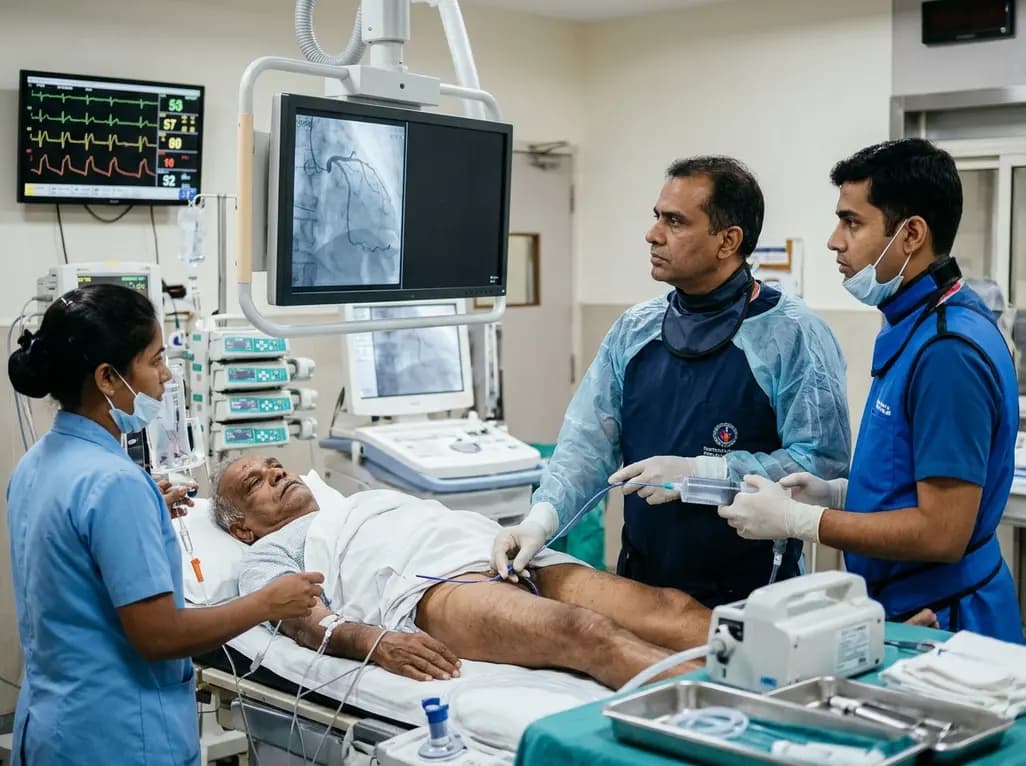
An elderly man with partially repaired Tetralogy of Fallot presented with STEMI caused by coronary embolism rather than atherosclerosis. Successful treatment with sustained mechanical aspiration thrombectomy underscores the vital need for high clinical vigilance in adult congenital heart disease.
Today

A comparative review of tension band wiring and intramedullary screw fixation in thumb metacarpophalangeal arthrodesis, evaluating union rates, hardware complications, and clinical outcomes.
Today

Following regulatory scrutiny from FSSAI regarding promotional representations and lean muscle preservation claims, Dr. Reddy's Laboratories and Nestlé Health Science are currently reviewing the branding and marketing strategy for their joint nutritional supplement Celevida GLP+.
Today
