.webp&w=384&q=75)

Loading, please wait...
Loading, please wait...
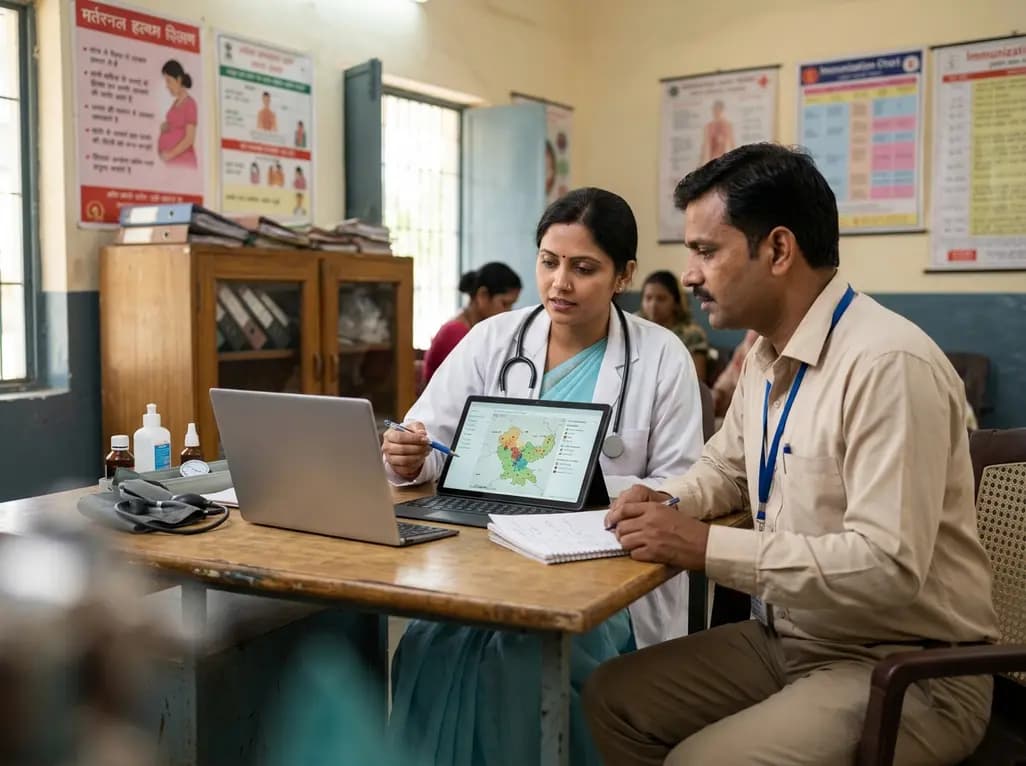
Primary care physicians serving rural populations face distinct clinical, geographical, and operational challenges. Consequently, accessing reliable rural health information remains essential for designing effective clinical workflows and community outreach initiatives. Rural practitioners frequently encounter sparse infrastructure, limited specialist referral networks, and complex socioeconomic determinants of health. Moreover, evidence-based practices developed in tertiary urban centers often require contextual adaptation before implementation in resource-constrained environments. Therefore, curated information repositories bridge the gap between academic research and field reality. By utilizing specialized clearinghouses, healthcare professionals obtain actionable data, validated clinical guidelines, and proven intervention models tailored specifically to remote settings.
Chronic conditions such as hypertension, type 2 diabetes, and respiratory ailments impose substantial burdens on rural communities. Fortunately, structured toolkits translate complex disease management protocols into step-by-step implementation roadmaps. Clinicians can readily adopt standardized patient education modules, remote physiologic monitoring workflows, and nurse-led triage protocols. In addition, these toolkits outline strategies to mitigate medication non-adherence driven by distance barriers and financial limitations. Healthcare providers thus improve longitudinal disease monitoring without overburdening local clinical staff. Furthermore, applying tested chronic disease frameworks reduces unnecessary emergency referrals to distant tertiary care facilities.
Acute clinical events demand rapid stabilization and seamless coordination across decentralized primary care networks. Dedicated knowledge hubs provide vital guidance on structuring emergency response pathways, point-of-care diagnostics, and acute triage algorithms. Furthermore, rural facilities can establish robust inter-facility communication protocols to expedite critical transfers. Tele-consultation platforms and standardized handover templates significantly enhance diagnostic precision during acute presentations. As a result, local general practitioners confidently manage trauma, acute coronary syndromes, and obstetric emergencies while awaiting definitive transport. Implementing these systematized emergency protocols drastically lowers preventable morbidity across underserved regions.
Community health workers serve as indispensable liaisons between rural clinics and dispersed households. Therefore, integrating standardized training resources into primary care systems strengthens grassroots health literacy and preventive screening. Dedicated rural health information portals offer validated instructional frameworks covering maternal care, vaccination schedules, and sanitation hygiene. Moreover, clinicians can deploy task-sharing models that empower community health workers to perform point-of-care screenings and lifestyle counseling. Consequently, primary care teams expand their clinical reach while fostering deep community trust and culturally competent care delivery.
Digital connectivity and resource scarcity often complicate technology adoption in peripheral clinics. However, modern rural health information clearinghouses offer scalable mobile health solutions, asynchronous telemedicine guidelines, and low-bandwidth electronic record templates. Clinicians can evaluate sustainable digital health platforms designed specifically for intermittent power and internet connectivity. Furthermore, comparative implementation studies provide practical insights into cost-effective diagnostic equipment and decentralized pharmaceutical supply chains. Primary care teams can therefore modernize their facilities without exhausting modest operating budgets.
Continuous quality improvement requires rigorous outcome tracking and localized benchmarking metrics. By accessing standardized evaluation frameworks, clinicians measure the real-world impact of their preventive programs and clinical interventions. Additionally, tracking indicators such as immunization coverage, antenatal visits, and glycemic control highlights persistent care gaps. These objective data points empower medical administrators to allocate scarce clinical resources with high precision. Ultimately, data-driven primary care delivery elevates population health standards and ensures equitable healthcare access across geographically isolated populations.
A rural health information clearinghouse acts as a centralized repository of evidence-based toolkits, clinical guidelines, demographic statistics, and program models tailored for rural settings. It enables clinicians, researchers, and public health organizations to overcome resource barriers and implement validated healthcare strategies in remote communities.
Primary care physicians can utilize rural-specific toolkits that modify tertiary protocols for low-resource environments. These frameworks emphasize task-sharing with community health workers, point-of-care testing, structured tele-mentoring, and decentralized medication distribution to maintain high clinical standards despite local infrastructural constraints.
Task-sharing allows primary care physicians to delegate routine preventive screenings, health education, and basic monitoring to trained community health workers. Consequently, this model expands clinical reach, mitigates severe specialist shortages, and improves chronic disease compliance across geographically dispersed rural populations.
Disclaimer: This content is for informational and educational purposes only and does not constitute formal medical or legal advice. Refer to the latest local and national guidelines for clinical practice.
References
1. Villere S et al. RHIhub: Rural Health Information Hub. Med Ref Serv Q. 2026 Aug 13. doi: 10.1080/02763869.2026.2715986. PMID: 42595728.
2. Longenecker RL et al. Training physicians for rural practice: A scoping review of educational models and workforce outcomes. J Rural Health. 2023;39(3):512-524.
3. Kumar A et al. Strengthening rural primary healthcare through digital health innovations: Strategies and system integration. Lancet Reg Health Southeast Asia. 2024;22:100342.

Read summarized clinical updates, watch expert medical content, and earn CME certifications right from your smartphone.
Open your smartphone camera to scan and install.





Rural healthcare delivery faces unique geographic, workforce, and clinical resource constraints. This article examines how primary care clinicians and public health teams can effectively utilize structured rural health information repositories and evidence-based toolkits to enhance patient outcomes.
last month
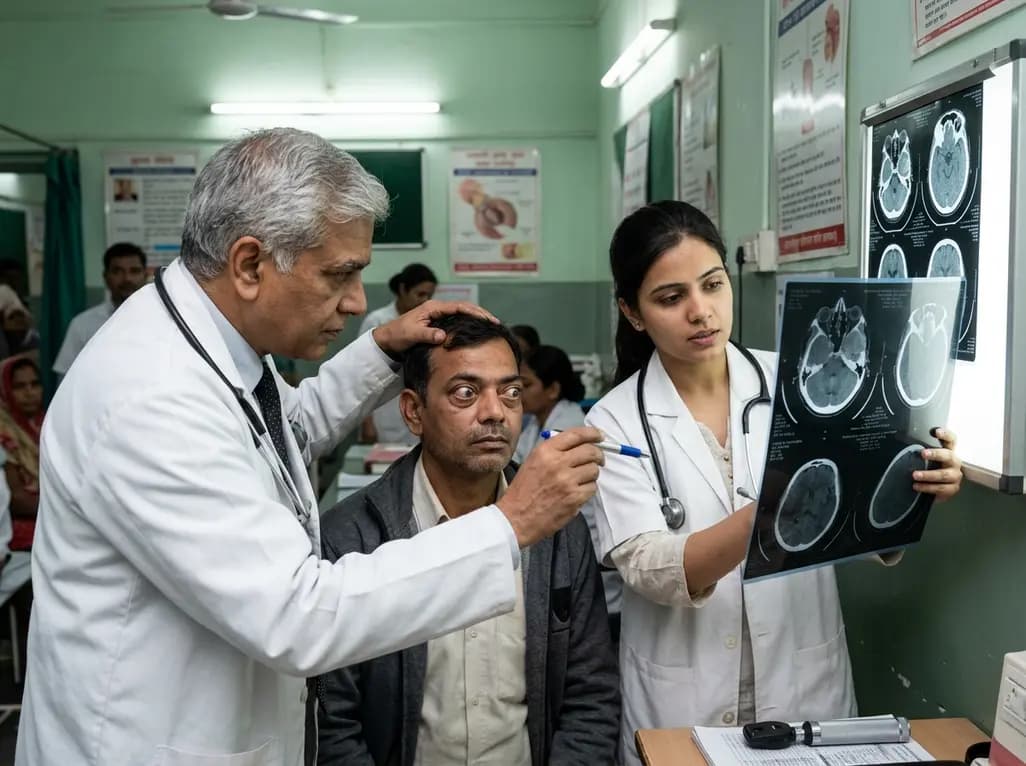
A recent clinical report details an atypical presentation of bilateral proptosis as the primary manifestation of aggressive multiple myeloma. Explore the diagnostic pathway, imaging findings, and critical multidisciplinary management strategies essential for handling extramedullary plasma cell dyscrasias.
Today
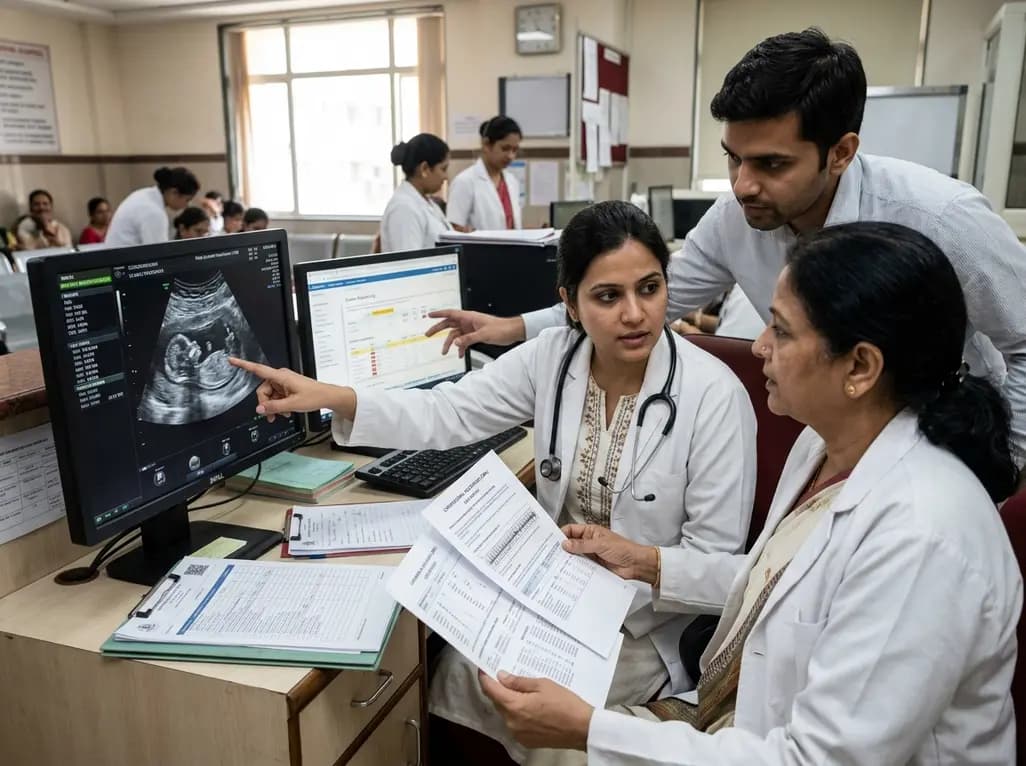
Prenatal evaluation of fetal growth restriction requires an integrated diagnostic approach. While chromosomal microarray remains fundamental, exome sequencing offers significant diagnostic yield in isolated and syndromic cases, especially when ultrasound shows skeletal anomalies or normal placental function.
Today

Discover a novel laparoscopic approach for iatrogenic diaphragmatic hernia repair following pedicled omentoplasty. This modified Sugarbaker technique integrates dorsal pedicle lateralization and round ligament reinforcement to secure the diaphragmatic defect while preserving vital omental vascularity.
Today

High-grade trochlear dysplasia disrupts patellofemoral stability. Although the patellotrochlear index measures cartilage overlap on MRI, cartilage contact does not ensure osseous containment. Relying solely on two-dimensional metrics may lead surgeons to overlook necessary tibial tubercle osteotomy procedures.
Today
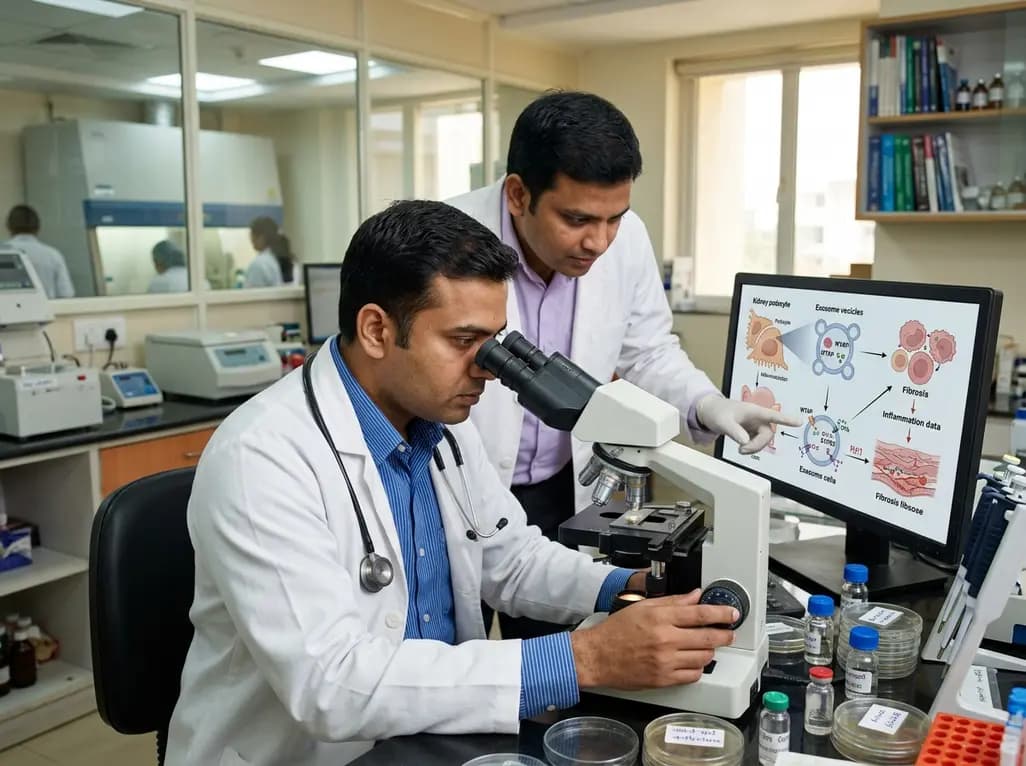
New research reveals that M1 macrophage-derived exosomes aggravate diabetic nephropathy by transferring WTAP to stabilize S1PR2 mRNA. Silencing WTAP in these vesicles attenuates endothelial injury and renal fibrosis, pointing toward innovative nanomedicine therapies.
Today
