.webp&w=384&q=75)

Loading, please wait...
Loading, please wait...
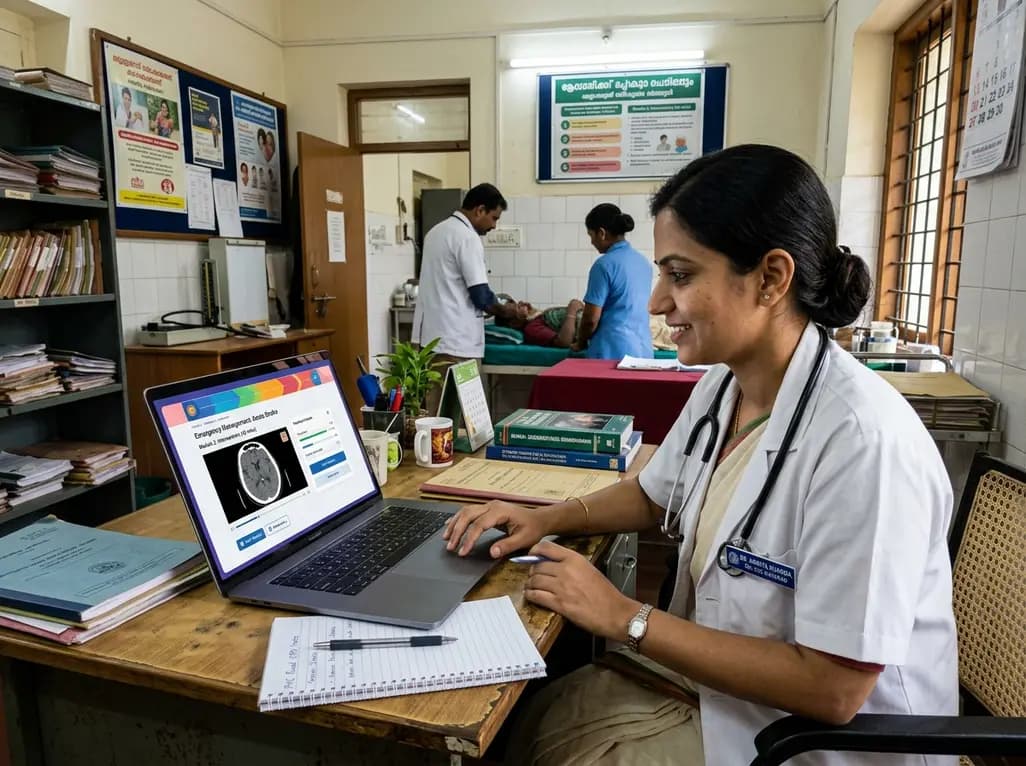
Rural primary healthcare providers encounter substantial professional isolation, unique clinical demands, and persistent time constraints. Consequently, accessing continuing professional development remains a formidable barrier for clinicians working far from tertiary medical centers. Modern digital education offers a transformative bridge across these geographical divides. A landmark international survey evaluated how rural GP e-learning can effectively address unmet continuing education priorities among community practitioners across the United Kingdom and Europe. Although remote digital platforms have proliferated, rural physicians frequently report that generic educational programs fail to capture the realities of rural practice. Therefore, assessing the real-world preferences of community practitioners is essential for creating high-yield educational curricula. This descriptive needs assessment offers critical insights into preferred learning modalities, ideal time commitments, and high-priority clinical topics for rural physicians worldwide.
Geographic distance and severe staffing shortages regularly prevent rural clinicians from attending conventional in-person medical conferences. Furthermore, traveling long distances to urban academic centers often disrupts patient care and imposes heavy logistical burdens on small rural clinics. In contrast, digital learning formats allow doctors to access evidence-based updates directly from their local clinical practice. However, rural practitioners require instructional formats that integrate smoothly into demanding daily workloads. For example, previous educational models often relied on multi-hour recorded lectures that proved difficult to finish during brief clinical breaks. As a result, course completion rates remained low among busy solo and small-practice family doctors. When educational developers customize digital curricula for the rural primary care context, clinician engagement improves significantly. Structured remote learning also connects geographically dispersed clinicians with broader peer networks, reducing the sense of professional solitude. Ultimately, flexible digital platforms empower rural healthcare providers to maintain up-to-date clinical competence without sacrificing local clinical responsibilities.
The joint study surveyed members from the Royal College of General Practitioners in the United Kingdom and the European Rural and Isolated Practitioners Association. Surprisingly, only eight percent of respondents who answered the specific engagement question reported using educational resources tailored to rural practice. This remarkably low uptake demonstrates a glaring gap in the current continuing medical education landscape. Furthermore, while numerous generic primary care modules exist, very few educational programs address the complex operational challenges faced in isolated clinics. Specifically, rural doctors manage acute crises without immediate specialist backup, point-of-care diagnostics, or rapid hospital transport. Consequently, standard urban-centric clinical pathways frequently fail to provide actionable guidance for resource-limited environments. Therefore, rural doctors often feel that existing academic programs overlook their practical diagnostic and management dilemmas. To resolve this imbalance, academic institutions and regulatory colleges must deliberately co-design instructional materials alongside frontline practitioners. Addressing this persistent educational deficit is essential for retaining competent medical staff in underserved rural communities.
Time scarcity represents one of the most significant impediments to professional development in community healthcare. In the study, respondents overwhelmingly expressed a preference for concise educational interventions lasting between thirty and forty minutes. Moreover, physicians favored interactive e-learning modules, focused webinars, digestible online lectures, and portable audio podcasts over lengthy academic texts. Because rural clinicians frequently balance on-call duties with heavy patient lists, modular bite-sized formats provide optimal flexibility. Clinicians can easily complete a focused case module during a lunch interval or listen to an audio podcast during a rural commute. In addition, interactive case-based scenarios mirror real-world decision-making far better than passive reading materials. Participants particularly value practical knowledge checks, simulated triage decisions, and downloadable clinical decision algorithms. Thus, microlearning architectures substantially enhance information retention and accommodate chaotic rural clinical workflows. Academic course directors must therefore abandon marathon seminars in favor of targeted, interactive, and high-impact digital learning modules.
Rural practice requires broad clinical versatility because general practitioners routinely serve as the first and only line of defense for diverse emergencies. Survey respondents highlighted emergency care as their foremost educational priority. Specifically, managing acute cardiac events, polytrauma, anaphylaxis, and pediatric respiratory distress before transport arrival requires rapid, decisive action. Furthermore, participants identified mental health crises and substance addiction management as critical areas needing enhanced training. Rural communities often face limited behavioral health resources; consequently, family doctors must deliver comprehensive psychiatric interventions locally. In addition, managing complex multimorbidity and extreme clinical uncertainty emerged as core educational demands. Because rural doctors must balance multiple chronic illnesses without immediate subspecialty consultations, clinical risk assessment is a daily reality. Similarly, elderly frailty management and palliative care require advanced communication and prescribing skills in home settings. Finally, clinicians highlighted telemedicine training as vital for triaging patients and conducting remote specialist consultations efficiently.
Although the surveyed cohort comprised European and British general practitioners, the educational lessons resonate deeply across global health systems, especially in India. India's vast rural population relies heavily on primary health centers, community health centers, and isolated rural general practitioners. Furthermore, Indian primary care physicians encounter comparable clinical burdens, including managing acute emergencies, complex infectious illnesses, and escalating non-communicable diseases. However, mandatory continuing medical education credits mandated by the National Medical Commission often remain difficult for rural medical officers to acquire due to urban-centric training schedules. Therefore, establishing mobile-friendly, thirty-minute rural GP e-learning modules would democratize professional development across diverse Indian states. Additionally, training rural medical officers in telemedicine aligns directly with national digital health initiatives like the Ayushman Bharat Digital Mission. In particular, interactive modules focusing on emergency stabilization, snakebite management, chronic disease algorithms, and tele-consultation protocols could substantially elevate rural care delivery. Consequently, structured digital education serves as an indispensable tool for strengthening rural healthcare systems internationally.
Creating effective digital training programs requires moving beyond passive web repositories toward collaborative, user-centered educational platforms. Specifically, instructional designers must incorporate real-time clinical simulations, asynchronous discussion forums, and practical checklists tailored to rural resource constraints. Moreover, future initiatives must rigorously evaluate educational effectiveness through validated post-training clinical outcomes rather than simple attendance tracking. Regulatory bodies and academic associations should also grant formal accreditation and continuing medical education credits for concise digital learning activities. However, developers must also overcome technical barriers, such as intermittent internet connectivity and outdated hardware in remote dispensaries. Therefore, offering downloadable offline modules and low-bandwidth podcasts ensures equitable access for all healthcare professionals. Furthermore, establishing peer mentorship networks within digital learning hubs helps combat geographic isolation while fostering collaborative problem-solving. By investing in scalable, evidence-based e-learning infrastructure, medical organizations can sustain an inspired, capable, and confident rural primary care workforce worldwide.
Rural general practitioners strongly prefer concise, flexible educational formats lasting between thirty and forty minutes. According to survey data, clinicians favor interactive case-based e-modules, live webinars, focused online lectures, and educational podcasts over lengthy academic lectures. These compact formats allow busy practitioners to integrate continuing professional development into demanding daily workflows without disrupting clinical patient care or requiring long-distance travel to distant academic medical centers.
Physicians practicing in rural and remote settings prioritize clinical topics that address urgent care and diagnostic uncertainty. Top priority areas include emergency stabilization, mental health and addiction disorders, multimorbidity management, clinical risk assessment, frailty care, and telemedicine integration. Because rural practitioners routinely handle acute presentations without immediate specialist backup or hospital access, they require practical training that enhances independent decision-making in isolated and resource-limited primary care environments.
Primary care physicians across rural India encounter similar professional isolation, heavy patient volumes, and limited tertiary infrastructure. Concise digital modules help Indian medical officers fulfill National Medical Commission continuing medical education mandates without abandoning clinical postings. Furthermore, targeted online training in emergency protocols, snakebite treatment, infectious disease triage, and national digital telemedicine platforms empowers government and private rural practitioners to deliver safe, evidence-based care within underserved district populations.
Disclaimer: This content is for informational and educational purposes only... Refer to the latest local and national guidelines for clinical practice.
References
Dolan M et al. E-learning preferences of rural general practitioners: A descriptive educational needs assessment. Results of a cross-sectional survey distributed through UK and European rural GP networks. Adv Clin Exp Med. 2026 Sep 08. doi: 10.17219/acem/224991. PMID: 42709019.
Campos-Zamora M, Gilbert H, Esparza-Perez RI, Sanchez-Mendiola M, Gardner R, Richards JB, et al. Continuing professional development challenges in a rural setting: a mixed-methods study. Perspect Med Educ. 2022;11(5):273-280.
Dowling S, Minihan F, Duffy I, Cullen W. Does locally delivered small group continuing medical education (CME) meet the learning needs of rural general practitioners? Educ Prim Care. 2019;30(3):145-151.

Read summarized clinical updates, watch expert medical content, and earn CME certifications right from your smartphone.
Open your smartphone camera to scan and install.





A cross-sectional survey by RCGP and EURIPA highlights educational needs for rural general practitioners. Rural doctors strongly favor 30- to 40-minute interactive e-learning modules focusing on acute emergencies, multimorbidity, frailty, risk management, and telemedicine to support isolated primary care practice.
last month

Explore why official drug package inserts fail to reflect modern evidence for clozapine prescribing. Learn how legal standards of care, case law, slow titration, and vital adverse event monitoring empower clinicians to prioritize evidence-based medical practice over outdated manufacturer labeling.
Today
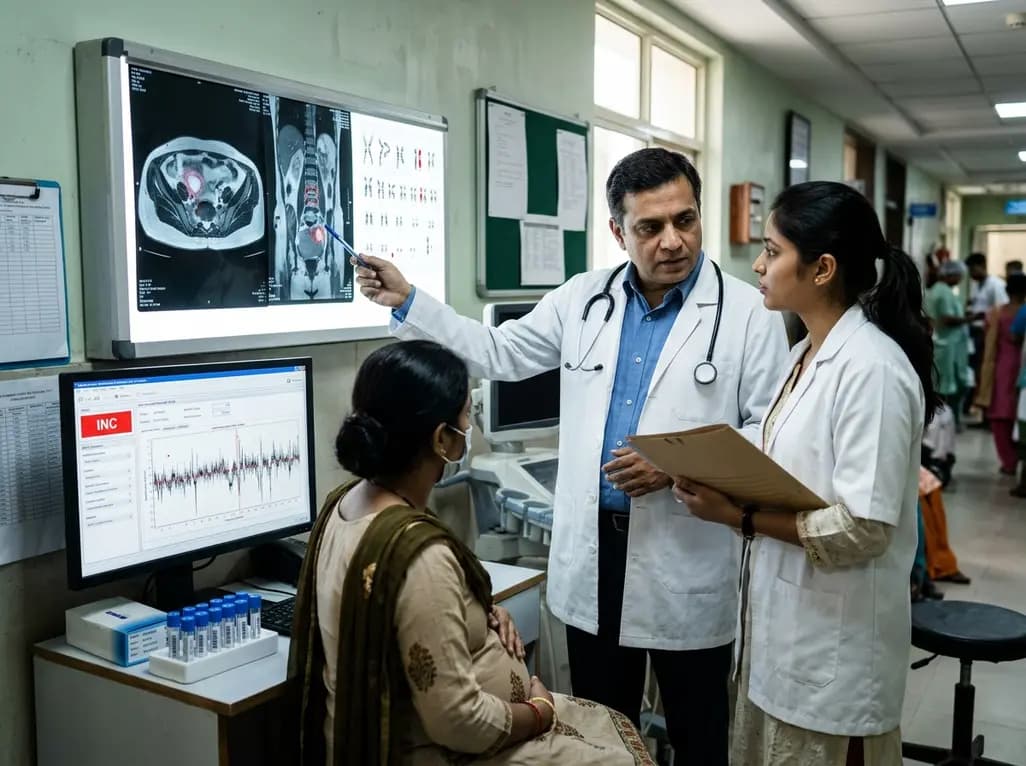
Occult maternal malignancy accounts for 3.82% of persistent unreportable NIPT results with genomic noise. Multiple chromosomal aberrations, notably on chromosome 18, warrant thorough oncological evaluation and whole-body MRI to ensure timely maternal diagnosis while preserving fetal care.
Today
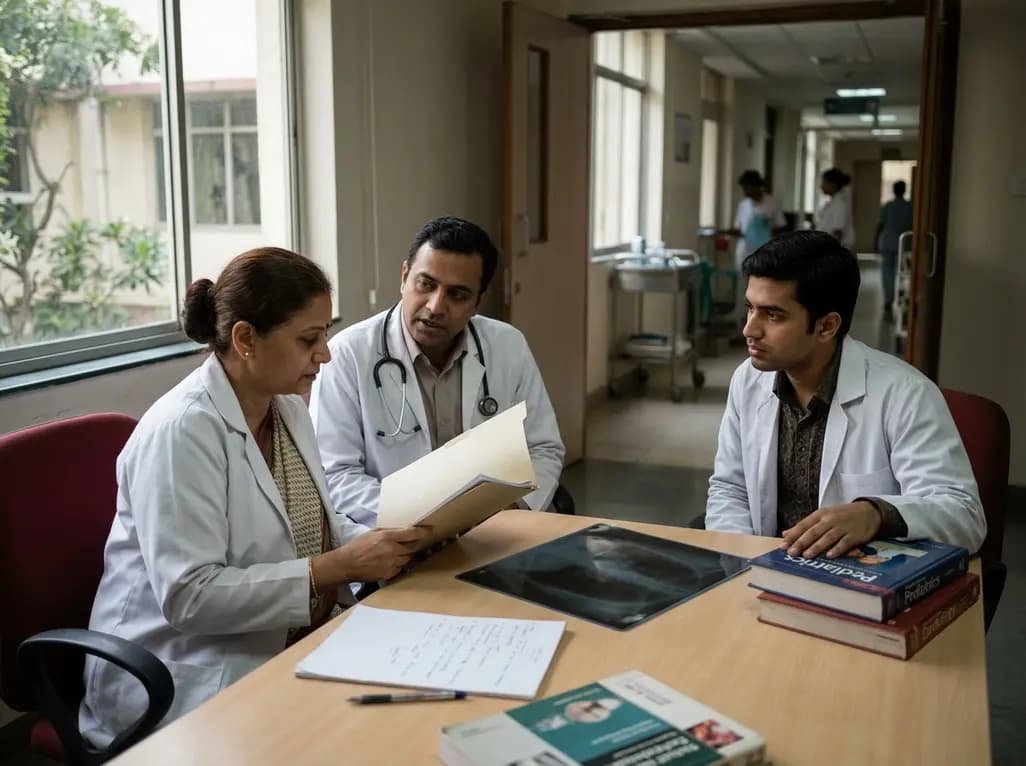
This article reviews the forensic and clinical complexities of acute myocarditis arising on left ventricular hypertrophy in children, highlighting early diagnostic red flags and multidisciplinary postmortem autopsy protocols.
Today
A randomized controlled trial demonstrates that an eight-week dual-task training intervention significantly improves static and dynamic postural control over standard balance exercises in individuals with chronic ankle instability, addressing critical neurocognitive deficits during athletic and daily activities.
Today

A retrospective cohort study of 7,716 ICU patients from the MIMIC-IV database demonstrates that Gradient Boosting Decision Trees significantly outperform traditional SOFA scores in predicting in-hospital mortality among patients with sepsis and diabetes, with SHAP analysis providing clinical interpretability.
Today
