

Loading, please wait...
Loading, please wait...
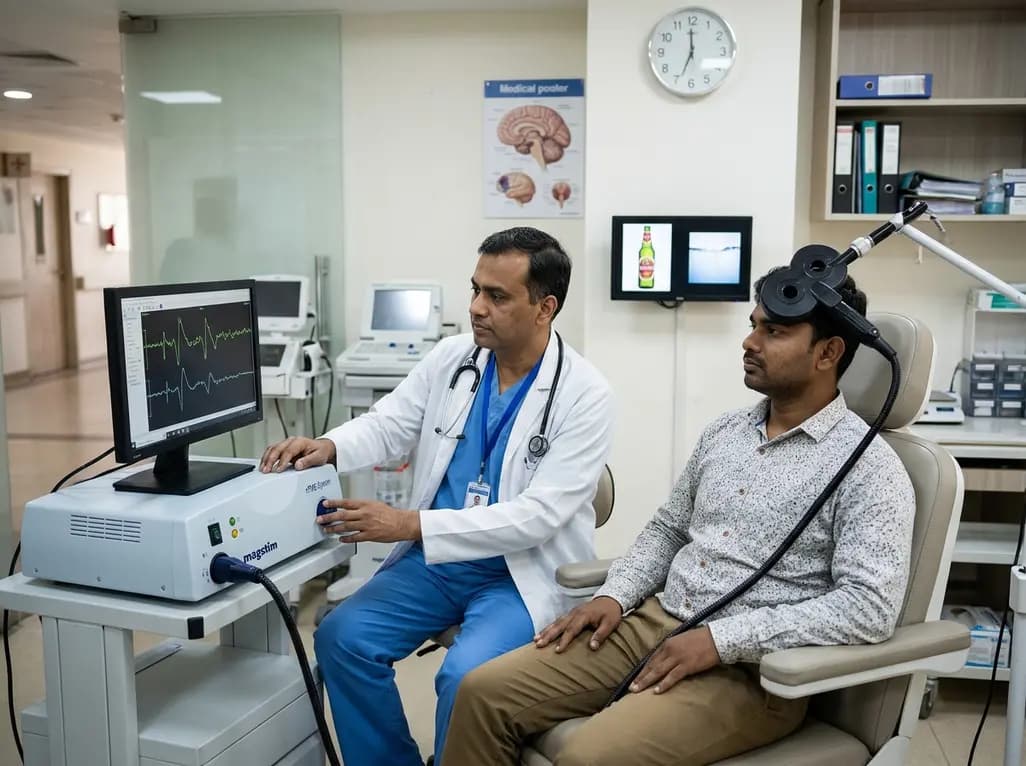
Healthcare professionals face persistent challenges when managing alcohol use disorders. Consequently, exploring innovative neuromodulatory interventions has become a vital clinical frontier. Recent neurobiological discoveries highlight the potential utility of rTMS for alcohol use. Specifically, maladaptive drinking behaviors often stem from automatic cognitive biases toward substance-related cues. These reflexive motor actions routinely bypass conscious behavioral inhibition. Therefore, targeting the prefrontal circuits that regulate cognitive control provides an attractive therapeutic strategy. A recent clinical investigation evaluated whether non-invasive neurostimulation could alter these ingrained habits. The findings reveal compelling evidence that focal cortical stimulation directly modifies neural and behavioral responses.
Substance use disorders frequently involve an imbalance between reflexive and reflective brain processes. In particular, appetitive conditioning produces powerful automatic approach behaviors. When individuals encounter alcohol cues, subcortical reward circuits prompt motor actions toward the stimulus. Meanwhile, top-down prefrontal executive systems often fail to inhibit these sudden impulses. As a result, patients experience rapid behavioral automaticity that overrides intentional abstinence. Traditional behavioral therapies attempt to retrain these motor tendencies through cognitive drills. However, standard cognitive training frequently yields modest long-term clinical benefits. This therapeutic plateau occurs because behavioral training alone may not sufficiently alter compromised cortical networks. Specifically, hypoactivation in the prefrontal cortex impairs the conscious suppression of appetitive urges. Electrophysiological studies consistently show diminished neural control signals in individuals who exhibit strong approach habits. Therefore, clinicians require targeted interventions that directly enhance executive neurocircuitry. Non-invasive brain stimulation offers a mechanistically sound modality to restore this disrupted balance. By modulating frontal cortical excitability, neurostimulation can theoretically empower inhibitory control mechanisms against conditioned triggers.
The dorsolateral prefrontal cortex plays an indispensable role in goal-directed action regulation and impulse inhibition. Furthermore, the right dorsolateral prefrontal cortex specifically facilitates motor avoidance and active response withholding. Because alcohol-related cues trigger reflexive motor activation, activating right prefrontal regions can restore necessary behavioral resistance. High-frequency rTMS for alcohol use enhances cortical excitability across stimulated neuronal populations. In this sham-controlled clinical protocol, investigators recruited forty-five healthy male alcohol consumers. The team delivered high-frequency stimulation at ten Hertz directly over the right dorsolateral prefrontal cortex. Specifically, the active intervention comprised 1560 magnetic pulses applied at 110% of the resting motor threshold. Researchers configured the protocol with 3.9-second pulse trains separated by 26.1-second inter-train intervals. Meanwhile, the sham control condition utilized an identical coil oriented perpendicular to the scalp at ninety degrees. This rigorous sham setup reproduced realistic acoustic sensations without delivering therapeutic electrical fields to underlying tissue. Consequently, the study maintained robust blinding standards across experimental groups. Participants performed an alcohol approach-avoidance task paired with continuous electroencephalography before and immediately after stimulation. This precise methodology allowed investigators to measure immediate neurophysiological and behavioral adaptations.
Electroencephalographic recordings provide precise temporal resolution into rapid cognitive processes during cue exposure. In particular, event-related potentials such as the N2 and P3b waves reflect cognitive control and attentional allocation. During baseline testing, participants with marked approach tendencies displayed significantly attenuated N2 and P3b amplitudes toward alcohol cues. This electrophysiological deficit indicates reduced regulatory engagement during the early appraisal of alcohol stimuli. Thus, individuals with blunted prefrontal waveforms struggle to muster immediate cognitive resistance. However, active cortical neurostimulation dramatically altered this neural profile. Following active stimulation, participants demonstrated significantly enhanced prefrontal N2 amplitudes during task performance. This physiological surge directly reflects greater recruitment of prefrontal control networks during avoidance execution. Furthermore, the N2 enhancement correlated closely with measurable behavioral adjustments. In contrast, sham stimulation produced no such neurophysiological elevation. Instead, control participants showed persistent electrophysiological suppression when viewing alcohol cues. These objective electroencephalographic findings confirm that magnetic stimulation exerts measurable effects on cortical circuits. Ultimately, the intervention strengthens early conflict monitoring, allowing patients to recognize and suppress maladaptive motor tendencies more effectively.
Electrophysiological enhancements corresponded directly to distinct behavioral changes in motor performance. Prior to stimulation, participants responded faster when pulling alcohol pictures toward themselves rather than pushing them away. This pattern confirms the presence of an ingrained, automatic approach bias toward alcohol cues. Following the active protocol, participants displayed a marked facilitation of avoidance responses. Specifically, individuals pushed alcohol stimuli away significantly faster and more consistently than during baseline testing. Therefore, active stimulation directly countered the pre-existing behavioral automaticity. In stark contrast, participants in the sham group demonstrated progressive strengthening of their automatic approach actions. This striking divergence indicates that repeated cue exposure naturally reinforces approach tendencies unless neurostimulation interrupts the cycle. Repetitive task practice alone merely consolidated the habitual motor urge among sham controls. Consequently, active brain stimulation served as a neuroprotective shield against repetition-induced automaticity. In addition, the magnitude of behavioral avoidance correlated with the increase in prefrontal N2 amplitude. These outcomes provide clear empirical proof that modulating prefrontal cortex excitability produces rapid, quantifiable changes in action tendencies.
These experimental findings offer valuable mechanistic insights for clinicians treating addictive disorders. Although conventional psychotherapeutic models emphasize conscious decision-making, automatic behavioral tendencies often trigger substance relapse. Consequently, pharmacological and psychotherapeutic treatments frequently struggle to prevent immediate, reflexive cue responses. Integrating targeted neuromodulation could address this therapeutic gap by reinforcing neurobiological circuits that govern impulse control. Furthermore, baseline motivational profiles heavily influence individual treatment responses. In this study, individuals with strong baseline approach tendencies derived the greatest regulatory benefit from stimulation. Accordingly, clinicians might utilize baseline behavioral profiling to stratify patients who will respond best to neurostimulation. Tailoring neurostimulation protocols based on individual neurocognitive markers represents the future of precision addiction medicine. Moreover, single-session laboratory studies establish proof of concept for expanded multi-session clinical protocols. While a single session transiently resets motor biases, repeated treatment courses may induce enduring synaptic plasticity. Therefore, future clinical trials must evaluate whether repeated protocols can sustain avoidance behaviors over several months. Such trials will determine if non-invasive brain stimulation can reliably lower clinical relapse rates in real-world settings.
As neurostimulation technology advances, psychiatrists and neurologists must determine how best to integrate these modalities. Non-invasive brain stimulation displays an exceptional safety profile with minimal systemic adverse effects. For instance, participants generally tolerate high-frequency prefrontal stimulation without severe discomfort or cognitive impairment. In addition, researchers are currently exploring whether combining brain stimulation with cognitive bias modification accelerates therapeutic gains. Administering stimulation immediately before or during avoidance training could optimize neuroplastic learning windows. Consequently, the brain may encode avoidance habits more robustly and permanently. Nevertheless, investigators must address several methodological questions before widespread clinical deployment occurs. Future studies need to explore stimulation parameters across diverse patient populations, including female cohorts and individuals with severe dependence. Similarly, researchers must investigate bilateral frontal targets and optimal session frequencies. As clinical data accumulate, neurostimulation could emerge as an indispensable adjunctive weapon alongside pharmacotherapy and behavioral counseling. Ultimately, strengthening prefrontal inhibitory capacity empowers patients to regain control over compulsive behaviors and achieve sustainable recovery.
High-frequency magnetic stimulation applied to the right dorsolateral prefrontal cortex increases localized cortical excitability. Consequently, this intervention enhances top-down inhibitory control over subcortical reward impulses. This neurophysiological shift amplifies prefrontal N2 wave amplitudes, enabling individuals to recruit executive control networks rapidly and execute behavioral avoidance when encountering conditioned alcohol cues.
The right dorsolateral prefrontal cortex plays a crucial role in behavioral inhibition, conflict monitoring, and motor response withholding. Because automatic alcohol habits represent failures of inhibitory control, stimulating this specific prefrontal region selectively reinforces avoidance pathways. Therefore, focal stimulation to the right hemisphere counteracts reflexive appetitive responses toward substance-related environmental triggers.
A single session provides immediate neurophysiological and behavioral modulation rather than permanent recovery. It demonstrates proof of concept by transiently enhancing avoidance execution and prefrontal event-related potentials. However, sustained clinical recovery requires comprehensive multi-session protocols combined with standard medical management, psychotherapy, and lifestyle interventions to induce lasting cortical neuroplasticity.
Disclaimer: This content is for informational and educational purposes only... Refer to the latest local and national guidelines for clinical practice.
References

Read summarized clinical updates, watch expert medical content, and earn CME certifications right from your smartphone.
Open your smartphone camera to scan and install.





A landmark trial demonstrated that single-session 10Hz rTMS over the right dLPFC selectively enhances alcohol avoidance behavior and prefrontal N2 event-related potentials in males. This neurostimulation approach counters automatic cue-driven drinking habits by boosting top-down cognitive control.
Today
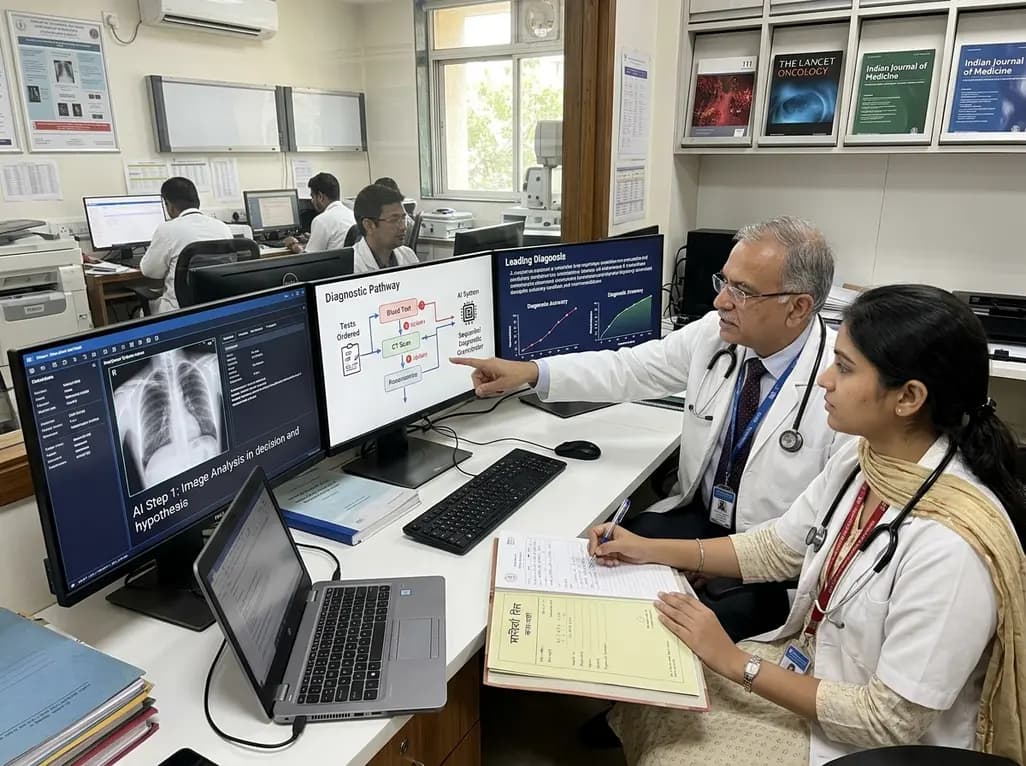
A breakthrough peer-reviewed study demonstrates that a sequential AI diagnosis system can mirror real-world clinical reasoning. By ordering stepwise tests and updating hypotheses dynamically, this multi-agent orchestrator achieved superior diagnostic accuracy while reducing investigative costs.
Today

A prenatal case highlights severe glutaric acidemia type II presenting as bilateral hyperechoic cystic kidneys at 18 weeks. Whole-exome sequencing revealed a novel homozygous ETFDH frameshift variant, demonstrating the power of rapid genetic testing in fetal renal anomalies.
Today

Review how tailored exercise programs benefit frail older patients with heart failure. Explore pathophysiological mechanisms, individualized training prescriptions, and strategies to overcome adherence barriers in clinical practice.
Yesterday

This comparative study evaluates posterior labral tears with and without glenohumeral instability, highlighting distinct demographic patterns, MRI underestimation in stable shoulders, and successful arthroscopic repair outcomes.
Yesterday

A clinical study demonstrates that early intervention with tocilizumab, either as monotherapy or bridged with corticosteroids, achieves significant proptosis reduction and resolves active inflammation in treatment-naive thyroid eye disease.
Yesterday
